Join music gear discussions on Equipboard. Talk about guitar gear, electronic music production, get help identifying gear, ask for feedback on your music, suggest ideas to improve Equipboard and more.

Beginner gear for generating nostalgic 80's synth (noob level, and building.

I started out with a Casio CZ1000. That was a baptism of fire! Can't think of a less intuitive synth for a callow 17 year-old newbie...! I had no idea what anything meant, I just used to change everything at random and hope for the best. In fact I still don't fully understand what phase distortion synthesis is...the thing is, they were polyphonic and cheap at the time. They still are cheap if you can find one...

https://en.wikipedia.org/wiki/Phase_distortion_synthesis

I know all about phase distortion in PRACTICE, i have a CZ1000 too LOL. But, like you, I am not entirely clear on how it differs from Yamaha's FM (which is really Phase Modualtion, not actual Frequency Modulation but in prractice at audio range they are esentially the same sonically and only differ when used for non-audio applications). But yeah, what the fuck is Phase Distortion then. Its similar but different enough that I keep a Casio around just inc ase. I shoulda paid closer attention in trig and calc as a kid.

Heh, my fist programmable synthw as a Yamha DX7mkIIFD, as if a basic DX7 isn't ahrd enough to create original aptches on, the IIFD packs an extra engine in for layers and splits so you can get extra confused. It wasn't even up to me. That FX belonged to ym dad and uncle so it was there when iw as interested. And it seemed like a 'standard' peice sicne I ahd seen everybody and their brother behind one in the 80s. Before the itnernet I thought I was just a synthesis idiot for a while and I didn't realize right away that some of the sounds I ehrd my dad and uncle record with were from expansion rpeset cartridges that my uncle misplaced!

GEAR:
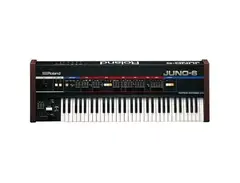
  • Roland Juno-6
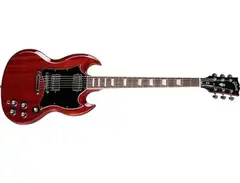
  • Gibson SG Standard
  • Vox AC30 Guitar Combo Amp

Tangental to this thread but....

https://youtu.be/WEvnZRCW_qc

Programing FM on the Sega...

that was REALLY interesting

GEAR:
  • Roland Juno-6
  • Gibson SG Standard
  • Vox AC30 Guitar Combo Amp

I love reading, etc. about the restrictions video game composers worked with. That stuff is way inspiring

Just ordered the Volca FM and the AKAI MPK mini MKII to wet my whistle. Certainly in my spending range and doesn't break the bank. Next up is to get a decent DAW (Logic X maybe?). I think the Volca and MKII helps out with portability as well, since I travel abroad frequently.

if you're on mac and making electronic music exclusively Logic and Ableton are pretty much the top 2. Logic has more of a pro-tools audio handling that's great for when you want to perform life over the entire song.Ableton is great with loops and samples and allows real time manipulation. Logic has an old epdigree having begun as the simple MIDI sequencer Notator when Mac and the Atari ST (running the early version of cubase) were going toe to toe to be the MIDI computer of choice (and there was cakewalk for old PCs). I go back with Logic to when the PC version came out and its always been solid at handling MIDI. I switched back to Steinberg in the early 00s because Cubase SX had more of the features I wanted like rewire for slaving Fruity Loops when it was pretty much a virtual sampler with a drum machine step sequencer interface. Logic is a great alla rounder now like its cousin Cubase. Ableton is very object oriented and seems to be a great choice for eople with limited formal musical background. There's a lot of overlap though. You will probably want a trial version of ABleton first tos ee if you can wrap your head around the interface and features. For 80s synth pop I feel like Logic might make more sense.

the Volcas are really small and portable so if you're working onthe road you'll have a peice of ahrdware. You probably stillw ant 1 more peice of ahrdware, soemthing for basslines. Don't expect a 4 operator FM synth to make super deep, thick basses though. That's really analog turf. You might want to just get the volca bass, its more than just an acid machine and does some relatively thick 80s Korg sounds. Its not going to be a minimoog, but I have one and it holds up well to the small bass synths from arturia, novation and others. Korg's ARP odyssey mini is another great 2 oscilator mono and it comes in a dinky tabletop version that will travel well. Notas small as a volca but it will fit in carry on with room to spare for your clothes and stuff. The Moog Minitaur is really small and people lvoe it for bass. I keep thinking about getting one. That's the only moog besides the mother32 that's really small enough for travel. Pretty much the 80s bass sound is Moog/Arp (the odyssey is not the arp for it, tis not great at bass on its own), a stacked voice polysynth run in mono like a Jupiter 8 or Mono/Poly, soemthing sample based off an Emu Emulator or an early AKAI and occassionally a DX7 (your Korg FM might get there). If you lsiten to stuff really hard you'll be able to discern these camps. Although be careful referencing depeche mod records because when they really got into full swing in the 80s they were layering multiple synths for everything, including bass. The great thing about mono synths that are aimed at abss is the do lots of other stuff well too as long as you don't wanna play 2 notes at once ;-) So you're likely to use the hell out of whatever machine you buy for bass to make single note pads, little stabs, fitler-tweakin' 'acid' sequences or to play guitar-like 'lead' riffs.

GEAR:
  • Roland Juno-6
  • Gibson SG Standard
  • Vox AC30 Guitar Combo Amp

Jim is quite right; Logic is probably the way to go for your DAW if you want to make 'songs' with a conventional verse/chorus/middle-8/ad-lib to fade sort of structure; it's very easy to move blocks and chunks around to create song arrangements in Logic. You CAN do that in Ableton Live too, of course, but in my view Ableton's real strength is creating little loops and repeating motifs, MPC style, in the session view section, which you can jam around with endlessly in real-time (throwing in wacky effects treatments, timestretching, pitchshiting, stuttering and so on) to combine phrases and loops in ways you might not have considered if you were just writing a song. I see it as more of a DJ tool, still, and its workflow lends itself brilliantly to live, flowing elecrronic music. Plenty of people combine them to get the best of both worlds, using Ableton to jam around with to create surprises, which they then import into Logic to arrange into a more coherent structure. You can build complete songs in Ableton, but IMHO, the automation and editing tools are a bit small and fiddly and cramped, whereas in Logic it's crystal clear.

For 80s synthpop, Logic also comes bundled with some simple synths which, although now very old in VST terms, are actually really still quite useful for this genre. The ES-E ensemble and ES-P polyphonc synths will get you in the Juno ballpark, the ESM is a passable stab at a 303-like synth, the ES1 simulates a typical analogue monosynth, the EFM-1 is a very basic FM synth, and the ES-2 gives you wavetables and modulation complexity if you're feeling a bit braver. Gear snobs might scoff at these ageing stock synths, but it's possible to get some very respectable results with them, even in 2017!

Another angle is the whole 'chiptune' thing, if you want to add some really retro flavour to tracks! I'm no expert on this by any means, but there's no need to go and buy an old Commodore 64 to get those classic SID / NES videogame sounds (although you can if you want!). There are plenty of VSTs out there which do the job, some of them very cheap or free.

http://www.musicradar.com/news/tech/9-of-the-best-chiptune-vst-plug-ins-554428

I use Plogue's Chipsounds, but that's quite pricey.

This isn't : https://www.audiothing.net/instruments/minibit/

Another way to get that sound would be just to restrict yourself to the simplest waveforms on any synth (pulse, square, sawtooth), use the bitcrusher in Logic to reduce the sample rate and bit depth, and deploy a very old trick to make 'chords'; the programmers of game tunes in the 80s used to get round limited polyphony by playing flurries of notes (e.g. C, E, G, C) really fast, (1/64 grid resolution or more in the sequencer). At this speed the ear is (almost) 'tricked' into thinking it's hearing chords rather than an arpeggio...