Find Your

From the gear your heroes play to personalized rig insights, expert reviews, and the best prices—Equipboard is your music gear concierge.

Trending guides
View allSee expert reviews and top picks.
Recent articles
Browse the latest gear recommendations and reviews


.webp)
How Musicians Use Loopers In 2026
Looping is no longer about novelty or showing off. In 2026, it's about writing faster, practicing smarter, and performing with more control. Modern guitarists use loopers as workflow infrastructure, not performance tricks, transforming how they write songs, structure practice sessions, and build live arrangements.

The Vintage Advantage: Why Original Guitars Hold the Magic, the Value, and the Stories Reissues Can't Touch
Vintage guitars are more than old wood and worn finishes. They offer a unique mix of aged tone, real-world investment potential, and unmistakable character that modern reissues can only chase. This guide shows you how to hear the difference, inspect a vintage guitar like a pro, avoid common buying traps, and care for an instrument that could inspire you for life.

Roland JUPITER-8: The Definitive Guide to a Synth Legend
The JUPITER-8 wasn't just another synthesizer. It was a statement of analog perfection that defined an entire era of music. If the TR-808 was Roland's rhythmic revolution, the JUPITER-8 was its crown jewel, a flagship instrument designed with no compromise that became the sonic benchmark for every polyphonic synth that followed. From the opening pads of Michael Jackson's Thriller to the shimmering textures of Duran Duran's new wave anthems, the JUPITER-8's pristine, hi-fi character sounded like nothing else in 1981. More than forty years later, vintage units still command astronomical investment, and modern recreations continue reshaping electronic music production. This is the story of how eight voices of analog polyphony became the definition of synthesizer excellence.
Learning center
Artist and industry
Official on Equipboard
Brand pages verified and managed by the brand themselves.
 Animal Factory Amplification
.jpg?v=1781176773) Antonio Guitars
Antonio Guitars
 BEATCORD
 Cytomic
 Dazzle Guitars
 DrAlienSmith
 Electronic Audio Experiments
 FTelettronica
 Get'm Get'm
 Goodhertz
 Intech Studio
JML Guitars
Intech Studio
JML Guitars
 Lehle
Lehle
 Lerni
Lerni
 Locoparasaxo
 Mad Professor
 Morris Guitar
 Moth Electric
 Normal Devices
 Oak Creek Guitars
 Red Monkey
 RhPf Electronics
 Riffle
 Soundgas
Latest videos
View all


Artists
Trending


.jpeg?v=1784600206)


Top


Explore Gear
View all music gearTrending Music Gear
-m.webp?v=1785164346)
$79.00 - $88.95
in Distortion Effects Pedals Rank


-m.webp?v=1785164346)
$95.00 - $399.52
in Overdrive Effects Pedals Rank


-m.webp?v=1785135886)
$12.95
in Delay Effects Pedals Rank


$299.00 - $315.00
in Multi Effects Pedals Rank


$77.00 - $109.99
in Distortion Effects Pedals Rank


-m.webp?v=1785150174)
$89.00 - $99.99
in Phaser Effects Pedals Rank


$89.99 - $109.99
in Tremolo Effects Pedals Rank


$100.75 - $120.99
in Overdrive Effects Pedals Rank


$18.48 - $80.00
in Reverb Effects Pedals Rank


$249.00 - $379.99
in Delay Effects Pedals Rank
-m.webp?v=1785164438)
$139.00 - $159.99
in Distortion Effects Pedals Rank


-m.webp?v=1784905094)
$733.00
in Overdrive Effects Pedals Rank

-m.webp?v=1785077894)
$325.00 - $379.00
in Reverb Effects Pedals Rank


-m.webp?v=1785150169)
$219.00 - $258.00
in Distortion Effects Pedals Rank


$1,649.00 - $2,055.00
in Steel-string Acoustic Guitars Rank
.jpg?v=1785070564)


$225.00 - $599.00
in DAW Software Rank


$219.99
in Chorus Effects Pedals Rank

.jpg?v=1785168945)


$196.00
in Delay Effects Pedals Rank


$149.99 - $172.00
in Phaser Effects Pedals Rank

New Music Gear


Recently Updated

$179.95 - $264.95
in China Cymbals Rank


$1,699.00 - $2,199.99
in Classical & Nylon-String Guitars Rank


$2.00 - $7.49
in Picks & Pick Holders Rank


$66.00 - $89.00
in Guitar Potentiometers Rank

$11.99 - $13.96


$105.59 - $211.00
in Drum Thrones Rank


$21.99 - $35.00
in Drum Hardware Parts Rank

$13.98 - $15.26
in Miscellaneous Guitar Parts Rank

$22.48 - $39.55
in Harmonicas Rank

$13.95 - $54.36

$888.00 - $1,199.99


$422.00 - $600.95
in Ride Cymbals Rank


$103.00 - $239.99
in Keyboard Stands Rank

$13.90 - $32.99
in Microphone Stands Rank


$1,044.05 - $1,099.00

$36.99 - $52.99
in Drumsticks, Mallets & Brushes Rank


$10.50 - $18.99
in Maracas & Shakers Rank


$694.00 - $909.99
in Congas, Quintos & Tumbas Rank


$27.97 - $54.99
in Other Hand Percussion Rank
.jpg?v=1784427085)

$155.99 - $229.99
in Bass Drum Pedals Rank


$232.70 - $279.99
in Bags & Cases Rank

$1.44 - $5.95
in String Winders Rank


$900.00 - $1,090.00
in Snare Drums Rank


$15.90 - $18.99
in Drumsticks, Mallets & Brushes Rank


$14.30 - $17.99


$248.00 - $399.99
in Keyboard Stands Rank


$12.99 - $16.06


$359.99 - $372.00
in Classical & Nylon-String Guitars Rank

$899.99
in Drum Sets Rank


$156.00 - $189.95
in Effects Cymbals Rank


$473.89 - $584.95


$425.00 - $494.95
in Ride Cymbals Rank

Community
Recent Submissions
Explore some of the best recent submissions and gear reviews.
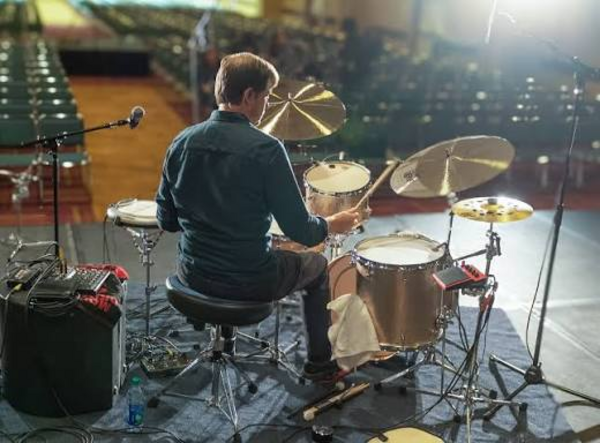
 Spencer Smith uses DW Collector's Series Drum Kit
Spencer Smith used a DW Collector's Series Drum Kit on "This Is Gospel"

Submission status:
Needs Review28 minutes ago
Submitted by

layndin_laysch
Submitted by
layndin_laysch
28 minutes ago
via Photo
 Lindsey Jordan uses Catalinbread Talisman
In the provided image, Lindsey Jordan is using a Catalinbread Talisman.

Submission status:
Needs Reviewabout 3 hours ago
Submitted by

arlene_nguyen
Submitted by
arlene_nguyen
about 3 hours ago
via Photo
Lindsey Jordan uses Xotic Effects EP Booster
In the provided image, Lindsey Jordan is using an Xotic Effects EP Booster.

Submission status:
Needs Reviewabout 3 hours ago
Submitted by
arlene_nguyen
Submitted by
arlene_nguyen
about 3 hours ago
via Photo
Lindsey Jordan uses Boss BD-2 Blues Driver
In the provided image, Lindsey Jordan is using a Boss BD-2 Blues Driver.

Submission status:
Needs Reviewabout 3 hours ago
Submitted by
arlene_nguyen
Submitted by
arlene_nguyen
about 3 hours ago
via Photo
Lindsey Jordan uses Walrus Audio Julianna
In the provided image, Lindsey Jordan is using a Walrus Audio Julianna.

Submission status:
Needs Reviewabout 3 hours ago
Submitted by
arlene_nguyen
Submitted by
arlene_nguyen
about 3 hours ago
via Photo
Lindsey Jordan uses EarthQuaker Devices Palisades Mega Ultimate Overdrive V2
In the provided image, Lindsey Jordan is using an EarthQuaker Devices Palisades Mega Ultimate Overdrive V2.

Submission status:
Needs Reviewabout 3 hours ago
Submitted by
arlene_nguyen
Submitted by
arlene_nguyen
about 3 hours ago
via Photo
 monophreak reviewed Roland TR-626 Rhythm Composer
Great in 2026 due to the mods.
Really enjoying the TR-626. After research, I wasn't going to go for it initially because I heard mixed feedback about the stock sounds. However, this can be overcome through the HKA mod and custom ROM writing tools. It makes the TR-626 really solid. I was attracted to it due to the ability to pitch sounds up and down and adjust volume for a basic mix. The pitch shifting adds in nice artefacts and aliasing which gives it some lovely 12 bit character. Custom ROMS give you some space to pre-EQ some drums before they are triggered which helps when it hits my mixer. I liked it so much that I decided to add it into my workflow and I created the Raymond Transistor 6 editor to handle global pitch and volumes so that I could easily save and recall settings on a song by song basis, without tedious menu diving.
2 hours ago

 yumenokumo reviewed Mad Professor Double Moon Modulation
This is the only pedal I've been actively angry about. If the control (feedback) knob is dimed out when you flip to a flanger setting, God help you. I had headphones on at a moderate volume and it lit up so fast that my ears have been damaged ever since.
2 hours ago

 hojaldre reviewed Yamaha CX40 II Classical Electro Acoustic Guitar
Rock-Solid Yamaha Craftsmanship Holding Back a Weak Passive Pickup
The Yamaha CX40 II is essentially the electrified counterpart to the iconic C40 classical guitar, offering the exact structural consistency, comfort, and projection that Yamaha is famous for worldwide. As an acoustic instrument, its neck profile is remarkably forgiving, providing exceptional playability and rock-solid tuning stability that punch well above its price tag.
The primary limitation of this model resides in its factory passive pickup system. Featuring only basic volume and tone controls without an active preamp, the plugged-in tone lacks headroom, dynamic range, and output level when compared to modern standards. However, because the underlying acoustic foundation and wood construction are so well executed, retrofitting this guitar with an active aftermarket preamp module, such as a Fishman system, completely transforms it into a highly capable studio and stage classical instrument.
2 hours ago

hojaldre reviewed Epiphone Les Paul 100
Flat-Top Utility: A Minor Functional Upgrade Over the Special II
The Epiphone Les Paul 100 sits in an interesting spot within the entry-level market. Contrary to what its name might suggest to a beginner, this is not a carved-top Les Paul, featuring instead a completely flat slab body with no archtop and no fancy flame veneer. In terms of physical construction and bolt-on neck design, it remains fundamentally very similar to the Special II.
Its main selling point and primary advantage over the Special II lies in its control layout, since it offers the traditional four-knob setup with two volume and two tone controls, allowing for proper pickup blending in the middle position. Beyond that, the stock ceramic humbuckers and factory hardware keep it firmly anchored in the budget category. It is a decent, functional workhorse that gets the job done for beginners, but it is ultimately a basic instrument without anything truly extraordinary to offer
2 hours ago

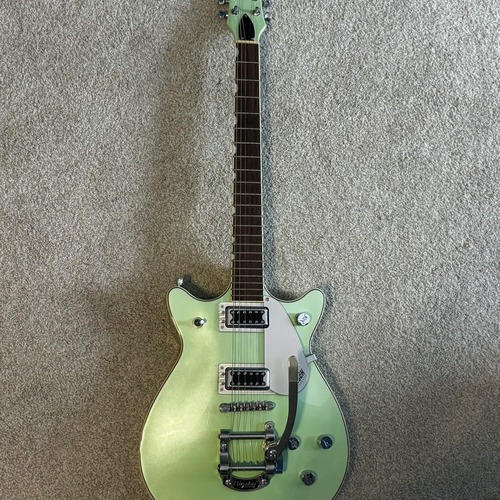
Community Setups
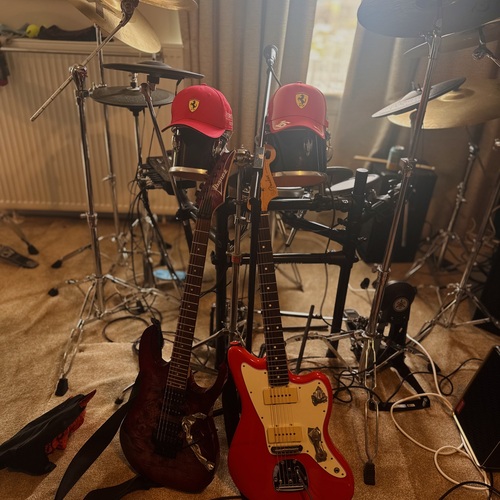
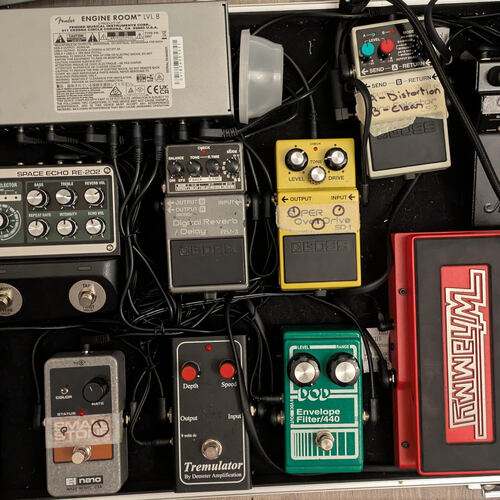
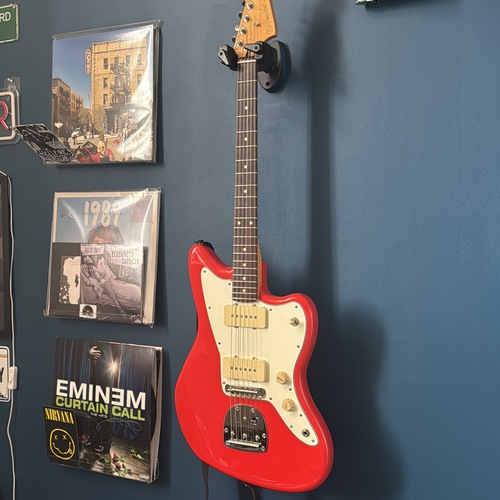
Explore guitar rigs, studio kit and more Show your setup.

.jpeg?v=1785087848)

Discussion Forum
Latest posts from the community.
Hey Alex , du hast Moderator Status.
"And how do I delete an uploaded picture for an instrument if I found a better one?"
- Just Edit the Gear , Like Add Description or whatever
- Do Add the 1st Cover Picture there on Top under "Choose photo"
- Add Following pictures under "Add more images" in Blue Color under "Choose photo" New Window will Pop-up for that. There you can also Delete images.
- On the bottom of the Page , add "improved Image" and Save - Ready
When an Error Appears , was the Picture in wrong Size or Format , then you need to change that on your PC with Photoshop or in the Web with an Image Editor or whatsoever.
If the Cover Image was not replaced , and is suddenly Empty , just repeat it on Top under "Choose photo" ones more .... and it should appear.
Simply take the first picture under "Choose photo" again if it doesn't appear; this will replace it.
Other images that follow are under "Add more images." There are small trash can icons there, which you can also use to delete images.
Always add bands first... here: https://equipboard.com/pros/select
Make sure it's spelled correctly, as this cannot be changed later. Or needs an Admin.
Then add artists, also here: https://equipboard.com/pros/select
Attention! A list of known artists will appear; they should be included from a database. Select the correct artist. You can also open the link and check what they've done; that's how you can identify them.
If the artist isn't listed, they are either not known to the database or not successful enough. A decision will then be made regarding their inclusion, which can take a very long time, sorry.
Once you have the band and artist information, go to "Edit artist details" for the artist. It's in the small top right corner.
Once you have the band and artist information, go to "Edit artist details" for the artist.
... And under "Bands & Groups" > "Add bands & groups to BlaBla Blaaa" you can enter the band or bands in which the artist is a member. They should pop up as soon as you type, once they've been created.
For text, you can use the following... Text followed by two spaces -> Cuts text and Jumps to the next line AsteriskAsteriskTextAsteriskAsterisk -> 2 Asterisk before and after Text makes text bold For lists, use the dot here (•).
Note: Some things are only available after reaching a certain IQ level, but this doesn't apply to you with "Moderator" status.
Einfach das erst Bild unter "Choose photo" wenn es nicht kommt nochmal machen, das ersetzt es einfach. Andere Bilder die folgen unter "Add more images" da gibt es kleine Icons Mülltonne kann man auch Bilder Löschen.
Bands immer zuerst .. hier: https://equipboard.com/pros/select Achtet darauf das es richtig geschrieben wurde, dies ist dann nicht mehr zu ändern.
Danach erst Künstler auch hier: https://equipboard.com/pros/select
Achtung ! Dann kommt eine Liste bekannte Künstler sollten drinne sein aus einer Datenbank, richtig den richtigen Künstler auswählen , den Link kann man auch aufmachen und überprüfen was derjenige gemacht hat , daran erkennt man es.
Wenn der Künstler nicht dort steht , ist er der Daten Bank nicht bekannt oder nicht erfolgreich genug, dann wird entschieden ob er dazu kommen darf , kann sehr lange dauern , sorry.
Wenn du die Band hast und Künstler, beim Künstler unter "Edit artist details" gehen das ist rechts klein oben. und unter "Bands & Groups" Add bands & groups to BlaBla Blaaa kannst du die Band oder mehrere Bands eintragen in dem der Artist dinne ist, die sollte Auf-Popen wenn sie erstellt wurde sobald du tippst.
Zusatz: Es gibt manche Sachen die kann man erst ab einen bestimmte IQ Punkte machen, das betrifft dich mit "Moderator" Status aber nicht. Wenn Du als Moderator Sachen besprechen möchtst , kann du auch das Form Mod benutzen.
Für Text kann man folgendes benutzen...
Text und danach 2 mal Leerzeichen -> Spingt dort die Zeile
SternchenSternchenTextStrenchenSternchen macht Text in Fettschrifft also sogesehen mit 2 mal Sternchen davor und dahinter umklammern.
Für Aufzälungen den • Punkt verwenden oder zur Not geht auch -


Counter of items on custom lists not updating
Thanks for chiming in. I've heard of this happening to others before.
I can't promise anything, but your timing might be good -- lots of site-wide updates lately.
Is anyone else still experiencing this counting issue with their custom lists?


Should acoustic guitar amplifiers be a category?
IMO yes they should be, as the voicing is generally quite a bit different than an electric amp. Also, they will have features like feedback control since this is a big issue with amplifying acoustics. The reverb on acoustic amps a lot of times will run in parallel with your tone because that works better with acoustic, and I don't think electric amps generally do that. There are also brands like Fishman that I believe only make acoustic amps. My .02!


