Join music gear discussions on Equipboard. Talk about guitar gear, electronic music production, get help identifying gear, ask for feedback on your music, suggest ideas to improve Equipboard and more.

Daft Punk's Behringer Compressor: Let's Finish This.

okay great but where's my history of the composer line? every model and everything you can find on them, there may be more than 3 variants! I know you can do it even though behringer doesn't have a legacy product page I can find on their site. You're a lord of googling gear. GO!

When i'm done this monotonous dirge of a jam by a hardcore punk band that shouldn't play at less than 130bpm I'll be back and looking for it

GEAR:
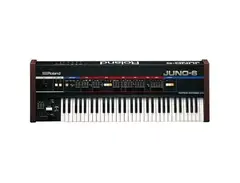
  • Roland Juno-6
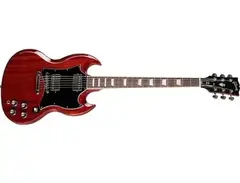
  • Gibson SG Standard
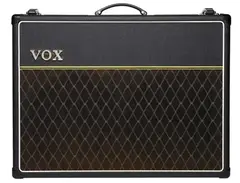
  • Vox AC30 Guitar Combo Amp

okay great but where's my history of the composer line? every model and everything you can find on them, there may be more than 3 variants! I know you can do it even though behringer doesn't have a legacy product page I can find on their site. You're a lord of googling gear. GO!

When i'm done this monotonous dirge of a jam by a hardcore punk band that shouldn't play at less than 130bpm I'll be back and looking for it

1999 Sound on Sound review of the MDX2200, which affirms 2000 and 2100 as the only possible models: https://www.soundonsound.com/reviews/behringer-mdx2200-composer-pro

Behringer MDX2100 Legacy Product Page: https://www.behringer.com/product.html?modelCode=P0001

July 1992 MDX2000 ver. 2.1 manual cover (copyright 1993), confusingly followed by the contents of the 2100 manual: http://www.tanderud.se/pdf/Behringer%20MDX2100.pdf

GEAR:
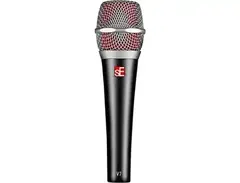
  • sE Electronics V7
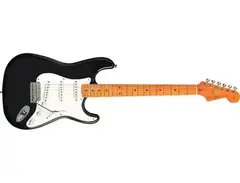
  • Fender Vintage Series '57 Stratocaster
  • Blank slot

Behringer MDX2100 Legacy Product Page: https://www.behringer.com/product.html?modelCode=P0001

where the hell is that page, damn, I was looking 2 days ago and kept winding back around to current products

GEAR:
  • Roland Juno-6
  • Gibson SG Standard
  • Vox AC30 Guitar Combo Amp

March 1995 version 2.2 MDX2100 Manual: https://www.manualslib.com/manual/1013218/Behringer-Composer-Mdx-2100.html

GEAR:
  • sE Electronics V7
  • Fender Vintage Series '57 Stratocaster
  • Blank slot

ah ha, the search, but they don't have an entry for the mdx2000

GEAR:
  • Roland Juno-6
  • Gibson SG Standard
  • Vox AC30 Guitar Combo Amp

damn this is an impressive display of web digging to my 40+ year old eyes.... I gotta get back to it, this last track must be mixed and I have to draw the 1st issue of Stick Insect Dick or at least do the layout

GEAR:
  • Roland Juno-6
  • Gibson SG Standard
  • Vox AC30 Guitar Combo Amp

Behringer’s “Our Story” page: https://www.behringer.com/our-story.html

1992

COMPOSER MDX2000

The best selling compressor ever, from that time all 19" units had the new enclosure design and were Made in China, more COMPOSER models will follow. Being a visionary and entrepreneur, Uli Behringer investigated and discovered many of the large-scale electronics manufacturers had invested in automation,which yielded lower operational costs and provided for mass production. The MDX2000 COMPOSER, another milestone in Behringer’s goal to bridge the gap between pro audio and consumer electronics, was the first product designed for large scale production in China. With several successor models to follow, the COMPOSER quickly became the best selling compressor of all time.

GEAR:
  • sE Electronics V7
  • Fender Vintage Series '57 Stratocaster
  • Blank slot

Here’s my current verdict: since Daft Punk did not officially become Daft Punk until 1993 and the MDX2000 seems to have been phased out by then, it’s most likely the MDX2100. The bottom right photo in Exhibit A is dated 1996 and Exhibit B is dated 1999.

French version of the 2.2 manual: https://medias.audiofanzine.com/files/mdx2100-473566.pdf

GEAR:
  • sE Electronics V7
  • Fender Vintage Series '57 Stratocaster
  • Blank slot

Mr. Holtz, welcome to the thread. Thank you!

I gotta say, those old archival image sites and the # of old Behringer docs you've wrangled into this thread is incredible and much appreciated.

Jim, your deep knowledge on dynamics processing, and your usual generosity in helping me with this crazy quest is essential and much appreciated as well.

Cheers to you both for showing all visitors what is so great about this site. :)

GEAR:
  • Roland TR-808 Rhythm Composer
  • Roland SH-101
  • Roland TR-909 Rhythm Composer

phased out means it was really cheap used, they were all about cheap.... beck then 106es for isntance went for PEAnuts, the mackie CR they ahd is a cheap piece of crap.... they went bargain basement

GEAR:
  • Roland Juno-6
  • Gibson SG Standard
  • Vox AC30 Guitar Combo Amp

Here’s my current verdict: since Daft Punk did not officially become Daft Punk until 1993 and the MDX2000 seems to have been phased out by then, it’s most likely the MDX2100. The bottom right photo in Exhibit A is dated 1996 and Exhibit B is dated 1999.

They were in bands before Daft Punk, so either of them could have brought some gear into the picture well before forming. I mean all those old Roland boxes were already 10 years discontinued when they started. They knew how to buy used gear, for sure :)

GEAR:
  • Roland TR-808 Rhythm Composer
  • Roland SH-101
  • Roland TR-909 Rhythm Composer

They were in bands before Daft Punk, so either of them could have brought some gear into the picture well before forming. I mean all those old Roland boxes were already 10 years discontinued when they started. They knew how to buy used gear, for sure :)

yeah man, I groaned when I bought a new drawmer stereo mastering EQ, full price? NO! but I thought I needed it and no one sells them so.... there's this new shiny gear syndrome going on amongst many and an idea that vintage pricing has always been, but its not so.... and some pieces like a behringer never trade for their new price, which was not much to begin with! you know it sucks so why pay 100 bucks (or however many francs) when you can go half price on last years model? at the time everything they had was still considered by many to be outdated junk or cheap newish junk for amateurs.... it was cheap junk that they mastered! the composer still is that, noisy piece of crap, but when you need 2 more channels of basic compression its an option that won't keep you from paying the rent. I can see that even the daft punk connection ahs failed to glamorize this piece of shit although they along with tape op disseminated the idea that the 3630 is solid when you clip the gate circuit out and they trade for 3 figures now which is hysterical

GEAR:
  • Roland Juno-6
  • Gibson SG Standard
  • Vox AC30 Guitar Combo Amp

Jim, your deep knowledge on dynamics processing, and your usual generosity in helping me with this crazy quest is essential and much appreciated as well.

thanks but I'm no match for the Holtz Effect, this guy's an internet deep dive monster.... he gets deep and slays the kraken of something or other, my metaphor is falling apart.

I can't believe how hard it was to make a mix of this last track, it just doesn't fit the record, I hoenstly thought it was an outtake last night only to be told it was going in with the others and to quick finish it.... I also notice on the last track that one of my lexicons was patched in reverse stereo for a the first bunch of cuts LOL.... its barely in and mostly is mono but all the drums with a taste of it are mirrored in the small room patch LOL Think anyone will notice?! Always check your patchbay wiring thrice, twice don't cut it my friends.

GEAR:
  • Roland Juno-6
  • Gibson SG Standard
  • Vox AC30 Guitar Combo Amp

Jim, your deep knowledge on dynamics processing, and your usual generosity in helping me with this crazy quest is essential and much appreciated as well.

thanks but I'm no match for the Holtz Effect, this guy's an internet deep dive monster.... he gets deep and slays the kraken of something or other, my metaphor is falling apart.

All I'm doing is keyword searching in Google. Quotation marks for the words you want specified, minus for the ones you want omitted.

GEAR:
  • sE Electronics V7
  • Fender Vintage Series '57 Stratocaster
  • Blank slot

All I'm doing is keyword searching in Google. Quotation marks for the words you want specified, minus for the ones you want omitted.

is that how it actually works? I gave up all that syntax searching ages ago as google always seemed to spit back crap anyway

GEAR:
  • Roland Juno-6
  • Gibson SG Standard
  • Vox AC30 Guitar Combo Amp

All I'm doing is keyword searching in Google. Quotation marks for the words you want specified, minus for the ones you want omitted.

is that how it actually works? I gave up all that syntax searching ages ago as google always seemed to spit back crap anyway

GEAR:
  • Roland Juno-6
  • Gibson SG Standard
  • Vox AC30 Guitar Combo Amp

All I'm doing is keyword searching in Google. Quotation marks for the words you want specified, minus for the ones you want omitted.

Take the compliment, Tom! :D

GEAR:
  • Roland TR-808 Rhythm Composer
  • Roland SH-101
  • Roland TR-909 Rhythm Composer

let it be known I'm leaning towards the MDX2000, I'll ebt music stores in germany and france were littered with used ones at the time, probably still are, they never break

GEAR:
  • Roland Juno-6
  • Gibson SG Standard
  • Vox AC30 Guitar Combo Amp

let it be known I'm leaning towards the MDX2000, I'll ebt music stores in germany and france were littered with used ones at the time, probably still are, they never break

Interesting write-up from a seemingly-knowledgable owner of both units:

http://beden.si/studio/reviews.html

Behringer Composer MDX 2000/2100

"If you're into the lower end of the pro audio market, you might be aware of the distinction between old Behringer gear, which was supposedly OK, and new stuff, which is regarded as "Pro" in name only. Having owned a number of units from both eras, I can say that this is only a general guideline, but it does apply when it comes to the compressors, where the MDX 2000/2100 Composers (the review is for both units, since they're in most respects very similar) do seem to outperform the later Composer Pros."

"The first clue that the Behringer Composer might be a decent compressor is the build quality, which is very solid. The front panel is made out of machined aluminium, the rest of the chassis is made out of steel, the knobs feel sturdy, and while the jack sockets are soldered directly onto the PCB, I haven't had any failed or intermittent connections with the three units that I've had. It's also quite well-specified: it's got an expander/gate with variable release time, an auto mode, and a limiter. The feature that I was most impressed, however, was the failsafe relay operation meaning that if something goes wrong with the compressor, the audio still gets passed through, which is something even some much more expensive and revered units can't boast, and which, together with the reliability that I have experienced, makes the Composer perfectly viable for less demanding live tasks."

"The main reason why the Composer can't take centre stage either in live or in studio work is, to put it bluntly, its second-rate sonic performance. Neither the MDX 2000 nor the 2100 are able to cope with signals that either have strong transients or a lot of bass, let alone those combining the two, e.g. kick drums. Given its reputation, some people wouldn't use it on anything, but I felt that with a bit of care, it was very transparent on vocals and acoustic guitar, though it has to be said that the Really Nice Compressor comfortably outperforms it on both as soon as ratios beyond 5:1 are required. Still, the price difference between the two is significant and if you need several channels of non-critical compression, you might appreciate what the Composer can do for you at some 20 euros per channel (and it does dual mono, which the RNC doesn't)."

"In fact, the MDX 2000 is rather better at dual mono operation since there is a documented but rarely mentioned bug in its stereo link implementation. The problem is that the left channel truly is the master channel, not only for the controls but also for the internal sidechain. In other words, the right-channel signal doesn't affect the compression at all, which is a serious oversight that can be downright dangerous under unpredictable circumstances. You could be having deafening amounts of feedback on the right channel but as long as the left channel wasn't affected, the MDX 2000 wouldn't act upon it. The only way to get around this is to sacrifice an aux send to do a mix of both channels and use it as the external sidechain control, which is obviously a bit of a bummer."

"The MDX 2100 isn't without design flaws, either. For some reason, its headroom is significantly lower than the MDX 2000's, which means that even with the limiter turned off completely, it will use the compression circuit to auto-limit the incoming signal. There is no way to prevent this, not even with switching to external keying, which should in theory completely divorce the program from the control path. I tested this when I was trying to use the MDX 2100 as a bass ducker to make some room for the kick, but instead, it began to compress the bass. When I switched back to the MDX 2000, the problem was gone (and yes, I checked the -10/+4 input setting)."

"The feature speaking strongest in favour of the Behringer Composer today is the price. They rarely sell for over 50 Euros, and if you know what you're getting them for, you can't really do much better than that. The old Composers can definitely match the Samsons, the Phonics, the Alesis 3630, and Behringer's own later offerings, and even surpass them in certain regards, such as transparency."

If the MDX2100 has a design flaw that compromises it's ability to duck a bass to make room for a kick drum... then I'm leaning MDX2000 too.

GEAR:
  • Roland TR-808 Rhythm Composer
  • Roland SH-101
  • Roland TR-909 Rhythm Composer

"In fact, the MDX 2000 is rather better at dual mono operation since there is a documented but rarely mentioned bug in its stereo link implementation. The problem is that the left channel truly is the master channel, not only for the controls but also for the internal sidechain. In other words, the right-channel signal doesn't affect the compression at all, which is a serious oversight that can be downright dangerous under unpredictable circumstances. You could be having deafening amounts of feedback on the right channel but as long as the left channel wasn't affected, the MDX 2000 wouldn't act upon it. The only way to get around this is to sacrifice an aux send to do a mix of both channels and use it as the external sidechain control, which is obviously a bit of a bummer."

"The MDX 2100 isn't without design flaws, either. For some reason, its headroom is significantly lower than the MDX 2000's, which means that even with the limiter turned off completely, it will use the compression circuit to auto-limit the incoming signal. There is no way to prevent this, not even with switching to external keying, which should in theory completely divorce the program from the control path. I tested this when I was trying to use the MDX 2100 as a bass ducker to make some room for the kick, but instead, it began to compress the bass. When I switched back to the MDX 2000, the problem was gone (and yes, I checked the -10/+4 input setting)."

"The feature speaking strongest in favour of the Behringer Composer today is the price. They rarely sell for over 50 Euros, and if you know what you're getting them for, you can't really do much better than that. The old Composers can definitely match the Samsons, the Phonics, the Alesis 3630, and Behringer's own later offerings, and even surpass them in certain regards, such as transparency."

If the MDX2100 has a design flaw that compromises it's ability to duck a bass to make room for a kick drum... then I'm leaning MDX2000 too.
Great find! Reading the 2.1 2100 manual, it seems that the expander was changed and made independent and a true stereo configuration was added.

GEAR:
  • sE Electronics V7
  • Fender Vintage Series '57 Stratocaster
  • Blank slot