Join music gear discussions on Equipboard. Talk about guitar gear, electronic music production, get help identifying gear, ask for feedback on your music, suggest ideas to improve Equipboard and more.
The elusive Yamaha MP-1

-s.webp?v=1783318437 "Roland TR-808 Rhythm Composer")
-s.webp?v=1783349885 "Roland SH-101")
-s.webp?v=1783349877 "Roland TR-909 Rhythm Composer")
Until Ableton Live supports staff notation, there's always this stopgap:
https://youtu.be/6b4jUqNpUzA?t=814

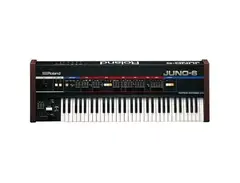
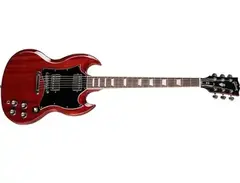
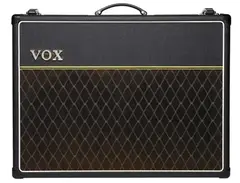
Lololol, as long as print receipts and adding machines are used in retail, this keyboard is a real winner, why didn'tit catch on?!!!!!
I'm doing this mix for ThCraymer and he's in ableton. I haven't opened it in awhile and I get into his project and remembered how much I loathe it. Kids who start out in ableton are only learning to use the ableton ecosystem. It's nothing like any other daw or hardware and some of the stock tools, though useful, have senseless, intentionally idiosyncratic GUIs and parameter names. And the latency handling is the worst. If you're not doing a lot if loop stretching it's just crap. A toy. Others will be offended and I'm sorry, but it's not a comprehensive recording solution. Its gimmicks are available in other platforms now, they sound just fine l, they're just buried under menus because the really useful bread and butter features are out front, laid out in a way that mirrors a classic analog studio and the focus is on low latency and timing accuracy for actually recording records. Learning ableton isn't learning music production, it's just learning ableton, which is more of a big fancy dance music instrument. I really don't iunderstand ableton's spread in popularity outside that target market.
This is also mostly true of flstudio but it can be made to handle latency better and really use your modern interfaces speed. Ableton struggles. Both suffer from a needlessly idiosyncratic gui (although live is comparatively streamlined as it wasn'tbuilt piecemeal on a win95 virtual akai mpc)... but I'll get off my soapbox.
Lololol, as long as print receipts and adding machines are used in retail, this keyboard is a real winner, why didn'tit catch on?!!!!!
Ha! I don't know what one is supposed to do with a 4-bar slip of paper containing a Portasound-composed phrase, but I am seriously impressed with the layout and print quality of that thing. It's not easy to make staff notation beautiful at that resolution. The end product is disposable, but they're pretty little pieces of litter, at least.
I'm doing this mix for ThCraymer and he's in ableton.
You're a real mensch, Jim. I love that you're doing a mix for him.
And [Ableton Live's] latency handling is the worst.
Are you saying the total roundtrip latency achievable in Live is inferior to what other DAWs can do on the same system with the same audio interface, or are you referring to the way Live handles per-track delay compensation for live-input recording? It's been years since I've used another DAW to record live audio, help me understand how Live is less-than on this front. I'm curious to know you findings.
If you're not doing a lot if loop stretching it's just crap. A toy.
Ha! It really seems that nobody cares much about the loop stretching in Live in 2023, every DAW can do it well now, or so I gather, so decent loop stretching has become basic table stakes. There's a whole generation of more-recently-minted producers that use Live everyday, but barely touch Session view. I can't even remember the last time I saw a YT video in which someone used Session View.
I, like you, remember when using Live as your primary DAW was pretty much a non-starter, and Live was mostly seen as a tool for live DJ/electronic performance and perhaps as a "sketch pad" for song ideas that you'd then export to PT, Logic, or DP to arrange and mix... which, was what it was originally designed for, if memory serves.
The end product is disposable, but they're pretty little pieces of litter, at least.
It's crazy how nice it looks. I really wish they would revive this idea! Just maybe with nicer paper?
I'm doing this mix for ThCraymer and he's in ableton.
You're a real mensch, Jim. I love that you're doing a mix for him.
Its been pretty fun. I'm about ready to mix now. I went to town flying in real drums and I've been reamping his DI guitars... he had this ambience going with ableton plugins that I had fun exceeding last night using a my space echo sandwiched between some lexicon... that was a wine slugging good time. I may have spent awhile just making freaky sounds for no reason too lol
My son's hone with a sports injury today so I had to halt production til monday. Kids are noisy and I still have 2 parts to reamp with open microphones.
And [Ableton Live's] latency handling is the worst.
Are you saying the total roundtrip latency achievable in Live is inferior to what other DAWs can do on the same system with the same audio interface, or are you referring to the way Live handles per-track delay compensation for live-input recording? It's been years since I've used another DAW to record live audio, help me understand how Live is less-than on this front. I'm curious to know you findings.
Yup. I can get my roundtrip under 10ms in protools and cubase even with a pile of plugins. Not so in Live... and all the latency compensation occurs in the master section rather than on a track per track basis.
EDIT: so for example let's say I set up a bus compressor on an aux, hardware or software... in live that parallel compression will be out if phase by the number if samples the plugin takes to do its dsp work or the roundtrip latency in and out if the interface to send and return to hardware. In protools and cubase when the plugins report latency ir you check the roundtrip on a hardware insert they correct everything automatically at the track level (they've gotten so good at it that I don't mind mixing hybrid anymore)... live tweaks things in the master somehow and it never cones out right. This is true of a lot of daws actually. But that's a huge deal breaker for me. I need my timing to be exactly as recorded. Even a couple milliseconds is too much. Apart from parallel processing this us important because all if those little latencies from track to track are cumulative and can turn a great groove with some cool ambience into something that's hard to get to get. That's my 2 cents. I've been in some discussions about midi timing too and here's a place live performs well internally but gets weaker when sequencing hardware. Anyway, I also dislike all of the stock plugins for one reason or another. And I want a channel strip available with filters, gain staging etc. Protools lacks some channel strip features too and it drives me batty... I shouldn't have to insert a gain plugin to get a little trim or boost pre-fader... or fool with gain levels in a sub menu. I want basic mixer functions available in my mixer all the time. Live is a tool made by technokrauts and it feels that way. There are things that are so cool about it and it looks sleek and modern but it's also very limiting and and and also time consuming to use in ways other than the technokrauts intended you to use it. I don't want my tools dictating the way I'm going to do my work.
Ha! It really seems that nobody cares much about the loop stretching in Live in 2023, every DAW can do it well now, or so I gather, so decent loop stretching has become basic table stakes. There's a whole generation of more-recently-minted producers that use Live everyday, but barely touch Session view. I can't even remember the last time I saw a YT video in which someone used Session View.
I have no clue how people use this jawn. Not saying live is useless but I can't guess what a workflow would be like using just live for a professional grade production unless its hip hop or dance music. It has a really nice time stretching algorithm that's faster to get results from than other daws but it's not really worth it to use it when you trade a lot of other functionality... it's got uses but it's not a great system to take every style of music through to a finished mix. It'll fight you making a rock record.... takes 10 times longer to do everything than in say mixbus.
Yup. I can get my roundtrip under 10ms in protools and cubase even with a pile of plugins. Not so in Live... and all the latency compensation occurs in the master section rather than on a track per track basis.
I appreciate you taking the time to cite detailed examples, Jim. Thank you.
I have been pushing myself to develop a better, more granular understanding of all the ways each of the major DAWs handle PDC. I'm up in it with a magnifying glass as of late and your system-level, studio-honed perspective is much appreciated. You're pulling me back to reality.
As an example, I've been going through popular plugin synths that add additional latency, like U-He Diva, and researching why the devs chose to give themselves an additional buffer. In the case of Urs Heckman's stuff, he states (via KVR ):
"I process everything in blocks of 16 samples. This allows me to do optimisations that otherwise would easily yield 2-3 times the cpu usage for the same algorithm.
Why do I need latency for this? - Because some hosts are so "smart" to outsmart badly designed plugins and process them at irregular buffer sizes. If every host would just use geek-friendly 16-float aligned buffersizes such as 32, 64, 256, 512, 2048 then there would not be a need for any latency."
(Urs and his team are top-shelf DSP Engineers, IMPO, so I knew the reason would be interesting)
For something like a compressor with a look-ahead feature, yeah, it's inherent in the design -- I don't need to scratch my head over why those add an additional buffer, but instruments and effects that don't need to analyze/look-ahead, but still have a supplemental buffer are a current curiosity.
Anyway, re: DAW differences, yeah... DAWs differ. lol. I am always curious to hear other people's grievances and observations re: DAW vs. DAW, as I always learn something good from them, but as far as my own opinions go, I'm enjoying my current state of neutrality -- judge me as needed.
I just call em as I see em. I'm not offended by latency I knowingly add with a plugin or whatever... I want my daw engine to work smoothly with my interfaces to achieve the lowest latency my system can provide so I know I have a good starting point... and I need latency compensation to be accurate with U-He quality plugins OR badly coded ones that don't properly report latency. All summing points MUST be in phase no matter how long some of the delays. It's the host's responsibility to handle all this well.
... All summing points MUST be in phase no matter how long some of the delays. It's the host's responsibility to handle all this well.
No disagreement on my end. Thankfully there are some good DAWs out there that do handle this well.
Yet another tangent: have you been able to try out UA Luna? I haven't given it a spin yet, mostly because I'm not who they are aiming for right now, but the virtual tape deck/idea pad approach is intriguing.
I feel like Luna is probably like a slicker version of studio1; to really get ty he most out of either you need to go all in on UA or presonus hardware. Deep integration is the big feature on these type of platforms. They might be great, but it's a way to force you into only shopping one company's products instead of trusting your ears and the specs. That's a commitment I can't make. And I don't need to. I use any daw more as a an advanced editing platform and tape recorder (that doesn'tmean I want it to sound like a tape recorder, I want NO sound from the media)... integration with some sort of dsp in my interface isn't all that tempting. Next gen 32bit converters are more important to me. They (ua) make a lot of bold claims like being the only daw with analog sound built in which is utter bullshit. Its still digital and mixbus also uses a similar approach. I have always been turned off by the marketing hyperbole the modern managers of UA throw out there.
YMMV.... Luna does have an enticing gui lol. That matters to a lot of folks.
EDIT: I don't really care aboutlooks. I need sample accurate editing and sample accurate latency handling. Once i deem something ready to mix I'm not really looking at the DAW anymore. I don't color code tracks or even look at the bullshit DAW meters much once everything is gain staged to my satisfaction. You don't see music. Looking at the computer too much busses your ears to listen for what you see in the waveforms. It's a big distraction from making things sound cool. Even analog metering can take you off course. If I start worrying about how many red lights are going off it takes my mind off the song. This is not to say that everything can be red lined with impunity on every production., but you gotta focus on the music and whether you're presenting in a way that's sympathetic. You do that with ears. Visual feedback from your tools is there to get you to a place where your ears can decide. It's there so if you hear something that jumps out as off or so wrong its super cool you can find out where it's coming from. It can then be corrected or replicated. When you start obeying your tools you're not making artistic decisions. One should be confident in their skill and taste. The daw is an awesome tool but it wants to tell you how to make music and it has to be resisted. Subverted even. Tape had lots of limitations we fought. Computers keep adding possibilities but using them sucks you into this really nonmusical place. I don't know anything though. I just know what works for me and the mindset that gets results that make me smile. I'm not terribly successful so maybe I ought to pay closer attention to trends and think more about the potential audience than I do. I'm usually just trying to please myself and hopefully the other people involved. I think the quality of my work is really dictated more by the qualities of the underlying material and how much fun I have listening to it.
I feel like Luna is probably like a slicker version of studio1; to really get ty he most out of either you need to go all in on UA or presonus hardware. Deep integration is the big feature on these type of platforms. They might be great, but it's a way to force you into only shopping one company's products instead of trusting your ears and the specs. That's a commitment I can't make.
I'm well aware of UA's historical business model of plugins locked to their own hardware... but they've been making recent strides in transitioning to native DSP like everyone else. This classic hardware-locked UA approach didn't work for my needs, but it always seemed a straightforward proposition that I never felt was executed in any kind of bad faith.
That said, now that Luna can run natively without any UA hardware, and UA has been porting some of it's previously hardware-locked plugins to native VST/AU/AAX, I am ignorant as to what remaining aspects of Luna still favor the UA ecosystem over any third-party offerings.
Ditto for Studio One, how does that one favor Persons hardware?
I mean, less Avid/Digidesign hardware is required to run full-fat ProTools in this day and age, as far as I understand, but do they still offer a zero latency mode that only works if their own DSP cards/modules are present? Heck, even Logic (pre-Apple, when it was cross-platform) used to have that extra-accurate MIDI timing protocol that only worked with eMagic interfaces.
I have always been turned off by the marketing hyperbole the modern managers of UA throw out there.
I'm not that familiar with much of their marketing message, as I'm outside of their radar, but marketing in the MI space, in general, is a challenging needle to thread. We are a VERY tough crowd to please. Even the positive and open-minded among us are career haters by the rest of the world's standards.
Is there anyone in MI, in your opinion, that does Marketing right?
YMMV.... Luna does have an enticing gui lol. That matters to a lot of folks.
Luke had to turn off his targeting computer and trust his feelings to blow up the Death Star... seemingly the only lesson from those movies the western world refuse to embrace and internalize.
EDIT: I don't really care aboutlooks. I need sample accurate editing and sample accurate latency handling.
Getting to work at the per-sample level was one of the things that really appealed to me about using computers for music back in the 90s. The first time I opened up a .wav file in Sound Forge and zoomed allllll the way in, I was hooked. 1/48,000 of a second is an eternity to a modern CPU... whole worlds can be built and destroyed and built again inside the space of 1/48,000 of a second. It's a lifetime. It's multiple digital grand canyons. I mean, isn't that what the OG Tron was trying to tell us?... that the whole "tron world" portion of the movie takes place within a blink of a human eye? The idea that I have to sacrifice hundreds of samples and several milliseconds to get what I want (outside of any look-ahead type function) is painful, and the idea that we all have to wrap our heads around so many different iterations of this concept, across so my different contexts to make a track that is truly in-sync with itself in the way we want is equally rough.
I'm well aware of UA's historical business model of plugins locked to their own hardware... but they've been making recent strides in transitioning to native DSP like everyone else. This classic hardware-locked UA approach didn't work for my needs, but it always seemed a straightforward proposition that I never felt was executed in any kind of bad faith.
That said, now that Luna can run natively without any UA hardware, and UA has been porting some of it's previously hardware-locked plugins to native VST/AU/AAX, I am ignorant as to what remaining aspects of Luna still favor the UA ecosystem over any third-party offerings.
There's tight integration with the proprietary hardware on both of these, sort if like protools and eucon. I dont know that it's done in bad faith, it's just that I actively avoid ecosystems like that. It's a personal thing. If i encountered a client utilizing Luna or Studio1 I might rethink that but it hasn't happened yet. If I ever did a full integrated system I would probably get a used euphonix/avid s5 digital mixer and go 100% Protools on a $5k+ power mac. It crossed my mind at 1 point when a lot of post houses were selling their giant 5.1 mixers to go to the s6 control surface but I chickened out. Presonus offers a scaled down, budget version of that ecosystem with the studiolive line and studio1. I've just been burned by that sort of package before... you cited emagic and that was one time. I actually still have an emagic serial bus midi interface. That midi timing was tight... TIGHT
Anyway, my policy on trying new daws now is really needs based. If no one comes to me with projects in these upstart daws then I'm not going to worry about getting them. The only daw I don't have that us commonly used is logic. Since apple bought it I became rather snarky towards it. Couple that with the fact that I decided not to go back to team mac when I bought a new laptop and I guess I'm just not going to use logic and people will have to print stems. Otherwise the daws everyone uses are protools, ableton, cubase/nuendo, and a surprising number of home recordists use reaper as do a lot of budget friendly project studios in basements and garages and cold war era bunkers... I have yet to have a project come in that was done in anything but those 5 platforms. I've been tempted to get an entry level apple silicon iMac with logic just to make that a possibility. It's always better if I can open the project myself when I'm dealing with amateurs and logic always seems to be the choice of guys who are longtime mac users but are new to recording. If 8 did classical these days I would be looking at pyramix though.
All the stuff we're talking about is about to go out the window. Audio over IP is here and its changing everything. Theres of course Dante, but AVB is still alive and is taking a new form, Ravenna. Once the dust settles and mac and windows provide robust OS level support for audio over ip protocols the latency will just keep getting lower and only dsp processing will introduce anything audible. USB and even thunderbolt interfaces are about to go the way of pcie. The whole DSD thing is really taking off too but it hasn't been embraced outside of classical recording and audiophile consumer circles. Although tascam has been making a stereo master recorded with DSD support for tears now. I've been considering buying one so I can record my mixes at 2 sample rates simultaneously, 1 back to the daw and the other to the tascam. Occassionally I make a cassette pass too, just for giggles.