I really enjoy overloading the instrument input of the preamp in my univox stage echo with the delay off from recorded +4 line level signals, it's just a 4558 typething but for some reason it sounds really cool, especially on synths (some synths are hot enough to overload it live, they tend to be old analogs)... this is a cheap old magnetic platter echo that has a weird delay tone. Not terribly valuable. You get 2 weird fx for a couple hundred bucks. Really 3 fx, it distorts well and the delay time can be set short enough to do manual flanging which sounds righteous.
a distressor has a lovely drive section even when the compressor isn't doing anything. You can go from a little fatness to seriously hairy on most sources. Not cheap but useful and worth every penny.
I like hitting a neve or api hard... my soundcraft 400 has a raunchy drive when you whack it hard at any stage, even before actual distortion sets in cool stuff occurs, depending on whether you'rewailing the input, the fader amp via a hot signal into the insert return or youjust assign to a bus or aux and red line it, cool stuff happens in these type of 80s and 90s desks that you don't get from most new offerings in the budget range... for subtle saturation my soundtracs us better, the line inputs have a sweet spot when the clip lights are going that's really nice... the tape returns and aux returns less so... if you're thinking of buying a mixer, look at older ones with big power supplies if you want to saturate without the low end crapping out. A small Ramsa (panasonic pro audio dept) from the late 70s or a yamaha rackmount pm mixer can provide great saturation for under 500 bucks with multiple channels and summing.
I have good luck with the my summit compressor... with the compression knob down and the input gain up it makes a great saturation unit right into tube 9overdrive territory, a pro vla can do that too but it's less lush... there's a dirt knob and a 'tint' button on the overstayer stereo fet compressor that work great for adding thick harmonics with the compressor in or out and its stereo with dual ganged controls which is handy. A pro vla is pretty cheap. The 1 and 2 are both good. You also get 2 channels of tasty opto compression that handles bass well for a very reasonable price. Their tube MPA can saturate too... I forget if it has a line ine in but if you use a DI and drop the input signal from +4 to consumer -10 you should be low enough to avoid clipping the transformer much and hot enough to push the preamp...
you can also try overloading a passive di box but it'll take fiddling to get transformer saturation without peaks distorting. Only high end di boxes can take really hot signal, they're designed for about -20dbm, maybe -10 consumer line so +4 professional level thats over a volt at 0VU into 600 ohms and higher into a DI transformer that's hundreds of thousands of ohms is going to be way into distortion and will probably generate some undesireable noise too, so care should be taken with levels. If you're coming from a daw then your meters are against full scale and a lot varies from developer to developer so YMMV. You'll obviously have to loop a DI sognal back into a mic amp because the signal will be too low for a line input after it hits a 12:1 transformer. Obviously a balanced line signal will need cold grounded out in this situation because an instrument input is unbalanced. Any 600:600 line balancing transformer can be saturated, the cheaper ones have the highest THD at the lowest levels. You'll want to slap it in a box with jacks or look at a shielded model and build some pigtails... boxing is better, but a pain. Look for transformers with a full 50hz to 20khz or greater frequency range unless you want filtering and look for high thd figures. You're not shooting for fidelity with a Jensen lol. You want artifacts.
A valley dynamite can make an outstanding distortion if you know how to misuse it... and it's a swiss army knife of dynamics tasks with a no fuss set if controls and a crazily good detector circuit. A dbx 160x has good saturation but it takes a lot of signal. Both are really useful tools that can also generate harmonics. If you slam the input and gun the make up to saturate the output stage too, you will need a pad on the return or a wide gain range on the input of the next device.
Obviously anything all tube will tend to saturate well... and all the 90s joe meek gear leans that way even before you start abusing it. I'm a particular fan of the sc2 bus compressor. Very blown out saturated compression. If you've got a tape echo or even a good quality cassette deck, try wailing into it harder than intended for tape saturation, just be careful not to get the input circuitry distorting too hard. Anyway...
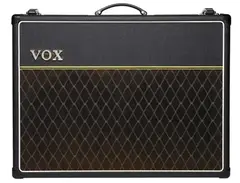
You can run anything into a guitar amp. One of my favorite tricks is to put a di with a pad between the amp and speaker rather than mic the speaker tone where I'm using the whole amp as a big saturation processor. It still needs that speaker load though, never operate a tube amp without a matched load.
I'll overload anything just out of curiosity.
Edit: Theres also those kits to build intentionally colored 500 series modules that can saturate even line signals in really purposeful ways. I think DIYRE makes them and they're called the "colour" series. If you can read a schematic and world a soldering iron you could buy 1 kit to try out and a cheap midas or fredenstein lunchbox to provide the 15v rails and if you don't like it sell them off. You can also build a great fet color box from Hamptone's jfet gain stage. The fets are getting hard to find but it's a really great sounding little preamp and the saturation is fat and gnarly. There's a tape op article with schematics and application notes. It's so simple that it can be made on vero or perf board in an hour. It dan run if a generic 24v wall wart. If you omit the voltage regulator circuit a single stage won't bias up perfectly and will be less linear which us what you're after.
You could throw together a colorsound powerboost/overdriver which has a wide studio type bandwidth, tons of discrete transistor gain and passive baxandall tone controls. Cheap. You could omit the footswitch for studio use. For line use you'll want to experiment with a reversed high headroom DI with a pad or a dedicated reampbut it should do cool stuff just yanking your interface output down...




-s.webp?v=1783318437 "Roland TR-808 Rhythm Composer")
-s.webp?v=1783436227 "Roland SH-101")
-s.webp?v=1783436217 "Roland TR-909 Rhythm Composer")