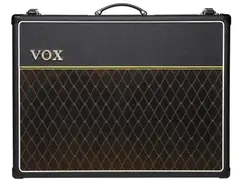
I'll get snobby here and say that between a CC or a C, the big difference is cabinet construction from what I gather, either come with wharfedale H30 ceramic style peakers or Blues as an upgrade, but anywho I've never met either I thought sounded good nor have I serviced one, many have been offered to me and I won't touch them because fully PCB tube amps are sketchy unless well spaced and double sided but add the tube sockets to the PCB rather than 80s style flying leads and you should just buy a new one or get a properly built amp. Okay, snob out ended (but there's heat based issues apart from snobbery here, its better vetilated than an old vox but its underventilated for board mounted hot parts). But its a touring durability thing for underfunded bands. Stay away from pcb mount tube sockets! And less ciruitry is more reliable unless its a frickin soldano. Anyway I think the big difference is that the CC series is baltic birch ply while the C is chipboard... a real AC30 from the best era is solid pine like a tweed fender. Later in the marshall era they do baltic birch ply like a marshall cab and those have sound too with their lower end mullard mustard caps and albion transformers, that's the u2 sound, but the badass ac30s are pine cabs, wima tropyfol caps, allen bradley resistors and haddon, radiospares and perhaps woden transformers if they'e not the wax insulated ones that melt, frickin woden, man!
Sorry, but I'm the amp tech here who is an ac30 expert. I know these amps like the back of my hand until the CC which is a doorstop, the C2 doubly so. Anyway, the big difference as I know it is the cabinet and plywood versus MDF is a big deal to me. MDF is cr@p for tone! And why does a tube rectified amp need a standby? I dunno! Unscience there!
I'm always at a loss why anyone would tour a chinese pcb vox on purpose, but that's me, I like reliability over replacability in amps and the reverse in pedals. Can it be proved to be an ac30cc2 vs ac30C2 by year? Maybe the photo predates the singleC version? Look at daes