Join music gear discussions on Equipboard. Talk about guitar gear, electronic music production, get help identifying gear, ask for feedback on your music, suggest ideas to improve Equipboard and more.

Happy New Year[Check our my first sound track in this new year]

https://soundcloud.com/nikhiljoshua/overcomenew-year-special

I will you all a very Happy New Year, :)

let me know how's the sound track 😄

where's the rest of the piece? its not done, just the first 2 minutes, right?

GEAR:
  • Roland Juno-6
  • Gibson SG Standard
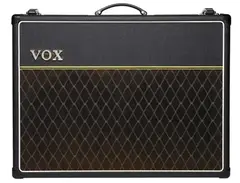
  • Vox AC30 Guitar Combo Amp

I regret telling this but, it's all I got 😶 I did that in 1 day to start the year with good music track...Well, the music I learnt it from a tut on youtube. Btw, I made it Studio One Prime.

take it down, write the rest.... great start... very soundtracky and well puttogether compositionally but it fails to develop. What you have is an intro. You could work that theme into 10 to 15 minutes of continuous music. And you should.... its Hans Zimmerish to the point of plajarism, but just to the edge of it.... ;-)

GEAR:
  • Roland Juno-6
  • Gibson SG Standard
  • Vox AC30 Guitar Combo Amp

Actually I was inspired by Hans Zimmer, I recently saw a documentary about him, It was very good. I saw that after I made that track though. I will look into more detail of the song now. But I need some resources or tutorials about this kind of music and writing...If you know any please let send it... 😄

its called school.... developing a theme int he classical style is something that only class can teach you unless you are Mozart

EDIT: its way outside the scope of a forum post for me to try to pass down my formal music education to you, I apologize... there are years of study of harmony and the interweaving of harmonic and melodic motifs to develop a piece that I would be hard pressed to explain in print.... class can often be a nonverbal meeting of the minds between the aspiring student and the experienced teacher....

its like Harry Potter and Hogwarts, so much rests within the mind and inhabits the world of ideas.... it helps to read music if you want to communicate with a potential teacher more rapidly, but some of it is just mystical and hard to explain

you have a good ear and a good feel for music and I daresay its a shame you were not nurtured earlier

GEAR:
  • Roland Juno-6
  • Gibson SG Standard
  • Vox AC30 Guitar Combo Amp

well, if you know any free e-book or something...like post me a link...anyhow I will try out something from my mind

this is not book work

for starters try to imagine the rhythmic motif established by your string arpeggiation across alternate harmonic forms... stick with triads by all means but vary.....

GEAR:
  • Roland Juno-6
  • Gibson SG Standard
  • Vox AC30 Guitar Combo Amp

I'm going to use my own music to illustrate the development and variation of theme again, sorrym butI knowwhat I did and why I did it

if you listen the 'chorus' section contains a repetitive motif with an open ended m6 harmony at the end that allows me to return to the 'verse' theme or to modulate in a few directions and in the end of the piece I continuously change the key of the theme without changing the motif to add interest and movement as well as a slowly gradating emotional 'shading', a movement of the sense of mystery as the arrangement changes register that tickles the ear until I gt bored and returned to another theme to close out

the verse is also intensely thematic, though it cycles keys and varies chord changes (harmonies) it follows a very set 4 bar motif

I apologize, but the track is not mixed nor is the synth programming done, its just a rough draft sequence I left off on to await further inspiration

GEAR:
  • Roland Juno-6
  • Gibson SG Standard
  • Vox AC30 Guitar Combo Amp

on your level here'ssomething I put together wen I was 16 or 17 using a dated sampler, 1st dition fruityloop for percussion and a sony minidisc recorder or ADAT, not sure...

GEAR:
  • Roland Juno-6
  • Gibson SG Standard
  • Vox AC30 Guitar Combo Amp

I lack the technical and theoretical background Jimmarchi1 has. What I do have is an ear that knows what it should listen for and can detect when things don't quite sound right.

Have you ever been watching a movie and during the scene when they are about to kiss, there is a sound like a duck looking for its ducklings?

Or have you ever watched a chase scene and heard the tinkling of a wind chime?

No. You haven't. Because the composer/ score writer understands what they are doing and what should/ shouldn't be included.

Be or BECOME aware of the sounds you choose. They should never DETRACT from what you are hoping to achieve. They should never COMPLIMENT what you are playing. They must BE the music.

The drums in this track require and deserve a presence. In this example you have provided, drum sounds are so low in the mix, poorly equalised and so haphazardly dropped in that they sound less like drums and more like the sound of the people in the apartment above you moving heavy furniture... they lacked rhythm and purpose.

And that nasty untreated cymbal!!! Horrific sounding piece of trash. Promise you will never use it again in an orchestral piece!

Think about the ACTUAL BAND that would be playing all of this music. Rows of violins, some straight backed cellists, there would be percussionists with large timpani drums and all sorts of glorious instruments... all playing to create this incredible wave and flow of sound. Where on earth did the idiot who owns that cymbal come from, how did he sneak into the auditorium and who let him stay long enough to ruin the track? To be THAT prominent in the mix and still sound so weak and thin, I almost wonder if you added this JUST to get people to react against it. Never let music be your pawn.

Hint: Choose another cymbal, pull it lower in the mix so that it integrates, detune it to make it sound richer and deeper and if all else fails, drop a flanger across it.

No instrument should be included for the sake of inclusion.... you are a solo artist... you do not need to write parts to give the distracted lesser musician in the group something to do other than scratch their privates on stage!

Your arpeggiator has a tempo... it oscillates through its cycle in a continual pattern. When you add drums, quantise or synchronise (or both) so that they are in time with the oscillation. It is horrifically distracting when they drop out of synchronicity.

In short:

Give the drums some guts! They deserve it in this piece.

Match tempo with arpeggiator

Construct a drum track. Do not just thump drum sounds in.

When you listen to the piece, no one instrument should sound out of place. They should all happen so seamlessly that you are able to smile and think "nice cymbal velocity" or " those drums build so well... so suspenseful."

No Classes or books can teach this. This is about feel. and place. and belonging.

Get the feel right, place everything correctly and make it all sound like it belongs, and you are on the path to making listenable music.

GEAR:
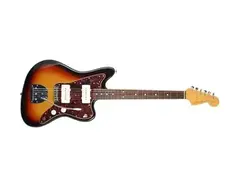
  • Fender MIJ Jazzmaster JM62
  • Epiphone Dot
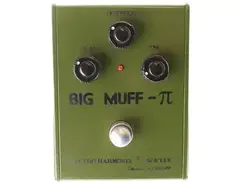
  • Electro-Harmonix Sovtek "Green Russian" Big Muff Pi V7C

Thank you tel_nobody I got it. Now I'll start the track from scratch. Before that I'll be seeing some orchestra settings, the instruments used and will experiment according to that. And I will maintain the sync as you said...btw, I didn't find a timpani in the instrument list...so I used a tom and filtered it to be the timpani 😁

Nice track, and the old one was also good. For my track I think I will change the chord sequence to alter the mood maybe some more chords...

Excellent. now we're thinking tricky!

GEAR:
  • Fender MIJ Jazzmaster JM62
  • Epiphone Dot
  • Electro-Harmonix Sovtek "Green Russian" Big Muff Pi V7C

how goes it, young sir?

GEAR:
  • Roland Juno-6
  • Gibson SG Standard
  • Vox AC30 Guitar Combo Amp