Join music gear discussions on Equipboard. Talk about guitar gear, electronic music production, get help identifying gear, ask for feedback on your music, suggest ideas to improve Equipboard and more.

10-46 or 10-52 in standard tuning?

I used to use 9's strings, but now it's too thin for me.

10-46. It'll retain the tension nicely with E Standard. But honestly, if I were you, I'd give the 9-46 a try first before going the 10-46 route. 9-46 will allow you to retain a tighter tension for rhythm guitars, while having a nice feel when playing solos.

GEAR:
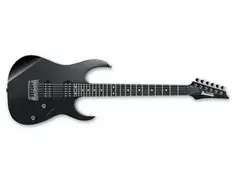
  • Ibanez RG652FX
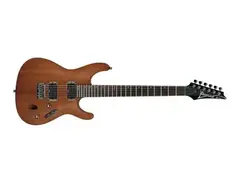
  • Ibanez S521-MOL
  • Blank slot

I see that you're into Death Metal so maybe the heavy bottom strings would be a better match if you're commonly using drop tunings - It'll help keep tension as well as emphasis and sustain on the lower strings. If I were in a position that I kept a dedicated drop tuned guitar I'd put 10-52's on that and keep standard tuned guitars with 10-46's.

My string choice depends on what guitar I'm playing, which in turn depends on which genre of music I tend to use it for. So for example my main 'general purpose' guitar gets mainly used for blues. For this reason I put lighter strings on it for easy bending. However, its short-scale neck makes 9s a little too bendy for my taste. Early on I would find myself alternating between 9's and 10s before discovering 9.5s were a thing.

My other electric is a Mustang/Jaguar hybrid. It too has a short-scale neck but the Jaguar Tune-o-matic bridge/trem system it uses was designed when heavier and higher tension flatwound strings were all that were commonly available. Today's Light gauge strings provide less than optimal tension for this particular mechanism so opting for 11s serves the guitar better. I consider this one my Surf guitar and enjoy its firmer feel for playing in a completely different style. My surf guitar is played with a pick and tends towards trem-arm use rather than finger bends, whereas my blues guitar is played fingerstyle with much more string bending.

I see folks on forums declaring their chosen string gauge like it's their football team but of course, our potential 'best' choice can depend on so many factors: the guitar; it's scale; our tuning preference; the string composition; the music style and our playing style as well as our limitations as we develop (or age!).

GEAR:
  • Epiphone Casino Coupe
  • Pignose "Legendary" 7-100
  • Hohner Marine Band 1896 Diatonic Harmonica

I think Billy gibbons and brian may have conclusively proven that the influence of string gauge on tone in standard tuning is greatly exaggerated. Play what feels most comfortable for you. As an engineer I can assure you that better playing produces better sound. When someone is fighting their guitar, even if they're getting the parts out every take, they're not expressing the song unless it's a tune about a frustrating struggle.

GEAR:
  • Roland Juno-6
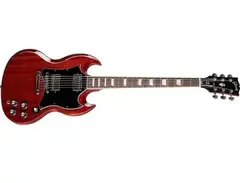
  • Gibson SG Standard
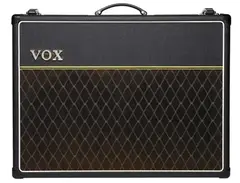
  • Vox AC30 Guitar Combo Amp

"Why you working so hard?" - Billy tells the story!

www.youtube.com/watch?v=HyEPAZT3kzk

I feel very privileged to have seen BB king perform twice in 1987. I was so blown away the first time I saw him that I came back to see him again!

I've given up trying to find a recording that captures even a shadow of his presence on stage. I'll share this clip anyway to stay vaguely on the topic of strings.

https://youtu.be/lKf-mU6QrJs

GEAR:
  • Epiphone Casino Coupe
  • Pignose "Legendary" 7-100
  • Hohner Marine Band 1896 Diatonic Harmonica

I want to change string gauge not because tone. It's because I can't normally control that strings.

I want to change string gauge not because tone. It's because I can't normally control that strings.
Then my advice from 30 years of guitar playing is to slap a stock set of ernie ball slinkies on, cheap investment and a good baseline for 10-46 (some brands have more or less tension in the same gauge), see how that feels. If your bottom feels too light then you can try heavy bottoms or if you want more tension across the board without gauging up look at DR strings, fenders or if you want coated the elixir nano webs...they all have higher tension from a straight 9 gauge set than ernie's. In fact DR makes extra high tension strings as well so you can a set of 9s for example that have the tension of 10s, god knows how that works but they make em. For less tension in 10-46 or10-52 there's d'adario and ghs which in my experience have the slinkiest feel.

The real question is how much do you bend on the wound strings? When I was kid I played jazz at school and heavier music in my bands (grunge era) and used 10-52 because I was mostly playing rhythm and LA style jazz solos with no bends at all or just on the plain strings. In college I went to 10-46 because I incorporated lots of string bending into my style and wasn't playing jazz rhythm in a big band and nor was I chugging power chords much either. Think about what your needs are. Easy wound bends ir rock solid tuning stability while palm muting and strumming with heavy down strokes. 46 will fight you less if you bend a wound string, 52 won't bend when you wail away on a power chord like Johnny Ramone.

GEAR:
  • Roland Juno-6
  • Gibson SG Standard
  • Vox AC30 Guitar Combo Amp

10-46 Ernie Ball regular slinky here. Keeps the tuning very well, and can handle bends from the whammy bar very well too!

GEAR:
  • Jolana Iris
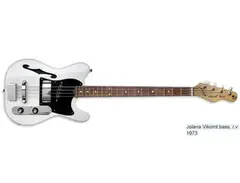
  • Jolana Vikomt Bass
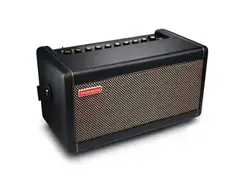
  • Positive Grid Spark

Simply enough, if you're an Ernie Ball guy, I'd suggest EB Ultra Slinkys (10-48) or EB Turbo Slinkys (9.5-46), they even sell both in 3-packs.

Ultra Slinkys

Turbo Slinkys

GEAR:
  • Washburn T-24 Taurus Bass
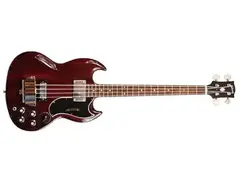
  • Gibson EB-3
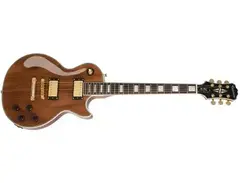
  • Epiphone Les Paul Custom Pro Koa - Limited Edition

for me i switch it up. i use 10-46 when i'm using standard tuning for usual use. in my band we also use an octave down version with a pitch shift for that i use a 10.5-48 because on pitch shifted songs i pick harder for better attack.

GEAR:
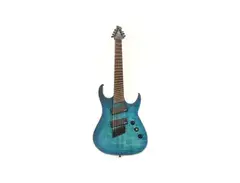
  • Agile Pendulum Pro 72527 EB CA Blue Flame
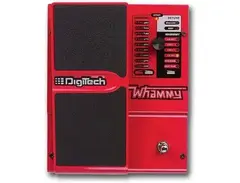
  • DigiTech WH-4 Whammy (4th Gen)
  • Blank slot

Old time jazz hits different.

46 lik bence daha mantıklı

I normally prefer 9-42 gauge strings for standard tuning, but 10-46 gauge is what I use on my Stratocaster because of its tremolo resistance, so 10-46 gauge is more universal.

I normally prefer 9-42 gauge strings for standard tuning, but 10-46 gauge is what I use on my Stratocaster because of its tremolo resistance, so 10-46 gauge is more universal.