Join music gear discussions on Equipboard. Talk about guitar gear, electronic music production, get help identifying gear, ask for feedback on your music, suggest ideas to improve Equipboard and more.

5-string basses with tiny/vintage-height frets?

I like tiny "vintage Fender"-size frets on basses. 0.43" tall or shorter.

Who makes 5-string basses with these tiny/short frets?

  1. Lakland
  2. Dingwall
  3. ????

Is that it?

On guitars, I think I prefer tall & shreddy frets for anything that isn't trying to be a blackguard Telecaster -- but for basses, I like to feel a bit of the fretboard under my fingertips as I play. I started with fretless back in the day: my fingers are right up on the frets out of habit... so maybe that's why I like basses with subtle fret wire?... IDK.

GEAR:
  • Roland TR-808 Rhythm Composer
  • Roland SH-101
  • Roland TR-909 Rhythm Composer

Being a P and J traditionalist if I were looking for 60s fender frets on a 5 string I would just do a custom parts bass from warmoth. Comprehensive fret selection. Or if I had a modern fender 5 string P I would just buy a warmoth neck and sell the stock neck.

GEAR:
  • Roland Juno-6
  • Gibson SG Standard
  • Vox AC30 Guitar Combo Amp

Warmoth only offers a straight 10" fretboard radius for all their bass necks.

No compound radii.

No money-note-assisting 7.25" radius.

No modern 12 or 14" shredder radii.

I hear their build quality is wonderful, but if their opinion is "bass players shouldn't concern themselves with the roundness of the fretboard", then I feel like I can't trust them to be super on-point with the rest of the neck... know what I mean?

They offer all kinds of radii for guitar necks... so, IDK what their logic is.

Musikraft is willing to go all the way with me, but I'm not sure ppl think of their current output -- haven't checked in with them in decades.

The internet tries to tell me that USACG can't be trusted in the post-Tommy era. I don't know Tommy, but I knew people who bought custom necks from them in like 2015 in the results were great.

I hear Allparts necks meet Fender Japan standards, which is great, but they don't do custom orders.

Also: I'm willing to go full cloth-covered-wire & nitro-traditionalist for a 4 string P-bass (and I just might, someday), but for a 5-string, I feel like I should just embrace the modern and get something shreddy... There aren't many investment-grade 5 string basses out there... It's like buying a fancy bicycle for 100+ mile rides: you just have to live with some humiliatingly techy/flashy details that won't age well, and channel your civic-war-recreationist urges elsewhere. I can't see myself going through the trouble to flow/transfer some fancy counterfeit Fender logo onto the headstock of a custom-ordered 5 string bass neck...

...

GEAR:
  • Roland TR-808 Rhythm Composer
  • Roland SH-101
  • Roland TR-909 Rhythm Composer

Look into Fender Bass V

GEAR:
  • Agile Legacy 727
  • Michael Angelo Batio Sawtooth Double Guitar
  • Laney Black Country Customs TI-BOOST

My friend, I've never given bass neck radiuses a second thought... I'm more of a bread and butter bassist. I only pick my bass up on my own music or if a client is unhappy with a bass performance at mix and it's too late to bring the guy back in or he's a stubborn jerk. My golden rules of bass are:

  1. Don't overplay it we'll be here all day.

  2. Mostly low is the way to go.

  3. The root on 1 is usually fun.

  4. It's not your job to fool with knobs. Controls wide open, no stomp boxes unless its a wall of sound fuzz song, amp set flat, DI into a mic pre with huge bottom on another track. It's a bass, not a CS80.

  5. Make it sit in the track or your mix will sound whack. String gauge, wrap type, cotton or foam under the saddles and pick type or fingers and the technique used are the best EQ and dynamics processing.

The idea of a compound radius on bass is interesting though. I mean, why doesn't warmoth offer that? Seems like bassism. Which is a portmanteau of racism and bassist...

So about fancy bass brands, my buddy has a fully customed out Warwick Bass II, gibson EB-2 style, that is hands down the best playing shortscale ive played and it produces the roundest, fullest tone I've ever heard from a hollow bass. It's a spectacular bass. Every Warwick I've picked up has been better than average but when you gave something fully customed out like my friend did, they really step up their game. They fulfilled every requirement he had and accommodated all his fiddly requests. If they offer the small frets on a compound radius, Warwick will treat you right on a custom instrument.

GEAR:
  • Roland Juno-6
  • Gibson SG Standard
  • Vox AC30 Guitar Combo Amp

Look into Fender Bass V

The OG. Isn't that designed for a high C instead of a low B though?

GEAR:
  • Roland Juno-6
  • Gibson SG Standard
  • Vox AC30 Guitar Combo Amp

My friend, I've never given bass neck radiuses a second thought...

In my experience, many lifelong 6-string guitarists don't really care about radius either, despite radius being a more impactful dimension on that instrument.

... and for bass, for me, radius isn't a primary concern either. I've never played a 5 string in my life, I don't know what I don't know yet. Maybe I'll want something super-flat on a 5 string, maybe I won't care... maybe I'll hate 5 string altogether and just get a second 4-string tuned to B-E-A-D.

... but IF I'm ordering a completely custom bass neck, where I choose every dimension... I kinda feel like I should have the option to do a compound radius... I would want to order something with a spec you couldn't find on The Stratosphere's eBay shop, you know?

  1. Make it sit in the track or your mix will sound whack. String gauge, wrap type, cotton or foam under the saddles and pick type or fingers and the technique used are the best EQ and dynamics processing.

Given that I'm still learning the instrument, I limit myself to 1970s session bassist rules:

  1. Show up with a 4 string P or J, strung with flats.

  2. Whether you record direct into the board, or through a mic'd B15 is the Engineering Team's decision, not yours.

  3. Your fingers, your strings, and your tone knob are your signal chain.

  4. If the song needs something brighter, use your fingernails, a pick, switch to rounds, or put on a fresher set of La Bella flats that are still in their big-bright-angry-acoustic-guitar-sounding phase.

  5. Any compression applied while tracking is the Engineer's decision, not yours.

  6. You probably weren't the first bassist they called, so be humble and do something simple that flatters the song and the other performers.

I want to learn to play through a new/unfamiliar chord chart in a competent and tasteful manner -- obsessing over bass pedals, plugins, and amps will have to be someone else's problem. Ditto for exploring bass as a lead or solo instrument, that's someone else's journey, not mine.

The idea of a compound radius on bass is interesting though. I mean, why doesn't warmoth offer that? Seems like bassism. Which is a portmanteau of racism and bassist...

Ha! I almost accused them of bassism too, using that exact portmanteau... great minds!

Fender's Mononeon signature bass is a 5 string with a compound radius (10-14", I think?)... Fender wouldn't have gone to the trouble of tooling-up the Mexico assembly line to do a compound 5-string neck like that if the artist didn't feel strongly about it. They don't offer that neck on any other products, so it must have cost them some $$$$ to accommodate... so yeah, I'm curious to at least try one.

So about fancy bass brands, my buddy has a fully customed out Warwick Bass II, gibson EB-2 style, that is hands down the best playing shortscale ive played and it produces the roundest, fullest tone I've ever heard from a hollow bass. It's a spectacular bass. Every Warwick I've picked up has been better than average but when you gave something fully customed out like my friend did, they really step up their game. They fulfilled every requirement he had and accommodated all his fiddly requests. If they offer the small frets on a compound radius, Warwick will treat you right on a custom instrument.

I'm glad to hear that. I'm curious about both Warwick and Spector basses. Never played either, but both those brands came on so strong in the early-mid 80s with basses that were clearly attempting to move beyond the Fender paradigms... It had to be more than just pro players following a fashion trend, you wouldn't have seen the mass adoption that happened if those brands weren't offering something special.

GEAR:
  • Roland TR-808 Rhythm Composer
  • Roland SH-101
  • Roland TR-909 Rhythm Composer

Correct, you could probably go low B but make sure the post/saddle can take the string, if not you would have to use a lighter gague

GEAR:
  • Agile Legacy 727
  • Michael Angelo Batio Sawtooth Double Guitar
  • Laney Black Country Customs TI-BOOST

Engineering Team... always capitalized. I'll always try to be accommodating and just do a faithful capture of a bassist who is a gigging band member, but if that love sound isn't happening in the context of a record, I speak up. If you don't listen to my suggestions, that's fine... just don't pretend it's my fault when your bass sound doesn't sit in the mix. If you're overdubbing rather than tracking as a full band then the 70s rules should be followed but seldom are. I just threw my hands up in the air with this one band of dopes in june and bowed out until the mix... it's almost November and these folks who "know what sounds good" are still tracking... or are trying to.

Definitely get in touch with Warwick l.

GEAR:
  • Roland Juno-6
  • Gibson SG Standard
  • Vox AC30 Guitar Combo Amp

Look into Fender Bass V

The OG. Isn't that designed for a high C instead of a low B though?

Honestly, if I ever get a 5-string bass, I’ll remove the strings, replace them with 6-strings bass strings and tune it this way.

GEAR:
  • Blank
  • Boss BF-3 Flanger
  • Meteoro Demolidor FWB-20

If I recall correctly, the 60s bass V also gas less frets. It's designed for session work so a bassist reading a chart can reach a wider range of notes without changing hand position. It's really its own instrument.

GEAR:
  • Roland Juno-6
  • Gibson SG Standard
  • Vox AC30 Guitar Combo Amp

I don’t necessarily want the V, you know.

GEAR:
  • Blank
  • Boss BF-3 Flanger
  • Meteoro Demolidor FWB-20

Who would? But the benefit of the E to C tuning on a full size modern 5 string might not be appreciated by everyone... or anyone for that matter. It makes sense on THAT instrument, which is super specific. Theres a reason the bass V didn't go mainstream and isn't even as popular as the bass VI. Using that tuning sounds nutty to me.

GEAR:
  • Roland Juno-6
  • Gibson SG Standard
  • Vox AC30 Guitar Combo Amp

im not sure about where you are but im sure theres builders that will do whatever you want, someone like john shuker will build you whatever you ask if youve got the money, if youre on a budget it might genuinely be cheaper to refret a more affordable 5 string

GEAR:
  • Sound City B120
  • Fernandes RB 80
  • Pro Co RAT 2

i guess having a high c would only fit in some very niche and specific type music, maybe something with no guitars. wouldnt going higher up the fretboard on a high c would start to steal guitar frequencies?

GEAR:
  • Sound City B120
  • Fernandes RB 80
  • Pro Co RAT 2

When I push the faders up for the first time to begin a mix and the bassist starts riffing on the regular G string above the 5th fret while the rhythm guitar is blazing away with the roots on low E, I grit my teeth a little bit and start looking at my fully parametric EQs.

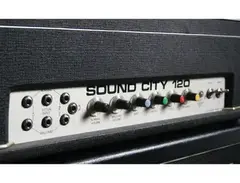
PS: nice sound city

GEAR:
  • Roland Juno-6
  • Gibson SG Standard
  • Vox AC30 Guitar Combo Amp

haha yeah maybe consider modifying their bass like the dude who plays in ash when theyre doing that... (for some reason he takes off the g string)

thanks about the sound city, its been a long project getting it to function!

GEAR:
  • Sound City B120
  • Fernandes RB 80
  • Pro Co RAT 2

It's a pretty complicated circuit for the 70s... but at least they maintained Dave Reeves' clean layout and the construction was usually pretty tidy, if not up to Harry Joyce Co standards.

GEAR:
  • Roland Juno-6
  • Gibson SG Standard
  • Vox AC30 Guitar Combo Amp

yeah, i had a friend whos more of a hobbyist work on it first and he got it vaguely functioning then took it to the local amp tech who biased it and rewired the impedence selector to work with the plug as it had been wired direct. theyre really awesome old amps!

GEAR:
  • Sound City B120
  • Fernandes RB 80
  • Pro Co RAT 2

im not sure about where you are but im sure theres builders that will do whatever you want, someone like john shuker will build you whatever you ask if youve got the money, if youre on a budget it might genuinely be cheaper to refret a more affordable 5 string

I hear you. I'd love to do that someday.

The reality is that I'm only 1 year deep into learning bass, and I can't justify spending that kind of $$$$ when I haven't even fully memorized the fretboard yet.

The only reason I'm looking at a second bass is that my GF asked me to get a second bass so I could keep one at my place and one at hers. Can you believe that?!? I am not making this up!

I've already had to tune down to Eb to learn a song or two, and I want to learn a few urban gospel tracks, even though I'm not a churchgoer, so I figure it would be good for bass #2 to have those 5 extra lower notes.

So whatever I get, it's probably best that it be something I can re-sell for close to what I buy it for... because my tastes will surely change as I get better.

GEAR:
  • Roland TR-808 Rhythm Composer
  • Roland SH-101
  • Roland TR-909 Rhythm Composer