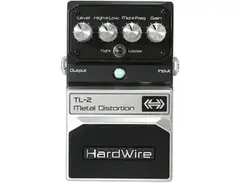
I've been there, taking a head on a train and hiking it to the venue. I can't blame anyone for getting a class D amp that fits in a backpack. I don't even like taking my amps up and down stairs anymore.
Brace yourself for some history and speculation.
The golden age of tube amp design if you ask me is like late 50s when the narrow panel tweed fenders and early vox amps come out through to Mike Soldano's prototype SLO100s hitting stages around 86 or when he incorporates in 87. So let's say 57 to 87, 30 years.
Tube diodes go back to Edison and Tesla. The first triode was nicknamed the "audion" so you get that it was always meant to amplify analog sound. That was 1907. So by 1957 the technology had been perfected for audio over the course of half a century through 2 world wars which accelerated r&d because communications used the same technology at the time. Just a heads up, the triode and early speakers actually predate electric guitars by a good 30 years. The ability to amplify actually gave birth to the instrument. The amp is the heart of rock n roll.
By contrast, the first functional field effect transistor was developed in 1927. It couldn't be manufactured consistently and nwas never used outside labs. It took until 1947 for Shockley at Bell labs to improve FETs enough to possibly be used in a commercial product and the following year his team developed the first viable bipolar junction transistors from germanium. These took until the late 50s to be adopted and were very inconsistent. Mainly used in industrial switching, radios and fuzz pedals, although a malfunctioning transistor mixing desk inspired the first fuzz (it was probably malfunctionin gbecause germanium is crap). The first silicon transistor wasn't made until 1954 and wasn't available commercially until the 60s. That texas instrument silicon BJT is the first viable solid state device for our purposes.
So if we look at the development of tube guitar amps it takes 50 years to get to the golden era and it lasts for less than 30 as transistors and their IC opamp offspring take over the other branches of audio... so with that math in mind, the golden age of transistor guitar amps should've started around 2004, give or take, and with military communication having been digitized since satellite communications came if age things are going to move on a slower track. Tube radios and guitar amps are close... cell phones and transistor guitar amps aren't. I expect that great sounding solid state instrument amps are just getting started and the best is yet to come. Digital modeling really jumped the shark but there are still designers out there working on lightweight, analog amps that are voiced to make music and not just reproduce it (we have that down). A modeling amp still needs analog circuitry to drive a speaker. The digital part us just a digital signal processor with converters on either side that need to be bookended by a preamp and a power amp. The whole idea here is that the digital part makes the signal from the pickup musical so that the solid state input and output circuitry can cleanly capture the pickup and reproduce the processed signal, because like I said, with solid state we got that shit locked down now.
Also, keep in mind that the tube amp gave birth to the electric guitar so there was no competing, established technology slowing down development and the voice of electric guitar grew up with that technology, tubes weren't asked to imitate acoustic guitars, their idiosyncratic sound was embraced and pushed to the limits. Solid state is being asked to replicate or better an older technology that defined 20th century music... the thrust of solid state technology in audio has been capture/reproducttion and synthesis. There was a digital synthesus detour, and that technology is still growing up but has been detoured itself simulating analog, but analog synthesizers have really just hit their stride in the last 10 years and seem to be the defining sound of this century. Sorry Mr Guitar. Interestingly, electronic music synthesis is actually older than electric guitar but it wss really just novelty instruments until moog and buchla.
There's a lot of thing coming down the pike for solid state guitar amplification in the next decade. Keep your eyes peeled, its probably not coming from well known manufacturers, they're not daring enough, though you're seeing established brands experimenting with analog over digital for light, cheap amplification. I'm half tempted to fool around with my own solid state design after writing this.

-s.webp?v=1783436201 "Pro Co RAT 2")


.jpg?v=1776886312)