TLDR: start with sounding like MA while unplugged, and then avoid #$%*ing up your good tone as the signal makes it's way from your fingers/strings to the amp's speaker.
Howdy.
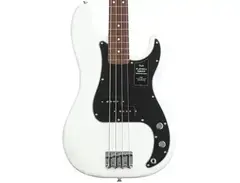
I'm assuming that when you play your Fender Player II Precision unplugged, you already sound a lot like Michael Anthony, right? Because if you don't, amplifying that performance with the Rumble 25 isn't going to make you sound more like MA.
My advice would be:
Establish a baseline tone: Set both knobs on your Pbass to full/100%, set all 3 EQ knobs on the Rumble 25 to noon (pointing straight up at the words Bass, Mid and Treble), turn Contour and Overdrive buttons OFF. Adjust the amp volume knob to whatever is a comfy/safe level for the space you're in.
Pick a single VH song you want to "tone clone".
Find a "no bass" version of that song on youtube to play along to. Search live footage of the song, or google around, to make sure you know if it's a song Anthony played with his fingers or with a pick.
Play along to the track a few times and tell us what you feel is missing, tone-wise. I'm sure folks here will have more to say once you've zeroed in on a specific tone from a specific song.
Big picture: you're not going to be making any radical knob adjustments to dial things in. You might end up backing off the tone knob on your bass like 10 or 20%, you might need to + or - one of the EQ knobs on your amp by 10-30%, and (depending on the song and what the overdrive circuit on the rumble sounds like) you might decide to engage overdrive on the amp... nothing crazy, think of these as finishing touches.
I'm not in a VH cover band or anything like that, I'm just trying to get the ball rolling here. Others will have more VH-specific knowledge.
The things that will make the biggest difference:
1. Your fingers/pick technique. Articularion and note length. This is where the tone resides. In most live footage I've seen, MA plays behind the neck pickup (the split/P pickup), but in front of the bridge pickup (when his basses have a bridge pickup). On a Pbass with just the one pickup and one tone knob, where along the string you choose to strike (in relation to where the pickup is) is especially critical to controlling your tone.
2. The setup of your bass. Some rock players play with high action so they can dig while keeping things pretty mechnically clean, and some set the action low and lean into fret rasp and clank. I don't know enough about MA's setup to know which way he leans here, but knowing the answer will tell you whether the grit and grind is his tone is coming from an SVT head, preamp, pedals, post-processing, or some combination of those things plus mechanical fret rasp.
3. AFTER 1 and 2, now you're in the territory of icing the cake with minor tone knob and amp EQ tweaks, and deciding if the Rumble OD circuit gets you closer or further away from your goal. Once you're at this point, then spending money on an OD pedal or something like a SansAmp might make sense, but these kinds of things rarely bring much longterm happiness in the world of bass. Try to keep your signal chain dead simple for as long as you can.


-s.webp?v=1785077870 "Roland TR-808 Rhythm Composer")
-s.webp?v=1785077880 "Roland SH-101")
-s.webp?v=1785077873 "Roland TR-909 Rhythm Composer")