Join music gear discussions on Equipboard. Talk about guitar gear, electronic music production, get help identifying gear, ask for feedback on your music, suggest ideas to improve Equipboard and more.

How does a compressor clean a dirty signal?

I was re-watching a Rig Rundown with Paul Gilbert when I noticed something I hadn't paid attention to: after his distorted signal splits, it hits one end with a compressor that makes his tone really clean, as if there were no distortion to begin with.

How does that even happen? How can that be done?

that doesn't make ANY sense... a compressor just controls dynamics, imagine a little gremlin adjusting your volume, threshhold tells him how loud the signal has to get before he starts paying attention, ratio tells him how low to reduce the volume based on how far the input signal is above the threshold, the attack control tells him how long to wait from the point the signal exceeds threshhold before adjusting and release tells him when he can return to full volume.

If anything, compression will make a dirty guitar sound even dirtier as it will amplify distorted characteristics of an overdriven sound when its working, plus most circuits add their own subtle distortion.... this is why most recording engineers will (or should) tell you to back off the gain when recording. Even if you aren't going to compress the guitar track and you don't mix with bus compression, in the mastering phase the whole track will get some dynamics control and the guitars WILL sound more distorted by the time they reach the end listener. Even the nicest mastering equipment will add a little harmonic distortion (across a stereo master this should help act as 'glue', but its there) and as those guitar tracks get squashed the crunchy harmonics will be amplified and because they are square-ish waves already they will automatically sound louder than the 'clean' component of your tone. The ratio of harmonics will get skewed by the compressor and 'artificial' harmonic content from the compressor will be added. VCA designs are typically 'cleanest', while FET, sharp-cutoff-tube and opto designs will add more of their own distortion (though it will be more musical and probably more pleasing to your ear than distortion from a VCA-type unit). By the way, all those names of compressor formats refer to the detection circuit, though in the case of sharp-cutoff-tube and FET designs it also tells you something about the make-up gain amplifier (which will also add distortion).

I am thinking Gilbert didn't explain his signal path properly. Hes a great player, but maybe he's totally out to lunch when it comes to his gear! You feed a compressor a clean signal and you get a fatter, more harmonically rich signal with a lot of obvious detail but less dynamics, crush it hard enough and it will top being a clean tone... but if you feed it distortion you get more distortion (this CAN be a good thing, I am not making a value judgement).

Pretty much your rule of thumb is that every stage of processing, be it analog or digital, will degrade your signal-to-noise ratio, limit bandwidth and add (sometimes imperceptible) harmonic distortion to your raw signal. Just the extra wire involved will do this. Anyone who says otherwise is trying to sell you something!

GEAR:
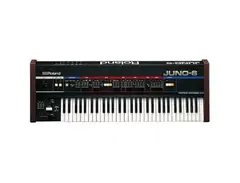
  • Roland Juno-6
  • Gibson SG Standard
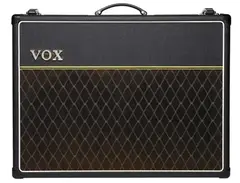
  • Vox AC30 Guitar Combo Amp

If you have a pedal, any pedal, with a volume knob on it and you turn really down... it will clean a dirty tone very well... and what better than a compressor that will make tha clean tone full and smooth. I might as well try it myself! :-)

If you have a pedal, any pedal, with a volume knob on it and you turn really down... it will clean a dirty tone very well... and what better than a compressor that will make tha clean tone full and smooth. I might as well try it myself! :-)

that didn't even occur to me to use the output on a dynacomp or whatever like I use my guitar's volume control. It should have. I built a boost pedal with 2 volume levels, one designed to be anti-boost. But the OP said the compressor was after his dirt boxes, so that can't be it.

GEAR:
  • Roland Juno-6
  • Gibson SG Standard
  • Vox AC30 Guitar Combo Amp

https://youtu.be/AFE2YKMjs2U?t=7m27s

The volume knob is on the right side, set to 1200, so that should mean the volume will remain the same as before (given that the sustain is really high).

There's also the DI Box to consider, but I don't think they function to remove dirt from a signal.

There's also the DI Box to consider, but I don't think they function to remove dirt from a signal.

you can't take distortion out of a signal, period. You can reduce the gain in voltage into the device that's producing the distortion until it no longer audibly clips, but anything down the chain from your source of distortion will at best be distortion neutral but more likely will add a little more distortion

GEAR:
  • Roland Juno-6
  • Gibson SG Standard
  • Vox AC30 Guitar Combo Amp

I think Gilbert is fucking with us and Eric (the singer) actually gets a distorted signal.

Either that, or Gilbert has some wizardry that I must know of.

I think a better question is ... why not just click the distortion off? Isn't that a helluva lot easier?

The only pedal I know that will do what you are describing is the Voodoo Labs "Sparkle Drive" series. It's basically a pedal that splits your signal into two channels, one dirty and one clean, and then lets you blend them together. It's actually quite beautiful and magical and makes it a LOT easier to get certain guitar tones (like instead of having 2-3 amps on stage for dirty/clean blend). I don't own one, but I've had my eye on it for a while. There are tons of demo vids on YouTube ;)

Dude ... I just watched the clip for fun ... I think you misunderstood what he is saying. Just before the clip starts (rewind a sec) he says "oh wait actually before that happens ... one side goes to the pedals and the amp, the other goes to the compressor" dude he is splitting the signal BEFORE it gets distorted and in his pedal chain. He's splitting it straight out of his guitar.

That's how it sounds to me, anyway. And it makes way more sense.

Dude ... I just watched the clip for fun ... I think you misunderstood what he is saying. Just before the clip starts (rewind a sec) he says "oh wait actually before that happens ... one side goes to the pedals and the amp, the other goes to the compressor" dude he is splitting the signal BEFORE it gets distorted and in his pedal chain. He's splitting it straight out of his guitar.

That's how it sounds to me, anyway. And it makes way more sense.

I think you're right Nick!

GEAR:
  • Roland Juno-6
  • Gibson SG Standard
  • Vox AC30 Guitar Combo Amp

Dude ... I just watched the clip for fun ... I think you misunderstood what he is saying. Just before the clip starts (rewind a sec) he says "oh wait actually before that happens ... one side goes to the pedals and the amp, the other goes to the compressor" dude he is splitting the signal BEFORE it gets distorted and in his pedal chain. He's splitting it straight out of his guitar.

That's how it sounds to me, anyway. And it makes way more sense.

I think you're right Nick!

OK, watch from here:

https://youtu.be/AFE2YKMjs2U?t=5m38s

His unnafected signal is pretty damn dirty, but not as much. So at first, I started to think that Gilbert really was just screwing with us and that kinda dirty signal was what the singer got

And then he turned on the Boss CS-3

AND SUDDENLY IT'S CLEAN A CLEAN SIGNAL

I can see that the volume knob alone is around noon, and I'm not familiar with Boss' compressor.

Halp...

Well, what I'm hearing is the same thing I hear when I plug straight into my bluesy Fender amp. At a high amp volume (knobs at 5 or better) when you're strumming hard on that bridge pickup you get a fat, slightly "dirty" amp tone. When he steps on that compressor it's like he rolled the volume down just a little and got that clean tone. Sounds like he is picking more gently too, on that chord arpeggio. So just sending a gentler signal to those pickups and using good old fashioned dynamics. The compressor is probably helping to keep the pickups from peaking and breaking up the amp. I dunno that's the only explanation that makes sense.

Go to any blues club you'll see guys rolling their volume knobs down to play clean and then rolling up to 10 for a dirty solo. Breaking up the amp.

My favorite takeaway from that video clip is the script phaser. I have that exact same pedal, but I rarely ever use it. Now I saw that, makes me wanna use it more often. He says he uses it on "almost every solo" ... find that hard to believe and yet his FX blend knob is really far down whereas mine is pretty high. I bet if I rolled my knob way down to 2 or 3 it would probably sound great on all my solos too ;)

Problem is, the volume knob on the pedal is on the right pointing at noon.

That's the same amount of sound coming out except with more sustain.

Problem is, the volume knob on the pedal is on the right pointing at noon.

That's the same amount of sound coming out except with more sustain.

noon is not unity in every circuit dude....

GEAR:
  • Roland Juno-6
  • Gibson SG Standard
  • Vox AC30 Guitar Combo Amp

I all gear I've seen, volume knobs are set to either noon or somewhere below to where volume exceeds the original signal. It would make somewhat sense if I were right, but even if I were wrong, then you would be wrong in saying that the compressor is lowering volume.

I all gear I've seen, volume knobs are set to either noon or somewhere below to where volume exceeds the original signal. It would make somewhat sense if I were right, but even if I were wrong, then you would be wrong in saying that the compressor is lowering volume.

there's no hard and fast rule, compressors are not like boosters and distortions, they are most definitely cutting signal by lowering the peaks, the output knob controls a separate make-up gain amplifier, who knows how the volume pot is calibrated, plus, the more compression you add the more makeup gain will be required to achieve unity.... I like to turn the compression way up on dynacomp pedals to drive 4 input marshalls for leads played ons tratocasters and I find I have to turn the output to 9 or 10 to get any worthwhile boost under the those conditions even though when they are setup moderately with a tele for country work they have more output than I need and unity is way lower.... depending on the year of the pedal with the compression maxed unity gain is WELL above 5... anyway, my point is that cmpressors are their own thing and both stages effect each other output-wise, YMMV

GEAR:
  • Roland Juno-6
  • Gibson SG Standard
  • Vox AC30 Guitar Combo Amp