Join music gear discussions on Equipboard. Talk about guitar gear, electronic music production, get help identifying gear, ask for feedback on your music, suggest ideas to improve Equipboard and more.

Iso-box construction advice.

I was just reading through one of the other forums about everyone getting amps that are louder and louder. I am heading towards the final stages of a studio build (at home), and wanted to ask if anyone reading this has had any prior experience with building their own iso-boxes for guitar cabinets. I have got the loud amps, but want to be able to record them with a little bit of consideration towards my neighbours and my neighbours neighbours. The entire room will be insulated with Earth or rock wool, and the walls will be double clad with fire check drywall. There is another iso-barrier product which I'm also considering called insuboard which insulates temperature as well as soind deadens. I just want to know if you are using double layers of earth wall or Rockwall in the walls of your iso-cabs, whether you are increasing on additional layers of drywall, or whether you are using fibreglass sheets before you hit the interior surfaces with acoustic foam?

GEAR:
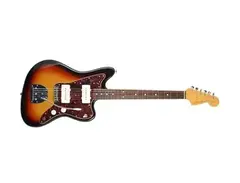
  • Fender MIJ Jazzmaster JM62
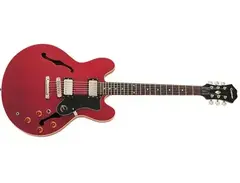
  • Epiphone Dot
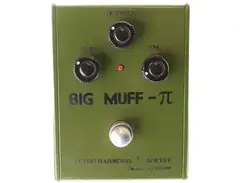
  • Electro-Harmonix Sovtek "Green Russian" Big Muff Pi V7C

this is a real bear. I am sure all the plans on the net are good, but ISO boxes don't sound so hot unless they are ENORMOUS. Without enough air around them your guitar speakers may sound pinched and funky, especially if its a closed back cab in there. If you are going to really deaden the box making the walls super absorptive then bigger is better. A good rule of thub with closed back is to make the box considerably taller and deeper than the cabinet.... at least 4 times deeper so the wave forms have room to develop before being reflected or absorbed. You might be better off with a purpose built ISO cab, the ebst being Rivera's (again, other designs that are simpler sound weird, supposedly the rivera's porting system gives it enough air movement that it has a more natural cab sound but it also isn't dead silent) OR with a good reactive loadbox to run your 800 DI and then you can audition cabinet impulse responses via a VST IR plugin. That's a popular method these days and I do it a lot when I am not in a position to blast a bunch of noise....

Or when you say ISO box do you mean ISO BOOTH? Are you isolating a closet maybe? when I isolate a booth I like to have a floating floor and some walls within the walls. Its not just about thick and dense walls (though the outer walls should be like that and the materials you are looking at are a good way to go if your booth isn't alreasy made of concrete or brick), putting air between 2 sets of surfaces traps sound waves inside so the outer walls don't have to absorb as much... a good indoor/outdoor type storm door that seals shut is a good call, here you will want 2 layers of glass on the window with gas between them like my patio door, that blocks a lot of noise

GEAR:
  • Roland Juno-6
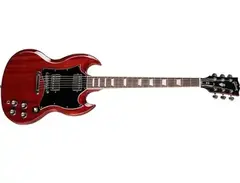
  • Gibson SG Standard
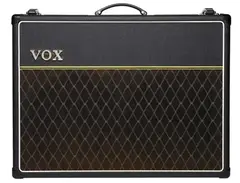
  • Vox AC30 Guitar Combo Amp

Hey man, I'm new here, but I work for a company called Acoustical Solutions. We specialize in sound and noise control. Maybe I can shed some light. Like the others have said, you won't get as good of a sound from a isocab as a live room, but building an effective isocab is pretty simple. First start with your framework. On the outside of this use your standard sheetrock. Now, insulate with r-19 bat insulation, just like you would a wall. Next you want to apply a Mass Loaded Vinyl directly to the studded framework. Any MLV will work, but look for something that is at least 1lb per sqft and provides at least an STC of 20. From this you can either use a resilient clip and hat channel or just "furring strips". Mount your layer of 5/8" sheetrock to that, then apply a dampening compound like Green Glue and another layer of 5/8" sheetrock. That's pretty much it other than sealing all the seams up with a good acoustic sealant. You don't need to add absorption like panels to the interior of the isocab. Also, its a good idea to make sure your also placing your actual amp/cab on a rubber pad to decouple it from the floor. Hope that helps!

everything he said is right

GEAR:
  • Roland Juno-6
  • Gibson SG Standard
  • Vox AC30 Guitar Combo Amp