Join music gear discussions on Equipboard. Talk about guitar gear, electronic music production, get help identifying gear, ask for feedback on your music, suggest ideas to improve Equipboard and more.

Les Paul amp hum

There's continuity from the jack (sleeve) to the toggle switch, each pickup, bridge, tailpiece, back of all 4 pots (connected in a u shape). The tips and sleeves of my cable are good.

But when I plug it into my small marshall MG solid state combo, I get a hum. Its reduced if I touch the strings or any of the grounded parts mentioned above.

I dont get it. Is my guitar picking up more noise from the surroundings than my amp can handle? I moved around my home but the hum level doesn't rise or fall. Do I need a new input socket on my amp, or new resistors/ capacitors?

I hate that hum and I have humbuckers.

GEAR:
  • Tokai SG-50s
  • Marshall AVT150H Half Stack
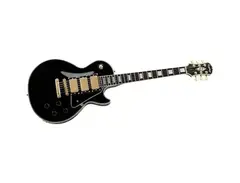
  • Epiphone Les Paul Custom Black Beauty

that's normal, lowlevel ground hum from the complete circuit and not from RFI seeping into your pickups, it was always there to some degree, you probably never noticed it. Remember how you're strings are grounded through the bridge by a wire that connects to your tone controls ground? You're a part of ground and releasing the strings will change the ground potential and can (and usually does) induce some hum. I never used to let go of my guitar neck on stage when there wasn't music coming out of my amp unless I was muted before the amp fr this reason. dimed superlead can spit out egregiously loud,hum when you let go of the strings in a poorly wired room (every venue known to man)...

the guitar and amplifier are a complex circuit that you're meant to be a part of.... when you remove yourself from the circuit it no longer behaves optimally. Its a pretty sketchy system by pro audio standards but its the way guitars work.

GEAR:
  • Roland Juno-6
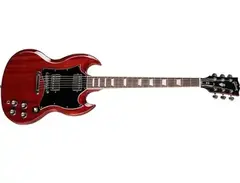
  • Gibson SG Standard
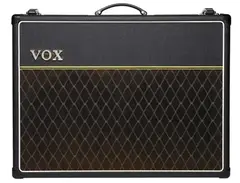
  • Vox AC30 Guitar Combo Amp

Thanks for that. I wasnt too sure if that hum was normal. It gets louder after a while, and stays at that volume. I had originally thought that the heated caps in the amp were causing it. Learned something new!

GEAR:
  • Tokai SG-50s
  • Marshall AVT150H Half Stack
  • Epiphone Les Paul Custom Black Beauty

it shouldn't change in level from the source (guitar) although it could just be factor of the amplifier warming up.... in a tube (valve) circuit putting the amp in play puts HT on the plates (in standby or straight from off in a tube rectified design there is only a modest voltage on the heaters of the tube but no high voltage applied to the cathode and anode therefore the tube has been physically heated but is not really doing anything a lightbulb doesn't do until you add that high tension at 200v+) and they take a little to stabilize tonally so they're 'cold' at first and more linear, as they warm up even set clean, they will begin to accent a larger harmonic spectrum and so any signal they're amplifying will become richer as they amplify harmonics of the fundamental to a greater extent. In this case the harmonics ofthe hum will be getting louder as charges build up on the plates and control grids. The harder the amp is running the louder those will become because, distortion! If you're using a transistor amplifier YMMV old school AB designs do take time to warm up and exhibit their own version of the behavior I outlined for tube designs although it tends to be a lot more subtle sonically for various boring technical reasons, transistors are not tubes you know. And I gave you a lot more tech than the average musician probably cares to engage with.

troubleshooting:

The capacitors are probably charged as long as the amp is plugged into the wall. Even when off the caps will draw power and remain charged which is why ina high voltage circuitit is vital to discharge the filter caps before attempting any repair or modification work on an amplifier. Many amps carry power supply voltages that will kill you and they can retain these for some time even when unplugged from the outlet. Bad capacitors tend to make a frying bacon hiss and pop sound. It would be unusual for them to hum. If your power supply hums even with the guitar unplugged its not the components but either a design flaw, unbalanced power tranformer, or the dreaded ground loop. I won't get too deep into eliminating ground loops in a residential building right now, its a real pain and require a lot of patience although a quick fix for a simple system like a guitar, amp and pedal board is to plug everything into the same outlet making sure that the plugs are tight fit so ground is uninterrupted (this is important for safety too, people really don't maintain their outlets like the should and I'm amazed that more musicians aren't regularly fried by their gear) so that they share a ground potential and now ground AC feeds back into the circuit at any point. When in doubt a couple of ebtech hum-Xes will generally do the trick by isolating the grounds via a simple transformer. 1 will you usually do it although you can't hurt things by isolating every wall connection. There's also the problem of dirty power. If all your outlets share a breaker with appliances this could very well be the case and this where a power conditioner is of use.... your hum may be what I first diagnosed or one of these other 2 ground phenomena or even a combination of them. If its bothering you that much try eliminating the home wiring variables with a power conditioner and a humX separately and in combination to determine what type of ground noise you're experiencing. I doubt any of this will do anything though, it sounds like the standard "hands are grounding the circuit" buzzing.

When in doubt always, always ask a sound engineer.

GEAR:
  • Roland Juno-6
  • Gibson SG Standard
  • Vox AC30 Guitar Combo Amp

Wow I love all the tech you wrote, good stuff thanks! Ok, power conditioner and humx. Stay away from the power capacitors. Gotcha.

I read somewhere that our bodies are actually transferring electrical charges to the guitar strings that causes the buzz/ hum to go away. Something about us being giant antennas picking up all kinds of electromagnetic noise from the surroundings. What do you think about that? It's bizarre right?

GEAR:
  • Tokai SG-50s
  • Marshall AVT150H Half Stack
  • Epiphone Les Paul Custom Black Beauty

yes, you're a small current producing device and also a path to ground.... but you're only a safe path to ground for small voltages unless you like to risk stopping your heart for a sec... you have very low electrical resistance... and yes you can soak up RFI but that's a different source of noise than what we're talking about, separate the idea of RF noise from line noise and ground loops. I'm not suggesting you have a ground loop, its unlikely, but if you insist on tooling around with it I would eliminate that possibility and then explore line noise. I think you just have normal "not touching the strings noise" which has to do with the overall grounding of the circuit and may have to do with you being a weak antennae too adding RFI to the mix.... although I doubt this, it assumes you're picking up out of phase signals and with humbuckers they're already out of phase, a good test is to let go of the strings with your cell phone, PC(s) and broadband router on, then turn them off and see because with the closest sources of strong microwave interference eliminated it should at least reduce when just your neighbors signals are floating around.... anyway, there ya go

GEAR:
  • Roland Juno-6
  • Gibson SG Standard
  • Vox AC30 Guitar Combo Amp

Thanks!

GEAR:
  • Tokai SG-50s
  • Marshall AVT150H Half Stack
  • Epiphone Les Paul Custom Black Beauty