Join music gear discussions on Equipboard. Talk about guitar gear, electronic music production, get help identifying gear, ask for feedback on your music, suggest ideas to improve Equipboard and more.
Questions about Mic'ing guitar amps (and finding the right mic)

I recorded an EP a while back that's available on Bandcamp, but even at the time was very glaringly aware that I simply had no idea what I was doing. In an effort to make amends for the next time I have a project's worth of material to put out there, I was wondering if I could get a few general pointers about the recording process:
1) What seems to work best for amps in terms of mic placement? My mic was always just a tad left of centre, four or five inches away from the speaker. Doing this produced two noticeable issues; the lovely reverb I'd dialed in on my pedals was all but inaudible, and I had to add some extra in in post, and also, the more driven tones lost a lot of their power. Am I better off setting the mic further back and cranking the volume of the amp? Or is this not even a placement issue?
2) I'm a student with no money and a decent-but-not-built-for-recording laptop; I recorded my stuff on a Blue Yeti into audacity, which apparently sucks the quality out of your recording all by itself (having said that I have a friend who's been doing that for years and HER stuff sounds really crisp and clear). Can anyone recommend any affordable DAWs of a higher quality? Preferably one with a metrenome. (I know there's an article on here for mics and USB mics, so I'm not asking for help here unless anyone happens to have a goldmine)
3) Double-tracking parts; every time I tried, the track would pop/click/do that thing where there's too much input and sound awful. I tried recording with a lower volume on the amp at the time but then the track was just too quiet. Any pointers?? Is this even necessary to do?
4) I'm well aware of both the fact that I'm maybe being a little TOO critical of what I've done, and also of the fact that no 'one-size-fits-all' answer exists here. Was just looking for any any general advice that might be on offer, any nuggets of wisdom that might make whatever I do next sound less trash-y :)


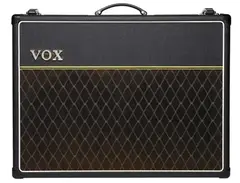
1) there is no rule, whatever microphone(s) and position(s) serve(s) the arrangement... I like 2 mics, usually though. MONITOR in context... also, try recording a DI track at the same time as your amp track to give yourself options later to layer sounds with the same performance. If you are playing with heavy distortion I would consider using a distant mic at about a ayrd out on axis to get some room, it sounds muscley to me on heavy distortion to get some room chugging and some coupling from the guitar is you happen to be performing in the room with the amp. I prefer recording lead lines in the room and not from the control room if possible because it allows me to play the amp a bit more and get expressive, but its all cirumstancial. These days I do a lot of electronic music, but I add guitar or run synths or drum loops thru my guitar amps and I tend to do mid-distance micing, off axis with one mic. I don't even fiddle too much, I just get a sound that is great in the room and pick a spot for the microphone and if it sounds passable I hit record and generally get great results. A lot of the time I just use a USB mic out of sheer laziness. I would spend more time dialing in a great amp tone that doesn't have too much bass but still sounds full than I would spend on mic placement. I hear a lot of amature guitar recordings and the #1 problem is frequency response that eats up the wrong part o the mix. Generally there's too much bass (sub 300hz), a lot of mush around 400hz, not enough legit treble to add definition and too much high mid (1k to 5k) that takes up a lot of space and causes ear fatigue. Bass and treble can be handled at the amp by making a sound that SUITS THE MIX and not your notion of how you want to sound in your bedroom alone. The mids are a mix of amplifier response and mic placement, but a well dialed sound will be more forgiving to mic placement. I like vox ac30s because they are not harsh and while capable of deep bass are not boomy or mush down low. Spend more time dialing in a sound, not effects, but just the straight sound.
2) you can make a record with a pair of 57s, a behringer mixer and an 80s tape deck if you have a vision and enough knowhow to realize it... gear is immaterial, its nice to have it, but you don't need it to record. Good instruments help more than great recording gear and top shelf software. Why not just record a click track first from a cheap metronome like the little blue Korg (I used that in professional studios that didn't use computers for years, just allowed a track on the tape deck, ADAT or Alesis HD24 for click, problem solved... $5 investment), plug it into your audio input on the laptop no matter how shitty and record 5 or 6 minutes at the tempo you want, then build the song around it.
3) I'm not sure I understand your problem/question... doubling is simple and is a question of playing technique and precision. Sloppy doubles sound like crap. If it sounds bad, do it again until it sounds good.
4) keep at it, the only way to get good at something is to do it all the time...
EDIT: After writing my general response I followed your link, your recordings aren't terrible. Everyone is always learning and like all of us you have room to improve as an engineer BUT you have a lot of room to improve as a producer. I have some thoughts but I didn't listen closely as I am busy, multitasking this morning. If you want me to listen more carefully I will, but be prepared for a no-holds-barred critique of the entire production (that will include songs and arrangements.... perfect arrangements of tight songs record and mix themselves). I think I ay be able to give you some insights that will aid your next endeavor but you may not enjoy swallowing them at first.... caveat emptor
Getting the right mix was weird and difficult for me, I was only ever recording guitar parts and I don't have a particularly sensitive ear for things like that, but I'm well aware of how important it is and I so wanted to get it right! I'm considering investing in a graphic equalizer to make stuff like that a little easier, do you reckon that's a good way to go?
I seriously appreciate any feedback/critique you're willing to give me, I cannot stress enough that how little I knew going into this, the way I see it the only way I can possibly go is up!
Your main problem is in the arrangements (basic as they are), much of it sits in the same basic register. There's limited dynamic range and bandwidth in a recording so an efficient arrangement makes for an easier mix. Otherwise you have to tolerate (or, as you become more advanced EXPLOIT) frequency masking or really reshape background sounds with heavy EQ to make space for the parts that need to be forward, and while most complex mixes use this approach to an extent, the less EQ you apply to a recorded track the better it will generally sound.
You don't need more gear. Spend more time working everything out before pressing record or at least really think thru and experiment with your arrangements while overdubbing, trying multiple versions of each part with different timbres and in different registers so you have options at mix down if you weren't sure at the outset of what was going to work well. I am not saying you need to exclude happy accidents and spontanaeity, but I am saying you want to stake out spaces for those surprises to occur so that they can be heard with all their magic and power. This is really not that ahrd when you are a one man band. It gets trickier in a band environment because not everyone will always 'get it'.
Consider a Socratic approach to music; the unexamined note is not worth playing.
Thanks a bunch for your input; the stuff you heard was put together from a few loose ideas at the back of my head that didn't get much room to breathe before they went in front of a microphone. I've already put a lot of thought into where to go next, and it feels good to have that extra level of focus in whatever I end up doing next
okay, well, make that record and if you're having trouble from a purely technical, negineering standpoint just post again with the new stuff and more pointed questions that are specific to the trouble spots and I will try to help you with some suggestions if the problems are just isolated sonic issues that can be addressed with better mic placement etc... beyond that I can only give you a little more general advice that will hopefully point you in a solid direction so you will not need anyone's help moving forward unless you want it
consider that technical limitations (by this I mean limited resources as well as a lack of technical, practical engineering knowhow) can force one to make decisions early on in the process (you've already made some just recording solo into a laptop) and that a sonic 'flaw' can be transformed into the centerpiece of a recording if handled creatively... there's a history of standout tracks that are iconic specifically BECAUSE THEY ARE TECHNICALLY IMPERFECT on various levels, but its an art in and of itself knowing what to exploit in this manner (heck, the entire garage rock genre is based around sloppy playing, sketchy sound quality and often nonsensical mixes, but its great fun because the folks who were seminal in the movement really knew how to play the ingenue)... apart from thinking your ideas through before beginning this time it may also be beneficial to rethink everything during the recording and mixing process in an attempt to 'get outside the box' of your original ideas if they begin to seem stale....
have you ever used Brian Eno's Oblique Strategy cards?
Thanks again for your input, I'm trying to make these sound as good as they possibly can, I'm grateful for all that you've said so far.
I'm aware a 'mistake' can sometimes take a track from good to great, but none of the mistakes I made making this felt organic to me, they just all felt kind of wrong... there's a couple of demo recordings I've made that have a nice 'done in one take' vibe to them that I do enjoy though.
I'd never even heard of those cards before but I've bookmarked them, this is an incredible resource!
whenever I get stuck I like to open that site and click 'random card', sometimes it helps