Join music gear discussions on Equipboard. Talk about guitar gear, electronic music production, get help identifying gear, ask for feedback on your music, suggest ideas to improve Equipboard and more.

What I should have done when starting out...

I'm making my way past being a beginner guitarist. I'm about to start learning scales instead of just strumming to anything and everything. I'm just hungry for advice and tips from guys who look back on their journey learning and wish they would have done this or that more? just looking for advice. Any info will help

You are already doing one of the things I wish I had done when I started, and that's learning scales/chords/names of notes.

  1. I wish I wasn't such a snob about what music I played. When I started out, it was Metallica or bust. Then it was Tool or bust. On and on until I eventually starting just playing along to anything on the radio. My point is, I wish I had made myself learn music from different genres and from outside my own musical taste from the start.

  2. I wish I had practiced multiple techniques equally. As a guitarist, it would behoove you to learn to finger pick, use a plectrum, and if you can... even try some percussive acoustic. Every extra, new way to play you practice will greatly enhance your playing and the need for people to have you in their band.

  3. Don't do drugs or other self-destructive behaviors just because an artist or icon of yours did/does them. It's so stupid, a waste of money, a waste of time, and you are rolling the dice on your freedom and health. It's cliche, but it's true. Don't hang out with people or jam with others who do either. You are who you hang out with. Guilt by association. Be a real rebel and be one of the few musicians that don't have an abuse story.

  4. Play multiple instruments. If you have a 6 string now, you should try a ukulele or bass. Learning the roles and mainstream behaviors of these instruments allows you to write better music. I did not re-enforce the multiple instrument idea after a while, and I wish I had kept up with it. Grab a banjo even.

  5. GET ON STAGE!!! Oh my gosh I wish I had done this years ago. Go out and play for living, breathing bodies. Get used to making wrong notes in front of a crowd, get used to having 400 eyes glued to you, and learn to move and get into the music. Don't just stand there like a statue. Videotape yourself when you play live and re-watch it the way football teams re-watch their games. Learn from what mistakes you made and keep working on your stagemanship. Learn when it is appropriate to dance wrong on stage and when to gently sway. You are a leader when on stage and the audience will feed off how you lead. If you look bored, they will be bored. If you are excited, they will be excited. Be a bard. Use your music as well as your body language to manipulate the crowd. If you are religious, I would greatly recommend playing for your church/temple/what-have-you. Even if you aren't super into the music they play, it is still experience and you are benefiting from being on stage, playing with other musicians, playing music outside your own tastes, and essentially mastering your techniques. Another benefit to these types of gigs is that the audiences there will be far more supportive than at a bar or in a parking-lot.

  6. Buy nice equipment. When you buy nice equipment and take care of it, you have the opportunity to sell it for a decent amount later if you wish. No one wants to pay $25 for a beatup guitar that was bought at Walmart for $100 4 years ago.

I think that's a good starting point.

@boom762 thanks you so much for your descriptive input. It will help me out tremendously.

personally I wish I hadn't let my sight reading get so band in the late 90s... in school jazzband I was mainly reading chord charts and then I played tons of rock music by ear, even on piano... my sight reading is pretty halting and atrocious now from lack of use and it slows me up a lot in certain situations.... keep your reading at its peak and if you can't read music, LEARN. Tab is apparently a useful notation method for GUITAR (I can barely make sense of it), but no one else uses it, so if you want to play in any group that contains more than guitar, drums and bass it really helps to read classical notation and read it well. It will also teach you how the piano works.

CAGED system.... I started with classical positions, but the CAGED system was a revelation to me, taking what's good about the classical method and making it super useful in all types of music. I didn't have to abandon what I already learned but it greatly expanded my ability to just jump in interpret most simple music once I know the key. I wish I had learned it right away. Study it now.

Stop worrying about the notes/chords and concentrate on how you approach them. From voicing to articulation. Never discount any technique from any form of music. Learn it all and add it to your arsenal.

Always try to surprise yourself.

Be a musician first and a guitarist second.

GEAR:
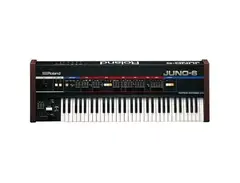
  • Roland Juno-6
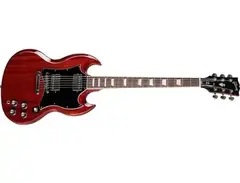
  • Gibson SG Standard
  • Vox AC30 Guitar Combo Amp

I've only been playing few years and am by no means an expert, but my biggest advice is don't worry about feeling in rut eventually you'll have that revelation you've been looking for and be able to move on, i struggled so much with this my first year or so of playing and i put myself behind where i should be now as a muscician. Another thing, and i agree with jimmarchi1, is CAGED, this makes chord voicing and finding keys to play with much easier and was a huge breakthrough with me and also watch this video,https://youtu.be/YzvvTNuivkk when i learned this scale after about 6 months of playing it was a huge breakthrough for me and i use this shape a lot being its more emotive than the square/boxy scales