Join music gear discussions on Equipboard. Talk about guitar gear, electronic music production, get help identifying gear, ask for feedback on your music, suggest ideas to improve Equipboard and more.

Why are SSL consoles/mixers so expensive? Are the PCBs sprinkled with fairy dust?

@pkennethk and I started talking about the SSL Big6 in a Mackie Onyx thread and I've gotten deep into the SSL rabbit hole since he asked my opinion. Thus thread is more if a general SSL thread but I'm really focusing on value for dollar (or pound?) Which I now know is pretty poor.

As a guy who has worked on some 4000 E&G desks I always find myself telling people that they are not sonically special. They don't sound bad at all, just no better than anything else. SSL made a feature packed desk with great automation that had everything you really need to mix a record... I love that about them, but when you start subtracting features like they did on the origin console and more egregiously the big6 usb mixer are you really getting your money's worth?

Sound is of course subjective but design elements aren't soooooo....

I sat down with my 90s budget desk service schematics and pdfs of the schematics of the trident 80b from which so many mixers like mine are derived as well as the schematics of the SSL 4000E and mssochistically compared them all and I can say that while the channels run at different impedance using different ICs and the SSL packs on the features, these desks are very similar at a channel level. They also use thgt e same summing IC (so does mackie) in a slightly different arrangement that's more to do with their choice of fader amps than due to any sonic benefits. Both arrangements have drawbacks due to component choices informed by cost and can be modded a bit for improved performance without swapping in modern audio specific ICs like those made by Burr Brown.

Something like big6 eliminates a lot of features while touting it's great circuits that are just SSLs take on the bog standard opamp cookbook circuits that are in mixers that are less than 1/3 the price. I'll admit you are probably getting a better 18v power supply (I hope you are for that money) which will give you somewhat better transient response... I'm sure the ground scheme is fantastic, SSLs great at PSU stuff thanks to building behemoths before it attempted desktop mixers. But I can tell you most of the cost is the logo. The neve logo means something, as it turns out the SSL logo really doesn't. Their reputation is based on well implemented features but in my view they're out there selling a superior sound to people who don't really know while stripping all the features and value from these products. Theres nothing wrong with their circuits it's just that they're not unique, just overpriced.

Nerd paragraph: Just for reference all SSL amp circuits from mic and line inputs to outputs are built on the ne5534 chip, a low noise opamp used by everybody for summing since the 80s. I dont think they went that way for performance... I can tell you my soundtracs is pretty close to an 80b (admittedly my desk is inline versus an 80b being split topology, that's just routing) everywhere but the mic/line amps which are more like the later super analogue ssl circuits than the transformer fronted discrete 80 series pres or the transistor balanced 4000 preamps... and an 80b is only a whisker different at a circuit level.

I've written more stuff but it's at an even nerdier level... ask me anything and I will get deep into these IC based desks and mixer/interfaces...

Admit it, we all want some faders and knobs. Let's talk about what makes them tick and what you get for the outlay from a mackie to anything short of Neve grade.

GEAR:
  • Roland Juno-6
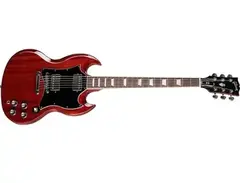
  • Gibson SG Standard
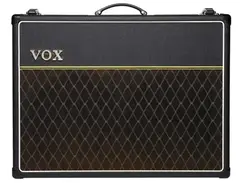
  • Vox AC30 Guitar Combo Amp

This is interesting and full of solid info about opamps and even a bit on sample rates. Slightly off topic but it informs the discussion and mirrors my thoughts, particularly the bit about sighted listening:

http://nwavguy.blogspot.com/2011/08/op-amps-myths-facts.html?m=1

I think the big6 is counting on you hearing the SSL logo. It's not 2400USD better than the lowly tascam model12. They're probably more similar than they are different working on typical IC building blocks using ubiquitous 5534 and tl071 opamps (or the dual/quad versions, 5532, tl072, tl074) that have been around forever.

GEAR:
  • Roland Juno-6
  • Gibson SG Standard
  • Vox AC30 Guitar Combo Amp

This is interesting and full of solid info about opamps and even a bit on sample rates. Slightly off topic but it informs the discussion and mirrors my thoughts, particularly the bit about sighted listening:

http://nwavguy.blogspot.com/2011/08/op-amps-myths-facts.html?m=1

I think the big6 is counting on you hearing the SSL logo. It's not 2400USD better than the lowly tascam model12. They're probably more similar than they are different working on typical IC building blocks using ubiquitous 5534 and tl071 opamps (or the dual/quad versions, 5532, tl072, tl074) that have been around forever.

This blogspot link is great.

I'm currently chewing on SoundOnSound's summation:

"At the most superficial level, the BiG SiX might appear comparable to much cheaper products from other manufacturers: Tascam’s Model 12, for example, or Soundcraft’s Signature 12 MTK. But even a little investigation will show you that that’s not the case. Far from being expensive for what it offers, SSL’s big‑small mixer actually represents amazing value for money. Other products with apparently similar features are built to a price. Their technical performance is good compared to the budget gear of yesteryear, but you probably wouldn’t want to use them on a high‑stakes classical recording session; and a feature set that looks impressive on paper often turns out to be incapable of adapting to different ways of working.

What distinguishes the BiG SiX is the way that SSL’s heritage of large‑format console experience comes through in almost every aspect of its design. You’re not just getting four reasonably acceptable mic preamps that are usable at a pinch: you’re getting four state‑of‑the‑art input channels that would probably cost thousands if you bought them in rackmounting form. You’re not just getting a couple of adequate headphone amps and a volume control, but a proper master section with genuinely flexible routing and monitor control facilities. You’re getting a device that operates at ‘pro’ signal levels. You’re getting balanced insert points on both the mic channels and the master bus. You’re getting true stereo Cue sends. And, of course, there’s that preset but great‑sounding SSL EQ and compression, all of which can be switched completely out of circuit if you don’t need it. Even if you treated the BiG SiX purely as a way to get hold of four SuperAnalogue input channels, and never used the rest of its features, you’d still be getting a lot for your money. When you consider what else it offers besides, it starts to look like a real bargain."

I think this merits a blind head-to-head between the Model12 and the BigSix. Someone needs to be bold enough to do it.

GEAR:
  • Roland TR-808 Rhythm Composer
  • Roland SH-101
  • Roland TR-909 Rhythm Composer

I think this merits a blind head-to-head between the Model12 and the BigSix. Someone needs to be bold enough to do it.

I would love to do it but lack the buy in... or I'm unwilling to pay it! Which is the same thing. But the other thing to consider here is the non sweepable mids. Maybe SSL managed to squeeze that little bit extra from their 5534 opamps with a great power supply and I'm sure their 1 knob vca compressrs are a bit better... BUT is that enough additionalsound quality to remove functionality like a mic pre on every channel and sweepable mids? An e242 eq module is fully parametric! Theres nothing expensive in here, I'm telling you. The 5532 is a buck at most and that's if you buy less than 10. Is all the cost THAT Corp VCAs, p&g faders and bigger electrolytics for the PSU?

To me the main point the reviewer makes is balanced insert points which are hard to come by under 5 figures! But also unimportant unless you're a big facility doing commercial projects and gave huge wire runs. And these are not transformer balanced outs and ins, electronic balancing is not adding sonic benefits. Theres a lot of unspecific gushing because he's listening to the logo and the big advertising payment SSL gave his boss!

GEAR:
  • Roland Juno-6
  • Gibson SG Standard
  • Vox AC30 Guitar Combo Amp

I think this merits a blind head-to-head between the Model12 and the BigSix. Someone needs to be bold enough to do it.

I would love to do it but lack the buy in... or I'm unwilling to pay it! Which is the same thing. But the other thing to consider here is the non sweepable mids. Maybe SSL managed to squeeze that little bit extra from their 5534 opamps with a great power supply and I'm sure their 1 knob vca compressrs are a bit better... BUT is that enough additionalsound quality to remove functionality like a mic pre on every channel and sweepable mids? An e242 eq module is fully parametric! Theres nothing expensive in here, I'm telling you. The 5532 is a buck at most and that's if you buy less than 10. Is all the cost THAT Corp VCAs, p&g faders and bigger electrolytics for the PSU?

The review talks up using the Big Six for hybrid/Ootb/loopback mixing... but I would suspect the total channel count would put kind of a damper on that kind of application. What would you consider a minimum viable channel count for doing a mix on something like this?

GEAR:
  • Roland TR-808 Rhythm Composer
  • Roland SH-101
  • Roland TR-909 Rhythm Composer

To me the main point the reviewer makes is balanced insert points which are hard to come by under 5 figures! But also unimportant unless you're a big facility doing commercial projects and gave huge wire runs. And these are not transformer balanced outs and ins, electronic balancing is not adding sonic benefits. Theres a lot of unspecific gushing because he's listening to the logo and the big advertising payment SSL gave his boss!

What pro-audio publication do you, personally, trust?

GEAR:
  • Roland TR-808 Rhythm Composer
  • Roland SH-101
  • Roland TR-909 Rhythm Composer

Personally I struggled with 16 channels for a year. There were several reasons to retire the 400b including unbuffered pan pots with poor crosstalk and soundstage behavior but what really got me was that people recording on their computer aren't thinking about track count. Simultaneous channel count is a concern for them when tracking as an ensemble but once you're into overdubs? I've gotten stuff with an individual track for a single percussion hit, man. So as many channels as you can fit and afford! I was originally thinking 24 into 8 for an upgrade but went 32 into 8 when I found a desk I could fit that meets my routing and sound quality requirements. I just can't imagine what I could use the big6 for because it's not big in any way.

GEAR:
  • Roland Juno-6
  • Gibson SG Standard
  • Vox AC30 Guitar Combo Amp

What pro-audio publication do you, personally, trust?

Tape Op... Andy Hong Hong don't pull no punches

GEAR:
  • Roland Juno-6
  • Gibson SG Standard
  • Vox AC30 Guitar Combo Amp

What pro-audio publication do you, personally, trust?

Tape Op... Andy Hong Hong don't pull no punches

That's a relief. I was afraid you were gonna say you'd lost faith in every last publication.

I'm a TapeOp fan myself.

GEAR:
  • Roland TR-808 Rhythm Composer
  • Roland SH-101
  • Roland TR-909 Rhythm Composer

The guys who run tape op are solid dudes... and are fun at the bar! At least the couple I've hung with. I've definitely read lukewarm reviews of products that bought advertising so you know that's not driving their content.

A lot of their steadiest advertisers are service based.... techs... I found my go to mastering lab through tape op!

GEAR:
  • Roland Juno-6
  • Gibson SG Standard
  • Vox AC30 Guitar Combo Amp

So let's say one records a nice analog synth through your Soundtracs console, into your MOTU interface, and the same synth, same part through a Tascam Model 12 using its internal USB interface. In technical terms, what do you think explains the sonic disparities between the recording made on the Soundtracs vs. the Tascam/Motu combo?

And since you're proposing the SSL Big Six wouldn't sound much better than a Tascam Model12, you could swap the Model12 for a Big Six in that question if you want.

Does it all come down to the strength of the power supply in your Soundtracs & the better-spec'd ADC in your MOTU?

GEAR:
  • Roland TR-808 Rhythm Composer
  • Roland SH-101
  • Roland TR-909 Rhythm Composer

All of the above will sound the same assuming the motu is converting. We have equivalent opamps at 18v in dead similar designs. The SSL may have lower self noise but we're still really negligible in the budget products. If you're a dolphin there's a bit more bandwidth above 20k you can hear from a 5534 on the channels vs tl071s however its circumstantial to a degree and there's there's other factors like signal impedance that are literally preferential.

GEAR:
  • Roland Juno-6
  • Gibson SG Standard
  • Vox AC30 Guitar Combo Amp

All of the above will sound the same assuming the motu is converting. We have equivalent opamps at 18v in dead similar designs. The SSL may have lower self noise but we're still really negligible in the budget products. If you're a dolphin there's a bit more bandwidth above 20k you can hear from a 5534 on the channels vs tl071s however its circumstantial to a degree and there's there's other factors like signal impedance that are literally preferential.

Well is there anything you find sonically pleasing about your Soudtracs and your Soundcraft 400b, or are they both just routing and mixing utilities because you prefer the ergonomics of mixing outside the box? I thought you were using consoles both for the ergonomic utility AND for the pleasing coloration they provide?

GEAR:
  • Roland TR-808 Rhythm Composer
  • Roland SH-101
  • Roland TR-909 Rhythm Composer

I mean yeah. They both sound good. Similar too. The soundtracs has a better stereo image, probably due to the pan pot buffers... it sounds a little clearer and 'larger'... a little more bus headroom. If i redo the power supply I can probably get the topaz head and shoulders ahead of the 400b sonically. I mean both sound a lot like a trident 80b and not even that dissimilar to an SSL 4000e. I would get flamed for writing that on gearslutz but I'm not lying. I feel like the SSL has more bandwidth but that's a subjective impression based on decades old experience. It's not like a 4000 is airy like a neve though. I think they sound harsh.... the mixes are very 'forward.' My 2 cheapo desks are a little softer sounding and tend to sound less in your face for better or worse. That's just my impressions. The #1 analog mixer concern is functionality. Features, channel count, routing. It's nice when it doesn't sound bad but I've done a record with an alesis budget mixer and it lacked punch but sounded okay and made this artist happy way back when.

GEAR:
  • Roland Juno-6
  • Gibson SG Standard
  • Vox AC30 Guitar Combo Amp

... It's not like a (SSL) 4000 is airy like a neve though. I think they sound harsh.... the mixes are very 'forward.'...

Any ideas as to what is different in the Neve designs that leads to this "airy" sound?

GEAR:
  • Roland TR-808 Rhythm Composer
  • Roland SH-101
  • Roland TR-909 Rhythm Composer

Yes. Discrete component opamps purpose designed for the specific job they're doing and a power supply robust enough to feed those power hungry class A circuits without mushing out on the transients. Also being purpose built for their jobs and transformer coupled the neve amps are running at low impedance which will improve bandwidth and are so stable that they're passing frequencies dogs can hear without oscillation. Also being class A they're incapable of producing crossover distortion.

edit: Theres also some stuff on the SSL mix bus that on paper is an improvement on say the trident version of a ne5532 virtual ground sum amp. Theres an extra transistor array on an ic (an LMsomethingorother it escapes me now) that's not really audio specific. It can be used for audio but I dont have a good opinion of it. Then again o think it fronted the jensen 990 opamp used in the john hardy m1 and Jensen's dual servo pre and those are some of the finest preamps known. I digress. In fact it's probably not the same part in big6 because it's now obsolete... more modern chips will reduce that bottleneck... neotek and others did something similar but used discrete transistor pairs in a common emitter amp to minimize the effect of loose tolerances. They usually used nice bipolar transistors for that impedance matching job in front of the ne5532 that had a long pro audio and hifi track record. SSL kinda cheaped out although the chip they chose may have been the best part at the time if you didn't want to eat up a bunch of pcb real estate. Im not sure what was available in the early 80s. Neotek are a lot less crowded being less complicated in the routing department. A lot of 4000 ieners swap those ICs when the desk is being serviced. Additionally there are tons of VCAs in the signal path of an SSL for automation and dynamics processing. No one ever credited a VCA with improving the audio entering it lol

One thing that occurs to me as a drawback of the tascam model mixers is their power supply which seems to be a modern switch mode affair and that is not the ideal way to provide reliable power to a mixer of any size.... I'm sure SSL gives you a bug, well regulated PSU. Basically any logical power supply upgrade will improve transient response as far as the audio path will allow (some caps seem to be faster than others for example, sluggish signal caps will create a bottleneck that no amount of reserve power will push the large transients thru) and will also tend to improve bass clarity.

Also, the tascam may be surface mount devices. You can get all of these ICs as SMDs now. I'm kinda suspicious of surface mount for right now.... I don't know how to service those pcbs and I'm not sure that i trust the durability of a construction method that's geared toward making consumer electronics more affordable.

Disclaimer: I'm by no means an electrical engineer or even an expert studio maintenance tech.

GEAR:
  • Roland Juno-6
  • Gibson SG Standard
  • Vox AC30 Guitar Combo Amp

Discrete is a godsend for long term serviceability, sure, but that article you linked earlier was pretty much a "discrete sounds better" myth busting piece, no?

GEAR:
  • Roland TR-808 Rhythm Composer
  • Roland SH-101
  • Roland TR-909 Rhythm Composer

Yup... but he included exceptions and Neve would fall in there as would the Jensen 990 and GML discrete opamps. I mean it's like 60 bucks an amp for a 990. Purpose made specialty items designed to outperformed an IC in a handful of very specific audio applications.

GEAR:
  • Roland Juno-6
  • Gibson SG Standard
  • Vox AC30 Guitar Combo Amp

Yup... but he included exceptions and Neve would fall in there as would the Jensen 990 and GML discrete opamps. I mean it's like 60 bucks an amp for a 990. Purpose made specialty items designed to outperformed an IC in a handful of very specific audio applications.

10-4

GEAR:
  • Roland TR-808 Rhythm Composer
  • Roland SH-101
  • Roland TR-909 Rhythm Composer

Sony NY had a custom desk made from all GML amps with no corners cut. Then they closed the NY office and here it sits because no one can afford it!

GEAR:
  • Roland Juno-6
  • Gibson SG Standard
  • Vox AC30 Guitar Combo Amp