Join music gear discussions on Equipboard. Talk about guitar gear, electronic music production, get help identifying gear, ask for feedback on your music, suggest ideas to improve Equipboard and more.
Guitar Pedalboard Design

Hi Guitarists,
Feel free to post stuff here relating to pedalboard design & signal flow. Questions, advice etc...
To get things started, here is a link to what I am planning for 2016, what do you think?
http://equipboard.com/gear_photos/2930
Signal flows more or less from Right to Left in a standard manner.
Looking forward to hearing what you think. :)
-TWBP

Well, it looks like there is a top row and bottom row (on the right board, where your signal begins)? So my first question is how exactly does your signal flow?
My signal path begins with guitar > tuner > wah > OD > comp. But that right board seems to have a lot more on it. Three expression pedals (including the digitech whammy)? I've got a volume pedal so I can dig that, but I'm curious what is your third expression pedal controlling? one of the delays? and if so, why not have it next to the delay pedal?
Looks very neat and orderly and perfect in a Tetris manner but hard to solidify my opinion about signal flow without knowing (1) which pedals are true bypass, (2) which have buffers if any, and (3) can the smaller right board stand alone on its own for smaller gigs or do you HAVE to use both all the time?
I will also leave you with this thought .... I did not see any A/B boxes ... I (and many notable players) like to have a couple A/B switches on my board so when I'm not using all those fancy delays/phasers/etc. I can switch them out of my signal path. Saves tone, in theory.
Hi nickgrooves,
I like your idea about the A/B boxes. What would you advise as a good A/B that doesn't take up too much space?
Signal flow as follows:
Ernie Ball Volume Pedal - Tuner out to TU3 (always on) Main signal out - Exotic Compressor - EQ - Xotic Wah - Digitech Whammy 4 - Jim Dunlop Hendrix Pedals - Super Ego - (board jump) JHS Presteige (Buffer Booster used to get signal level back up a bit) POG2 - AnalogMan KOT L - Rockett Archer - JHS Muff - Z.Vex Fuzz - ISP Decimator - Visual Sound Chorus side - AnalogMan KOT R - Echosex 2 - JHS Buffered Splitter (STEREO Signal) - Eventide H9 - Visual Sound Echo side - Strymon Timeline - Strymon Big Sky - Stereo Out to Korg SDD-3000 to two custom Vox AC15HW.
Most of the boutique pedals and the delays are true bypass, I was thinking of getting a looper but I may go with a pedals rack and a voodoo lab midi ground control system in the future and I can make do with a simple booster (JHS Presteige) until then.

Signal flow as follows:
Ernie Ball Volume Pedal - Tuner out to TU3 (always on) Main signal out - Exotic Compressor - EQ - Xotic Wah - Digitech Whammy 4 - Jim Dunlop Hendrix Pedals - Super Ego - (board jump) JHS Presteige (Buffer Booster used to get signal level back up a bit) POG2 - AnalogMan KOT L - Rockett Archer - JHS Muff - Z.Vex Fuzz - ISP Decimator - Visual Sound Chorus side - AnalogMan KOT R - Echosex 2 - JHS Buffered Splitter (STEREO Signal) - Eventide H9 - Visual Sound Echo side - Strymon Timeline - Strymon Big Sky - Stereo Out to Korg SDD-3000 to two custom Vox AC15HW.
Most of the boutique pedals and the delays are true bypass, I was thinking of getting a looper but I may go with a pedals rack and a voodoo lab midi ground control system in the future and I can make do with a simple booster (JHS Presteige) until then.
yeah, you need the midi switcher because if you add a few more rack processors you are going to be competing with The Edge! That's a lotta tap dancin' w/o his great midi system!
I like your 2 ac15HW setup, you are a man after my own heart (I like to use at least 2 ac30s --HWs, vintage or similar handwired stuff-- even when I am not running stereo effects, a Vox and a Matchless together really is a super wide and complex sound). If there are certain effects you always use in combination, there's an all analog solution that's cheaper than the ground control but is easier to deal with than the looper and it even has a nice buffer bult in as an option. Check out the Carl Martin Octaswitch. It may reduce your tap dancing a little if implemented wiseley. I am not sure why you have so many different delays when so many of your delay pedals have tap tempo features. I get that the SDD3000 has a great preamp to act as a final signal buffer as well as having a unique, bright and crispy delay sound, but the strymon timeline really does most of the analog simulations you could need with sound quality that's unsurpassed even by TC and Fractal, so the VS H2O and Echosex seem like overkill.
There's a lot of potential drag on your signal here without the buffers and you are really changing the loading on your pickups with them. I am not surprised you need the ISP noise reduction with all this extra signal chain. If it were me I would get a Radial Tonebone Dragster for my guitar strap to reintroduce a proper, reactive load that your guitar pickups can 'see' and then consider going wireless from there with an effect rig this nutty. But I am not a big fan or the perfect 1megohm load buffers present to your guitar, even with all the signal loss through gobs of cable (and I own some tweaky, hifi standalone buffers), other guys don't like the sound of a guitar straight into an amp.
I would also think about making something this complex into a wet/dry/wet rig with an ac30HW or maybe a tweed fender as the center/dry amp that also will be a cleaner sound to get some definition back in your overall tone. The higher headroom of the 30 watter will help with that as will feeding the ac30 from a point in your chain somewhere before your last dirt box. So after the decimator you would have a good, active ABY like radial's (yes I use a lot of their stuff, no I am not an endorser, just a fan), hit the analog chorus (its not stereo? bummer.... I recently scored an old Ibanez FL9 in a trade that I really like but its not stereo either, grr), get some more dirt from the KOT, then split to all your fancy digital stuff and then out to the 2 ac15s which will get extra dirt and all the modulation and stereo delays for an ULTRAWIDE sound. In smallish clubs the soundmen will not love you when they have to put 2 more microphones up, but fuck 'em. If you're going complex, I say go big or go home. In the words of Meatloaf "you have to go over the top to find out what's on the other side!" This isn't a smallish club rig anyway.

Nice. Adds up to around £6,135 GBP. How are you financing it? Also why do you need THREE delays, TWO fuzzes, TWO reverbs,and TWO overdrives? And finally what are the Hendrix pedals: Vibe and Fuzz?
Thanks for the advice Jim, maybe I should change my name to "theedgewouldbeproud"... ;)
That's a lot to think about, and I really like your sound methodology, a man after my own heart indeed! I was considering with possibly going for some sort of Hiwatt at a dry as they are so clean sounding, a Vox AC15/30 has that idiosyncratic tone that I love but a Hiwatt tube series (maybe a 40W or 50W) would give a really clean dry element. I know Hiwatt of late have not been all that great so I would probably have to try and find something a bit older or try another Amp for dry tone, I hear that Matchless are pretty transparent amps, would you agree? Perhaps I could look at that as an option?
I have seen the Octaswitch once on a video somewhere on youtube but never gave it a second glance, I'll check it out for sure now though.
Go big or go home, great words to build pedaboards by! :) The thing is I am stuck in some middle ground between needing a MIDI system and most of my pedals rackmounted and where I am now with a big board and just a lot of tap dancing. I'll get MIDI when I deserve it I guess, probably won't be for a few years....
I really wanted a stereo chorus but I really like what you can do with the H2O, I'm always slightly hesitant to get pedals that are two in one as they just seem to be less flexible unless you can get in between the two sides like on the KOT 4 Jack version. Having looked at it and heard what people have had to say I don't think I'm going to get the H20 in the end as I have more than a justifiable number of delays and a good quality stereo chorus would be more beneficial to my rig.
Cheers dude! :)
Hi dukeuke,
I'm financing it by starring in a Mayonnaise Commercial. ;)
But seriously, most of the stuff on my board I have accumulated over a few years. I work as a video tech (currently for Imagine Dragons on their world tour) and sometimes if you get to be good friends with the backline guys who look after the bands gear, they can get you a good deal on gear too.... Most of the time, it's hard earned cash from 20+ hour days of doing shows and buying gear with no discount, I just spend money on what I love so when I come home from 6 months on the road I can chill out and enjoy my own music, you can't put a price on that. After all, you can't be throwing TVs out of hotel room windows every day, it just gets boring.
The seemingly excess gear; I've decided to get rid of the H20 delay in favour of a Stereo Chorus after reading some advice from jimmarchi1, that leaves two Delays (Echosex and Timeline) which do different things based on where they are in the signal chain (one is stereo and is second last in the signal path and one is not). The Eventide H9 does a bit of everything as it is essentially a ModFactor, TimeFactor, Space etc all in one. The two fuzzes; the JHS Muff lets me emulate any of 6 Big Muff style fuzz boxes which I like because it's pretty flexible in a small pedal and I can get almost any sound of Fuzz. The Z.Vex Fuzz Factory is a completely unique pedal and you can't compare it to any other Fuzz IMHO, it does some really crazy sounding stuff and I love it. That leaves the one reverb pedal (not counting the H9 which is an entity of its own).
The Hendrix pedals are awesome; a Univibe and Octavio, perfect for chasing the Hendrix tone or just something a bit different to go your own way with. There are some great youtube reviews of them, check them out.
Cheers!
-TWBP
I was considering with possibly going for some sort of Hiwatt at a dry as they are so clean sounding, a Vox AC15/30 has that idiosyncratic tone that I love but a Hiwatt tube series (maybe a 40W or 50W) would give a really clean dry element. I know Hiwatt of late have not been all that great so I would probably have to try and find something a bit older or try another Amp for dry tone, I hear that Matchless are pretty transparent amps, would you agree? Perhaps I could look at that as an option?
the most transparent, cleanest matchless in your wattage range is the thunderman... its like a mutt between a vintage ac50 and a hiwatt dr504... its LOUD as heck... a DC30 is more transparent than a vox, but not by much... its a bit louder, a bit punchier, more treble, more bass, more modern, but still relatively low headroom as both of tis channels present a lot of signal to the phase inverter compared to your average ac30... UK modern hiwatt is utter junk and I was unimpressed with the Reeves branded hiwatt clones I've tried, they are weak and sterile compared to a hylight or even the much maligned biacrown hiwatts... Mark Huss makes some great Hiwatt clones with permission of Dave Reeve's surviving family that really do the business under the name of Hi-Tone and he even does a 4x6v6 30 watter that's switchable down to 15 in a pinch if you can't turn the input gain up loud enough to shake the stiffness off w/o pissing off the soundman
but they cost a fortune, almost as much as a Hylight dr504 in bad cosmetic shape... if you can find one, the Harry Joyce branded amps are phenomenal
Dr Z makes an amp that has a sort of DC30ish front end into 2 ultralinear KT77 tubes that's very hiwatty but with a more robust preamp that can get a full sound even at low levels

Just saw this. Anybody understand exactly what the technical purpose of a buffer is? I have a friend who has one and he just put it the beginning of his board just after the guitar. I'm here thinking, "I think buffer should clean a signal, so why put it immediately after the guitar if that signal is already clean to begin with?"
I have read about buffers and watched a youtube video on buffers in pedal chains and I'm still not entirely clear on what they do. Funny thing is, until recently (last six months?) I'd never even heard the term used in guitar rigs (only computer circuitry talk; my dad was a big-deal electrical engineer back in the days of hardware). Anyway ... best I can tell you don't need a buffer if you are only using a few pedals. It seems the folks who need buffer pedals are folks who have tons of pedals. I'm not saying that because of this thread. I'm saying it based upon what I've seen and read online, and again, not really being sure about their purpose. It seems a lot of folks who have buffers aren't really sure either they just heard they needed it and bought one.
I'm hoping Jimbo chimes in with a highly educational post but since he kind of already explained it a little here, it may not help folks like yours truly.
Just to add, JHS sells a buffered splitter, so I always though that if you have a lot of pedals, you put the buffer after distortion and modulation and before delays and reverb.
On the subject of buffers, this is what I have found to be true for me.
Buffers have become more popular along with the semi-recent tide of boutique pedals. The JHS Prestige that I have and reffered to originally in the thread can be used in a few ways, if you're not using a clever MIDI system or looper system and just have loads of pedals in a chain then it can be used to boost the level back a bit and clean up the signal. It can also be used as a boost for solos etc and finally to add to a driven sound.
The buffered splitter by JHS that you mentioned is slightly different as it does not have level controls, instead it delivers two identical outputs (not passively) which is great for many situations but IMHO most useful for splitting your signal chain for stereo applications. (I know there's different ways of doing that sort of thing but these boutique pedals & buffers exist partly because people just love owning and playing with really nicely done gear.) I am one of those people and have my Prestige in the handpainted version. :D
But I'm not frivolous so I will probably be making use of the Mono-Stereo capabilities of the H9Max.
Also, has anyone seen the new Electro-Harmonix Cock Fight? It sounds really cool, like a Fuzz Factory with a cocked Wah all in one. I showed it to my Guitar Tech friend on Imagine Dragons (which is where I currently work) and he was pretty interested.
Here is a decent youtube link for the JHS Prestiege. https://www.youtube.com/watch?v=u3Zf8OG_9V0
Yeah, I'm loving the cock fight, but I don't think the price has been announced, or sales started in the UK/Europe. I wouldn't say fuzz factory (It's not glitchy, and mad enough), it's more of a modded muff I'd say, but nonetheless it's pretty nice.
I'm hoping Jimbo chimes in with a highly educational post but since he kind of already explained it a little here, it may not help folks like yours truly.
a buffer is a unity gain voltage amplifier that can handle a high impedance input and bring out a low impedance signal that will have minimal loss across long cable runs.... its essentially the same circuitry as a clean boost but its designed so it won't exceed the peak t peak voltage being put out by your guitar pickup. Any good clean boost can act as a buffer/line-driver if you carefully trim down the output to be about the same as when the pedal is disengaged. No boost or buffer is completely transparent and the cheaper the components, the more color they impart to your tone (like the buffer in most boss OD pedals in bypass) which is what caused the push for true mechanical bypass in boutique boxes. Ask more pointed questions and I will give more specific answers, for the home player with short cable runs a buffer is not important.

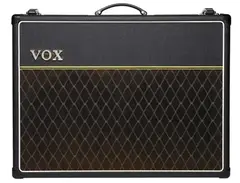
-s.webp?v=1783349875 "Vox AC15C1")
Hello!
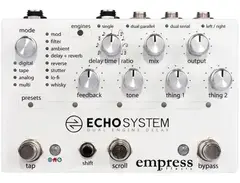
I recently bought a Vox AC15C1 and previously I bought a Marshal MG10 as a practice amp. After buying the Vox, I went for a Empress Echosystem and I didn't much time to check it all then I found a Wet-Dry option for the Left-Right outputs.
I absolutely love my main amp sounds, from clean to overdrive, so when I plug all the pedalboard sometimes that "purity" is lost in a bit. The Vox AC15C1 doesn't has a FX loops to put there all modulations and time-based effects. The first thing I've tried with the Echosystem was the stereo setup and it sounded really good.
Still not satisfied at all, searching a way to keep the original sound from the amp and mix it with the Wet Signal, I've tried this Wet-Dry config, using the Vox as Dry and the Marshall as Wet and it sounded incredible!
The pedalboard chain is Dyna Comp>EP Booster>TS Mini>BD-2>LS-2>Carbon Copy>Echosystem
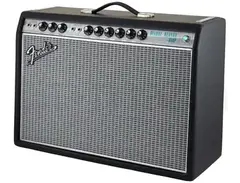
Coming soon, I'll go for a Fender Deluxe Reverb '65, to use it as a wet-signal amp to enhance the sound.
I have a Boss LS-2 selector to try a proper Wet-Dry using the signal after the drives as Dry, with the selector at A+B Mix, the main output with the modulations and based effects and the A Output the Dry signal.
okay, there's no reason to put an effects loop on a vox, even one with a master, because an effects loop falls between the preamp and phase inverter and vox and copycats typically put the master volume between the phase inverter and pwoer tubes, so the master isn't before where an fx loop needs to be in roder to function correctly... a more marshall style master doesn't sound so hot on a vox. It can be done, but it relly takes the voxiness out fo the drive.
That said, I've been mr ac30 for like 20 years. I own vitnage ones, new ones, boutique stuff... I have never had an issue with echo and mod into the front end even though i get a lot of my drive from the amp. Some of my ac30s ARE a bit finnicky with dirtboxes and when you throw other effects into the kix they get finickier... I've founf the C and CC amps to have one of the msot sirt-box finniky iterations of the circuit, but that's my ears. You really want to be careful with delay into the front of an amp in general. Its fine, I personally prefer it to effects loops... but you need to really know be used to doing it that way because you're encountering little bits of comrepssion and distortion that maybe you don't ehar in your dry signal but they have a lot of pull on the delay response. Vintage amp guys and oldsters? we get it and have no problem. Everyone else seems baffled. Really, setting it up right your delay will sound better then ever...
I will say that I am always dissatisfied with delay using only one am but its a compromise I'll make when iw ant to travel light. I agree with brian may on this one. If your speakers share the dry and wet signal of pretty much any delay based effect then you're going to get weird phase distortions as the delay and dry overlap at times forcing the cone to try to move itself in opposite directions. It bothers my ears if I'm playing alone, but frankly in a band situation it gets swallowed by the stage volume.
For wet/dry wet/dry/wet setups using multiple amps instead of the EVH lineout to power amp arrangement I really recommend you use the same amps or better still, an extremely similar amp with a lower wattage so you can drive it nice and hard for a similar tone with less output for delays etc. For instance, a good wet amp for a deluxe reverb is a Princeton... for you an ac30 would make a good dry amp and then your 15 could handle wet duties. When I do that sort of thing these days I will use the ac30hw in halfpower for delay with another ac30 for dry or if I want modulation I'll use a COUPLE older ac30s, one will still be dry and the other I'll use the vib/trem channel and engage the vibrato when I want a stereo chorus/phasing type of thing. Its loud though. Not fun to carry all those ac30s either. Even 2 is a lot for me these days.
are you favoring the TB channel or the mighty but underrated normal channel? Or does the current PCB ac15 not have a normal channel? Vintage ones were normal channel and vib/trem only! but that was the ef86 normal and the Wurlitzer style vibrato (all tube nothing like it, think tubey univibe throb). The handwired series all share a preamp design that gives you the ac30TB, normal and a bright switch on there approximating the non-top-boost brilliant channel (although not quite as the C2 and similar HW remains a much higher value coupling cap C3 from the channel's gain stage than a real non TB, for example my '62 bass model has 1000pf AKA 0.001uf, largest value of any vintage ac30 non-top-boost brilliant channel versus the 0.047uf coupling cap in the classic normal channel that I believe is used in this slot of the C, CC and HW amps, although it may be some other wonky value that Korg chose, I forget... which means with the bright cap engaged the channel isn't as bright as a vintage non-top-boost and its not even brighter than a vintage normal channel when the channel volume is maxed because the bright cap only reduces bass as the pot is turned DOWN! So the normal channel with a bright switch is a real mutt).
so I'm going to eat my hat about voxes and effects loops... pparently the new AC30S1 has a marshall style master and an effects loop... then again it seems highly bastardized sporting one channel that looks like a top boost but not containing enough preamp tubes to power the top boost channel and a long tailed pair phase inverter. I would guess its a solid state effects loop too, meh. I mean, 2x12AX7s s not many. Maybe they used a MOSFET as a cathode follower and a couple of JFETs to balance the effects loop... or perhaps its just a high Z preamp in and out like my matchless.
Whatever the case, apparently you canmake some sort of ac30 with a modern effects loop. Although I'm not sure how tis going to sound. The demo I saw on Premier Guitar last night was kidna lackluster in the voxiness department... not a bad sounding amp or anything but it didn't sound particularly voxy unless they were playing very clean.
when this thread originaly went up there was tlak about buffers and I've had a night and day buffer experience lately. I've been tuning up my '62 and '75 ac30s to make them giggable if I want. I enver played the 70s one much after I got it and the '62 I've used sparingly to record since I knew it wasn't totally healthy even though ti sounded okay still. After tons of servicing and a million hours of my poking around inside both amps are healthy. My whole live rig was geared around newer amps (I did have an older selmer and traynor in my MEGA head switching rig, but I do an AC30HW and/or a matchless with the little efects setup most of the time because 3 heads, a rack and a combo was a crazy idea, cool though the tones were)... when I just set up one amp fairly clean I wasn't using a buffer in my chain. I had a long spectraflex feeding a dirt box, line6 modeller and TC delay followed by a decently long monster cable. Everything true bypass. I never noticed any tone suck with the mdoern amps, but through the older amps with mostly vitnage wima and mullard signal caps all the sudden I'm going "where's all my tone?" I'm thinking I screwed up my servicing and I'm poking aorund inside and taking the abck panels off, whatever. Finally I just plug a short cable straight in. BOOM, the '62 sounds sparkling and amazing like I would expect. WHen i engage a buffer on the delay and wire everythign back up its all good. Sounds more or less normal. I usually find most solid state buffers to color the top a little, add some ahrdness as well as restore the treble while destroying the mystical impedence conenction between my pickup and the amp's first gains tage, so I don't like them. But here I had the mystical connection but my wire runs were eating enough top end that a really good quality old amp revealed it! It enver bothered me with high end new amps, maybe they're THAT much brighter or the old caps and transformers are more sensitive, I don't know. But even the 70s ac30 benefited from the buffer and the 60s one was like night and day. Not that it sounded BAD without the buffer, but it was like taking a blanket off the amp. I will enver use my live effects rig with that old amp again without a buffer. Everyone needs some buffering options. Even me!
This is also interesting because even something like a matchless seems to be less sensitive to what goes in then a simialrly high end early 60s amp. On the flip side, the modern ac type aps I have are way mroe finnicky about dirt boxes whereas the 60s and 70s examples just inhale overdrive, distortion and fuzz. These amps are all incredibly similar on paper but use different capacitor and resistor types and every example has a simialrly specced but differently constructed transformer set. At first I was thinking that the healthy 1962 was only a smidge better than the newer examples, but after a lot of time with her tuned up I'm realizing that they really don't, or can't, make them like they used to. The 60s one is so much better than new ones, just like old fenders versus the reissues... its a million little cumulative things that don't jump out in a 5 or 10 minute A/B taste test. Interestingly the new amps seems to be really sensitive to loss of low end when you engage a pedal where all the sudden you kick in a big dirty OD boost and its loud and thick but the bottom is hollow, but the old amps do fine with the same pedals at the same settings and the low end jumps out less whereas any loss of top end when you're clean is like a big hole in the treble frequencies from what you expect up there. Be it a compressor pedal or long cable runs, the old amps are treble sensitive and the new ones, though pretty similar in theory, have a sensitive bottom end. And yeah, I'm using like ALL THE SAME speakers. New blue alnicos and new WGS reaper 55s.
Wow! Thank you Jim for reply! I was reading your comments and this is a great help to know where to move for my next amp. A Vox AC30 (or a pair of them) will definitely arrive sooner or later to my rig.
Also, by reading the previous comments, I got interested about the Vox-Matchless pair. Currently, I'm not gigging so I don't feel in a hurry, but who knows when I might be back again.
I own 4 voxes, 60s, 70s, 90s and a new HW2 as well as a knock off matchless I got when my '62 was out of commission for a while a few years back (and the matchless C30 is very much a boutique mutt of the 50s and 60s ac30 that like started going to the gym and stopped smoking LOL)... so I really dig the ac30. I love the 15 and 10 too, the old ones... oh and the 50 and 100, old ones.... but for me the ac30 is just the perfect amp. I used to tour with 50s and 60s amrshall and fender, but I needed to be hella loud some nights and those ehad cab setups are rock solid, whereas old voxes can be a little finnicky if you don't keep up with 'em and I wasn't always as into doing my own tech work. But I always was missing my ac30 sound. Its so present. Clean or eman the vox sound is just like "YO! here I am! I'm cutting the mix, I'm bright but never harsh... I'm the loudest sub 50 watt amp in the world too, but no so loud the sound guy will be mad at you! I'm not for home use, I'm a gigging and recording machine, LOVE ME!"
I will say this, I think the only versions of the ac30 I'm not super hot about are the 80s Rose Morris amps and the recent Custom Classics and Customs, although I prefer the Classic out of the 3 if I ahd to do a show with rented backline. The current HWs and the 00's heritage amps are pretty kick ass though, not really the same as my old ones, but they're in the ballpark and the special tricks from those recent fawn versions are totally killer... best bang for buck these days in a fairly old school vox is the 90s reissue built by marshall udner contract to korg. Its the last production ac30 with a proper vib/trem channel and a true ac30 guy will tell you its solid trem and seriously amzing, sweet tube vibrato. Smokes the lame circuit on the new chinese ones. Not evne the ame thing. See I wound up with my '62 because when they came out the 90s marshall-made reissue was HELLA expensive by my standards at the time but I lvoed that thing eveyr time I played it at sam ash so I managed to find a beat up original bass voiced model with the rear top boost that was 99% the original parts for the same money... turned out to be a good investment! But I've since gotten one of those reissues and its pretty damn sweet. I still like my old one better, but if you want vibrato I recommend that version, they trade for similar money as the HW2 sells for new I think. I'll take the HW2's build quality, but the odler one is a pretty accurate 3 channel reissue with all the vitnage trimmings and noting added to the classic formula.
But yeah, if you wanna invest in some more vox for a wet/dry type rig, the 30 is everything the newer top boosted 15s are, just more of it, and not really in a more=louder way either. Its just more goodness at any level. If you want 2 flavors to like stack amp tones (which I'm a big fan of) then get a deluxe. You will not be elt down by the silverface deluxe or princeton reissue, they're like 90% there and much cheaper than originals these days... try a tweed deluxe too. that's actually my deluxe of choice. There are decent reissues now. I had a wide panel 5C3 for a while as well as the similar Gibson Titan and Lancer... not sure if thsoe amps are stilla ffordable, but hey... you cna build a deluxe kit in about 12 hours with good isntructions ;-) The tweed deluxe set around 3 or 4 or maybe with both channels at 2 is soemting special too and has more in common withyour ac15 then with blackface amps... the brownface deluxe is also sweet. Look out for used ampeg J20 Jets. handwired amp but its not a Jet reissue at all, tis secretly a 1 channel brownface deluxe. I think you'll find for tone stacking a more brown or tweed fender sound at 12 to 15 watts will stakc ebtter with a vox then a balckface. A larger blackface is nice for A/B useage, clean and dirty wth vox at 7 to 10.... anyway, rambling.
So do you feel like you're losing the ac15's tone just plugging in the pedalbaord or only when you have some effects on? If you disengage everything and you think your tone is suffering elt me ask you some questions. Are you using that EP booster as god intended, as an always on like an EP3 woulda been? So its buffering your signal? If so, are you using the buffer in the empress? You might have a whole lotta buffers overlapping and it might be giving you some tone suck even assuming they're high quality.... and have you tried taking the dynacomp out? I have one and I feel like its got a buffered bypass too. Some buffering can be good with long cable runs, but lots of buffers of varying quality will really buffer your tone. If you leave the EP on all the time that's buffer enough for the whole rig although if you want echo trails you will be forced to use the buffer in the empress too... that will effect you even in a wet/dry setup using the empress' stereo outs as your splitter. If I do wet/dry or wet/dry/wet I will typically split with an ABY or soemthing and then just put that delay on the wet side or one of the sides so the other outputs aren't hitting it all, you know? Its always on but I can turn off the signal to that amp and it only produces feedback from the last note it got and I can keep playing dry.... anyway
NOT GIGGING? HA! who cares.... me? I just like looking at my AC30s