
lobberuno
Will end once for all this drive pedal searching?
Every rig tells a story. Start yours.
Catalog your gear, wishlist what's next, and share the setups behind your sound — free.
Create your EquipboardGuitars 3

I had somewhere an old Epiphone LP 100 black, which I used to play along with my high school band around 15 years ago. This electric guitar was a big improvement in my playing, but first at all I didn't understand a lot of the features in the electric guitars, perhaps for most of my playing this was fine for me.
After 6 years, I had to change all the cables in the circuits due to some issues during my playing. This happened once more after 10 years of playing with it, at that moment I was just playing with my old band just for fun. Suddenly, the guitar died and the electronics had no more response, I stated this guitar is down for good after 12 years life.
However, I keeped the guitar for any interesting possibility of using any part of it. Because I live very close to the sea (less than 1 mile), all the metal parts are right now with oxide. It was in a very bad condition... But I couldn't just let it go like that after so many performances, also the life itself comes from the wood, not from the electronics and first at all it was a gift from my dad... So, a pair of months ago I began the duty of getting all the pieces again, from electronics up to bridges and the tuning machinery.
I equipped it with Probuckers Vintage pickup by the moment, and repainted the whole guitar (which originally was in black color) in a mahogany color.

Has been around 10 years that I bought this guitar, it was a Ibanez AEG10EV1202 in Sunburn finish, and my friends absolutely loved it at the first sight. Easy to tune and very soft to play. It has a Fishman mic and it includes a three band EQ with presence and volume. But I have to tell that the magic of this guitar, despite is not captured by the mic, is all about it can really "sing" if you know some guitar tricks to recreate natural effects in the guitar like vibrato, chorus, pitching and combined with bluesy techniques makes this guitar so great.
Probably after some years, this guitar may require a tuner machinery change, but after 9 years playing this guitar has been doing a good job. Probably you will want to upgrade the piezoacoustic mic to grab more frequencies.
Ernie ball has a copper material strings series, they sound awesome with this guitar.

Gretsch G5655T Electromatic Center Block Jr. Single-Cut with Bigsby
Semi-Hollowbody Electric Guitars
The G5655T is a great guitar, I'm impressed. Yet, is different from a solid body electric guitar, because the magnetic induction works different, think about using an electroacoustic guitar with pickups, is like the middle point between electric and acoustic.
Recently, I just play just for fun, trying to improve on bends, rather than speed, chords with long decay reverbs and trying stuff about those late 50s, early 60s style (surf included).
Previously with solid body electric guitars, I have been searching for a clean and clear overdrive tones and I found to roll out the magnetic poles on the humbuckers so them will sound more clear. But, with the Gretsch G5655T it works pretty well. These are untouch since I bought the Gretsch G5655T.
The guitar looks pretty solid, feels lightweight compared with other electric guitars. Maybe could replace an electric guitar, but in essence both are on different classes. Think about a semihollow body guitar like a guitar with richer sounds, nice feedback and natural acoustic.
I'd recommend this guitar for musical revamps on 60s rock, music with mellow acoustics, bended chords or effects. Even Jack White-esque sounds.
Pairs well with pedals. Trebble bleed pots included. Master volume included. Bigsby included. Split-Coils is desirable but not included.
**Update 2023/02/06**. I've playing the Gretsch and I'm still amazed. The sound is rich on harmonics, and comfortable to play. Mine still needs some adjustments for a perfect playing but I would like to explore a some more time before a major modification.
Sincerely, it doesn't replace an electric guitar, because the frequency range is between single coils and humbuckers. Instead of, it co-ops with any other guitar very good. Yes, this is a guitar that I have waited for so long.
**UPDATE NOV/28/2024**: Because this is a very different guitar and pickups than a common solid electric guitar with humbuckers, single coils, P90, and so, I strongly recommend to DON'T adjust the poles from the Filter-Trons, unless you want a really vintage for your tone. Recently, I have been adjusting the pickups height and poles. Spoilers: I messed it a little then finally I restored it like a factory reset so it sounds more electric and suitable for acoustic, clean, boosted and overdrive tones. Maybe and just maybe could bring some distorted tones with the proper pedals (*a la Jack White-esque*).
Amplifiers 2
-m.webp?v=1784241757)
This is my first valve amp that I own, however I played many others back before, like the Fender Twin Reverb, the Fender Bassbreaker and Marshall DSL 40C, and the Vox AC15 is what I needed since much time before. In terms of sound, you get the classic chime but also a pretty good overdrive which can bring you in the classic and modern rock position. I don't consider it has much headroom but we can also Mic the amp. Anyway, you can get clean tones even with a high volume. I mostly play in the normal channel but the Top Boost puts a little more gain in it. I suggest to put any tone control at 12* and start there to get tones. Also, the formula for cleans is high master volume>less channel volumen, to get overdriven tones you have to put high the channel volume> less master channel volumen. The FX included are awesome, the reverb reminds me of Kings of Leon - Because of the Times album sounds. Check it out, probably this is your amp.

Indeed when everybody likes this amp because it is pedal friendly, saturates the tone early and has some upgrades, you will love the Bassman tone stack for sure. Probably, I'm more used to the Vox AC15C1 grit; however, the Fender Custom Deluxe Reverb '68 can bring a sound contrast to compensate the EQ.
For a full potencial, you have to turn up the volume up to 3-5, getting a clean boost. The amp begins to overdrive until 6-7, and distort on 8-10.
Update Feb 16th, 2023:
What is up with this amp after a time?
It is and splendid amp, the tone feels warm and you can play everything on it. Funny fact is that the ambience near my place is close to the sea and the amp now looks like a real '68, but also the wear affected the tone and sounds better than before.
Effects Pedals 8

I got this pedal inspired by the equipboard of Caleb Followill from Kings of Leon, but also this site recommends this pedal. After testing the MXR Micro Amp with my pedalboard, I found that this pedal brings a little shine to the tone, so your sound will have a proper clarity. After the 12 o'clock, the MXR Micro Amp begins to bring overdrive to the amp, as the volume climbs up. At full range, you obtain a greatly overdrive increase (depending your amp will raise the volume or the gain). The dynamics in this pedal are awesome, it improves my playing a lot.
MXR Micro Amp into a Vox AC15 (Class A amp)
Very subtle volume push, until you reach closely full pot, but instead adds gain frequencies and overdriving your signal. It is a nice transparent push when you like more of your Class A amp without messing on volumes, or having an overdriven setup and cleaning the signal with the guitar pot.
MXR Micro Amp into a Fender Custom Deluxe Reverb '68 (Class AB amp)
You get volume raising, subtle added frequencies. Still trying to figure how to match this pedal with the amp.

This is my first dedicated Delay pedal. Before I tried a TC Electronics Flashback 1.0, also the delays from Amplitube and Bias FX.
After I unpacked the Echosystem, I updated the firmware to the latest version (1.07), then I tried every effect with a Vox AC15 in the normal channel, which sounded good. After I ended the quick-tour, I remembered that this pedal can go on stereo by using two amps, so I used the AC15 also a Marshall MG15 which I have for quiet practice. Once I've paired the volume on both amps and I begin to use the Echosystem, the sound was incredible amazing.
There is a certain position for the amps to create the stereophonic sound, you just have to sit down and play in front the amps, these separated by almost 1.2 meters (4 feet), and you're done, you will be ready to the most amazing sounds.
Certainly, most people complains about there is not a screen telling you which effect, parameter or preset is on, and probably the most desirable thing to know is what "thing 1" and "thing 2" mean without a manual, or the exact current delay time on the pedal. However, once you play like two hours with the Echosystem, you get really used to this. Actually, I'm that kind of guitar player who is tweaking the pedals all the time during a solo practice, so I like how easy you can get the sounds.
I was playing the Echosystem directly in front the amp, so I can't tell much about using the pedal through an Amp FX Loops, but I tried a kind-of wet/dry stereo and it sounded awesome, as much as I started playing at 17:00 hrs and after a while I noticed it was 22:30 hrs.
The dual engine posibilities are very handy and I liked the parallel engine, even when before getting this pedal I was caught by the series engine. Still I need to dig a little more into the dual engines to perfectly mix both delays.
I hope in a future Empress Efects release a software so you can create your unique Modes or a Computer based patch manager, that would be very useful. Also, to have an use with the SD card port with more Modes, like a Looper, or more presets.
*Update Feb.19.2023*
This pedal fits superb for small pedalboards also, where you need to choice just a few pedals. Saying this, the Echosystem can bring you modulated effects also Reverb, that you can get from the delays putting the time to 0 ms, mix 100%.
Also, if you do stereo or wey/dry, you can easily route your signals per side. Just save a preset or presets with the desired setups on left/right machines.
*Update Dec/04/2023*
I had a problem with the Echosystem due to overload on my pedalboard, and some of the circuit got burnt, so I got in contact with the Empress customer service asking for a repair. Instead they gave me some directions that I was able to do like one year later, this is, now with a proper solder station (I never could be able to do just with a solder pencil). So, I'm glad with them because their reply was very friendly, specific and solved the problem. I would prefered to send the pedal but they said there was no need for that. After all, the Echosystem is back thanks to the Empress Technical Support. I owe them some XX Lagers and Coronas, of course.
By the way, during this time, I had to use a TC Electronics Flashback as the main and unique delay on my setup. Now, I can tell you exactly the difference between both pedals. Taking apart the dual engines and modes that the Echosystem has, this one is a keeper because the quality sound is massive and the texture of the main signal is kept clear and safe, so you can notice every change on the sound, soft and heavy sounds and so.

Probably is not the super high quality sound that you expect for any other kind of reverb, but for the price is fine. I put this pedal after a reverb signal from a Echosystem as a 'reverb layer' to shape a Hall or Spring effect, with 70-100% Decay and 50% Level on the Shimverb, on the wet-amp. I replaced a Hall of Fame 2 for this one, because I used only two effects on it and I use more the reverb from the Echosystem. So, if you search a quality shimmer, probably you would have to look anywhere else, unless you want something different, toy-sounding like. The shimmer sounds kind like a bit ring... digital traces... like a toy.
For the room and spring modes, it does nice, but the digital decay traces can be listened, if you want something more organic or real-simulated, this pedal is not for you.
The best thing of this pedal is that you can get a full wet mode at level 100%, that way you're able to do sound FXs, pads and so.
**UPDATE:** Probably a little late, but I'll tell you that if you feel dissapointed about this pedal, I encourage to give it a try by doing this.
The digital traces can be listened and that can be threated as a "reverb layer". Being said this, you can put this pedal before a delay or after a reverb with a little more processing quality. I think is about to have a variety of sounds and shape what actually we use.
The Mooer Shimverb - Shimmer mode, sounds better when this pedal is before the delay. Try it this way and you will notice a better blend with the general sound. If you have a expression pedal, control the feedback to push the shimmer intensity.
If you put this pedal before the delay, you will have space-ish tones.
Check it out: https://soundcloud.com/lobbruno/mooer-shimverb-shimmer-01-draft
With Keyboard (Casio LK-220)*
https://soundcloud.com/lobbruno/mooer-shimverb-03
*Please note that the route is Casio>Shimverb(Shimmer)>Echosystem(Spring Reverb), so the Shimverb is almost on full Mix (at 90%) texturizing the sound and the Echosystem is providing the ambient and decay. Please note the Casio LK220 is an entry level keyboard.
Update Feb.17.2023 I recently got a Boss SD-1 and I watched a video on YT which remembered me about putting a reverb into the first spot on the pedal chain before Compressors, Overdrives and so. Then, this pedal fits nice for that specific function without spending too much, because the settings on the pedal are minimal.

Right before I had the MXR Micro Amp, the Empress Echosystem and the Mooer Shimverb, so I needed an overdrive to don't be annoying with the neighbors. I was about to buy the Behringer TO800, but something went wrong and then I forgot to purchase again. After some days, I found the Nux Tubeman Mkii and I decided to get this one after watching some videos.
Once it arrived, I tried first with a *Fender Custom Deluxe Reverb '68*, on the Custom side. I was impressed with the quality and the features, because is a quiet pedal, with gain on zero, it works as a clean mid boost, has a good response to dynamics and to the guitar pots, it overdrives with clarity, very cool, it has headroom, the sound can be trebly, normal or muffled... It is a bang for the buck.
Then, I tried this overdrive with a *Vox AC15C1* and it sounded awesome. No harsh sounds, just clear tones and awesome lead riffs. I liked it more with the AC15C1 than the CDR68.
I never tried the Ibanez Ts808, but I think how it would sound and feel a real one, and probably the Nux Tubeman doesn't do that "whack" sound when you hit the strings or probably you wouldn't be likely to riff all the time, like the Ibanez TS Mini, but it has a great sustain and tone.
I already had a Ibanez TS Mini and a Fulltone Fulldrive 2 Mosfet, both are really good, but I preferred more the FD2 for flexibility and also because it tamed the tone for the Vox AC15C1 (no a harsh overdrive). The TS Mini is good, however, I think it has a lot of overdrive since you turn the gain pot from zero. Despite the small headroom, is a good overdrive pedal. By the other hand, the FD2 had its own mid boost overdrive and it has rich harmonics added (sounds a little chorused because the frequencies added), feels good when playing and also sounds tamed (no harsh tones), but requires +18Vdc for its full potential (to have more headroom and clarity).
So, I'm thinking that these three pedals are equalized on three variations of mid-push and these have their own flavor. The Nux Tubeman Mkii is more modern oriented as it has a FET technology and brings clarity to the sound, and it feels and sounds like the Fulldrive 2 Mosfet running on +18Vdc. Awesome work for Nux.
I was thinking on getting the Fulltone Fulldrive 2 Mosfet again, but it will not be needed anymore, just I put the MXR Micro Amp before the Nux Tubeman MKII and it pushes the overdrive like the boost stomp on the FD2. Great pedal, honestly.
Now, I want back the Xotic Ep Booster, just to push the pedal a little harder if is needed, lol.
**UPDATE:** Alright, I've been practicing this time with the *Fender Custom Deluxe Reverb 68* and I'm getting the sounds that I want without any effort, I dial the knobs and there are. Before I got the overdrive, I was digging into the amp, getting some vintage sounds, from late sixties and seventies, I really travelled to the time, and now with the Nux Tubeman MKII, I get a modern tone, more like to The Strokes, Artic Monkeys and so on. The amp reverb gets consumed by the overdrive, so you can dial the in-amp reverb up to 10 and you barely will notice it, and the same with any time-based effect. I don't know if this is good or bad, but this means that if I want the reverb to be noticeable, I probably will have to separate the sounds into dry and wet. Now, I think I would like to give a try to other Nux drive pedals, like the Horseman or the Steel Singer.

My first and unique compressor before this one was a MXR Dyna Comp. Many people knows about it and it has been on professionals' pedalboard since its release.
My change into a lower budget pedalboard resulted in a time reduction for my playing, so I don't need a better or superb professional rig at the moment. However, I found over that even budget stuff can fit or sound 'well' on certain combinations. Having a good amp and a good guitar is 2/3 the way for the tone you ever dream. The another 1/3 is on your cables and the quality of your pedals.
I bought this compressor for under USD$20, free shipping. Probably still I'm trying to figure out how good it is on stage situations, but the first con is the stompswitch, it does a "clack" big sound considering you do studio recording, you might want to change the stompswitch.
About the sound, I just tested it on low volume, but feels great when it is connected to the Vox AC15C1 and improves greatly the smoothness during the playing (this is, the dynamics get improved and also the touch response). I remember regreting about my Fender CDR68 and the Vox AC15C1 because both didn't feel like if them were tube rectified. However, with this compressor, helps a lot compressing the sound to give a sparkle to the sound.
Finally I understand that when we found a saturated tone, is because the frequencies get compressed. Taking note about this, when you have an overdriven amp (like the Vox AC15C1) but you don't get more overdrive, you probably have to put a compressor in the first spot of your pedalboard and turn up the sustain.
About the tone, I feel it lack of some frequency push around 700~800 Mhz, exactly I don't know, or it is because I was playing very low (around 3-4).
Some cons I can add about this pedal is that sometimes tend to bring noise to the signal, and is resolved using an isolated power supply for pedals, supposing that the electrical supply is correctly grounded according to the National Electrical Code (NEC).
The question is **why should I need a compressor?** Let's compare this pedal into two amps.
The first one, Class A Vox AC15C1, if you add more volumen per channel, the gain goes up at the same time the volume goes up. However, you sometimes need clearing your sound because it is fuzzy, gritty and even messy. So you connect your compressor, all knobs at 12 o'clock and then turn counterclock wise the sustain until you feel comfortable with what you're listening to. Turning the sustain knob clockwise, you get a grittier sound, as the same if you turn right the level knob. **Do you want to nail the Marshall amp sound with your AC15C1?** Bring a compressor into the signal chain, put a proper gain and sustain down the pedal.
On the other side we have a Fender Custom Deluxe Reverb '68, which features a Class AB amplification, the compressor reacts as an 'acoustic improver', so you can lower the gain pot on the guitar, get a proper volume and then turning counter clockwise the sustain to get a close tone like if the guitar was an acoustic. However, if you turn sustain in clockwise, the dynamics get improved and the feeling during your playing gets smooth. If you turn right the level knob, the gain raises a little up and the volume goes up.
If you just want to have pedals on a budget, this is a nice option, even better than a digital effects processor (yuck!)
**Sep.22.2023 Update**. Recently, I'm practicing and I finally found how may it work on my pedalboard. The best concept for this pedal in my opinion is as **enhancer**, improves your sound, from a poor signal to a richer sound. Those thin and lack of character sounds, goes up with crispy and some decibels more in your chain. Those guitars with special coils may take profit of this pedal (probably from any compressor). My favorite setup is left knob at 10 o'clock, right knob at 2 o'clock and the central at your choice depending how much speed you require.
This pedal as enhancer is always always on.
-m.webp?v=1784127457)
I got this pedal from a friend, and before I tested it with a nice score. However, after I got an Empress Echosystem, with a better processor, is noticeable the difference on the sound quality. Yet, I believe the TC Flashback has a hidden Reverb which you can tweak by using the Tone Print tool, so this is the "magic" for its sound, a boosted and compressed sound and finally we get a beautiful tone for our delayed rhythm.
I mostly use this pedal just for the looper, because is easy to start and stop. I tried to combine with the Empress Echosystem, using this last just in Reverb mode having decent results.
The TC Flashback is amazing, however, it lacks some advanced features that I look at delay pedals, like tap tempo and kill-dry button easier to switch. But, let's going to do a fair review, this is a small pedal and despite that has been released years ago, it is still a favorite for most pedalboards.
**UPDATE NOV/28/2024.** What can I do to this pedal if I'm going to buy a better Delay Pedal (like a Timeline, for example) soon? As I stated, this is a nice staple pedal, so:
1. The first use you can do is to use it as a Looper.
2. Behind the pedal there is a cover, so you have to unscrew then you can configure the Dipswitchs following the manual directions to have a Kill-Dry configuration. Then, the Mix knob will now act like the pedal volume and use the Delay Time Knob around 30-100 ms, Digital Delay mode for the biggest clarity. What will this used for? Your sound will have a proper delay so this emulates a tube amp effect and brings dynamics and a smooth playing. If you play Blues or Jazz, please try this option, but will work with any style. The pedal must be the on the closest place to the guitar input (not the amp input). Additionally, I setted a cheap reverb pedal without use (Mooer Shimverb) between the Flashback and the guitar plug and this drastically improved my playing (I'm a huge fan of tube amp dynamics to be honest).

Currently, testing this pedal so I would prefer you take this review like a grain of salt.
Previously, I had a TS Mini, BD-2 Blues Driver, Fulldrive 2 Mosfet and recently got a Nux Tubeman MkII, all them are great on its own for the way these were designed. Now, it's time for a Boss SD-1 Super Overdrive. My rig for test was a Gretsch G5420T into the SD-1, then jacked into a Vox AC15C1 and to a Fender Custom Deluxe on Vintage Channel. The electrical outlet is grounded properly, just the power supply for the pedal is ungrounded.
I read great reviews about this pedal, and all them are true. The AC15C1 might sound harsh in some setups, but the SD-1 tames well this amp. The SD-1 brings a mellow sparkle and a very comfortable smoothness to your playing (Strokes-You only live once rhythm interlude riff for example), but if you add more gain to the sound, you can play hard rock or even metal if you bring treble.
Volume and gain pots are like an equation to balance for me, but sometimes I can experiment full volume and gain just for fun. Starting at zero gain, we get sparkled clean boost with some mellow vibes. The more the gain, adds more subtle sparkle on the background guitar sound, so you can understand what is currently playing. The Volume control is preferred at 12'o clock first, then you turn the knob to adjust The Tone knob is toward clarity (contour).
For the Fender CDR 68', I liked better how the SD-1 matches the amp, the smoothness is still noticeable, but not excesive, like when playing on the Vox AC15C1 that feels like playing on a sponge fretboard (that grade of smoothness in a good way). The sound is amazing, you can listen to the notes, and still a little grit on the background, a distintive chime for the SD-1. However, using the Custom Channel that uses mid-push I found an interesting response from the amp, still clear, pushed the low mid frequencies in a good way, great for soloing and still can be rhythmical. Probably, a compressor could be added to the formula, but is not required.
Comparing the SD-1 versus other pedals:
SD-1 vs. TS Mini. As far I remember, the TS Mini has more grit and can sound harsh on full tone, its EQ makes that you want to do riffs all the time. With the SD-1, I tend to do mellow rhythms (bigsby included). Also, the TS Mini needed a booster to do nicely for solos and consistent riffs (EP Booster). Probably, a booster might help for the SD-1.
SD-1 vs. Fulldrive 2 Mosfet. Not in the same category, but for versatilty, the FD2 wins here, however, the SD-1 has clarity while the FD2 might sound unclear or muddy on some setups, unless you plug a 18 vdc power supply for the FD2 to bring clarity. For mellowness, dynamics and vibe, the SD-1 is the way to go. If you want versatility, you may prefer the FD2.
SD-1 vs. BD-2. This is an interesting match, both are somewhat transparent, however the SD-1 sounds mellow and also its EQ is provided with Mids, where the BD-2 is mid-cut, it might sound harsh on a Vox AC15C1 or a Fender Deluxe Reverb. Not the case for the SD-1 on these both amps.
Boss SD-1 vs Nux Tubeman MkII. A very close match. Both are mellow, both starts on clean boost setups. However, where the Nux has a modern vibe tone because the FET electronic design, the SD-1 tends for a classic tone. You can play with both pedals the same songs and probably you will don't notice if the pedal was changed. But, both are EQ on different ranges, and I tend to do rhythms with the SD-1 more than with the Nux, which is more an general purpose pedal. Update Feb.19.2023: Is also important to mention, the Nux Tubeman MKII has less grit on the gain Pot where the SD-1 has more grit starting the 9 o'clock gain pot position. You could 'clean' the grit on the SD-1 with a compressor before the SD-1 lowering the sustain and bringing up the level. As Summary, the Nux Tubeman MKII is a bit cleaner than the Boss SD-1.
On its own, the SD-1 as lead tone, is not being a favorite for my taste, is because I feel so much the mid push on my fingers, probably could fit nice for slow riffs or rhythm-riff-like solos (Hendrix - Little Wing). Also for rhythm lead feels great, warm, smooth and easy to go between chords, Bigsby vibrato chords or changing the neck position.
Update Feb.19.2023 The SD-1 matches other pedals nicely, say, for Riffs and Solos, put a very subtle Reverb on the first spot of the pedal chain to improve the acoustic frequencies. As well, pairing the SD-1 after a MXR Micro Amp gives extra frequencies to the overdrive.
Based on the previous comment I can state:
The Tone Knob controls a contour parameter for the whole EQ sound, if you balance the gain-volume and finally you adjust the tone, you will be able to master this pedal. Think about this like a mini amp.
The best matches for guitar-amp is Single Coils with Mid-Cut amps, examples: Strat with Vox AC15, Fender Deluxe Reverb, and so on. This because the Boss SD-1 offers mid push. However, it reinforces smoothness and mid push in a good way with Humbuckers and mid pushed amps (Les Paul into a SD-1 plugged to a Marshall, Hi-Watt, for example). It is up to your taste how your setup is going.
You can't go wrong with a Boss SD-1, which I'm considering to put on my pedalboard and kick off the current green overdrive.
**31/08/2024 Update**
Today I did a practice pairing a MXR Micro Amp with the Boss SD-1 plugged into the Fender Custom Deluxe Reverb '68, Custom Channel, all this because all the excitement about the comeback of the Oasis band. If you don't have a Marshall Amp nearby, well, this is a practical "Marshall at home", just try to add also some compression to the recipe and the windows will begin to shake. Sounds are some like 70's-80's depending how you configure the drive-volume ratio on the pedal and the tone.

I just got this small reverb for bringing some ambient background to the guitar riffs and rhythm. I need to say this is a small pedal, it doesn't has in-depth menus or submenus, with a lot of things to configure like... well, you know which pedal I'm talking about. But, for the small size and it carries 4 reverbs (essentials for my reason), also due the price, it does well. It happened to me that I had a previous reverb (Hall of Fame 2), but I just used Shimmer or Church (also named as Cathedral or Cavern), and I never used the Tone print stuff and the other modes.
This is my specific case that I just use like one or two reverbs for like anything. By the way, I absolutely love the reverbs included in the Empress Echosystem, it is so good, that also I use them a lot. However, the Hall and Spring reverbs included on the Echosystem are different to Space and Plate included on the Skylar.
During this one hour experience, the best thing was the Shimmer -Octaved Down-, it brings a new and fresh sound to anything like it, sounds new and modern, also doesn't get noticed but adds low frequencies to your sound. Massive.
I dislike that you need a TRS adapter to split signals to amps, so I ran the pedal in mono and anyway it sounded awesome. I can't wait to run it on stereo.
Skylar also can add Chorus as modulation for Space and Plate modes, á la BigSky formula.
I'm curious to add a Mariana Pedal on Pre/Post to the Skylar. It will be a nice experience.
**Update: 15/01/2024.**
After some serious playing and test, still I'm not able to split signals due the TRS input, so currently I'm playing a Vox AC15C1 with the drive and delay signal, and a Fender CDR68 Custom-Vintage Channel, with the full signal, with nice results. Still the most liked effect is Shimmer Octaved Down. Also, this pedal can achieve Bigsky-esque sounds.
A good feature that I was missing is the dry signal on/off option, able to change in a submenu by holding the Reverb Type knob, so you could have one preset with as dry signal and the other as wet signal.
Recent cons detected are that you can just have two presets with the pedal, and there is no a buffered bypass so the preset change passes being noticed. Still, I will preserve the 5 stars rating due the sound quality but in nowadays terms, more options are needed for the standard guitarist/keyboard player.
Microphones, cables and stuff 13

I get this keyboard to practice the piano basic skills, like chords and harmony theory, and during this I discovered a funny fact about the volumen control: If you play synth-like sounds using the included reverb, you can make some cool effects like the modern electronic songs, just require a little timing.
Mine has around 9 years, I don't play it very often, so it is in good condition. The best and useful feature is the USB/Midi capability, so you can use this keyboard as a Midi input for DAW software like Fruity Loops, so you can use the quality sounds from this software instead of the midi-quality included.

This is a distinctive condenser microphone from Amazon has arrased the top selling charts for its nice performance at such low cost. This is not, however, the best overall option but a good one to start with. I'm using this one along a Shure SM57 to record my amps.

This Hard-to-Die microphone is one of the best to put into your amp, guitar, drums or whatever it makes some noise. It is focused on mid ranges, so it fits nicely with any guitar or guitar amplificators.

I just got this audio interface, having a good result during my recordings. It has a preamp (Phantom +48 Vdc) to push your mics. Also features outputs for RCA, XLR and 1/4". Good for the moment.

Currently, I just play on my home to keep praticing, and I was reading many articles about the power supplies, daisy chains and how them can affect the tone. I never put importance on this, but finally I decided to do it to protect my pedal gear and because I was hearing a buzzing from some pedals. Alright, today the isolated power supply arrived.
I can say, I'm quiet impressed, this thing improved the tone and dynamics like about four times what it was. I was going to get a Voodoo Lab PP 2+, but for the price this thing is worthy. Maybe now I can do my super pedalboard without getting tone suck.
How the tone is improved? Say, playing the guitar with the AC15C1 felt thin and without much life, now with this isolated power supply it feels like a rounded sound (pretty much cloae like the Custom Deluxe Reverb without pedals), and the CDR feels now with clarity and way comfortable to play. Like those ping-pong air games on the play corner.
So, my suggestion is if you don't like your pedals or your amp, probably what you need is an isolated power supply.

The first time I got these cables, I purchased a 10 ft cable with tweed layer. Until now, these are the ones I use for the duties.
I can say, these cables are fair enough to let your guitar "breath" and still keep the flavor of the amp.
I've heard good reviews about the Mogami Gold and platinum Cables, probably those are my next purchase.

Just until I had many types of cable I noticed that every cable has its own "Mini EQ", and definitely impacts on the tone. The shorter the cable, maintains better the signal, and this way is probably better in a studio recording, where you want to keep every detail on. If you are searching for that kind of cable, probably you will want a Mogami or a CS Fender Cable.
For practical and stages purposes, practices and so on, if you have a harsh sounding amp, use this cable as it went good with my AC15C1.

Looks like a sturdy cable and it is, probably is enhanced to support long lines distances on stage setups, for recording it feels a little thin but carries out a good quantity of the analog signal.

I'm very happy to have found this cable quality at such price. Good for stage and studio, not the best probably in sound quality but it is really good for the price.

This is a powerful DAW, also VST plug-in instruments can be used and some standalone applications like amplitube also can be fully integrated for your audio samples or instruments. Very handy to compose songs. I began replacing the sounds of a Casio LK -220 electronic lighted keyboard, that I bought to learn the Piano Basics, because this instrument has a USB input and midi sounds, so you can use the sound quality from Fruity Loops (compilated audio samples).
Probably I'm not using Fruity Loops the way I should do, because I used it only to compose songs for videogames, maybe some youtube tutorials can help a lot.
A USB capable Mixer, a usb keyboard or synth, microphones and a PC with good perfomance* is the best suggestion to get the best results from Fruity Loops.
*The specifications for recommended performance are told in the Image-Line web site, but I can say to have a PC with Intel i7, 8-16 Gb RAM, 1-4 Tb HDD, 256 Gb SDD (optional), at least a 19-21" monitor to freely manage all the windows and menus without problem.


At the moment, I equipped a Ibanez Electroacoustic guitar with these strings and I have been changing to another tunings like Open D, A and G, also the standard tuning without any problem. The sound during the first playings are metallic chorused, and within the next days degrading from bright to a dark tone.

These strings have a silky feeling when you play the guitar, so for the people that is not used to this softness probably have to spare some time before with the chords. Probably I'll try a thick gauge strings to have more control during riffs and solos. These strings also resist very good coast ambients, but I had some issues recently, like some strings breaking before getting rusty.
Equipment that I had 15

This is a humble pedal, and I found out this little red buddy has five functions, and an interesting stacking with the Ibanez TS Mini.
1) First off, this pedal can control the overall gain and volume from your signal, to keep these parameters in the desired level.
2) To add an acoustic flavor. This pedal amplifies the acoustic frequencies in single coils, so your sound might be close to a real acoustic guitar if you tweak the guitar and the pedal.
3) With the TS Mini, occurs an strange effect, as the Dyna Comp pushes the frequencies up from the TS Mini, instead of limiting the volume.
4) To add a retro effect on your signal pedalboard, when it is used at the end of the signal chain.
5) As a booster, when the signal is not compressed.
6) To provide sustain to your tone.
Perhaps the sound of this pedal might not has a studio quality, it does its job pretty well.

This is my first stomp pedal ever, and previously I used just multieffects and emulators like Amplitube or Bias FX. About the BD-2, is a formidable overdrive thought can be used as booster sometimes and depending how it is tweaked, probably can be used also with other pedals to stack gain stages and get awesome sounds. I tried to nail the woman tone by putting the drive between 1 and 3 o'clock and the tone knob before 12 o'clock. I like it due the fat tone that it produces and the overdrive is really grain and mostly transparent.

The first time that I used this pedal was borrowed from a friend of mine, he has a Fender Champion 600, a very nice sounding amp, and he put the SL Drive just ahead the amp, then a nice solo and bluesy sound went from his stratocaster. Now, I just got an Vox AC15, and tried to repeat the formula but I had to make some tweaks to get the proper mid-push. For my taste, the SL Drive with the AC15 sounds with much high gain but I'll check in deep the pedal. You can pair a Boss Blues Driver > Xotic SL Drive > TB AC15 channel to get a Fuzzy crazy sound, very handy if you don't have a real fuzz pedal.

The Ibanez TS Mini is an interesting pedal, as it adds subtle gain to the signal chain, but also it stacks well when is paired with other drive pedals. With this pedal you will want to do Riffs and Solos all the time as its dynamics helps in the tone sustain, also it is middle equalized.
I haven't used any other TS like the TS9 or the TS808, but this little dude do the job fairly, perhaps there is something about the sound that you probably will want to use a booster before the TS Mini, and is about the "headroom" or in other terms, it sounds like if it was equalized in minus decibels, so needs to be pushed for more volume.
This pedal pairs well with other drives and fuzzes. By the moment I tried with the Blues Driver, SL Drive (Super Bass mode) and the Dyna Comp, to my taste, all them go before the TS Mini to approach a good mix between frequencies.
In general, the TS Mini is good for the rig, low price and fairly well for riffs, solos, blues and subtle overdrive.

Nice and humble pedal, with a lot of features. The sound feels not at all transparent, as it has added a little compression and probably the original signal is added in parallel with the effect to produce this pedal sound, which is really good. If you listen to Kings of Leon, you definitely want this pedal to achieve their sounds.
Using the Blues Driver and the TS Mini in parallel with the Boss LS-2, I can get many sounds from the Fulltone Fulldrive 2 Mosfet.
I bought this one after I tested a friend's FD2 with the Vox AC15C1 and finally getting all those sounds from the 'Because of the Times' album from Kings of Leon in 2007.
Probably I'll get rid of my other drives, but not by the moment. I've used the Blues Driver as clean boost before the Fulldrive 2 obtaining good sounds.
The EP Booster pushes well the Fulldrive 2 pedal, as this has headroom just when is pushed with the internal boost in the pedal.

First off, I got before the Empress Echosystem, which somewhat it feels analogue when the repeats sounds. The Flashback sounds really good in both mono and stereo, for the Echosystem I had to change the Input Pad to 0 db in the Advanced Configuration.
Alright, as the MXR Carbon Copy arrived, I went to compare these pedals, the Echosystem was in Analogue Mode (Blue), and I began to tweak until both matched the configurations. At the same equalization, the Echosystem had a little bit more grit even with the Thing 1 at 0%. By other side, the Carbon Copy tend to keep all the residual grit, but the repeats are darker, but still them can be listened.
In a shootout, the MXR Carbon Copy feels and sounds a little more organic and warm than the Echosystem Analogue Mode (Blue). At this point, I'm using the Echosystem as my multieffects (lol, because it has hidden modulations effects and Reverbs modes), and the MXR Carbon Copy as the main delay.
I'm really picky with the sounds, at the point that when I play with the Carbon Copy I hear some low-res spectrum in the repeats, like the one that can be heard in the Timeline Low-res mode. Nothing bad about the Echosystem, indeed I'm very happy to compare these two delay pedals (the Empress Echosystem and the MXR Carbon Copy) as the Echosystem has nice analogue sounds and when I use overdrive pedals, the repeats doesn't sounds like a modem turning on (lol again).
The dynamics in the Carbon Copy tends to pass all the residual information in the signal path as it is all analogue, the Echosystem really does good its job, but still a little bit behind. Cheers to MXR for this all time-winner analogue delay pedal.

It is a good pedal, I got it as second hand, but still in great shape. I also found the true bypass and buffered bypass functions, and kill dry. I didn't like at all the shimmer reverb, so I'll still tweak a little more to check for my taste setup.
The Mash function might be a mess sometimes, when you try to shut off the effect but instead of this, the Mash option is activated.

This pedal is everything that you need to make some routing for signals and wet-dry stereo. I've been using it also to have my dry amp, then I add the effects with a nice blend. My most used config is A+B Mix - Bypass, so I put the Delay on A, the modulators on B and I run them on parallel, also I keep my dry signal for a big three-dimensional sound.
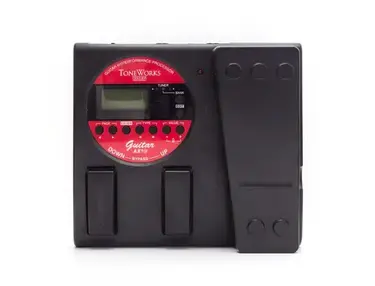
I think I'll never pass from the beginner level, but lets say that my early times, when I had to figure everything in the electric guitar (there were no guitar instructors in my town neither youtube or so), my dad brought me this multieffects. I liked the multiple effects included, specially one called Satch, it was a kind of high gain simulation with a wah included and mid equalized, very good to start shredding (anyway, at that time I would never could do shredding lol).
Another effect was a shifter, so this added with an overdrive and a long delay, it produced a sound FX which I called "NeutronBeam". With the included pedal the tone went from low octaves to upper octaves producing the sound effect.
Anyway, the sound is so digital, but this was a cheap multieffects. I replaced this with a DIgitech RP200, at the end of 2003 , though. I liked the effects more from the A1XG, but the Digitech had more effects and parameters to adjust everything.
I would get it again if I could just for the fun, lol!

This was an entry level multieffects, good to start with something. With the time, I learnt to go analogue rather than digital.

This was kind of the top notch multieffects by 2009 and Amplitube recently was introduced in the market.
So I bought this multieffects with the hope of improving my sound. I learnt a lot of history from the manual, but I never liked the sounds from this hardware.
For recording it is so great, so you can use the inputs and the USB to get sounds from Amplitube, but the POD X3 sounds were just so artificial. Even Amplitube had a better sound, so starting from here and thanks to Line 6, now I became All-Analogue in my sound.
Probably with the time, the emulations will get close to the real thing but they will ever miss anything in the process.

I was using a Line 6 X3 some years ago until I met the amplitube technology, so I toss off the Line 6. The advantages from emulations is that the software can be upgraded, not that way the hardware, that is limited to the built-in components. Recently, I also got Bias FX and all their libraries like Bias Pedal, Bias Amp and Bias Delay, all them highly customizable but still I like Amplitube because the Fender collection and the general app tone, though it lacks of effects. I hope for Bias Fx to make any update soon and improve the algorithm.

I don't remember how this amp sounds, at that time I just cared about the volume and well, after many years I understood that I have to care about the tone. The overdrive is smooth, I still have the cabinet and the panel (some mice invaded my amp and ate the circuitry so if you store an amp you should take care about this), probably I would want to rebuild this amp and change the speaker for a blue alnico one to have something different than the Vox AC15C1.

I got this amp after I sold out a 120 watts transistor amp, just to practice with proper volume at home. The original idea was to buy a tube-amp but since this was on discount, I bought it. Sounds little boxy, the knobs tend to crisp now after three years of usage, is a transistor amp so sometimes is hard to push any feeling through it without much dynamics, but is good to practice and pushing hard to get a nice blues technique.
I also should mention, I was used to my big amp with reverb, then this one is without effect, just a drive channel. So, at the first time you have to tweak the knobs a little until you find your tone.

Before getting this guitar, I was expecting an Epiphone Pro Electric guitar, due its capability to split coils and get more versality during my playing. Then I went to the store and the clerk told me to try this one. After this, I loved the tone and how easy was to play this guitar through the maple neck.
Now, three years later, maybe I would change the bridge pick-up, because it is not bringing my derised output (unpaired with the neck pickup). It is still in great shape and looking, recently I did some tweaks to the coils and it sounds with more natural compression.
For single coils lovers, I must admit that the single coil sound is about a 60-65% compared to a ceramic single coil. As humbucker, it has its full sound.
Update: Recently I did a modification to the pickups' iron bars, having middle strings with the max height and the rest in a ladder way. It made to drastically change the sound which I was finding, so it feels and sounds more natural and acoustic. In this way, the split coils sounds more like a legit single coil. However, would be good trying some pickups from the market.
Wishlist 5
Gear Photos 2

Top artists 5
The artists lobberuno has added the most gear to.


