Join music gear discussions on Equipboard. Talk about guitar gear, electronic music production, get help identifying gear, ask for feedback on your music, suggest ideas to improve Equipboard and more.

Post Your Personal Gear

Here's another collab cover I did more recently. In this mix. I used the ML Sound Labs MARS PR-H75 IR for the rhythm and ambient sounds, Synergy's in-built cab sim for cleans, and Ownhammer Heavy Hitters Diezel IR for leads.

https://www.youtube.com/watch?v=MNvzJBF-VSU&ab_channel=BillPrimo

GEAR:
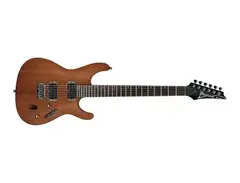
  • Ibanez RG652FX
  • Ibanez S521-MOL
  • Blank slot

just got around to music today, had a lot of comics work to do... do you want an opinion on the sonics or just attention? I listened.

GEAR:
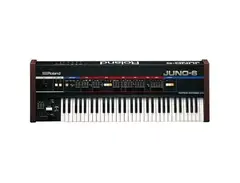
  • Roland Juno-6
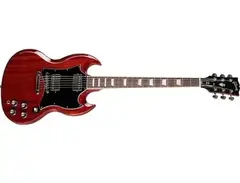
  • Gibson SG Standard
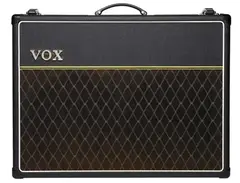
  • Vox AC30 Guitar Combo Amp

Your feedback would be appreciated. :)

GEAR:
  • Ibanez RG652FX
  • Ibanez S521-MOL
  • Blank slot

So the first one is low on true bass and has way too much energy in the upper midrange. That's not due to YouTube. It lacks dynamic range. I can hear the compression grabbing and releasing and not in a good way. When coupled with YouTube's 0playback algorithm it hurts my ears on every playback system. The whole thing is over processed. I couldn't get through it on YouTube. Maybe the master would be less painful.

The second one is less abrasive but sounds like it was mixed by a guitarist.

Both sound flat despite copious use of spacial fx. Flat as in 2 dimensional. That said neither mix is incompetent. I'm nitpicking. I've heard much worse... much much worse.

It's a shame, I like your playing and I'm positive the guitar sounds were nice when recorded. It's not my idiom as a listener so maybe its meant to sound this way but I'm not sure, you tell me... metal is one of the top loudness war genres so there's that, maybe irs a question of taste... but the frequency response is jacked on both and that's not a genre thing. If I worked on it I would crush it if you insisted but the more you crush the more attention you have to pay to the frequency response of every sound. When my ears are robbed of dynamic cues frequency becomes critical for various reasons.

Upshot? Nothing seems to be getting masked on either cut. No mud. I think I'm hearing everything clearly although without a multitrack maybe I'm not. And in its defense I don't know what you were going for. Tje guitar is certainly out front and if that was the brief you achieved it.

GEAR:
  • Roland Juno-6
  • Gibson SG Standard
  • Vox AC30 Guitar Combo Amp

Yeah, the I Sever collab cover was a challenge to mix because of how it's such an aggressive song, the drums I had to jack up the compression and saturation on the snare just to get it to cut through the mix. Same goes with the kick drum as well, albeit to a slightly lesser degree.

One thing we do have to understand is that Josh Middleton blended two amps in his recording - a 5150 and a Dual Rec. In my case I was just using the Friedman HBE, which, while it is midrange-pronounced and has plenty of high-end on tap, does lack the low-end "oomph" that the Dual Rec comes with. The HBE was designed to be much more articulate and knife-edge cutting in the mids for more of a shred metal style. I have been hesitant on blending two amps and quad tracking the rhythms, mainly because when you blend amplifiers together you have to be careful such that the two amps don't phase-cancel each other out. Another thing to keep in mind is that with more rhythm guitar layers that involve palm mutes, the harder the multi-band compressor has to work in order to keep the low-end in check.

The Galneryus collab cover was even bigger of a challenge because there were additional synth layers that the rhythm guitars had to fight through.

For the Sylosis cover, I used the ML Sound Labs MARS PR-H75 cab IR for rhythm and ambient tones, based on a vintage Marshall cab with pre-Rola Celestion T1217 Greenbacks, and for leads I used the Ownhammer Heavy Hitters Diezel 412 IR based on a blend of the V30 and Eminence Governor.

The Galneryus collab used the Diezel IR for rhythms, and ML Sound Labs MEGA-OS IR based on the Mesa Oversized 412 cab. One thing is for sure I won't be using the MEGA-OS cab for leads again. It sounded way too scooped in the mids and made my guitar tone struggle to cut through the mix.

Rhythms were boosted by the Horizon Devices Precision Drive with a lesser drive setting, and leads were boosted by the Mud Killer overdrive to drive the HBE a bit harder.

GEAR:
  • Ibanez RG652FX
  • Ibanez S521-MOL
  • Blank slot

I'm not sure what you're getting at with any of that. After the first paragraph (which had to do with your difficulty getting a balance out if the gate) it's a ton of genre specific guitar player talk that has nothing to do with mixing a record because it's part of the tracking phase. The colab track was less abrasive to me than the first one you posted.

My negative response was just one dude's opinion. That said the reason your snare wouldn't cut is because most of a snare's energy is in the midrange where most of the mix is erroneously focused... a couple decibels of dip around 3k covering a couple octaves on some or all of the guitars would've made room. Generally I wouldn't compress a snare to make it cut unless the performance and/or recording is really bad. Before patching up a dbx160 or 1176 I would seriously rethink my balance and make some eq decisions on other midrangey tracks. I'll compress a snare to add perceived snap or bring up the decay using time constants and if it's a bit bland sounding a colorful unit like an 1176 is good to bring some attitude. If its uneven playing I'll automate it a little before resorting to a box that will alter the sound. I compress individual channels less and less every year. I dont always lean hard on spot mics either. Depends how the overheads and rooms sound. These are decisions that should be made early, get the faders up and commit to a drum sound and then start massaging guitar or keyboard or whatever around them.

GEAR:
  • Roland Juno-6
  • Gibson SG Standard
  • Vox AC30 Guitar Combo Amp

Right, the snare drum. Those were drum samples (my colleague provided the exported tracks off of EZDrummer). Live drummers would've been much easier to mix; however, given the volatile music scene here in Toronto, I've given up on trying to look for a drummer for collab covers, hence why I had to resort to using drum samples.

If I had the choice of using live drummers then I would've used them.

Speaking of which, I really should save up for a copy of GGD Matt Halpern drum sample pack since a live drummer is effectively out of the question for collab projects. GGD's drum samples come with internal Turbo mode that allows me to shortcut the mixing process of drums so that I don't have to do all the hard work. I would be hesitant on scooping the mids though, since the guitars live in the midrange area and scooping it out would cause the guitars to get lost in the mix.

I don't know, coming from someone who focused so much to perfect the guitar tone for both studio and live applications, mixing drums is quite a challenge for me since I don't have much experience dealing with them, really.

GEAR:
  • Ibanez RG652FX
  • Ibanez S521-MOL
  • Blank slot

Hahaha. We're talking 3 db cut across a limited bandwidth that's more harmonics than fundamentals until you're way in the upper register, not a giant 6 or more db death metal smile curve from 250 to 6k. On my desk I would just use the channel eq which is fixed to like 2 octaves on the mid bands I think, sweep to about 3k, boost to refine the center frequency then cut hard and gradually bring it back up so it doesn't sound hollow, which will typically be like 3dB cut. I typically then try boosting the high shelf a little too but that's a matter of personal taste. If it's really gross sounding I'll switch to something with a sound of its own like a neve 1081 where the transformers and inductors help round things off a little when you hit the sweet spot.

My final piece of advice, take it or leave it, is assume nothing and try everything when the mix isn't happening. If something won't cut the mix it's probably not a problem with that track (particularly when it comes to drum samples which are typically very well recorded and don'tneed much eq or dynamics control if any), it's more likely a problem with the overall level/frequency balance and you've just gotten used to it. Very minor tweaks across a number of tracks can cumulatively clear up bandwidth and headroom without taking anything significant away.

And pulsonic cone celestions rock.

GEAR:
  • Roland Juno-6
  • Gibson SG Standard
  • Vox AC30 Guitar Combo Amp

https://elephantfootrisers.com

Fitted pedalboard risers for the most efficient pedalboard possible.

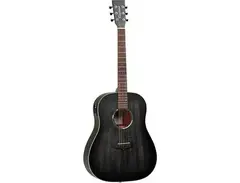
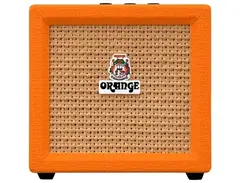
Fledgling guitarist here! I started 2 years ago, and I have a Tanglewood Blackbird, Squier Strat, Vox Pathfinder 10, and an Orange Crush Mini. Looking to expand as I develop my sound. So far, I'm really digging Ichika's tone, so I'll probably be picking up his reverb pedal.

Currently learning "Yesterday" by The Beatles :).

GEAR:
  • Squier Stratocaster
  • Tanglewood Blackbird Dreadnought Electric Black
  • Orange Crush Mini

Ichika used a Line 6 Helix nowadays; however, if I may be honest, a Strymon BigSky outperforms it far and beyond. The Cloud algorithm in the BigSky, paired with a good stereo delay, is key to nailing Ichika's reverb sound.

I hope you go stereo btw. Mono reverb effects sound extremely narrow AF and you won't get a wide, natural audio image.

GEAR:
  • Ibanez RG652FX
  • Ibanez S521-MOL
  • Blank slot

Oh nice! Big Beatles fan myself here, and pretty much self-taught on guitar, first song I learnt was "While My Guitar Gently Weeps" (the acoustic anthology version).

I'd agree that Strats are probably the best electric to start with, because of how comfortable they are to play (my first was some dirt-cheap supermarket strat). Also the Vox Pathfinder 10 is a great amp, my brother has one and it sounds amazing, especially considering the price, I might get one myself too :D

GEAR:
  • Jolana Iris
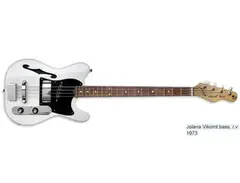
  • Jolana Vikomt Bass
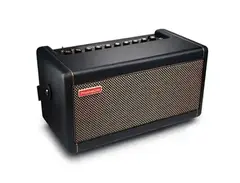
  • Positive Grid Spark

Currently learning "Yesterday" by The Beatles :).
A lesson in chord progression and song structure! They don't write them like them like that anymore... can't remember the last time there was a top40 song with a chord progression subservient to the melody and lyrics (check out the change under the word suddenly :-) and a refrain to turn the song around instead if verse chorus verse. Learn all those Lennon/McCartney ballads. And Harrison tunes too!

GEAR:
  • Roland Juno-6
  • Gibson SG Standard
  • Vox AC30 Guitar Combo Amp

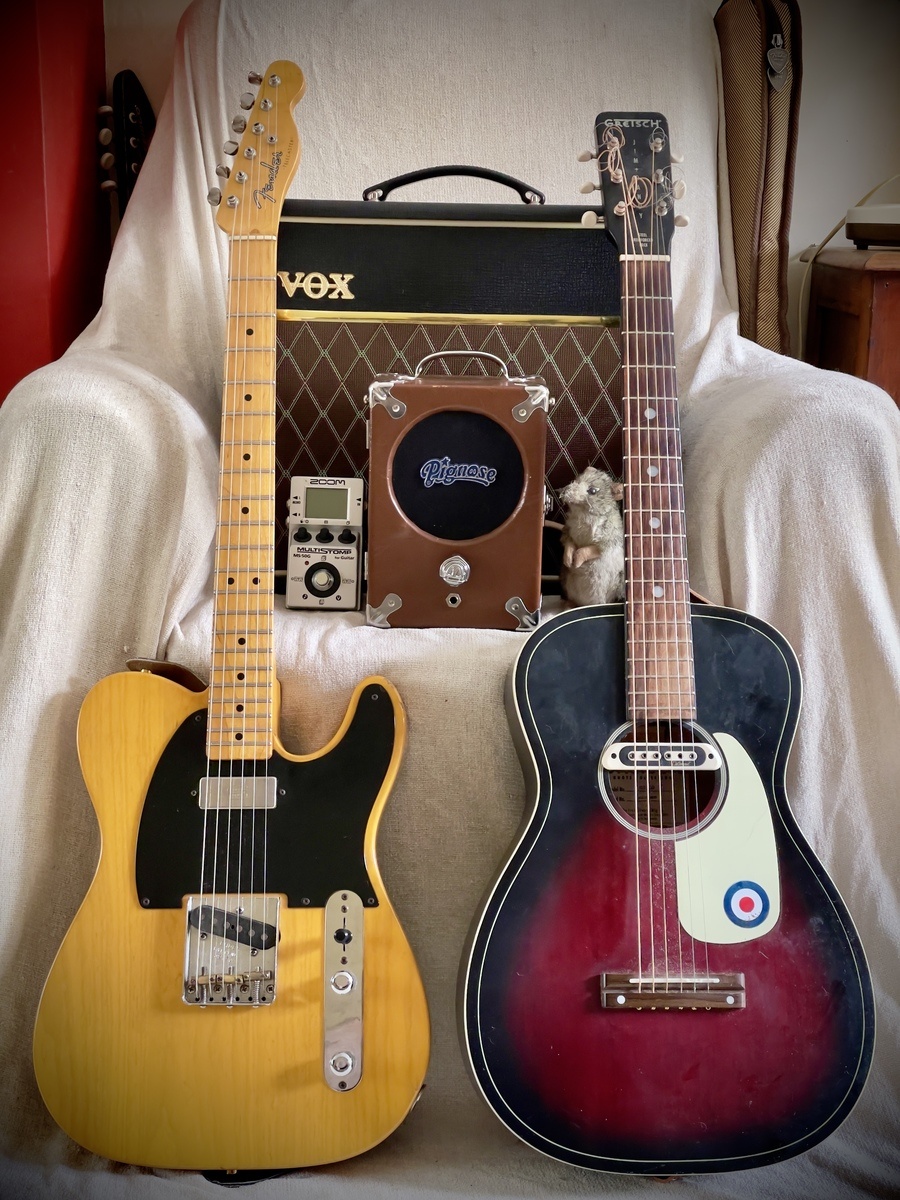
New Guitar Day (week) Fender American Vintage Hot Rod 52' Telecaster

I've long been on the lookout for a guitar that better expressed the vintage side of my musical tastes. I've had mixed feelings about the telecaster, liking the idea of having one and yet never finding one that grabs me. That was until this beauty came up for sale local to my work. It ticks all my boxes: 50's look and spec (mostly) but with a wee bit extra special sauce at the neck to dirty things up a bit (but not too much).

My daily play gear's been whittled down to this Tele, a parlour acoustic, my Vox indoors, and a Pignose outdoors with just my beloved MS-50g for modulation.
https://equipboard.com/gear_photos/18884

GEAR:
  • Epiphone Casino Coupe
  • Pignose "Legendary" 7-100
  • Hohner Marine Band 1896 Diatonic Harmonica

That tele with the duncan firebird pickup was on my wish list for years and I never bought one... so envious! Congrats, man. Those hit rods are fantastic guitars.

GEAR:
  • Roland Juno-6
  • Gibson SG Standard
  • Vox AC30 Guitar Combo Amp

So I've recently reorganized my bass rig. I wanted to use a more stable power supply for my Strymon's since under heavy power load, the Voodoo Lab X4 struggles a lot.

I've tried to mount the power supply on top; however, there were a lot of logistical issues due to the amount of space I had, where I'd either have cables running from all angles that can cause potential trip hazard during live shows, or I'd have to place the tuner or compressor on an angle in weird places, which can lead to further issues down the road.

So after careful experiments, I've relented that the best decision would be to mount the X4 underneath the pedalboard. It's not the most stable I'd say for sure given how velcro isn't as strong as hardware mounts that the Truetone and Cioks power supplies use, but given how the Voodoo Lab X4 doesn't come with hardware mounts, I figured that velcro is better than nothing.

The good news is, I do have space for one more pedal. Currently looking at either a Harmonic Booster or B3K from Darkglass to add to my bass pedalboard.

GEAR:
  • Ibanez RG652FX
  • Ibanez S521-MOL
  • Blank slot

Little late to the party, but I can't resist a gear run down! Current rig is as follows: Squier VM Jazzmaster/Vintage V72H (thinline tele deluxe) into the Fender's The Bends comp, Tone City's Kaffir Lime followed with the Golden Plexi, Ehx Neo Clone and Memory boy come next, then I have the TC electronic HoF 2, the Tone City Tiny Spring and lastly the Boss RC-1 Loop (and FS-5U foot switch). Current amp is the Boss Katana Mini, but plans are in the works for a Vox of some kind, potentially the pathfinder, maybe an AC4.

GEAR:
  • Line 6 DL4 Delay Modeler
  • TC Electronic Hall of Fame 2 Reverb
  • Blank slot

Thanks! - Yeah, I really feel I got lucky.

It was curiosity about the mini-humbucker that turned up this beauty for me. Chris Buck did an excellent video that put me onto the mini's special qualities. When he compared it with regular humbuckers and P-90s the mini-humbucker seemed to live right in my goldilocks zone; clear and articulate, particularly at low gain. This sounds to me the perfect substitute for the traditional tele single coil, whereas regular humbucker Tele's seem more of a compromise.

https://youtu.be/ZhguOmOseTk

Not having owned, or even played a Telecaster before I wasn't sure what to expect. The Tele wasn't previously a guitar I was much drawn to; the Country twang thing had no special appeal either. Now that I own one, I get it! The range available on the hot rod from just tweaking the volume and tone controls is astonishing. I'm pleased it sounds significantly different to the two other electrics I have already and yet it covers a lot of the same ground too.

As I tend to do, I put in a bit of research into my new favourite instrument only to discover it being used in and by a 💩-ton of my favourite songs and artists - I just hadn't been paying attention! So in a fit of enthusiasm I've thrown together a wee History of The Telecaster spotify playlist for personal reference. May as well share it in case it's of any interest to any bored tele-philes with nothing better to listen to.

https://open.spotify.com/playlist/4QifGObNV1ay1ja8XBfpQ7

GEAR:
  • Epiphone Casino Coupe
  • Pignose "Legendary" 7-100
  • Hohner Marine Band 1896 Diatonic Harmonica

Wow the mini humbucker sounds amazing :D Somewhere between a regular humbucker and a single coil, but also slightly different from a P90 (maybe closer to the filtertron pickups they have on Gretsch guitars?)

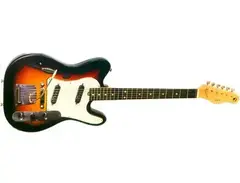
I had a similar lucky find with my own "Telecaster", the Jolana Iris! I first took interest in Telecasters because of Syd Barrett's mirrored Esquire which he often used (the guitar that eventually evolved into the Telecaster), but the one thing that made me hesitant was the fact it's not possible (or it's difficult) to add whammy bars to Teles in general (even for Les Pauls you have several types of tremolo/vibrato that can be added), and for me I tend to use the whammy bar a lot. Eventually I found a Jolana Iris going for sale very cheap locally! It's a Czechoslovakian brand from the '60s-'70s, and the Iris model is a Telecaster in almost every way (similar body shape, neck, pickups, etc.), except with a Jazzmaster vibrato bridge! And locally, as I live in Hungary, they tend to go for fairly cheap, mine was the equivalent of around $130 or so!

GEAR:
  • Jolana Iris
  • Jolana Vikomt Bass
  • Positive Grid Spark

Firebird himbuckers are unlike any other vintage humbucker. The wire is wound right on alnico bar magnets that are then potted inside the pickup cover. The construction method is most like danelecrto 'lipstick' single coil pickups and vintage tape wound designs like theburns trisonic pickups made famous by Brian May.

Edit: a filtertron is basically the same as a PAF, the difference being dual pole piece coils versus steel slugs on one coil and of course size. The filtwrtron is a smaller diameter but taller having been based around the classic Dearmond Dynasonic that Chet Atkins suggested as the benchmark for Ray's bucker. Seth Lover at Gibson was trying to make a dual coil p90 and settled on a couple of melody maker bobbins... the rest is history.

Interestingly Seth Lover and Ray Butts invented their humbuckers at the same time without any contact between them. Both pickups were awarded a patent in the USA despite being very similar. Doubly interesting is the fact that the filtertron was not designed by gretsch employees like the PAF. The filtertron was designed by a top player and the inventor who built his amplifiers (look up techo sonic amps some time). Gretsch then licensed the design from Ray and Chet and I'm pretty sure ray butts got a royalty on every filtertron sold until he died. I'll bet the beatles era was good to him!

GEAR:
  • Roland Juno-6
  • Gibson SG Standard
  • Vox AC30 Guitar Combo Amp