Join music gear discussions on Equipboard. Talk about guitar gear, electronic music production, get help identifying gear, ask for feedback on your music, suggest ideas to improve Equipboard and more.

Slomosa pedal effects challenge.

I’m using a standard Tele drop tuned to c standard into a wampler ego compressor running at 18 volts>big muff pi>boss ge-7 split into a twin reverb and a blackstar ht40 mkii black blue.

We play mainly grunge/desert/classic rock.

I’m going to try an AC15 and an av30 in stereo soon as well.

I’m using a standard Tele drop tuned to c standard into a wampler ego compressor running at 18 volts>big muff pi>boss ge-7 split into a twin reverb and a blackstar ht40 mkii black blue.

Nice! I bet that sounds... beefy, but it still cuts through anything you want it to.

Are you the only guitarist or do you share duties?

What size strings work for you down in C?

We play mainly grunge/desert/classic rock.

I’m going to try an AC15 and an av30 in stereo soon as well.

In my (limited) experience, once someone buys a good Vox combo, they tend to keep it... like forever.

GEAR:
  • Roland TR-808 Rhythm Composer
  • Roland SH-101
  • Roland TR-909 Rhythm Composer

Just using skinny top heavy bottom nyxl’s since it is/was my slide and drop tune guitar.

We have another guitarist, and he has more of gritty crunch sound.

He has 12/60’s on a schecter with double wound humbuckers into an ampeg ss140c.

The sound city b120 is a beast of an amp that utilizes 6, yes 6, el34 output tubes. They're weird active tone control amps that take getting used to. The huge power amps are derived from the hiwatt platform with a DC coupled phase inverter, which has an unusual fixed bias set by the last tibe in the preamp. Dave Reeves of hiwatt designed the first generation of sound cities and they stuck with his power amp topology which is pretty unique in guitar amps only being seen in hiwatt and sound city. The b120 is a mk3 or mk4 circuit so it's pretty evolved from the Pete Townshend l100/cp103 amp that then evolved into the hiwatt dr103. There's no other amp that sounds like the mk3 and 4 sound cities, for better or worse.

I would suggest just purchasing a sound city 50+ head which will sound similar without the need for matched trios of expensive power tubes. Maybe get a reactive load and IR loader like a 2 notes captor X. I don't know that anything else will get you there, its a really unique amplifier line, nothing in common with fender and marshall.

GEAR:
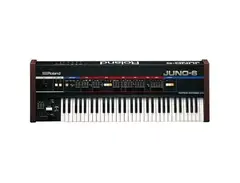
  • Roland Juno-6
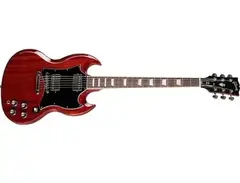
  • Gibson SG Standard
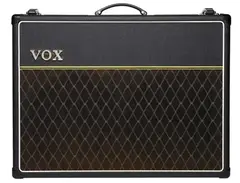
  • Vox AC30 Guitar Combo Amp

I’m using a standard Tele drop tuned to c standard into a wampler ego compressor running at 18 volts>big muff pi>boss ge-7 split into a twin reverb and a blackstar ht40 mkii black blue.

We play mainly grunge/desert/classic rock.

Cool.

I’m going to try an AC15 and an av30 in stereo soon as well.

You probably won't like the vox sound if you're happy with a twin. Apples and oranges in every way. I'm a vox guy and I've always found them to be finicky with fx. A twin is way more pedal friendly. Although a big muff is so scooped that it will have more presence if you use a vox vs the twin which has the typical blackface 1k scoop even with the midrange all the way up. A twin is a pretty grungy option. In the 90s everyone had a 60s or 70s fender or marshall jmp or jcm. Pretty ubiquitous in the USA.

GEAR:
  • Roland Juno-6
  • Gibson SG Standard
  • Vox AC30 Guitar Combo Amp

In my (limited) experience, once someone buys a good Vox combo, they tend to keep it... like forever.

Or get rid of it instantly. Not for everyone, and also an amp for DIY electronics enthusiasts because it will need work... but as I've said many times if my son doesn't take up the guitar I plan to be burried with my 1962 ac30. It'll probably be impossible to maintain by 2050 anyway as the major parts manufacturers discontinuemore and more throughhole components...

I digress, those of us who take to the vox sound and touch response never go back. I learned tube electronics theory on mine because they are the Jaguars of amps so I have an absurd amount of affection for her.

GEAR:
  • Roland Juno-6
  • Gibson SG Standard
  • Vox AC30 Guitar Combo Amp

The sound city b120 is a beast of an amp that utilizes 6, yes 6, el34 output tubes. They're weird active tone control amps that take getting used to... ...There's no other amp that sounds like the mk3 and 4 sound cities, for better or worse.

Nowwww we're gettin' down to it. This is rad, thank you! You're knowledge-bomb lead me to this great write-up:

https://www.vintageguitar.com/22338/sound-city-lb-120-mark-iv/

So what I'm learning is that these Sound City amps were workhorse amps built to a price, but designed by a genius (as you mentioned).

From the article, seems these amps were ubiquitous house/backline amps in UK venues up through the 90s. You either thought they were boring or downright bad (unusual active EQ), or you knew they had magic to give when you cranked them to 11 (assuming this was even possible in the venue they resided).

The EW guys apparently wanted to make Dopethrone with cheap, readily-available gear, thus the MIK Epiphone SGs, Boss pedals and the huge, unloved (at the time) Sound City amps that were probably pretty close to free in 2000 in the UK. Good on them for milking the specialness out of these old beasts. The apparent uniqueness of these amps and the declining number of functional Sound Studio amps in recent years might help explain why this particular album stands out among the rest of their catalog, sonically, at least. (Not to detract from whoever produced and engineered that release, huge chunk of credit and/or infamy there)

I would suggest just purchasing a sound city 50+ head which will sound similar without the need for matched trios of expensive power tubes. Maybe get a reactive load and IR loader like a 2 notes captor X. I don't know that anything else will get you there, its a really unique amplifier line, nothing in common with fender and marshall.

The 50 plus has the same unique preamp as the 120, right? This would sound awesome and be educational, but I don't know if I want to take on a 50+ year old tube amp at this point. Even if it's working and serviced when I get it, it will eventually be a doorstop in need of skilled repair. I want to focus on the fun stuff, and keeping an old amp alive isn't the fun part for me. But I have no reason to disagree with the recommendation: one of these amps would get me closer to the sound I'm hearing than an other style of amp and/or software.

GEAR:
  • Roland TR-808 Rhythm Composer
  • Roland SH-101
  • Roland TR-909 Rhythm Composer

I can tell you that not long after dopethrone there were 2 rehearsal studios in Philadelphia with sound cities, one of which was a b120 with a blown power transformer that i wound up changing out so the owner could sell it to recoup on some of the newer backline he provided. Oldsters called them "sound shitty" amps. Mk3 and mk4 sound cities can indeed sound shitty if you don't know the tone controls aren't passive like every other guitar amp ever created. But these damn things are everywhere. They made tons.

These amps were a ndeed built to a price point as evidenced by the switch from hiwatt style Partridge transformers to cheaper orange style Parmekos in the mk4 models which seem to blow if they're abused in any way. On the other hand the rest of the thing should be bullet proof. Built like a tank from great components, boards and wire. If you get one with new electrolytics filter caps in the PSU it should performer for 30 to 50 years without hiccup assuming you always set the voltage and impedance selectors correctly and keep it dry. I can't imagine what could fail ok n her, maybe an old carbon resistor. I wouldn't think twice about buying a 50+ in reasonable shape and I would shell out up to a G note on her given their increasing popularity and likely appreciating resale. Probably a wiser investment then gamestop stock lol. Youngsters now see sound city heads as budget hiwatts, a reputation based on the 60s L100 but pretty inaccurate by the 70s. But I would have my electric wizard jollies and when I tired of the b120 I would flip it and go out to 5 star restaurant on the profits :)

I'm pretty sure I just stuck a generic 100 watt marshall style power transformer on the one I fixed. Just something cheap and it worked instantly and nothing else was wrong but a blown fuse.

EDIT: I might try something in the helix family if I were you. Their hiwatt dr103 model sounds pretty good to me and I know hiwatts intimately. It's in the right camp. Punchy.

GEAR:
  • Roland Juno-6
  • Gibson SG Standard
  • Vox AC30 Guitar Combo Amp

I can tell you that not long after dopethrone there were 2 rehearsal studios in Philadelphia with sound cities, one of which was a b120 with a blown power transformer that i wound up changing out...

heroic!

... I wouldn't think twice about buying a 50+ in reasonable shape and I would shell out up to a G note on her given their increasing popularity and likely appreciating resale. Probably a wiser investment than gamestop stock lol. Youngsters now see sound city heads as budget hiwatts, a reputation based on the 60s L100 but pretty inaccurate by the 70s. But I would have my electric wizard jollies and when I tired of the b120 I would flip it and go out to 5 star restaurant on the profits :)

You know me too well, Jim... you know what I need hear... damn you.

EDIT: I might try something in the helix family if I were you. Their hiwatt dr103 model sounds pretty good to me and I know hiwatts intimately. It's in the right camp. Punchy.

Noted. A colleague/friend of mine was the Product Lead for the first Helix, the big boy with all the little screens -- he'll be happy to hear you approve of the Townsend Hiwatt modeling. I'll likely borrow one of those and an iridium from my Strymon buddy when I inevitably become unsatisfied with software options.

You gotta keep in mind I haven't played 6-string guitar in 20 years. I have big ol' bass calluses right now, but I still need to get some bar chords back under my fingers and get through a few songs before I've earned the right to spend $$$ on anything more than strings and a cheap pedal.

GEAR:
  • Roland TR-808 Rhythm Composer
  • Roland SH-101
  • Roland TR-909 Rhythm Composer

We have another guitarist, and he has more of gritty crunch sound.

He has 12/60’s on a schecter with double wound humbuckers into an ampeg ss140c.

I know you guys are tuned way down, but that still make my fingertips hurt just thinking about 12s.

He's rhythm, you're lead?

GEAR:
  • Roland TR-808 Rhythm Composer
  • Roland SH-101
  • Roland TR-909 Rhythm Composer

I honestly bought the Vox when I had to replace the tubes in the blackstar, and basically it’s one of the limited red models with the brown and green speaker mesh.

I’m a sucker for different colored tolex.

I have a few hours on it so far, and yes it’s a very different sound. I use the top boost channel.

I have a walrus eons pedal, and a keeley fuzz bender I want to try to get a bit more clip and spit from it. If that makes sense.

I’m going to try it with a Behringer fx600 set to pitch shift as well.

Wish me luck.

I peaked at the equipboard for the other guitar player from EW, Liz, but I think she joined after Dopethrone. She plays a 1st generation laney AOR 100 which is basically a jcm800 2203 so you can get her tones pretty easily with readily available plugins.

I also looked at the schematics for the mark 4 Sound City heads, it had been awhile. That preamp is nutty. It has 1 gain stage per channel followed by the volume controls and mix resistors, then after the 2 channels sum there's essentially a 3 way passive crossover feeding 3 parallel gain stages. The treble, mid and bass controls act as separate master volumes for each crossover frequency and are then bufferedby a final triode to drive the phase inverter. It's not your typical 3 band baxandall like you would expect in an active tube eq. It would never even occur to me build something like that, it's incredibly wasteful but unlike a baxandall it doesn't require a low source impedance to avoid loading the high end of the signal, on the other hand the tone knobs have unrestricted attenuation and if all of them are set to minimum they act like a single master volume control and send all if your signal to ground. WTF? That must have frustrated a lot of guitarists over the years. Even if you just turn one down full minimum you get a really steep filter rather than a shelf or bell. You're just muting a pretty wide frequency range above and/or below those turnover frequencies. Woof! No wonder no one models this thing. The average Helix or AxeFX user will be scratching their heads if they made it behave accurately.

EDIT: If you wanted something new with the general vibe of the SC amps I could build you a 1 channel 50 watt Jim-watt voiced up to your liking with a more sensible active tone section on the bones of a ceriatone heywhat?!504 or weber 6H50 kit or a suitable donor amp like a PA head with good hammond or tried iron. A baxandall hi/low shelving and 1hz bell could be built right into the existing gain stage and cathode follower that drives and biases the hiwatt phase inverter. It'll give you the vibe of the sound city without the quirks and would save a gain stage that could be made a boost or an OD mode. The inputs for the 2nd channel would be replaced with a bright switch and the aforementioned 'boost' switch. The master would be my post phase inverter design that varies global negative feedback to avoid fizzy artifacts although we would want to eliminate the presence knob since the Jim watt version acts in the preamp unlike a fender or marshall and would be replaced by the active hifi type 3 band tone control.

Shipping from the kit company to me and then out to LA oncebuilt might be a bear though. I personally wouldn't charge much for the build time on top of the parts. Its fun.

GEAR:
  • Roland Juno-6
  • Gibson SG Standard
  • Vox AC30 Guitar Combo Amp

I started as rhythm, but I have spent the last year working on scales.

He’s the front man fwiw.

And yeah those are chunky springs.

Hopefully the whole guitar world doesn’t figure out the deal with sound city amps by the time I can afford one.

Sound City heads trade for about a grand right now in the USA, up to $2k in good condition, which is more than double what they were 10 years ago. That's a pretty big appreciation so I would say the cat is out of the bag. Also, there are now current models.Steve Fryette bought the trade name and has been producing his take on the L100 and a 50 watt model. That will raise awareness and prices.

As I said to Ken, if you live in the USA I can make you a customized hiwatt/soundcity with a more useful master volume and all manner of preamp voicing and tone control mods. If you buy a kit or a suitable donor amp so I have a drilled chassis, sockets, some extra pots (I don'tkeep every value on hand), switches, pilot light and transformers that fit the chassis drilling, i have plenty of good quality loose parts to tailor the basic circuit to your needs. I've done it before.

This recording is my personal "jim-watt" which started as a traynor PA head and became a 50 watt rocking machine with late 70s hiwatt inputs, modified vox treble and bass controls and a sound city mk2 presence control and a choke in the PSU like the Jimmy page hiwatt:

https://on.soundcloud.com/5ejkf2uUTT2zg2o86

Just doing a pete impression with some buds a few years back, nothing special. Everything is at 5 including the master... plugged straight into the normal channel. Various mods can be made to vary the headroom and voicing.

If you have built an amp before I can walk you through a kit build and what components to alter to get your tone. It's a complex circuit that requires some knowledge to understand and a little extra care to get working correctly. The basic dave reeves design us really configurable in a number of places to produce different shades of 70s butt whomping goodness. I think there are more hiwatt and sound city variants than any other brand of amp.

GEAR:
  • Roland Juno-6
  • Gibson SG Standard
  • Vox AC30 Guitar Combo Amp

I also looked at the schematics for the mark 4 Sound City heads, it had been awhile. That preamp is nutty. It has 1 gain stage per channel followed by the volume controls and mix resistors, then after the 2 channels sum there's essentially a 3 way passive crossover feeding 3 parallel gain stages. The treble, mid and bass controls act as separate master volumes for each crossover frequency and are then bufferedby a final triode to drive the phase inverter. It's not your typical 3 band baxandall like you would expect in an active tube eq. It would never even occur to me build something like that, it's incredibly wasteful but unlike a baxandall it doesn't require a low source impedance to avoid loading the high end of the signal, on the other hand the tone knobs have unrestricted attenuation and if all of them are set to minimum they act like a single master volume control and send all if your signal to ground. WTF? That must have frustrated a lot of guitarists over the years. Even if you just turn one down full minimum you get a really steep filter rather than a shelf or bell. You're just muting a pretty wide frequency range above and/or below those turnover frequencies. Woof! No wonder no one models this thing. The average Helix or AxeFX user will be scratching their heads if they made it behave accurately.

OK, well that explains why nobody has attempted an emulation yet. Impressive knowledge-drop, Jim. Do you wager there's a single magic setting for the amp that we're hearing on the EW albums, with changes to the FZ-2 settings, mic placement, etc being the main tonal diff song to song, or are they deftly able to milk a bunch of great sounds out of this wacky preamp design?

EDIT: If you wanted something new with the general vibe of the SC amps I could build you a 1 channel 50 watt Jim-watt voiced up to your liking with a more sensible active tone section on the bones of a ceriatone heywhat?!504 or weber 6H50 kit or a suitable donor amp like a PA head with good hammond or tried iron. A baxandall hi/low shelving and 1hz bell could be built right into the existing gain stage and cathode follower that drives and biases the hiwatt phase inverter. It'll give you the vibe of the sound city without the quirks and would save a gain stage that could be made a boost or an OD mode. The inputs for the 2nd channel would be replaced with a bright switch and the aforementioned 'boost' switch. The master would be my post phase inverter design that varies global negative feedback to avoid fizzy artifacts although we would want to eliminate the presence knob since the Jim watt version acts in the preamp unlike a fender or marshall and would be replaced by the active hifi type 3 band tone control.

Shipping from the kit company to me and then out to LA oncebuilt might be a bear though. I personally wouldn't charge much for the build time on top of the parts. Its fun.

You're a true prince, Jim. Thank you. Your demo of the amp sounds great... and it would be awesome to own an amp where I know exactly who to call when it breaks :D

...that said, first, I gotta acquire a guitar, make sure I'm actually enjoying myself on 6-string again, THEN worry about the rest. I'm loving bass at the moment, but 6 string, especially one tuned down, played with a pick, etc, is such a different instrument.

GEAR:
  • Roland TR-808 Rhythm Composer
  • Roland SH-101
  • Roland TR-909 Rhythm Composer

No wonder no one models this thing. The average Helix or AxeFX user will be scratching their heads if they made it behave accurately.

OK, well that explains why nobody has attempted an emulation yet. Impressive knowledge-drop, Jim. Do you wager there's a single magic setting for the amp that we're hearing on the EW albums, with changes to the FZ-2 settings, mic placement, etc being the main tonal diff song to song, or are they deftly able to milk a bunch of great sounds out of this wacky preamp design?

Wow, that's an insightful question. My experience with a 120L was that it had a huge range of sonic sculpting power on tap usually only available from pedals and rack gear. I found it to be funny f oi r a few minutes testing the ranges of the 3 bands but intensely frustrating after that. The response of the amp was great, fast and snappy! I couldn't get a clean tone that was me although all of them could be good if recorded in the right context. For overdrive I settled on the simplest thing, turn up all the controls and then disl back bass and treble to eliminate harsh overtones and too much thump. These amps have the ability to do bass guitar well. Think john entwistle tones.

So after all that, let me stop digging the question. I suspect that Jus Osborne is really patient with tweaking the fz2 and sound city to the compliment eachother. The fz2 scoop mids switch inherited from the superfuzz combined with boss's active treble and bass circuit offer too much range so there are a lot if potentially bad tones hiding in there. Thus us true of the sound city too, but I would think that the combination of the 2 would allow you to attenuate anything you didn't like from the pedal or boost stuff you like that the pedal only produces with wonky knob positions. I think the guy must have the patience if a saint... or at least of a kevin shields. As to mic placement, that's usually stuff for big budgets. For heavy rock a lot of guys these days follow the Albini approach over the Jimmy page approach. For a record like dopethrone I would expect that 1 or 2 mics straight at the best sounding speaker at an optimal distance would be the method.

You're a true prince, Jim. Thank you. Your demo of the amp sounds great... and it would be awesome to own an amp where I know exactly who to call when it breaks :D

I've only made 2 of them and only my prototype amp has ever had issues because it was a test bed for all my ideas and some spots were soldered and desolder dozens of times. The one I made for a friend has like 5 years in without a hiccup. The goal is to make something that won't need service within the owner's lifetime unless its regularly abused. If you want a brit tube amp that's going to be in the shop in 5 years just buy a blackstar or jcm2000 series. Or a f*cking mesa. I won't even work on mesas made after 87. I make a lot of decisions based on durability and resistance to occassional abuse like overvoltage or short term impedance mismatches... bad grounding etc.

...that said, first, I gotta acquire a guitar, make sure I'm actually enjoying myself on 6-string again, THEN worry about the rest. I'm loving bass at the moment, but 6 string, especially one tuned down, played with a pick, etc, is such a different instrument.

Whatever you buy, plan to eventually gut it. Buy some early 70s gibson t-top humbuckers at a guitar show, take the cover off the bridge and put in 500k bourns pots. If you want more jangle from the neck use a 1meg pot for volume. Gibson and epi have been using 300k pots for years now and they load a humbucker too much for optimal tone, particularly when down tuned. Or maybe I'm just fussy as hell.

You might not be a USDA certified lunatic so a good stock SG could be fine for you. I hear positive things about Korean made epi SG400s.

Personally I would buy a well loved Gibson USA SG special (modern humbucker version) that's 10 to 20 years old when QC was still high and the fingerboard were always real rosewood. I really prefer the standard but I'm a sucker for overfret binding, for most unbound fretboard aren't important, but I always go for my standard over my special.

GEAR:
  • Roland Juno-6
  • Gibson SG Standard
  • Vox AC30 Guitar Combo Amp

Wow, that's an insightful question. My experience with a 120L was that it had a huge range of sonic sculpting power on tap usually only available from pedals and rack gear. I found it to be funny f oi r a few minutes testing the ranges of the 3 bands but intensely frustrating after that. The response of the amp was great, fast and snappy! I couldn't get a clean tone that was me although all of them could be good if recorded in the right context. For overdrive I settled on the simplest thing, turn up all the controls and then disl back bass and treble to eliminate harsh overtones and too much thump. These amps have the ability to do bass guitar well. Think john entwistle tones.

So after all that, let me stop digging the question. I suspect that Jus Osborne is really patient with tweaking the fz2 and sound city to the compliment eachother. The fz2 scoop mids switch inherited from the superfuzz combined with boss's active treble and bass circuit offer too much range so there are a lot if potentially bad tones hiding in there. Thus us true of the sound city too, but I would think that the combination of the 2 would allow you to attenuate anything you didn't like from the pedal or boost stuff you like that the pedal only produces with wonky knob positions. I think the guy must have the patience if a saint... or at least of a kevin shields. As to mic placement, that's usually stuff for big budgets. For heavy rock a lot of guys these days follow the Albini approach over the Jimmy page approach. For a record like dopethrone I would expect that 1 or 2 mics straight at the best sounding speaker at an optimal distance would be the method.

Thanks Jim :) So I took that knowledge-bomb and I did some digging. This great video let me hear & see what you've been educating me about. They compare the 50 Plus to a range of other doom-adjacent amps in what is a fairly meticulous apples-to-apples comparison as far as doomYT goes. The Sound City with the active eq really does sculpt and scoop it's way into different territory, and when it sounds most unlike the other amps, it is sounding very EW.

Your boy Ricky B is also a fan.

Also, I'm glad to be workin' overseas right now, because back home... this would be tempting me right about now

You're a true prince, Jim. Thank you. Your demo of the amp sounds great... and it would be awesome to own an amp where I know exactly who to call when it breaks :D

I've only made 2 of them and only my prototype amp has ever had issues because it was a test bed for all my ideas and some spots were soldered and desolder dozens of times. The one I made for a friend has like 5 years in without a hiccup. The goal is to make something that won't need service within the owner's lifetime unless it's regularly abused. If you want a brit tube amp that's going to be in the shop in 5 years just buy a blackstar or jcm2000 series. Or a f*cking mesa. I won't even work on mesas made after 87. I make a lot of decisions based on durability and resistance to occassional abuse like overvoltage or short term impedance mismatches... bad grounding etc.

I didn't mean to imply your amp would break, sorry if that's the way it came across. I know you'd build a brick#$%^house of an amp.

...that said, first, I gotta acquire a guitar, make sure I'm actually enjoying myself on 6-string again, THEN worry about the rest. I'm loving bass at the moment, but 6 string, especially one tuned down, played with a pick, etc, is such a different instrument.

You might not be a USDA certified lunatic so a good stock SG could be fine for you. I hear positive things about Korean made epi SG400s.

I'll try a bunch, Korean, American, whatever and when one comes along with a neck that speaks to my hand, I'll probably buy it. I am planning to try an Allparts neck on my p-bass, specifically because I want a thicker/beefier neck than the C-width shallow 50's neck it came with, and the measurements on the Allparts P necks are downright 70s-ish. So I'm betting I'll like the SGs with the beefier neck, which right now is the Standard, not the vintage-spec stuff, correct?

Pickups... eh... If I'm running it through an FZ-2, I'm not sure pickups will be a key ingredient, but we shall see. I just hate the hum, so as long as they're not P90s, I'll be happy.

Personally I would buy a well loved Gibson USA SG special (modern humbucker version) that's 10 to 20 years old when QC was still high and the fingerboard were always real rosewood. I really prefer the standard but I'm a sucker for overfret binding, for most unbound fretboard aren't important, but I always go for my standard over my special.

I know Gibson really went through a rough patch sometime after grunge died, but they're at least PLEKing everything that comes out of the USA factory now, right? Could a new(ish) one (post-robot) really be that bad?

GEAR:
  • Roland TR-808 Rhythm Composer
  • Roland SH-101
  • Roland TR-909 Rhythm Composer

Thanks Jim :) So I took that knowledge-bomb and I did some digging. This great video let me hear & see what you've been educating me about. They compare the 50 Plus to a range of other doom-adjacent amps in what is a fairly meticulous apples-to-apples comparison as far as doomYT goes. The Sound City with the active eq really does sculpt and scoop it's way into different territory, and when it sounds most unlike the other amps, it is sounding very EW.

Screwing around with amp and fx controls is a really british thing to do. Its something in their DNA.

Your boy Ricky B is also a fan.

Rick is a great player and one of the tube tone cognoscenti. For a guy who rarely if ever wields a soldering iron he really gets it.

Also, I'm glad to be workin' overseas right now, because back home... this would be tempting me right about now

She's a beauty at a very fair price if it's been recapped. That amp will take your head off with volume though. It's definitely not designed to be played at 1. For your own home amusement you'll want a load box.

I didn't mean to imply your amp would break, sorry if that's the way it came across. I know you'd build a brick#$%^house of an amp.

I always like the way you could drop a blackface fender and it would work fine. I always use those fender eyelet boards to organize the small components because you can get a lot of solder on the eyelets to survive shocks and drastic temperature shifts. Some of it I'll do point to point and I use pretty heavy hookup wire and ground bus.

So I'm betting I'll like the SGs with the beefier neck, which right now is the Standard, not the vintage-spec stuff, correct?

My SG standard has a baseball bat neck with a real stable neck joint. Every 61 reissue I've played has a slim taper and this vintage neck joint that's wobbly. My understanding is that Gibson modified the SG mortise and tenon due to stability issues but for the RI they went vintage correct for the purists. I wouldn't put heavy strings on a 61 RI. I've had 11s on my standard, no problem. My experience with actual vintage small pickguard SGs is that the necks vary a lot. The larger necks are more tuning stable despite the wobbly neck joint.

I know Gibson really went through a rough patch sometime after grunge died, but they're at least PLEKing everything that comes out of the USA factory now, right? Could a new(ish) one (post-robot) really be that bad?

I've certainly never liked any new ones as much as I like my pre-robot. Also, the plek machine is a bandaid for problems like sloppy tight bond application in the neck pocket. It gets around swelling issues but they always come back as the guitar ages. As gibson has become more of a profit vampire the brand has strayed from its roots. The current management is a far cry from Ted McCarty. I would say Gibson's modern heyday is about 89-90 to 05-07 but YMMV. SG humbucker specials from that era are typically big necks unless it's a special run in a weird finish, then it might slim taper or extra wide fingerboard, really its whatever the lp studio of that special run got. You won't see many limited runs like that in the 90s. Gibson went crazy with that stuff after the success if the gothic series.

GEAR:
  • Roland Juno-6
  • Gibson SG Standard
  • Vox AC30 Guitar Combo Amp

Also, I'm glad to be workin' overseas right now, because back home... this would be tempting me right about now

She's a beauty at a very fair price if it's been recapped.

I'll bet you anything the seller was actually in the Rim Pests. Fingers crossed it's still for sale when I get back home.

I always like the way you could drop a blackface fender and it would work fine. I always use those fender eyelet boards to organize the small components because you can get a lot of solder on the eyelets to survive shocks and drastic temperature shifts. Some of it I'll do point to point and I use pretty heavy hookup wire and ground bus.

amen.

...Every 61 reissue I've played has a slim taper and this vintage neck joint that's wobbly. ...

No thanks. I've only ever owned Fenders. The glued joint on Gibsons worries me enough as it is. I'll stick with something beefy.

I've certainly never liked any new ones as much as I like my pre-robot. Also, the plek machine is a bandaid for problems like sloppy tight bond application in the neck pocket. It gets around swelling issues but they always come back as the guitar ages. As gibson has become more of a profit vampire the brand has strayed from its roots. The current management is a far cry from Ted McCarty. I would say Gibson's modern heyday is about 89-90 to 05-07 but YMMV. SG humbucker specials from that era are typically big necks unless it's a special run in a weird finish, then it might slim taper or extra wide fingerboard, really its whatever the lp studio of that special run got.

Fair point re: plek being a bandaid. Ideally, you'd use the analysis pass of the plek to fail any neck that scans as too uneven right out of the chute, rather than using its robo-grinding and polishing to mask fundamental flaws for the first months/years of ownership.

Looking at the 2000s SGs on CL, It's looking like $800-$1200 for specials and even some standards from that era (before haggling, of course)... and there are some G400s that could potentially be one of the good ones for reasonable too. Seeing as how I'll probably have to widen the nut to fit bigger strings for tuning down to A or B, and lord knows what else will need to be tweaked, ground, swapped out or muscled to get it to doom and fuzz but not buzz, probably best I don't start with a pristine new Gibson straight from Nashville either way.

Re: the standards... would the binding have those "nibs" that are gonna break off during re-fret? I too like the feel of binding, but it seems like a major complicating factor when polishing or replacing frets... I've been eyeballing a set of diamond files for touching up frets on my bass, I like working on that stuff... but dealing with binding and glued joints is serious luthier territory.

GEAR:
  • Roland TR-808 Rhythm Composer
  • Roland SH-101
  • Roland TR-909 Rhythm Composer

Gibson standard models have Gibson binding if it's a guitar that historically had binding and Gibson binding always has the nibs. I love them, so smooth! I'm not hard on frets so a refret will be someone else's problem.

A stock Gibson nut should handle 11s no problem and likely 12s. If you want to go higher then a new nut will be in order. A lot of gibsons shipped with their brand of 11s in the 90s. Sometime in my mid 20s they switched to 10s and may have changed the way they cut the nuts. I've owned various gibsons and used anywhere from 9 to 12 gauge on them without issue. Usually I de-burr the saddles on a tune-o-matic anyway and I find a lot of string binding is a product if that bridge style and the Gibson string break angles, tuners and nut are blamed erroneously for tuning stability issues. A set if jeweler's files from harbor freight are an excellent tool for smoothing out those string grooves, just be gentle and don't screw with parts that aren't problematic. If you want to get fancy, try graph tech saddles.

EDIT: Regardless, I always just try the strings I want to use without changing anything but the setup. I'll just adjust action for optimum sustain and minimal amplified buzz, make sure the heck is as straight as I like it, then after 24 to 48 hours at my desired pitch, if the neck hasn't moved I intonate the guitar and live with it for awhile. I don't like to do more work than is required to an instrument, even with electronics I will spend up to a tear with stock parts before I'm certain I feel dissatisfied, then I really think about what I'm missing and how to get it. I'm really fussy about guitar tone, but if I get used to something then it's fine. Why out mire thought into it? If something keeps bugging me more every time I play a guitar then I get out my tools.

GEAR:
  • Roland Juno-6
  • Gibson SG Standard
  • Vox AC30 Guitar Combo Amp