I dunno... go play them. Everything sounds pretty good in these demo videos. Youtube's limited bandwidth really compresses these effects so they all sound killer. Any company run by guys who can build working stuff and bring it to market with a booth at the NAMM show is legitimate in a very real sense of the word. I am sure their pedals are 'legit' for someone, every sound ahs its place and you know that.... I was hijacking your thread for the puroses of humor here (I generally prefer to be funny or informatice than to be speculative), I don't actually use a lot of pedals and even went thru a long period in the last decade where I only used an ABY box for my amps and occasionally a roland chorus-echo or mutron flanger. I don't get really excited about new dirt boxes usually as there are a billion and none of them sound as good to me as whacking a tube amp up into the badass zone.
Anyway, my opinion is NEVER RELY ON ANY EFFECTS YOU CAN'T BUY ON SHORT NOTICE IN WHATEVER TOWN YOU ARE PERFORMING IN. If tis not always in-stock at the local big box guitar store in Akron Ohio on a Friday night then you better buy 2 of 'em or be prepared to live without it if it breaks. Without knowing whats up with the circuits I couldn't guess as to their reliability. A tubescreamer or a Boss pedal is a pretty known quantity, there's not a ton going on to break and if they break theya re readily available EVERYWHERE THEY SELL GUITARS.
Same goes for that new T Rex tape echo you want. its a lot of money and it will be more risky to tour with than any other effect because of all the mechanical parts. If I were ging to buy one and try to gig it I would either use my flashback X4 as a backup (maybe program a toneprint to duplicate the T Rex as closely as possible thru careful AB listening). Or I would bite the bullet and buy a spare.
ya gotta ask yourself "how man retailers will actually carry these pedals?" The company may be 'legit' and might have distribution to every store out there, but no one can make the manager at each location order every model they make.There are a lot more boutique pedals ins tores these days, but its mainly the established players like Fulltone, Catalinbread, T Rex, pigtronix etc
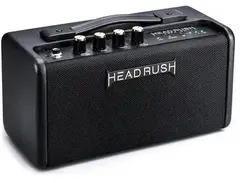
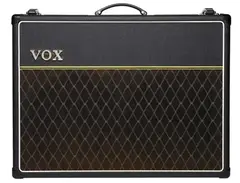
on a side note, I love the cosmetics on their amp!
EDIT:
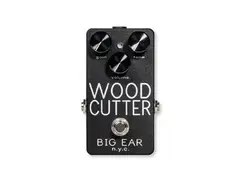
Having rewatched the awful Anderton's demo, I can guarantee that I know exactly what that bandwidth control is, it clicks thru multiple settings on a rotary. I promise you it adjusts the input caps from small (bass cut) to large (full bass response) much like the 'subs' switch on Z-Vex's distortron or the Orange FAC control on the older amps (and the 'tone' on the pentode channels of matchless, bad cat and divided by 13 amps) and may also have resistors in different values at each setting snubbing some top end. The mix of small coupling caps and carefully chosen resistors are what gives the tubescreamer its vaunted mid-push. They form a primitive bandpass filtercalled an RC network. The mid-push drives and distortions don't actually boost mids, they just seem to because they filter out treble and bass before the 1st amplification stage. The voice of the peal is determined by the components out front and the type of semi-conductor used to amplify and how it is implemented in the circuit. The height and freq controls seem to be 2 parts of a low-pass or variable shelving filter. They may have borrowed the Moog synth ladder filter like moog recently slapped on the minifooger drive (the voltage control via an expression pedal leads me to believe this) or they may have borrowed the shelving circuit from the high band of a parametric EQ. Freq is obviously the cutoff frequency and the height is the Q or steepness (resonance in moog filters) of the filter. My ear says shelving filter because there never seems to be NO treble, and that's what a low pass would give you as the frequency descends with the Q set steeply. Also, a nice low pass is expensive to build as the 'ladder' in ladder filter refers to a chain of transistors that would definitely up the cost of each unit substantially, and there's already a lot going on to jack the retail price up (tons of pots, a rotary switch, a custom enclosure etc)...
What I can't deduce just using my ears and eyes is exactly how they are achieving the pedal's clipping. It might just be diodes to ground or to the semiconductors bias potential (like in the OCD), it could be more of a fuzz with cascaded discrete transistor stages too.... I don't think it sounds like diodes in a feedback loop like the tubescreamer and SD1, but I could be wrong. If they configured mosfets as diodes or used a weird combination of LEDs or something it might be. But why be speculative? I can straight up tell you what's going on with the pedal's 'special' features.
these guys have combined a lot of cool ideas in their pedal, but just know none of it is original or innovative, its just creative to have combined all these different voicing options in one box. Anyone with a soldering iron and a little know how could make something like this, but why bother when there are plenty of much simpler devices out there that produce decent results within 5 minutes of tweaking leaving your day free to PLAY THE GUITAR. A pedal like this is like the mesa dual rectifier of drives, you could spend all day getting passable sounds and not playing without ever settling on anything. And then IN THE MIX with a band who knows if anything you came up with would really do the business at the back of the venue. Standing right in front of your amp you are getting a much different tone than what is reaching the back of the room and if you play at a low stage level and rely on the PA your ear is not hearing what a commonly used dynamic like a 57 or E609 is sending to the PA. A lot of the tried and true designs are meant to cut a mix all the way to the back of the room and to sound good close miced by a shure. If you want to improve on them its my opinion that the best way to do it is to follow their design philosophy but with an original circuit and that means minimal controls with a fixed voice that's specifically engineered to gig well. Tweak the treble and maybe bass to match your bypass tone and have at it. The sound that reaches the abck of the room will be right if the manufacturer did their job.

.jpg?v=1782968794)