.jpg?v=1784056446)
gchiaren
Admin
GearIQ 37599
Joined Mar 2012
Hi! Hope you enjoy Equipboard as much as I enjoy building it.
Every rig tells a story. Start yours.
Catalog your gear, wishlist what's next, and share the setups behind your sound — free.
Create your EquipboardElectric Guitars 3

Fender Telecaster Custom Electric Guitar
Solid Body Electric Guitars
Color/Finish: Black
Year: 1978
studio/recording
-m.webp?v=1783781964)

Pedalboard 10

This pedal got on my radar after seeing it on [Paul Banks' pedalboard](https://equipboard.com/pros/paul-banks/big-ear-pedals-woodcutter-distortion) (of Interpol fame). I was testing out numerous distortion pedals and trying to find _the one_ for my board (for the music I play I don't mind owning multiple fuzz boxes, but not sure I need more than one great distortion).
I should also mention that I'm a fan of the ProCo RAT sound in general, though I don't necessarily want the original on my board. With the Woodcutter, the story goes that the founders of BIG EAR had what they considered to be the "holy grail unit" RAT, so they cloned it and made the LM308-powered Woodcutter.
The RAT's built like a tank, but too big and bulky for my liking. Conversely the Woodcutter is a normal sized stompbox enclosure and is minimal and beautiful. The knobs in particular stand out - they're made of metal and feel amazing to turn. Build quality of the Woodcutter is 5/5, no questions about durability.
True to the RAT, it has 3 knobs - GAIN, VOLUME, and TONE. GAIN is like the RAT's DISTORTION knob. And man, the Woodcutter has plenty of it on tap. Below noon the distortion stays pretty "light" and manageable. Definitely _not_ a replacement for an overdrive pedal, I wouldn't call it the least bit transparent. At noon and beyond, it really sings. Truthfully past 3 o'clock I can't tell much of a difference. The TONE knob has a very wide range; turning it clockwise muffles the sound, while counterclockwise opens it up and lets those high frequencies through.
At the end of the day, I bought the Woodcutter bc it sounds like a RAT, only better. It's louder and a bit more gnarly than a RAT, but it manages to stay true to it and not go off the rails. In my experience it also plays very well with fuzz pedals. I know ProCo RAT is considered by many to be kinda fuzzy itself, but part of what I like about this clone is that it stays more in the distortion range.
This is an easy 5/5 for me. I don't foresee taking the Woodcutter off my board anytime soon.

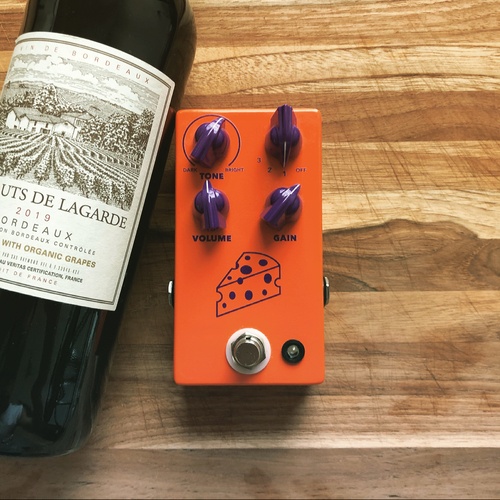

I play mostly garage rock/blues rock/alternative. I happened to fall in love with this pedal at the NAMM show. Each year I attend I like to make a short list of 5 or so things that excite me and that I plan to possibly buy over that year. I was hanging out at the JHS booth and spent way too much of my time playing with this bright orange little box.
So this is based off the [Lovetone Big Cheese](https://equipboard.com/items/lovetone-big-cheese), which admittedly I know very little about. Officially it's classified as a "fuzz/distortion" pedal, which I would completely agree with. What motivated me to buy it was... well, I can't get enough of dirt pedals. They're so easy to switch in and out, and you never know when you find one that just hits a sweet spot.
Not much to say about the build quality, it's JHS so ya know it's gonna be solid. The bright orange paint and simple graphic is pretty distinctive and will pop on the pedalboard.
The bread & butter of the Cheese Ball and the knob worth discussing is the mode selector switch which has settings OFF - 1 - 2 - 3. The OFF mode is supposedly the brightest and lowest gain mode, but I quite like it. The pedal sounds very open and jangly in that mode, the gain knob is nice and responsive and the tone knob is disabled. This is probably more the Cheese Ball's distortion side, wouldn't quite call it fuzz yet.
Setting 1 is totally different. It's very mid-scooped. Not in a metal tone kinda way... more like a 90s grunge/alt-rock sort of vibe. In fact I love it for that. I almost consider mode 1 to be like a bonus pedal within a pedal. The mid scooped sound is not as unwieldy, and thus plays well with other pedals, like overdrive.
Setting 2 I probably use the least, just because it's neither here nor there. From setting 1, it adds more gain and more mids. This is the point where it starts to sound more like a fuzz pedal.
Setting 3 is a beast, and we've landed in fuzz territory. In fact, if you turn up the gain knob it gates the sound, kinda like your speaker is on the verge of dying. Very velcro, as they say. All in all I would say you need to experience this pedal in OFF and setting 3, with setting 1 being suited to a very specific style of rock.
I was a little hesitant that played through my setup the Cheese Ball would disappoint me considering I initially played it at an exciting music gear trade show, but all fear was put to rest when I heard it ripping through my Blues Junior. I have a Gibson ES-325 I adore with Gibson mini-humbucking pickups that pair really nicely with the Cheese Ball (the cheese puns are unstoppable). In an ocean full of drive pedals vying for my attention, the JHS Cheese Ball is unique enough where I can confidently say I'll have it for a while


Amps 2
-m.webp?v=1784041644)

I mostly play and practice at home, and I had a list of criteria that was pretty specific for a guitar speaker - I wanted one that did not color the sound in any way, would take pedals well (with an amp-sim pedal in the chain providing the core tone), have a headphone output for silent practice, have Bluetooth to jam along with tracks, and preferably have an understated look.
I first learned about [full-range, flat-response speakers](https://equipboard.com/posts/best-frfr-speakers) and had nearly decided on the [Headrush FRFR-108](https://equipboard.com/items/headrush-frfr-108). Thankfully, I discovered the FRFR Go before buying, and I was immediately sold.
I mean, you couldn’t really match the specs any better to my needs. In terms of form factor and looks, it’s actually much smaller than I thought! **It’s just about 1 ft wide, super light, and as a design snob I love its simplicity.** With other FRFR speakers looking like either stage wedges or traditional guitar cabs, it’s nice that the FRFR Go looks like a modern/minimal bookshelf Bluetooth speaker. Point is, it should fit right in wherever you want to put it. The fit & finish is great, it feels well-built and the knobs are stylish and high quality.
My signal chain is guitar ➡️ drive pedals ➡️ amp/cab sim pedal ➡️ time/space pedals ➡️ FRFR Go. Depending on your other gear, you’ll need to experiment with INPUT VOLUME and MAIN VOLUME. Balancing the two will minimize distortion from high-gain pedals. You’ve also got BASS and TREBLE knobs which are nice and responsive, to sculpt your tone further (I keep mine at 2 o’clock). I’ve set the Volume and Gain on my amp sim pedal to about noon, fwiw.
**Considering the price and how small it is, the sound quality is outstanding.** It’s pretty much exactly what I wanted. Total power is 30W so it’s not loud enough to hang with band practice, but that’s also not what it’s designed for. For jamming in your home it’s *perfect*. I do find I can get it to crack a bit depending on drive pedals, pickup config, etc but this could also be due to me needing to play with the gain through the whole chain. As it stands I do wish it had a little more [headroom](https://equipboard.com/posts/audio-headroom) but not a deal-breaker by any means.
When I plug my headphones into it, it sounds awesome. No complaints. I do find I need to crank the main volume a bit with headphones but that’s probably due my headphone’s impedance.
The Bluetooth works _great_. My iPhone connects to it seamlessly, and I can stream my favorite tracks and jam along with them and feel like I’m in the band lol. Especially with headphones on.
Apparently it has a rechargeable battery good for 13 hrs but my FRFR Go stays put so I don’t have a review on that. Oh and it also has an aux in, which I haven’t tried but makes it even more versatile.
**All in all, the Headrush FRFR Go is awesome.** There are certainly other small practice options for bedroom guitarists, but the vast majority are amp modelers which makes them more complex and expensive. The FRFR Go is PERFECT if you’re already generating your tone digitally and need a way to faithfully reproduce it, while throwing in tons of thoughtful features that guitarists need when practicing and playing in small spaces.
Headphones 1

The Beyerdynamic DT 770 PRO-80 Closed Studio Headphones are absolutely amazing. Granted they're the most high-end headphones I've ever tried, but I honestly cannot imagine how another pair can sound *that* much better than these. I've owned headphones in the $100-120 range from Sony, Audio-Technica, and Sennheiser, and some more expensive Beats headphones (hey nobody's perfect). I wasn't exactly looking for new headphones, but I got a chance to borrow these from a music producer friend, and was absolutely blown away from the moment I heard some sound come through them.
The mid and high frequencies are so well balanced, and the bass is nice and rounded and full. I can see why these are often near the top of the list for music producers that need a good bass response. I've used these to produce music, play guitar, and for casual listening, and they excel in all areas.
Finally, I can't say enough good things about how comfortable they are. I only feel the need to take a break every handful of hours, which is better than I can say for all the other headphones I have owned or tried. The pads are super soft, and the DT 770s are overall very light, so you'll almost forget you're wearing headphones at all (if it wasn't for the sweet sweet sounding music engulfing your ears and brain).
If you're in the market for new over-ear headphones for studio or casual use and can stretch the budget to around $200, don't make a buying decision until you've given these a shot. It won't take long for you to fall in love with em, trust me on that.
Recording 2

On paper, it didn't seem like a *huge* upgrade from my old mbp. It's amazing though - they got rid of the optical drive and made it much lighter and thinner (almost like an Air), the battery life lasts significantly longer, and dat retina display is stunning!! Not cheap by any means, but WELL worth it.
Specs of mine are 2.3 GHz Intel Core i7, 16GB 1600 GHz DDR 3 memory, 500GB SSD.

Accessories 4


Had 21

Gibson Les Paul Custom Electric Guitar
Solid Body Electric Guitars
Color/Finish: Alpine White
Year: 2006
studio/recording


I bought this amp in 2008 as a practice amp I could easily carry anywhere without feeling like I was hauling around a ton of bricks - jamming with friends, traveling, etc. I like Orange as a brand, the Orange sound is pretty great. Aesthetically, it doesn't get much cooler than the, umm, Orange orange color. At the time I bought it I also liked that it had a headphones output, for quiet practice time.
Years have passed, and I gotta say I honestly haven't used it *AS* much as I thought I would. I'd probably say it's my needs that changed, rather than the amp being inadequate. Having said that, I'm not sure I'd buy it again if given the chance.
1) The sound is good, not great. It gets pretty loud for a practice amp, could probably handle a small-ish gig. Safe to say that you're not gonna get THE Orange sound. After all, it's a solid state amp, and it's made in China, not the UK. Distortion on it is good - it gets nice and crunchy, but nothing crazy. Would probably take pedals well, though I haven't tried myself. Reverb sounds pretty nice as well.
2) Build quality and durability isn't great - at least not in my case. Having handled the amp with care, and having kept it in storage for the last couple years, I expected everything to work just fine. I turned it on recently and BAM, hear a loud pop. Capacitor totally blew. Maybe I shouldn't be disappointed that something went wrong with the amp after ~6 years... the frustrating thing is how little I used it and that I took great care of it.
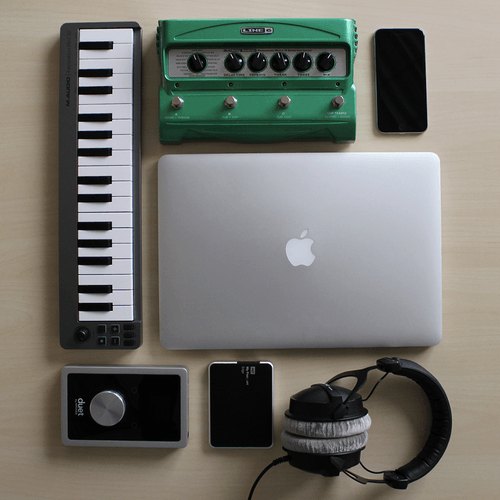

The Line 6 DL4 is one of those pedals you almost *have* to go out and try simply because of it's popularity amongst guitarists. To be honest, I'm not much of a delay pedal snob. I haven't owned or tried enough delays to really understand the nuances. Maybe for that reason, the fact that this pedal models 16 echo and delay boxes is perfect for me. The guitar sound I really like to emulate is a Editors/Coldplay/Bloc Party sort of sound, and this pedal has plenty of options for that.
I'm a fan of looper pedals, so the onboard 14-second looper is really what sold me on this one. I saw it as a way to get a good looper and a variety of delays all in one box... at least until I build out my pedal collection and go deep on some delays. The loop function is super easy to use, and 14 seconds is plenty of time to record a substantial loop and jam on top of it - it's pretty satisfying sounding like a one man band!
The build quality is great, I've gigged with it and have had no issues. Admittedly the price is a little steep, but I've had this thing for so long and it has brought me so much enjoyment that I don't really think about what I paid for it.
I'd say an easy 4 or 4.5 stars out of 5 for the DL4. Even if you're a delay pedal purist or collector, try this one out, it might still have something to offer you.


-m.webp?v=1784041041)


I've used Logic to write, record, arrange, mix, and master electronic music for the last few years. I'm very comfortable with the Apple ecosystem of apps, so when deciding between DAWs I naturally gravitated towards it. I used DAWs many years ago (Cakewalk) so I was already familiar with the general operation, but to learn the ins and outs of Logic I used "Logic Pro 9 Essential Training" from Lynda.com, and just followed along with all the videos.
I can't compare with Ableton, FL, Cubase, etc since I don't have experience with those, but I will say Logic Pro 9 has been a pleasure to learn and use. I think the best feature of a DAW is it's ability to sort of "stay out of the way" of the creative process, and Logic achieves that *most* of the way. Channel strips are great to recall your go-to plugin chains, the mixer view is intuitive, the piano roll is great, and the main arrange window is nice and provides lots of helpful context and menus around what you're doing.
If I had to point out a drawback, I would say it's automation, particularly snapping it to a grid. It can be infuriating snapping inflection points to the right places, in fact I think I've seen DJs complain on Twitter about how frustrating the automation can be.
And finally, Logic Pro 9's stock synths and plugins are nothing short of stellar. The ES M, ES1, ES2, and EXS24 (the sampler) are all very good synths in their own right. I've actually heard people say that if you are new to synthesis, you should exclusively learn ES1 and ES2 before moving on to third party synths (good advice I think). What I'm most impressed with is Logic's stock effects. Space Designer for reverb might be the only reverb you need. Channel EQ is a great equalizer (I stick one on every channel), the stereo spread fx are great, chorus/phaser/flanger and all that good stuff, and finally (very important for electronic music) the Compressor effect is pretty awesome. I was pretty new to compression, and Logic's Compressor helped me get a good grasp of it.


.jpg?v=1784056446)
