I'm glad to see some replies because I agree with most of them. That's what kind of interests me in the article. I don't see guitar as dying, I go to music shops on the weekends and I always see at least some younger person swing by and play some rock.
I don't think it's going to go the way of the sax. It'll probably be back in a few years. I think what needs to happen is we need to break free of the Les Paul/strat/Tele thing and start pushing the technology further.
And yes, we have a overpopulation of guitars - get your strats spayed or neutered. Case in point - I bought an Ibanez RG last weekend for $20.00 at a thrift shob because the output jack was broken and mismatched tuners. It was marked at $125 till I pointed that out! And the guitar was like new otherwise. I go to the pawn shops, they are always wanting to cut me a deal, one local pawn shop has more guitars on it's walls than the local Guitar Center does, and the guy there I swear I could probably talk him down to $200 for 17 of them (before my wife promptly beats me to death with one of them). More than 1/3rd of those guitars were under $100, some as low as $35-$45, and they played better than the $99.99 Harmony H-804 many of my school day classmates started off on.
MEanwhile, because of this huge pile of inexpensive and usable guitars, plus the internet's wealth of information on guitar modification, repair, and customization, there's almost no point in buying anything expensive anymore, and almost no point to even buying period. My last build - the Mosrite copy on my Equipboard - was a coffee can of parts and about $65 worth of new parts including tools, sandpaper, and glue. I think some of this has killed the mystique of the instrument, as well as the long standing legends surrounding what makes a guitar great like it's old wood or aged pickups.
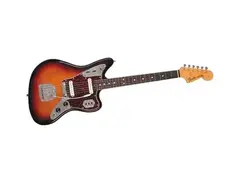
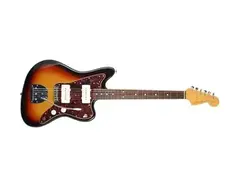
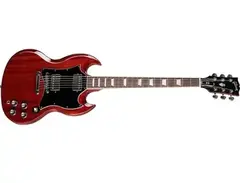
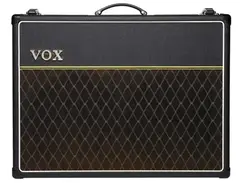
And the most neglected part of that is they are forgetting the pedals and amps. I remember starting out, a "practice amp" was a 2 channel 15 watt combo with an 8 inch speaker, all you had was a volume knob, a switch for the channels, pre-gain (distortion leevel), post-gain (distortion channel volume), a 3 knob EQ (low/mid/high), and a power switch. Now for less than THAT amp cost, I see what kids start with today and I'm jealous. We did not have built-in stereo effects, reverb, custom ported and tuned cabinets (I'm looking at you Blackstar), and then the darn thing probalby has USB at least or even Bluetooth on top of that making it even more editable than anything even in the $1100 price range (I'm talking stuff like the Line6 AX2 212, which I have owned, and the Johnson Millennium amps). Kids don't have to struggle for years with a shitty one channel combo that sounds like an ice cream truck and a box of hornets for a distortion pedal, and some "SG" that has fake humbuckers that are really mostly empty chrome covers with Jaguar pickups underneath, and action so high you can use it as a handy dandy kitchen tool as well as a musical instrument.
And on the subject of music tastes, you can't be a rebellious rocker anymore. For starters, society is so restricted, so watchful, so P.C., you cannot be a cranky asshole anymore without someone arresting you, putting you in a tight white coat, or somehow getting mad. And the record companies don't want to invest in interesting yet unstable rock stars anymore - because they are a liability in the shaky industry as it is now - much easier to bring in an impressionable, good looking young person and give them auto-tune and singing lessons, because as long as they feel better earlier, the less likely they blow their brains out on heroin in a handful of years than the angry guy with the electric guitar and high aggression levels (like me).
Also, guitar was, to the majority, a tool to get laid, get popular, and possibly become a rich rock star. Girls know the truth now - us guitarists are mostly sleazebags. Sleaze bags don't get popular anymore, they are uninteresting to a populace that is no longer somewhat scared of them, especially as much as the edge has been taking off things in society over the years. And popularity is a niche thing now instead of a unified youth subculture that required a monolithic industry or to support it. Honestly, I'm happy that crap is over - means those of us who play for the love of the instrument and the sounds it makes, and those of us who see something more to it that we can add - will be the ones who continue to stick around and play.