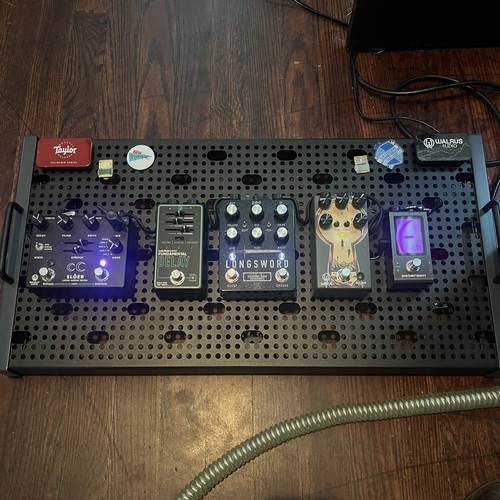
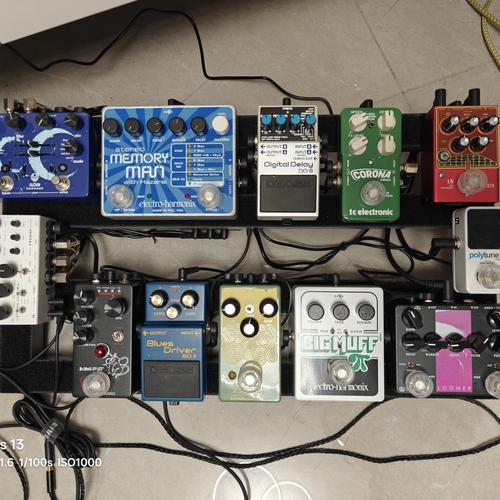
equipboard's Pedalboard


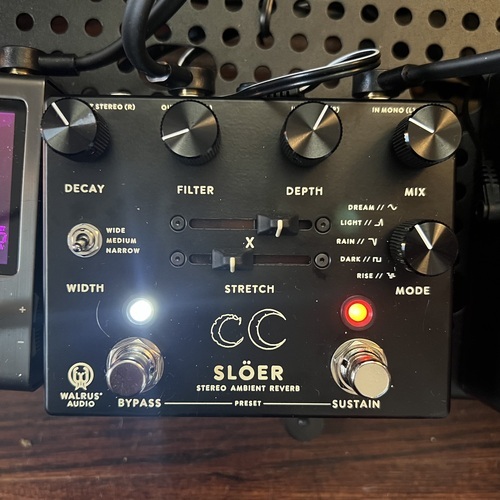
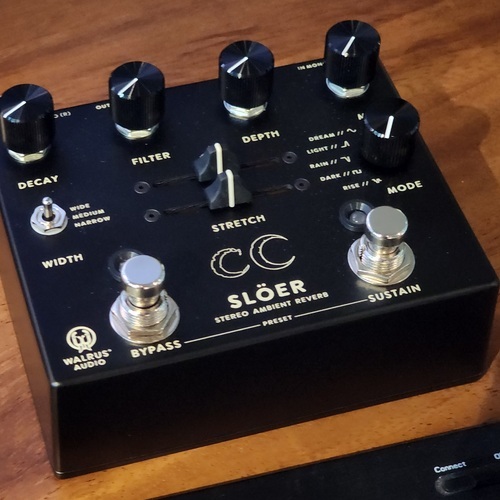
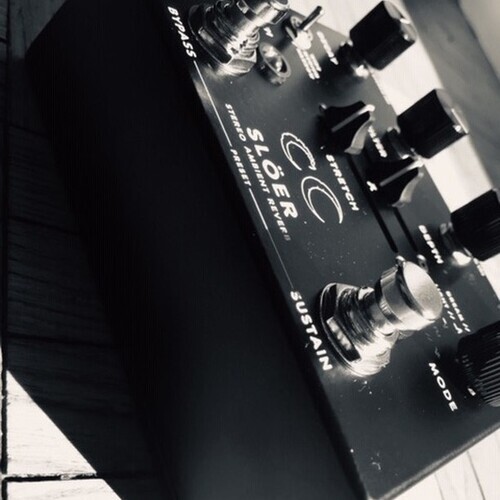
Beautiful artwork.
More gear photos from equipboard


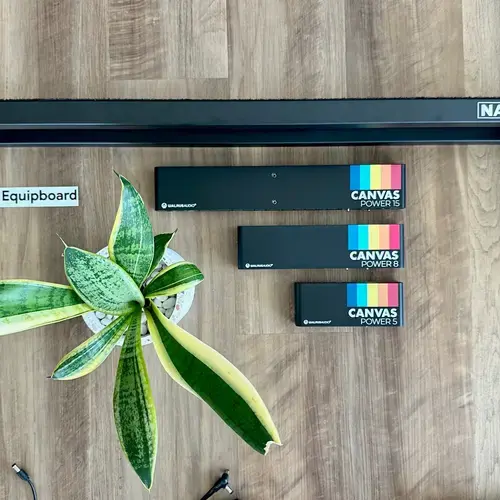
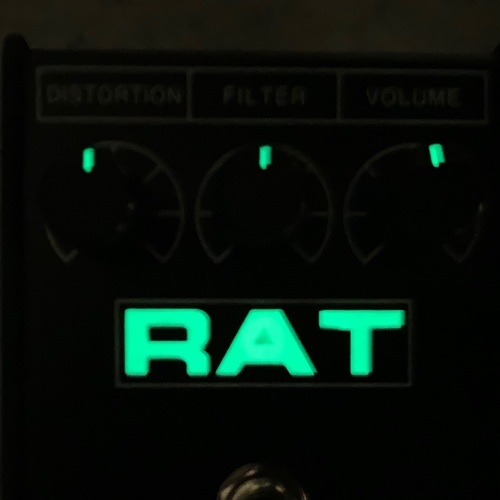


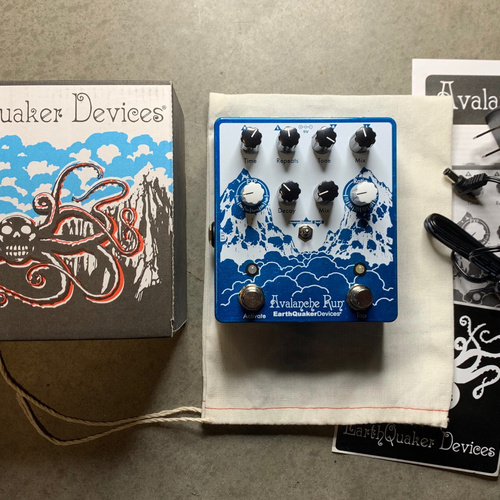





Gear in this photo
This rig
~$331
-m.webp?v=1784845365)
Avg price: $331.31


Superb ambient stereo reverb, but pricey and not for everyone
The Walrus Slöer is not your average digital reverb pedal. This little box of atmosphere wants you to take some quality time getting to know it. If you want to do like we did, make sure the weather outside is just right. Gloomy or rainy is best, but nighttime works well too. Get in a cozy spot, and grab yourself a refreshment. Unplug all your other pedals. Tune up, and just go straight into the Slöer, and from the Slöer to your amp. A stereo amp, preferably. If you don’t have that, then go into an amp with a headphones jack, as that will be the best way to experience everything the Slöer has to offer...
...Okay, so you don’t need to do all that, but we did, and here are our thoughts. Keep in mind, this is like the more sophisticated sibling of the Walrus Slö reverb pedal, which we previously got our hands on and reviewed. Walrus took everything from the Slö, and added more.
Build Quality and Design
Right out of the box, it’s a beautiful pedal to behold. The graphics are gorgeous, and really capture the whole vibe of what the Slöer is and does (note that Walrus is known for releasing versions with different artwork, but this is our favorite). It’s built well in typical Walrus fashion (how do they get those knobs to feel so good??), even though it feels slightly less indestructible than, say, a Boss pedal.
The size could put you off if you have limited space to work with on your pedalboard. It’s nearly 5 inches (12.7 cm) wide, which is almost the width of two standard size pedals. Just something to keep in mind.
Usability
What’s cool about the Slöer is that it’s a digital pedal that can do a lot, but it’s not that complex to use. There are no menus to wade through, just knobs and sliders that are well spaced apart. Whether it’s your first or fifth reverb pedal, you’ll be dialing in usable tones in no time - no manual needed (well, for the most part). The little “cheat-sheet” that Walrus includes with pedals is useful, particularly in this case because they describe all five reverb modes.
The knobs across the top, decay, filter, depth, and mix, are pretty “standard” and easy to grasp. Depth is perhaps slightly more complex, since it controls how much modulation is applied to the reverb decay.
You can store 3 presets, which is always a welcome feature. It also has some features you expect in a high-end reverb pedal, like the ability to momentarily turn on reverb by pressing on the bypass switch when the effect is off.
Stereo Reverb
Let’s get this out of the way - the best way to use the Walrus Slöer is in stereo. What does this mean? Your guitar can go in mono, but the pedal really shines when you can hear what it can do in stereo. This means using a stereo amp (like a Roland JC-40 Jazz Chorus or similar), or doing what we did and using an amp sim pedal that can handle stereo like the Walrus ACS1 and listening to it on headphones. There’s even a little switch on the pedal that lets you set the stereo “width” to narrow/medium/wide, but we found ourselves keeping on wide the whole time.
It’s not that the Slöer is BAD in mono per se, it’s just much more worth its hefty price tag if you can listen to the lush reverbs in stereo. It would be like driving a Ferrari, but reducing its top speed by 30%. It’s still a beautiful ride, but not being fully utilized.
Sounds
The main thing that gives the Slöer its soul are the 5 types of reverb modes, easily selectable from the knob on the right. 3 of them are carryovers from the Slö (and Slötvå), and 2 are new.
Every reverb mode is affected by the X and stretch sliders in the middle - the X slider does something different for each one. Here are our quick impressions of each mode:
- Light: This one’s new to the Slöer, and interesting. With X all the way up it's a bit extreme and it’s hard to think about how to use it. On a more moderate setting, it’s very angelic.
- Rain: Also new to the Slöer. It’s difficult to describe exactly what this reverb is, but it’s pretty cool and unique.
- Dark: Our personal favorite. It adds a lower octave to your reverb trail, making it sound very brooding and, well, dark. We fired off some Interpol riffs and just smiled.
- Rise: A pretty extreme effect. Very cinematic.
- Dream: Very cool, this one is a carryover from the Slö and is sort of the “signature” sound we associate with this line of Walrus pedals. If you hit the sustain footswitch this will latch (i.e. keep it going) and you can play with your uneffected signal on top of it. Pretty neat.
Overall, all modes are fun and unique, and the X knob gives each a subtle or extreme character. The stretch knob was honestly kind of hard to wrap our head around. Something about adjusting the sample rate? Not a super key feature in our book...
If you want to go even further down the rabbit hole of reverb tweaking, you can change the waveform that modulates the signal (also controlled by the mode switch).
Value for Money
The Slöer is not cheap. Overall, it’s going to appeal to ambient, shoe-gaze-y type players who want to wash their tone in a wide, stereo, out of this world reverb. Or it will appeal to you if you loved the Slö/Slötvå and want even more of that goodness.
The Slöer might not be for you if your reverb needs are a little more “clinical” or straightforward. You might also want to skip it if you can’t spare the pedalboard space, and frankly if you don’t have a stereo rig, you can get most of the Slöer’s mojo with a Slö or Slötvå. That’s the direction we would go, if faced with the decision between these Walrus reverbs.
Bottom Line
All that said, the overall quality and range of sounds the Slöer produces justifies its hefty price tag. The unit is durable, reliable, and backed by the strong reputation of Walrus Audio. Guitarists who crave ambient and textural reverb will no doubt fall in love with it.
Aside from its sophisticated sound, its user-friendly design makes it a standout choice for ambient musicians and sound designers. However, its overall vibe and hefty price may limit its appeal to those needing more conventional reverb options.
Preferred Settings + Usage:
Can't get enough of Dark mode. Width set to wide. Mix knob at 12 o'clock.
About this setup
This gear photo by equipboard features 1 piece of gear, including Walrus Audio Slöer.
.jpg?v=1774282825)