
lukemaynard's Reviews
11 reviews Back to lukemaynard's Equipboard
-s.webp?v=1783954670)

134
Versatile, well-built, does what it says on the box
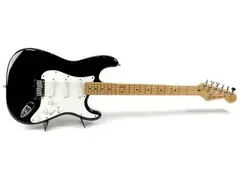
I'm a Strat fan and a lot of them have passed through my hands. I had an early 2000s American Deluxe Strat for many years, and have nothing bad to say about it. It's beautifully made and felt slick and comfortable in my hands: the satin finish on a beautifully shaped maple neck is perfect, and is a neck type I've preferred ever since even when playing custom guitars.
If you're picking up a Stratocaster, the vintage Noiseless pickups deliver basically everything you want tonally. They're rounder and less harsh sounding than a lot of single coils, and give you a lot of that Strat "quack" without ever being too shrill or tinny. The version I played had an LSR roller nut, which is an upgrade in most ways from the Wilkinson roller nut of earlier years, and if you do a lot of bending or trem play, it's a nice improvement.
Other than that, not much to say. It's a Strat. You know what that's supposed to mean, and this model delivers exactly that. No surprises, either pleasant or unpleasant ones. Dependable, high-quality, and a great working guitar. I never fell in love with it and didn't keep it after custom-building my first guitar in this same niche, but you really can't go wrong with it. Among the countless Stratocaster models now available, this one is consistently top-quality and one of the best available unless you have a lot of excess money going to the Custom Shop, Master-Built, or Signature Series Strats for something you want that's very particular. As far as general all-purpose Strats go, this is one of the best commonly available.
134
A fine Strat, ahead of its time
The Strat Plus series was introduced by Fender in 1987 and was the highest-end production model Strat at that time next to its Custom Shop guitars.
I found my Strat Plus in the late 1990s in a pawn shop for around $400. It was a steal even then, and I picked it up without knowing too much about it. Mine has the big Wilkinson roller nut, which you don't see in this picture. They were produced with a Wilkinson nut until around mid-1993, when they switched to the later, more elegant LSR roller nut that you see on the American Deluxe Strats of that period. The Wilkinson nut is not quite as versatile: you're limited in the gauge of the string you can feed through it, so you won't be playing super-heavy Stevie Ray Vaughan-style strings, but the Wilkinson is a heavier nut with better sustain, I think, and more than adequate for my purposes since the tremolo is blocked on my guitar anyway (see below).
For some reason the tremolo block on my Strat Plus is hard-glued down to the body. I don't even think it's just "blocked," it's hard-fixed to the body despite having a threaded hole for the trem arm. This is very similar to what Fender did with the early 1990s Eric Clapton Signature Strats, and the specs on this guitar are so similar to the earliest Clapton Blackie Strats that I wonder if this wasn't somebody's attempt to create their own Clapton Strat to spec on a budget.
The Clapton Strats from this period had a number of key upgrades that are mirrored by my Strat Plus: One of the tone pots is replaced by a TBX tone pot that cuts both ways, taming either treble or bass. It's a really unique tone control that offers a wealth of possibilities and widens your tonal palette once you learn how to adjust the rest of your gear to compensate for it. On a guitar with triple S-S-S pickups where no coil splitting is possible, it gives you a full ability to adjust your sound between a fatter bottom end and that classic glassy Stratocaster twang without swapping instruments.
The heart of this guitar is in the pickups: like the Clapton Signature guitars of this era, they're Fender Lace Gold Sensor pickups, which i think are marginally different from the non-Fender-branded gold sensors Lace continued to produce. They're balanced, clear, and very well-rounded: they're the pickups you hear exclusively on Clapton's "24 Nights" album and they are perfect for chasing that overdriven sound. You might want something more extreme if you're really chasing heavy metal guitar with soaring harmonics, but these sound good clean, they sound good dirty, and they have basically zero hum.
These are not "high-output," but don't be fooled; output isn't everything. The design of these pickups allows for weaker magnets which dramatically reduce string pull, resulting in really great sustain, and allowing you to set the pickup height as close as you want without excess magnetism affecting string ring-out—though maybe fixing the bridge down and having the Wilkinson nut helps with that too. Even with the bass rolled off using the TBX, the pickups don't have that harsh icepick sound of some vintage Strat pickups.
I like the sound of them, I like the EMG-style look of the covers without pole pieces, and although I've played Fender Deluxes and later Clapton Signature guitars that swapped these out for the "Vintage Noiseless" pickups, these are far and away the ones I prefer for what I play. This was a really great period for Strats, and a few extra appointments like the locking tuners (I think mine are Sperzels, but a few of them had Schallers too) make this a custom-shop level guitar at a very reasonable price. Make no mistake, this is a real player's guitar, and a delight to hold in your hands and hear through almost any setup. I'd recommend one to almost anybody who plays rock or jazz or blues, whether its your only electric or a welcome addition to the collection. They honestly don't make them like this anymore: the push-pull button on the modern (2022) Player Plus Strats adds one pickup possibility these don't have, but even that doesn't really give you more versatility than the old-school TBX setup with these pickups. This is not the prettiest guitar I've ever owned, through a few hardware & appoitnment swaps have made it look good even with an odd transparent natural finish on a dark alder body. But overall the whole package is a delight. It's a guitar I probably don't play as much as I should.
134
Some of these (some!) are very nice
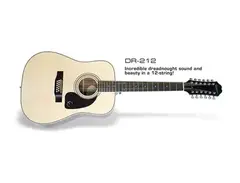
The Epiphone DR-212 is a solid 12-string for anybody on a budget. It's a good entry-level 12-string acoustic, and if it's something you're adding to your sonic arsenal it's probably good enough for occasional use. If you occasionally need to play some 12-string but don't use it on every gig, it's worth keeping around.
These workhorses are solidly built and affordable, and keep their value on the used market. Like many guitars in this price range, the quality varies a bit from guitar to guitar. I've owned two of them, and the first one punched above its weight for sure. It had a beautiful tone, great action, and was supremely playable even for somebody not used to 12 strings. It was good enough that when I sold it to move across country, I sold it and bought the exact same model where I got where I was going. The money I lost selling it used and buying another was trivial; it was less than I would have paid to transport it safely.
I still wish I'd hung onto the first one, though, because the second one of the same model was not quite as resonant or playable as the first, and the amount of work it'd take to thoroughly set it up and try to bring it up to the sound of a slightly better build of the same model is probably more than a guitar at this level is worth. It doesn't really NEED an overhaul to be usable on stage or in the studio. It's "good enough," and for the frequency and style of my use, that's all I need.
It'll never measure up to a really fine player's 12-string, like the Taylor 312 or 512s, but then at this price point it's unfair to expect that performance. It's as good as you expect it to be, and if you get very lucky like I did with my first DR-212, it might even be a little better.
134
A decent electric archtop, but not golden-age decent
This was a very special guitar for me growing up. When my guitar playing took off in my teens and I started playing more blues and jazz and getting the urge to plug in, I started on a Squier Bullet Strat my Dad had kicking around. This was my very first electric guitar of my own, and of course it blew the little Squier out of the water. But it wasn't really a perfect anything—not a solid-body electric substitute, and not really an archtop substitute—and it was never quite the right fit for me.
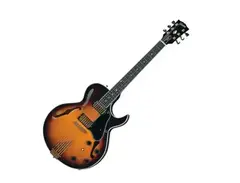
The Fusion I had was the gorgeous piano black finish variant made around 1997, and it was a thing of beauty to look at. With its gold appointments it looked an awful lot like B.B. King's "Lucille"—not the true signature model Lucille that Gibson made for B.B. King from 1980 onwards with no sound holes and stereo output, but the old ES-335 variants that he used to play in the 1970s on his most iconic and influential recordings. It has the look and feel of a hollow-body archtop, but with a "chromyte" center block that's something like balsa wood. The Generation III HRFs were made at Gibson's Memphis plant, and the build quality was great at that time, but it's a guitar that tries to be many things at once, and is sometimes the best of both worlds, and sometimes the worst.
The body is thicker than an ES-335, more like an ES-175, which is what Roberts used as the base for this design. The light center block keeps the guitar quite lightweight for such a thick instrument, and also does a fine job of killing feedback when you play live, but it makes a real difference when it comes to sustain. For jazz fusion, it's not a thing you notice, but the guitar neither rings like a true acoustic or sustains like a true hard-bodied Les Paul. I found it versatile in that you could theoretically play any kind of music on it, but whatever you did with it, there were other guitars that sounded better for that thing—with the niche exception, I later found out, of the kind of music Roberts made as a high-demand session musician and great live jazz player.
The other flaw worth mentioning is that its vintage-style finish is not too friendly for hard use. I stored a leather guitar strap in the cutaway bout when carrying the guitar in the case, and the white top and back binding of the guitar just drank up the dye from the strap, leaving it an unsightly stained-orange colour for the rest of its days. That was partially my mistake as a young kid who didn't know how to handle a guitar like this, but don't let it be your mistake too.
A final note—the elegant-looking "finger tailpiece" that holds the strings over the TOM-style bridge has a couple of adjustment knobs that are sometimes billed as "microtuners," but they're really not. They adjust the individual fingers of the tailpiece up and down, with the effect of fine-tuning the tension of each individual string just the way you like it. I had no real sense of how to use this feature as a young kid who was playing straight-ahead rock: the tension in my particular setup was high, which made the guitar louder acoustically and feel more like an acoustic in general when playing it: it was not at all good for string bends, but it was a nice effect when trying to sub this guitar in for a clean acoustic I could plug in.
In short, your mileage may vary with this guitar. It wasn't the right one for me, but for an experienced player who wants exactly what this guitar offers, it may be a better fit. Given that Gibson archtop electrics of this age are now going for upwards of $5,000 on Reverb, though, it certainly has a lot of competition from other semi-hollow archtops. To the extent that this is a 25-year-old guitar with not just the flagship Gibson brand on it, but a signature-series name, you are looking at a premium collector's guitar at a premium price. There are other guitars in this niche that punch above their weight, so make sure you love it before you decide to add it to your arsenal.
-s.webp?v=1783940687)
134
The finest production-built electric guitar I've ever played.
It's really not fair to compare this to hand-luthiered, custom-build electrics, but that's what I'm going to do. I'm a long-time lover of Fender Strat-style guitars, and have played those single-coil marvels for almost 25 years. I was in the market for a modern guitar that was built for more modern and extreme styles of playing. I needed something with hotter pickups, more soaring harmonics, and a tremolo/whammy setup that I could abuse the living snot out of.
Ibanez is the gold standard for those, but I've never liked the almost sharp edge radius on their bodies, which look like graceless Strat copies cut out of a single plank of wood. Even the Jem series that Steve Vai plays, which command sky-high prices at the top of the production line, are cut from the same ungainly RG shape.
I was seriously thinking about having a guitar custom-built, which I've done before for a Strat-style guitar which I'd post if I could create items. The problem when money's tight is that if you have to sell a custom guitar, it's virtually worthless relative to the build cost: it's a no-name after all. Buy a top-end collector guitar secondhand, though, and it'll be a zero-risk investment that you can unload anytime for the purchase price if you're suddenly in need. So when one of these beautiful guitars came out of somebody's attic virtually unused for below market price, I took the chance.
Let me put it this way: the seller shipped it from Canada tuned to pitch, and when I pulled it out of the box here, the floating bridge was precisely in tune. That should tell you about the build quality we're talking about here. It is without a doubt the finest production guitar I've ever played, and better than quite a few custom shop and hand-luthiered "bespoke" guitars as well.
It's got all those things you metal guys will want, except for extra strings. It's beefy and powerful and unlike my lovely old Strat, it's easy to get blistering tapping runs and squealing harmonic wails out of it. All the crazy dive bombs and stupid guitar tricks you want will come out of this axe if that's what you want to play. What surprised me, though, was how crisp and delicate it could be as a jazz guitar: you can roll off some tone, dial in a less aggressive setting right on the guitar, and settle into some Les Paul, some Wes Montgomery, some Lenny Breau if you want, before cranking the bridge humbucker and going right back to Satch Boogie.
Honestly, aside from playability, which is very good and comparable with any high-end electric, I'd say the extreme tonal versatility is what surprised me the most, and where this axe blows every guitar out of the water. There are only three pickup selections between two pickups, but the high-pass filter and the coil split are incredibly neat functions, especially once you learn to control your volume and gain through guitar, pedals, and amp smoothly. I've never really played the Strats with Tone on anything less than 10 because as you roll off volume or tone you get a lot of mud. Amazingly, volume and tone controls shape the sound of this guitar in really amazing ways: no sound in the instrument's range from dark to bright, from gentle to searing, ever comes at the expense of sound quality. I'm futzing with my amp a whole lot less as the tone control I need is much more onboard than with other guitars I've played.
Finally, owing to that versaility, I'll say this is the only "Signature Series" guitar I've ever played that doesn't lend too much of a signature sound and colour to what you're doing. I've played the Stevie Ray Vaughan SS strat, modeled after SRV's famed "Number One"—and while it was really cool for about 10 minutes sounding like SRV, that's not a tone you want to be your only tone ever again. Likewise with "Lucille"—the B B King signature guitar is great for sounding like B B king, and not so great for almost anything else you'd want a Gibson semi-acoustic (it's really more of a chambered Les Paul) to do. In contrast, the JS2410 will give you a range of respectable copycat sounds if you buy it to sound like Satriani (hot tip: the most important part of Satch's rig is 40 years of intense practice). The tones are right, the sustain is right (though don't be fooled, this guitar doesn't have a tricksy Sustainiac built in, though it sustains so well it doesn't need one). Unlike the other models, though, a few quick knob twirls and pedal adjustments and you no longer sound anything like Satriani. Want to sound like Springsteen instead? How about Mark Knopfler? Cream-era Clapton? Bad 80s-soundtrack-era Clapton? It takes very little monkeying to get you from here to there.
I play this guitar through a Line 6 M13 into a Line 6 modelling amp, and I know those things normally get a bad rap, but they work so incredibly well with this guitar. There is tone for days and the electronic gadgetry plays very nicely with the high output of this guitar. You don't experience a lot of tone suck at all when plugging through numerous fairly inorganic, synthetic effects. I'd go so far as to say my effects & amp setup improved when I plugged in this guitar.
All in all I couldn't be happier and heartily recommend it. And as a final note since I was whining about the Ibanez shape, this body has the sleep rounded edges that made the original Strats so sexy in the 1950s, and THEN some. It's a delight to hold and play, though it's obviously a little heavier than the traditional Stratocasters, and you will never get tired of the plain simple beauty of the thing.
No fancy pearl or abalone; just a couple neck dots. No curly puffy quilt-maple patterns. No gimmicks like auto-tuning bridges or light-up doodads or other distractions. It is elegant in its simplicity and a joy to play.
134
A glorious little hand-finished acoustic
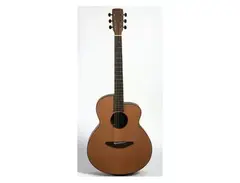
There are not many of these to be found in the wild. The only one on Equipboard has ovangkol back & sides, and I'm fairly certain mine has rosewood of one sort or another. Nevertheless, they're very close in tone and the asymmetrical body shape is one of the most elegant and original answers to the cutaway design I've ever seen—and heard.
As I hear it, Baden was a master luthier for Taylor Guitars who moved to East Asia to build guitars at affordable rates outside of a large-factory context. I won this little gem at a charity auction for less than its list price, the only way I could've afforded a guitar in this league, and I'm sure it's the nicest guitar I've ever owned. Small enough to be near a parlour-size, this thing outpunches my Yamaha dreadnought with beefy bottom end that never muddies the crisp highs that make this a lovely guitar for both fingerstyle and bright acoustic leads.
Craftmsanship is in the purity of the sound achieved and simple elegance rather than ornamentation. You won't see a lot of shell or fancy stuff cluttering up the look of this guitar, and maybe that's for the best. Advancements in veneer technology have resulted in a lot of sparkly adornments to mid-line production guitars, so they're no longer the mark of quality they once were. This is a very simply appointed guitar finished lovingly by hand, and anyone who really knows acoustic instruments will see, hear, and feel the difference.
The Baden name is not well known yet, and it's certainly not in the league of the $15,000+ luthiered masterpieces you see major artists playing. But it's just about the most elegant little instrument in its price range, and I'd take one of these over the comparably priced GIbson models they're turning out now. It holds its own with the beautiful vintage instruments that are getting harder to find, and is of a quality that the sound will (like those old woods) only increase in quality over time.
134
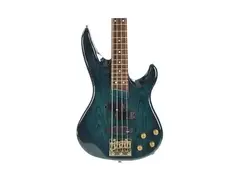
Versatile workhorse
Every fretted bass line I've ever recorded has been on a Yamaha CBX800A from the 1980s. This is a bit of a quirky animal—a 4-string, long-scale, active-electronics beast that's fatiguing for smaller people to play, but offers some of the most tonal versatility I've ever heard even in a bass that doesn't, in its design, feel like it's meant to be versatile.
The active pickups are terrific, and provide a much different response than the standard J-Bass/P-Bass pickups on your neighbourhood Fender. The neck is a bolt-on, but it's very deeply bolted into the body, if that makes sense; sustain goes for days and the bass isn't too muddy or thumpy on the bottom end, even on strings that have been dead for years. Hang onto one of these beauties if you can find one—they're not worth much to sell, but you'd pay two or three times as much for a custom shop bass that does the job so well, if the long-scale neck is something you can learn to like.
134
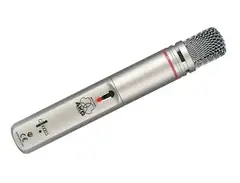
Fine all-purpose condensers for the studio or stage
The C1000S has been in production since the mid-'80s. I inherited two of these mics from my father after they'd been thoroughly well-used onstage, and they remained for more than a decade the only mics I ever used in the studio or onstage when I had to bring my own gear. They are workhorses, super durable, and very forgiving when it comes to sound quality in tough situations.
Making the jump to hugely expensive mics like the Neumann large-condensers might make sense once you've spent $10,000 on an acoustically perfect home studio. But for the budget recordist these are fantastic mics and may actually work better in imperfect spaces. They're great rugged touring mics, very nuanced in the studio, and have eaten everything I've thrown at them (vocals, amps, acoustic instruments, documentary sound) with equal ease. Mic placement and proximity is real important with them, but once you get to know them they'll give you a lifetime of service. A very fine go-to condenser for live or studio vocal/instrument sound.

41013
I actually really like the C1000, highly underrated.... its really a mid-sized capsule and there aren't a lot of those out there, they're only coming back in vogue lately and only in boutique mics....
you'll see a couple of these in a lot of professional studios' mic lockers and you wuld be surprised how many engineers break them out for various applications ins tudio where a condenser is needed but neither an LDC or pencil type SDC aren't doing it. These guys can be great hihat mcs, work well on acoustic guitars, mandolins etc.... I think they've remained in production because they fill a unique niche
134
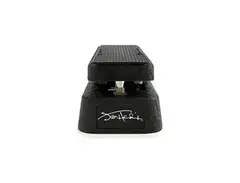
Darker-sounding wah with very sensitive midpoint
I have mixed feelings about the Hendrix wah, which is not a pedal I use enough of to really be a connoisseur of. The signal and sound are very clean and it's clearly a professional piece of kit. The dark end of the pedal is much darker than the standard Crybaby, which might help control the quack of a vintage Strat, but I find it's a little muddy even on my single-coil Strat clones. You only need to account for that brightness in one or two places, and if your rig is already set up to be balanced, this might be too much.
The frequency change sits almost all in one end of the rocker pedal's travel range. If you're pumping it for Voodoo-Chile-style effect or making a '70s erotic film soundtrack, that's not a big problem, but you may find if you use the pedal for nuance that the rapid frequency shift over 10-20% of the pedal's travel gets some real getting used to.
134
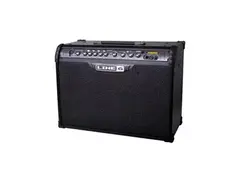
A one-stop tone shop
I've gone for years without a pedal setup of any kind partly due to the wondrous versatility of this amp, whose modelling of other amps and effects gives me a huge variety of sounds, even if the ability to fine-tune and control effects precisely is limited. The overdrive, chorus, delay, various amp models, and other goodies combine intuitively, and it becomes dangerously easy to record a bank of presets and never experiment with your sound again. The knobs feel flimsy, but so far this beast has proven rugged and travels well. It's heavy for new amps, but not at all relative to the traditional monster I used to lug around.
The customizable channels make it great for gigging, especially if you're travelling light and don't need a whole array of stompboxes. I've played shows with nothing in my signal path but the guitar going straight into this amp, and it's more than done the job of filling a bar or a small venue. It's a great workhorse amp, a must-have for the studio if you're on a budget and lack the money or the space for a wide range of Fenders and Marshalls, and this amp or the scaled-down 75W amp would spoil any beginner player too.
I think the Spider IIIs have been discontinued in favour of the Spider IVs, which are basically the same build with better software and more effects options are on board. If you have a choice, go for the IV; but the Spider III series is just as well made and will serve you well if you come across one.
EDIT: 5 years on, I still love this amp and it still does everything I want it to. One very big thing to be aware of, and I think this drives a lot of the negative ratings, is that it's maybe a little bit TOO faithful at modeling the amps it's pretending to imitate. As a result, you can't trust the knobs to do the same things from model to model. The "Red Metal" setting, for example, is based on the Mesa Dual Rectifier, but the "Green Metal" setting has a very odd custom Mid control that has a variety of effects on the distortion tone. The result is that players who don't take the time to learn the particulars of each model are going to have a hard time navigating the controls, because every time you switch models, all the "sweet spots" of the dials move on you without telling you. A '68 Marshall Plexi does not dial in the same way that a '53 Fender tweed Deluxe does, and the Spider does a good job of modeling that. The tradeoff of that perfect faithfulness, though, is that if you switch to an unfamiliar "virtual amp," it recreates the frustration of having to relearn new hardware. The few negative ratings, I'm sure, are from players who haven't figured this nuance out (as I didn't for years) and end up fighting with tone that's too swampy or shrill as a result.
134
Cheap knock-off with a few lovely surprises
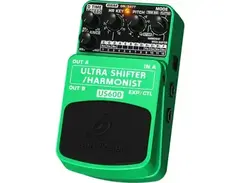
It's the closest I can get to the gold standard among stompbox harmonists, the Boss PS-6, on my budget. The sound is less clean and the tracking is pretty weak, though straight pitch shifting is better than the harmonizer. As a gadget for nifty little bends, it has its uses. The biggest surprise of all is a classy detune function with gives a lovely thick, almost chorus-like effect to the guitar and fills up a sharp single-coil tone with a lot of warmth.