

Pricing and availability
We compare 600+ stores and found this item at 1 store. Prices updated .
Store
Reviews
Price




Average Price: $2,500
High-end/Boutique
$500
$1201+
Price Tier
Budget
Standard
High-end
* Product prices and availability are updated by Equipboard every 24hrs and are subject to change. Equipboard may receive compensation for purchases made at participating retailers linked on this site. This compensation does not affect what products or prices are displayed, or the order of prices listed. For more information, please refer to our affiliate disclosure.
Description
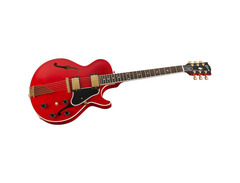
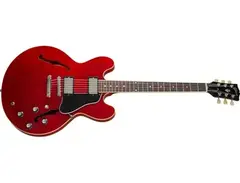
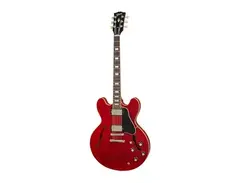
Discover the harmonious blend of jazz elegance and rock versatility with the Gibson Howard Roberts Fusion III Electric Guitar. This semi-hollowbody masterpiece is a nod to the golden era of music, channeling the spirit of its namesake, Howard Roberts, an influential jazz guitarist. Featuring a robust yet lightweight design, the Fusion III offers a rich tonal palette, allowing musicians to effortlessly traverse genres from mellow jazz to punchy rock.
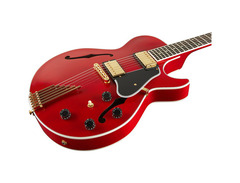
The guitar's dual humbuckers are engineered to deliver a powerful sound with minimal feedback, perfect for both stage and studio. The craftsmanship shines through with a sleek, comfortable neck that facilitates smooth playability, making it an ideal choice for both seasoned professionals and aspiring artists. Its unique body shape not only enhances resonance but also provides a visually striking presence that stands out in any lineup.
Whether you're strumming gentle chords or unleashing searing solos, the Fusion III adapts to your style with precision and grace. Experience the beautiful fusion of tradition and innovation with this remarkable instrument.
Key Features:
- Semi-hollowbody design for enhanced resonance
- Dual humbuckers for powerful, versatile tones
- Comfortable neck for effortless playability
- Rich tonal palette suitable for multiple genres
- Sleek and robust construction for stage and studio use
Product specs
| Brand | Gibson |
| Model | Howard Roberts Fusion III |
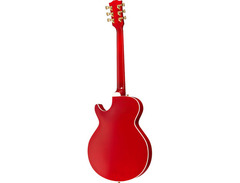
| Finish | Cherry, Ebony, Natural, Vintage Sunburst |
| Year | 1991 - 2009 |
| Made In | United States |
| Categories | Semi-Hollowbody Electric Guitars |
| Artist | Howard Roberts |
| Body Material | Maple |
| Body Shape | Single Cutaway |
| Body Type | Semi-Hollow Body |
| Bridge/Tailpiece Type | Stop-Bar |
| Color Family | Black, Brown, Red, Tan |
| Finish Pattern | Sunburst |
| Finish Style | Gloss |
| Fretboard Material | Ebony |
| Model Family | Gibson Howard Roberts Fusion |
| Model Sub-Family | Gibson Howard Roberts Fusion III |
| Neck Construction | Set-Neck |
| Neck Material | Maple |
| Number of Frets | 22 |
| Number of Strings | 6-String |
| Pickup Configuration | H |
| Right / Left Handed | Right Handed |
| Series | Gibson Artist Collection |
FAQs
-
What kind of music genres is the Gibson Howard Roberts Fusion III best suited for?
-
The Gibson Howard Roberts Fusion III is ideal for jazz, blues, and fusion genres, thanks to its warm, rich tones and semi-hollowbody design that offers excellent resonance and sustain.
-
How does the pickup configuration of the Gibson Howard Roberts Fusion III affect its sound?
-
The guitar features a single humbucker pickup, providing a smooth, warm tone with reduced noise, making it perfect for jazz and blues styles that require a clean, articulate sound.
-
Is the Gibson Howard Roberts Fusion III comfortable for long playing sessions?
-
Yes, the semi-hollow body and single cutaway design offer a comfortable playing experience, while the set-neck construction ensures easy access to higher frets for extended playability.
-
What is the neck profile like on the Gibson Howard Roberts Fusion III?
-
The neck of the Gibson Howard Roberts Fusion III is constructed from maple with a set-neck design, providing a comfortable grip and smooth playability, ideal for intricate jazz and blues playing styles.
-
Does the Gibson Howard Roberts Fusion III come in different finishes?
-
Yes, the Gibson Howard Roberts Fusion III is available in Cherry, Ebony, Natural, and Vintage Sunburst finishes, allowing players to choose a look that suits their personal style.
Videos

Dream Guitars
1998 Gibson Howard Roberts Fusion III Maple, Cherry Red! at Dream Guitars

1998 Gibson Howard Roberts Fusion III Maple, Cherry Red! at Dream Guitars
Dream Guitars
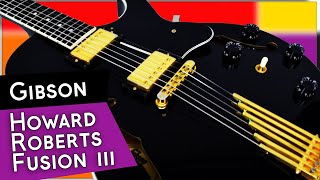
Gibson Howard Roberts Guitar Specs & History: The Fusion iii

Lonely Rocker

I've Wanted This Guitar For 17 YEARS! Gibson Howard Roberts Fusion III

Levi Clay
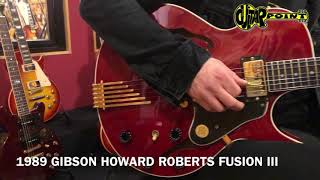
1989 Gibson Howard Roberts Fusion III / GuitarPoint

GuitarPoint
Reviews
PROS
-
Comfortable neck ideal for big chords and extended play sessions.
-
Versatile sound suitable for multiple genres from country to bebop.
-
Strong sustain and controlled feedback due to floating balsa tone block.
-
Offers a unique compromise between ES-335 and ES-175 body depth.
-
Hot pickups providing a smooth, dark, woody tone with top treble.
-
Lightweight for a semi-hollowbody, making it manageable for long performances.
-
Instantly playable with a finger tailpiece allowing string-specific tension settings.
-
Ebony fretboard contributes to excellent playability.
-
Classic design with gold appointments reminiscent of iconic jazz guitars.
-
Flexible enough to handle anything from jazz fusion to Western Swing.
CONS
-
Thicker body design makes access to top frets challenging.
-
Tuning stability issues with frequent string bending.
-
Vintage-style finish susceptible to staining from leather straps.
-
Chromyte center block reduces treble response and sustain.
-
Not a perfect substitute for solid-body or true archtop guitars.
-
Premium pricing for a signature-series collector's guitar.
-
Tailpiece adjustments may not be intuitive for all players.
Owner Insights
We analyzed real musician discussions from forums and Reddit to find what players love, question, and tweak about Gibson Howard Roberts Fusion III Electric Guitar.
Features and functionality
-
The guitar features a distinctive cutaway often referred to as the "Rhino Horn," which may be a patented design element by Gibson.
Source -
The stock tailpiece design is a notable feature that enthusiasts appreciate for its aesthetic and functionality.
Source -
The semi-hollow design offers a resonant, acoustic-like feel, enhancing playability and inspiration.
Source
Mods and upgrades
User experience
Use cases and applications
Comparisons
-
The Howard Roberts Fusion III is praised for jazz and fusion, comparable to the ES-335 in versatility and tone.
Source
4.0 out of 5
Based on 1 Review and 3 Ratings

134
A decent electric archtop, but not golden-age decent
This was a very special guitar for me growing up. When my guitar playing took off in my teens and I started playing more blues and jazz and getting the urge to plug in, I started on a Squier Bullet Strat my Dad had kicking around. This was my very first electric guitar of my own, and of course it blew the little Squier out of the water. But it wasn't really a perfect anything—not a solid-body electric substitute, and not really an archtop substitute—and it was never quite the right fit for me.
The Fusion I had was the gorgeous piano black finish variant made around 1997, and it was a thing of beauty to look at. With its gold appointments it looked an awful lot like B.B. King's "Lucille"—not the true signature model Lucille that Gibson made for B.B. King from 1980 onwards with no sound holes and stereo output, but the old ES-335 variants that he used to play in the 1970s on his most iconic and influential recordings. It has the look and feel of a hollow-body archtop, but with a "chromyte" center block that's something like balsa wood. The Generation III HRFs were made at Gibson's Memphis plant, and the build quality was great at that time, but it's a guitar that tries to be many things at once, and is sometimes the best of both worlds, and sometimes the worst.
The body is thicker than an ES-335, more like an ES-175, which is what Roberts used as the base for this design. The light center block keeps the guitar quite lightweight for such a thick instrument, and also does a fine job of killing feedback when you play live, but it makes a real difference when it comes to sustain. For jazz fusion, it's not a thing you notice, but the guitar neither rings like a true acoustic or sustains like a true hard-bodied Les Paul. I found it versatile in that you could theoretically play any kind of music on it, but whatever you did with it, there were other guitars that sounded better for that thing—with the niche exception, I later found out, of the kind of music Roberts made as a high-demand session musician and great live jazz player.
The other flaw worth mentioning is that its vintage-style finish is not too friendly for hard use. I stored a leather guitar strap in the cutaway bout when carrying the guitar in the case, and the white top and back binding of the guitar just drank up the dye from the strap, leaving it an unsightly stained-orange colour for the rest of its days. That was partially my mistake as a young kid who didn't know how to handle a guitar like this, but don't let it be your mistake too.
A final note—the elegant-looking "finger tailpiece" that holds the strings over the TOM-style bridge has a couple of adjustment knobs that are sometimes billed as "microtuners," but they're really not. They adjust the individual fingers of the tailpiece up and down, with the effect of fine-tuning the tension of each individual string just the way you like it. I had no real sense of how to use this feature as a young kid who was playing straight-ahead rock: the tension in my particular setup was high, which made the guitar louder acoustically and feel more like an acoustic in general when playing it: it was not at all good for string bends, but it was a nice effect when trying to sub this guitar in for a clean acoustic I could plug in.
In short, your mileage may vary with this guitar. It wasn't the right one for me, but for an experienced player who wants exactly what this guitar offers, it may be a better fit. Given that Gibson archtop electrics of this age are now going for upwards of $5,000 on Reverb, though, it certainly has a lot of competition from other semi-hollow archtops. To the extent that this is a 25-year-old guitar with not just the flagship Gibson brand on it, but a signature-series name, you are looking at a premium collector's guitar at a premium price. There are other guitars in this niche that punch above their weight, so make sure you love it before you decide to add it to your arsenal.
Artist usage
Add artist
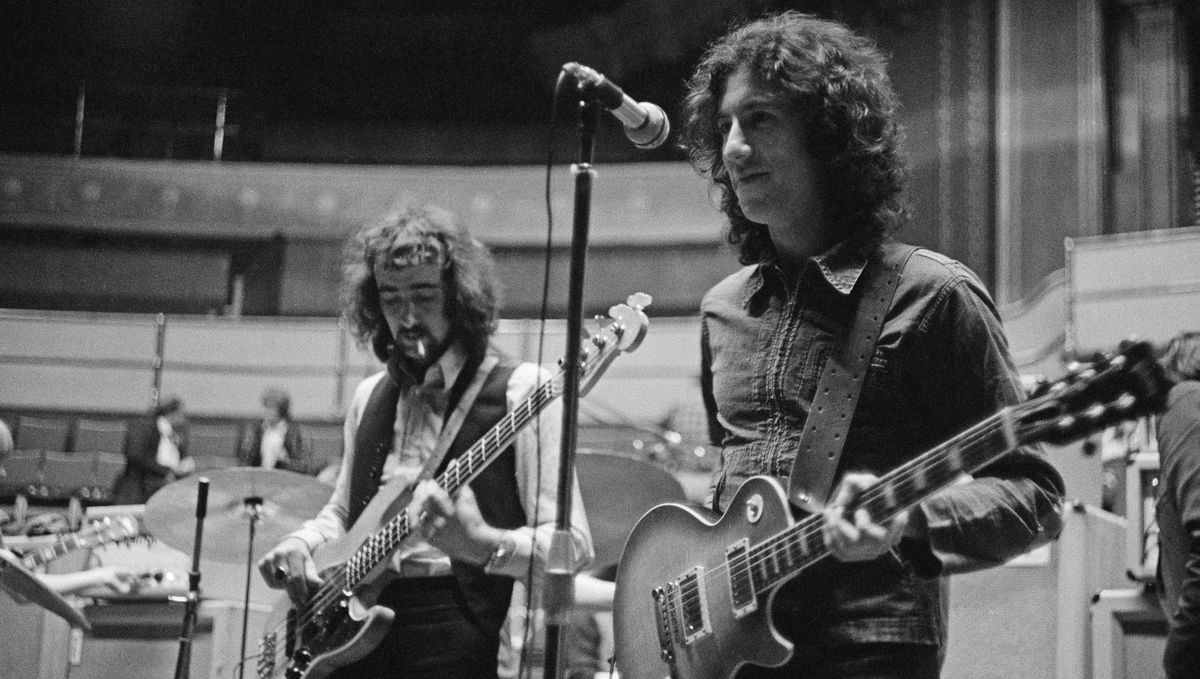
During his time with the Splinter Group, Peter Green was photographed with and mentioned in interviews that he played a Gibson Howard Roberts Fusion.
The particular model used by Peter Green is the Gibson Howard Roberts Fusion III.


Ted Nugent used a Gibson Howard Roberts Fusion 3 in the 1980s. There are a number of videos on youtube with him using that guitar.

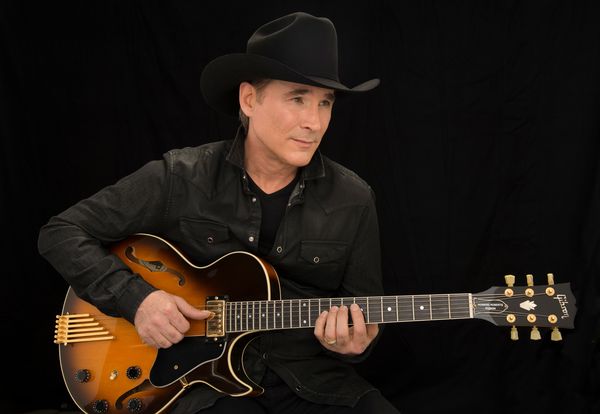
In this photo, Black is visible playing Gibson Howard Roberts Fusion III Electric Guitar.

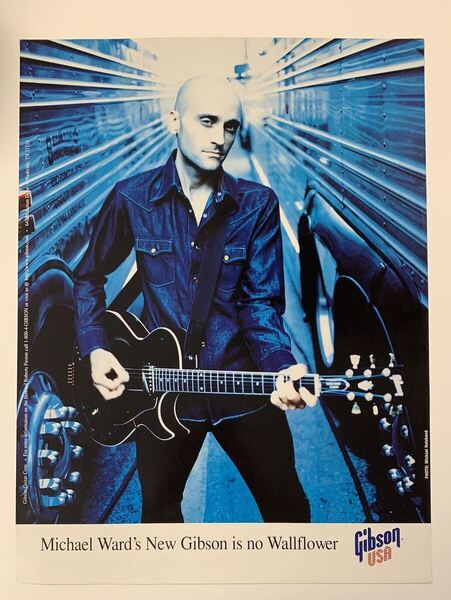
Michael Ward can be seen in this photo with a Gibson Howard Roberts Fusion III Electric Guitar.


Miguel Talavera uses a Gibson Howard Roberts Fusion III Electric Guitar, which he has customized with an original Bigsby bridge, enhancing its performance as an archtop guitar. This modification is evident in the user-uploaded photo.


Genre Usage
Based on how artists on Equipboard use this gear, it is most commonly found in the following genres.
Used With
Based on how musicians on Equipboard use Gibson Howard Roberts Fusion III Electric Guitar, it is most commonly used with the following gear.


More Gibson Semi-Hollowbody Electric Guitars

$2,555.00 - $3,499.00
in Semi-Hollowbody Electric Guitars Rank


$1,829.49 - $2,999.00
in Semi-Hollowbody Electric Guitars Rank


$2,555.00 - $3,499.00
in Semi-Hollowbody Electric Guitars Rank


-m.webp?v=1785106943)
$2,869.00 - $3,499.00
in Semi-Hollowbody Electric Guitars Rank


$1,499.99
in Semi-Hollowbody Electric Guitars Rank

-m.webp?v=1785107199)
$2,938.00 - $3,799.00
in Semi-Hollowbody Electric Guitars Rank
.png?v=1785070563)


$4,982.59 - $6,499.00
in Semi-Hollowbody Electric Guitars Rank


$3,149.00 - $3,499.00
in Semi-Hollowbody Electric Guitars Rank
.jpg?v=1785070562)


$3,250.00
in Semi-Hollowbody Electric Guitars Rank


$3,499.00 - $7,999.00
in Semi-Hollowbody Electric Guitars Rank


$2,750.00
in Semi-Hollowbody Electric Guitars Rank


$2,149.00 - $2,999.00
in Semi-Hollowbody Electric Guitars Rank


$1,599.00
in Semi-Hollowbody Electric Guitars Rank


$2,299.00 - $4,834.20
in Semi-Hollowbody Electric Guitars Rank


$2,740.42 - $3,999.00
in Semi-Hollowbody Electric Guitars Rank


-m.webp?v=1784332934)
$2,400.00
in Semi-Hollowbody Electric Guitars Rank


$1,595.00
in Semi-Hollowbody Electric Guitars Rank


$8,550.21
in Semi-Hollowbody Electric Guitars Rank


$1,649.00
in Semi-Hollowbody Electric Guitars Rank


$2,000.00
in Semi-Hollowbody Electric Guitars Rank


$2,299.00 - $5,729.70
in Semi-Hollowbody Electric Guitars Rank


$2,299.00 - $4,834.20
in Semi-Hollowbody Electric Guitars Rank

.jpg?v=1785070563)


$1,900.00
in Semi-Hollowbody Electric Guitars Rank


$1,599.00
in Semi-Hollowbody Electric Guitars Rank


$2,583.24
in Semi-Hollowbody Electric Guitars Rank


$1,829.49 - $5,640.17


$1,595.00


$2,406.48 - $4,844.00


$2,938.00 - $4,400.00


$3,250.00


$2,687.00 - $52,000.00


Accessories & Related Items


Community setups


Similar


Gear Guides







Most Popular Semi-Hollowbody Electric Guitars
Most Popular Brands
-
Added to Equipboard on by
 kkolar
GearIQ 121523
-


