
shea_patterson's Reviews
1 review Back to shea_patterson's Equipboard

162
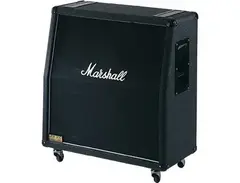
The Marshall 1960AV is the Benchmark
The Marshall 1960AV is the ultimate rock/hard rock/heavy metal cabinet. It is built like a tank, sits on casters, and features the unmistakable growl, gut-busting projection, and distinctly defined midrange. When you listen to a record, you most likely hear a Celestion G12 Vintage 30, and despite not being the #1 seller, it is the most recorded speaker of all time almost without any doubt. It was created in the mid-80s when hot-rodded amplifiers were becoming the norm, requiring a speaker capable of producing higher wattage, while producing, tight punchy lows, crunchy saturated mids, and clear-cutting highs. It soon became a favorite of almost all guitarists who wanted to demonstrate their picking dynamics, intricate strumming, and other playing characteristics with extreme clarity, even when overdriven to the max. To this day, it is still unbeatable, with manufacturers including the G12 V30 in all of their flagship cabinets. (Orange, Mesa, EVH, etc...)
The standard 1960 with the T75 sounds awful, lifeless, charterless, and ill-equipped to handle the demands of modern focused sounds. If you don't believe me, please go listen to this speaker before buying it, as this is something I believe most musicians rush purchasing and don't realize how bad these speakers sound. As for the 1960X with the Greenbacks, it's good for '60s, '70s, and early 80's music, but shows its limitations in the midrange, being overly bright for high-output amplifiers. The 1960HW with the G12H-30 is surprisingly a solid contender and would be the only other speaker I would consider in the mix. It is an old speaker, but unlike the Greenback, it retains its midrange quite well, even when pushed to the max. A combination of G12H-30/s and G12 Vintage 30 speakers would be a hell of a combination, one well worth exploring.
Preferred Settings + Usage:
These speakers are designed to operate with a single 16-ohm mono input from your amplifier. Let go of the barely noticeable stereo setup, keep it simple, and your ears will amaze you.