
tim_harrison's Reviews
46 reviews Back to tim_harrison's Equipboard

1268
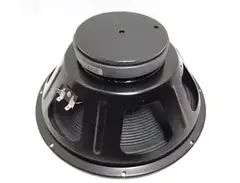
The speaker that became the Texas Heat.
They are the stock speakers in my BV412R cab. I contacted Eminence about them and I was informed that they are basically 16 Ohm Texas Heat speakers. Eminence initially designed them as OEM speakers for St. Louis Music but they were later released in the market as Texas Heat. The 86-078-16 (121282R) was the OEM name for 16 Ohm Texas Heat and 86-068-08 (121282R) was the OEM name for 8 Ohm Texas Heat.
Now about the speaker themselves, guess what I like them. They have a fat and warm mid-range but at the same time they really make your guitar heard in a mix. Their low end response is clear but soft. As of the high end response, I will say its high end is clearly controlled to stay in the upper mid region, due to this reason it has absolutely zero fizziness, but at the same time it cuts though the mix rather aggressively. Mixing this speaker in band mixes is actually even easier to do than the Vintage 30.
Some folks have recommended me to mix these speakers with the Swamp Thangs. I have heard good things about Texas heat and Swamp Thangs being mixed together, so I will certainly get some Swamp Thangs to mix with these speakers, but I won't get rid of these speakers even when I replace two of them with Swamp Thangs. It's not everyday that you come across a part of Eminence speaker history. I'll most probably put them in a separate 2x12 cab.
1268
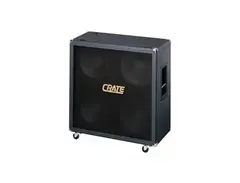
The original BV150H and BV300H speaker cab.
Although my BV412ST cab works perfectly fine with my BV150H but I always wanted to own the original BV412R cab that was released for the BV150H and BV300H. I am glad I finally found it. It looks the same as my old BV412ST cab but the speakers are different. The label on their magnet displays the product code 86-078-16 (121282R).
I contacted Eminence regarding these speakers and I was informed that they are basically 16 Ohm Texas Heat speakers. Eminence initially designed them as OEM speakers for St. Louis Music but they were later released in the market as Texas Heat. The 86-078-16 (121282R) was the OEM name for 16 Ohm Texas Heat and 86-068-08 (121282R) was the OEM name for 8 Ohm Texas Heat.
This cab is an interesting part of Crate and Eminence history and to be honest, it sounds beefy with the BV150H.
1268
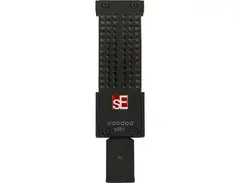
Genuinely impressed.
I heard good reviews about this microphone, but here's the thing, when folks start claiming stuffs like "flagship killer", "better than the Royer R121" for a microphone I usually take those claims with a grain of salt.
I bought the microphone because I wanted a reasonably priced but decent quality ribbon microphone, but after using it I will say genuinely impressed by this microphone. I can't believe I'm saying this, but I prefer it over the Royer R121, and Beyerdynamics M160.
It captures details so much better than those microphones and although it has the warmth of a ribbon microphone it doesn't add unwanted boxy and woofy low mid and mid-range coloration to your guitar tracks. It has an excellent linear tonal response. It's hands down one of the most mix friendly ribbon microphone I have ever used.
No I won't use phrase "good microphone for the price" for this microphone, this ain't some cheap alternative to the industry standard ribbon microphones. This is a high quality ribbon microphone that is being sold at a price that is affordable for working musicians.
1268
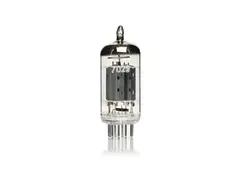
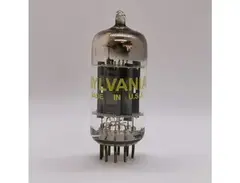
Excellent tube for P.I. position.
I'm a sucker for low priced NOS tubes. Now here's a thing about the Ei ECC83. Those who have used them in '90s know that if you buy them from a good reseller they can be the best and most robust tube you'll ever buy, but if you buy them from a shady source they will be the shittiest noisy garbage you'll ever find. They were excellent tubes but they had piss poor quality control.
Back in the '80s and '90s these were marketed by both Mesa, as well as Groove Tubes and were highly recommended for the P.I. position. Some of the best amps back then like the Mesa/Boogie Mark IIC, Dual Rectifier Gen. 1 used them in the phase inverter position. Back in the '90s they used to be my go-to tube for the phase inverters of my amps. If you find a good one then they last really long.
However when they stopped selling them I stopped buying them too. Most ones out there were faulty and prone to serious microphonic issues, so buying them was a risky affair. Then I found these folks at RAM Tubeworks who sell tested and selected Ei ECC83 tubes. So, I decided to give them a try, and ordered them for my old and trusty Crate BV150H. I opted for the Low Noise graded Ei ECC83 from them. They sell a Super Low Noise graded one too, but hey I needed a tube for the P.I., no need for a SLN tube in that position. It wasn't too pricey, cost me just $55 which is more or less similar to what all those so called premium re-issue tubes from New Sensor sell for.
Now about their performance. The ones I bought from RAM Tubeworks are actually graded better than what I used to buy from Mesa, and Groove Tubes. I had my fears about them being microphonic and noisy, but these ones were actually the good ones. They are everything that I used to love about them in the '90s. They're very clean, transparent, and have extended high and low end. However at the same time they don't have any harshness. Their highs are extended, clear, and detailed but they aren't harsh.
They are great tubes, and thank goodness there's finally a seller out there who sells them tested and screened for good performance. For all Mesa/Boogie, and Crate BV150H or 300H users out there, folks you can now buy your favorite phase inverter tube from the '80s and '90s once again without the fear of running into the bad ones.
1268
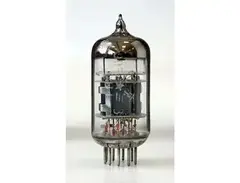
A terribly underappreciated gem of a tube.
I use it in the phase inverter position of my Invective. The problem with phase inverter tubes is that they suffer a lot of wear and tear. I like using long plates in phase inverter position but almost all modern long plate tubes are prone to failure in that position. So, after wasting a lot of a cash on modern production tubes I decided to give the NOS tubes a go. I was planning to plunge my cash on Mullard but then my local amp technician advised me to grab this tube.
First and foremost thing about this tube is that it's quite reasonably priced by NOS standards, next is how robust it is. My preamp tubes have come and gone but this old boy keeps running in the phase inverter position like a boss. As for tonal difference, the clean channel exhibits a bit more saturation than before. The crunch channel exhibits quicker break-up and saturation. As for the overdrive channel I noticed remarkable improvement in high end clarity as well as in the overall thickness of the tone. They also extended, and beefed up the low end response of my amp, and the low end now sounds more powerful but at the same time it sounds clearer than before.
That brings me to my question, why isn't this tube that well known? I have people in my friend circle who used NOS Mullard 12XA7 tubes in their high gain amps, I recommended them these tubes. Some of them replaced their Mullard tubes with these Sylvania tubes and all of them were impressed by how good it works in high gain amps. They noticed an improvement in the overall gain too. This tube right here is the best tube a high gain amp fanatic, and an amp hot-rodder can ask for, but too bad people barely know about them.
1268
Far better than the modern Shuguang 12AX7 tubes.
I use these tubes on both of my amps. If I need to describe them in three terms they will be, high gain, extremely low noise, long lasting. I have compared their noise levels next to TAD 7025 grade modern Chinese 12AX7 tubes and the difference in their noise levels is phenomenal. These tubes exhibit substantially less noise than the TAD 7025. If that isn't enough they also don't produce the harsh fizz exhibited by the current crop of 12AX7 tubes made by Shuguang. Another thing I have noticed about them is that they are far more robust than the current generation of Chinese 12AX7 tubes made by Shuguang. It seems that the Beijing military factory actually manufactured better quality tubes than Shuguang. The best thing about them is that despite all those advantages they cost cheaper than the tubes sold by TAD, and Groove Tubes. If you own a Crate BV150H or 300H, Mesa/Boogie Rectifier, or an amp like Invective that belongs to the 5150 family then quit wasting your money on the TAD, and Groove Tubes and get these instead.

182
I see that they're known by the name 6N4-J. So, are they real 12AX7 tubes or something else?
1268
The family of a specific tube has different members, those members are referred to as substitutes. Tube substitutes may not strictly adhere to the construction of the original tube they are derived from, but their wiring and pin out scheme is same as the original tube and thus they work as drop in replacements for the tubes they are based upon. 12AX7 substitutes like the 12DT7, 12DF7, 12AD7, 6N4-J are all derived from the 12AX7 and have the same pin out, but they are all slightly different from the standard 12XA7 tube.
6N4-J was basically a drop-in 12AX7 substitute made by the Chinese govt. for military usage, but there's a catch to their design. A true 12AX7 either operates at 6.3 volts, 300 mA, or 12.6 volts, 150 mA. The 6N4-J on the other hand has higher heater current draw, so it operates at either 6.3 volts, 330 mA, or 12.6 volts, 170 mA.
So, if you amp isn't designed to accommodate the additional heater current draw of 6N4-J then avoid using them in your amp. I face no problems because the circuit of all Crate BV series amps were designed around 6N4-J tubes. As for my Invective, it just uses a modified Peavey 5150 circuit, and the circuit of Peavey 5150 was designed around 6N4-J tubes. Same is true for Mesa/Boogie Rectifier series amps, their circuits were originally designed around 6N4-J preamp tubes.
182
That's an odd catch. I wanted to try them in my Fender Pro Tube Twin, but now I'm not sure.
1268
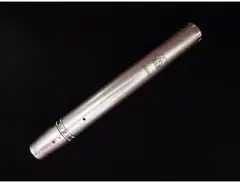
Holy f**k, I think I found the best dynamic microphone ever made.
I got this microphone from a seller on Reverb. I've never owned a vintage microphone before because I was never into vintage gear. I decided to go for this microphone because I wanted to add some vintage mojo to my otherwise modern rig. The very moment I put this microphone before my guitar amp my jaw hit the ground. Never in my life, I had ever used a dynamic microphone that's as neutral and detailed as this microphone shaped masterpiece from AKG. I used to swear by microphones like the Sennheiser MD441U, and Electro-Voice RE20, but holy hell, this microphone f**kin' butchers them. It has no proximity effect. What I hear in my room is what I get on my recordings. I swear I'm gonna hunt for more AKG D224E microphones in the used market and buy them. AKG needs to re-issue this microphone. This microphone is the gold standard of cardioid dynamic microphones and deserves to be back in the market.
1268
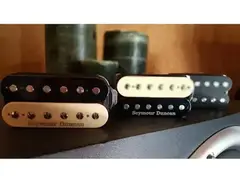
Good pickups but the mid-range on the JB is kinda honky and congested.
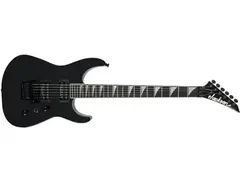
They are the stock pickups on my Jackson USA Select Soloist guitar. They sound good, can't go wrong with the 59/JB combination. The '59 pickup in the neck sounds smooth and warm, but, I'm not fond of the JB. It has a really honky and congested mid-range response. So I plan to replace the JB with the '59/Custom Hybrid.
1268
Exquisite guitar.
It's the best quality guitar I've ever owned. Attention to detail on this guitar is impeccable. The quality of the ebony used for the fretboard is top-notch, it's uniformly black. Not only it has neck-though construction but it also has a high quality real flamed maple top. The thing that left me absolutely awestruck was the tight construction of this guitar. Pots, switches, tuning keys, nothing on this guitar feels rough and loose. Everything feels extremely precise, and it's Floyd Rose set-up is hands down the most stable Floyd Rose set-up I have ever experienced on a guitar. If you have ever played the Pro Series Soloist then prepared to be shocked, this guitar is in an altogether different league than those guitars in terms of refinement and quality. The action on this guitar is really low, and despite of that, it has absolutely zero fret buzz. Shredding on it was as smooth as pressing keys on a piano, the notes just fly off the fretboard like magic. Once you get used to the action of this guitar the action on other guitars will feel high and uncomfortable to you. There's also something special about the internal shielding of this guitar, after using this guitar I realized that my other two guitars have more noise level in the signal than this guitar. About the pickups, well the 59/JB set is good but the JB bridge pickup has really honky and congested mids. So, I plan to replace the JB with the '59/Custom Hybrid to make this guitar sound even better. The stock tuners are great but I have ordered Gotoh SGL510Z tuners from Japarts, they have 21:1 gear ratio, so I'm gonna replace the stock tuners pretty soon.
1268
An excellent DAW that keeps on getting better with each update.
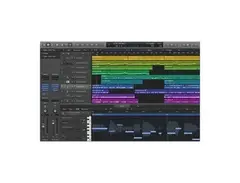
I've been a Logic Pro user since the early Logic Pro days. I still remember the first time I used this DAW, it was my introduction to the world of DAW, before that, I used to use an old Fostex B16 16-track tape recorder. Since then I've been a loyal user of Logic Pro. When Apple discontinued the Logic Pro and replaced it with the Logic Pro X, I was kinda apprehensive so I stayed back on the Logic Pro. Eventually, I decided to move on the Logic Pro X. From the very get-go, I realized that the Logic Pro X did have a lot more features than the Logic Pro 9, that being said at first I found it to be quite difficult to get used to the Logic Pro X. My biggest problem was that they dropped the support for 32-bit plugins. I had to replace many of my legacy plugins with new 64-bit plugins. It was a hassle but it was worth it. I have tried other DAWs like the Bitwig Studio, Tracktion Waveform Pro, Ableton Live, but in the end, I fall back to Logic Pro X. I feel a lot more comfortable to work on Logic Pro X than other DAWs.
1268
The best rack-mount mixer that money can buy.
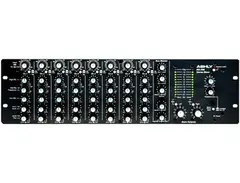
It's a bit pricey but it's hands down the best rack-mount mixer out there. It's ruggedly built, this mixer can take the beating of a live tour with aplomb. As for its audio quality, it's one of the cleanest sounding mixers out there. The preamps on this mixer are excellent for my needs because they don't impart any coloration whatsoever to the signal produced by the microphones. I love neutral microphone preamps, that's why I absolutely adore the microphone preamps on this mixer. Another thing I noticed is its low noise floor. When I powered it on for the first time it was so dead silent that I had to double-check whether it was really powered on or not. I even played around its equalizer section and still, there was no noise from this mixer. Those Tascam, Alesis, Behringer, Rane rack-mount mixers are just pretenders to the throne, this mixer is the true king of rack-mount mixers.

1268
The G12H30 clone that sounds better than the original G12H30.
The combination of G12M25 and G12H30 is quite an iconic one. That set-up has been used by numerous bands in the '80s and '90s, it always sounds perfect. So, when I decided to get the M65 speaker for my Atlas guitar cab I also decided to get the H75 to put them in the old tried and tested X-configuration in my cab. I'm glad I did because together they sound even better than the G12M25 and G12H30 combination. As for the tonal qualities of this speaker, it sounds like a really great quality Celestion G12H30 speaker albeit with the clarity and articulation that you only hear from Fane speakers. If you swear by the old-school G12M25 and G12H30 combination in your guitar cabs then try these speakers, you'll like them even more than the Celestion speakers.

1268
The G12M25 Greenback on steroids.
The first thing I need to point out about these speakers is that don't judge them by their name or wattage. They maybe 65-watt and have the "M" letter in their name but they have nothing in common with the Celestion G12M65 Creamback. The tonality of this speaker is similar to the G12M25 Greenback albeit with a tighter low-end response, and an overall bigger sound. It has a distinct clarity and articulation that you usually hear from Fane speakers. It's also a lot louder than the Greenback hence pairs great with other speakers. I noticed a strange thing about these speakers while trying them next to Eminence Private Jack and even my Eminence Crate 86-078-16 which are similar to the Private Jack speakers. Either Eminence is too generous about the SPL rating of its speakers, or Fane has quoted their SPL figures low because these speakers were louder than both the Private Jack as well as the Eminence Crate 86-078-16 speakers. These speakers have the nice woody mid-range of the Greenback, to be honest, they sound like a really high-quality Greenback that's somehow better and louder than a normal Greenback. If you're looking for a Greenback type speaker for your high gain amp then try these speakers, you'll love them.

41034
Emi exagerates their speaker sensitivity compared with most other manufacturers. There's no standard measurement method either although everyone SHOULD follow celestion's practices in my opinion
1268
That explains why these Fane speakers sound louder than the Eminence speakers.
41034
personally I really wanted to like the red coat and patriot speakers but don't... gave up on the whole line after awhile. Emi's last good speaker range is the Legend line. Even going cheap there are just so many better options out there like the warehouse speakers also made in kentucky and way better at doing the celestion thing. Or Fane is back! Fanes have always been super high grade. Good enough for hiwatt, good enough foranyone.
1268
Built like tank.
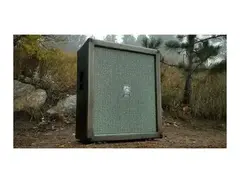
I bought them unloaded and loaded up Avatar-UK Fane M65 and H65 speakers in them in X-configuration. I love oversized guitar cabs, I'm a '90s Death Metal guy, and my speaker cab preferences are still stuck in the '90s. These oversized cabs produce a really deep low-end response that works great for my needs. Atlas makes really top-notch cabs. Of course, they're heavily built but that's what I love about them. If you like oversized Mesa/Boogie cabs but you want something which puts those Mesa/Boogie and ENGL cabs to shame in terms of quality then go for this cab, you'll be surprised by its quality. Then again, if you ain't fond of oversized cabs they make normal-sized cabs too, they too are built like tanks.
1268
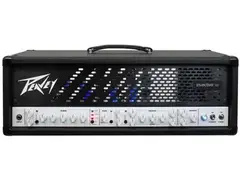
The best amp a metal guitarist can buy.
This is the first guitar amp that I bought completely new. If I need to describe the amp in the simplest way, I'll say she's tight. Oh wait that sounded weird, I meant she has a tight bottom. Okay, that didn't sound right either, what I mean is that the low-end response of this amp is clear and articulate and doesn't flub out at all. All thanks to the onboard mid-boost. While playing through this amp, I pretty much run my guitar straight into the amp. The only pedals I use are my wah pedal because I need it for solos, and I keep my SDM pedal on my pedalboard too for occasions when I need to play Swedish Death Metal. All other stuff is handled by the amp. This amp has onboard mid-boost to tighten the low-end response, master volume boost to boost the volume for solos, and even has an onboard noise gate. If you play metal then mark my words, the Invective is hands down one of the best amps you can get for yourself. That being said the clean channel of this amp is excellent too and is voiced like a Fender Brownface amp.
1268
1268
One of the most advanced noise reduction unit.
I always wanted to own a HUSH Ultra and now that I own it I have to admit it has surpassed all my expectations. Presets, transparent noise reduction, this unit is just perfect.
1268
Worth every penny.
I had to sell off many of my effect pedals in order to buy it but it was worth it. The quality of effect algorithms are top-notch, they're as good as those higher-priced Eventide and Lexicon units.
1268
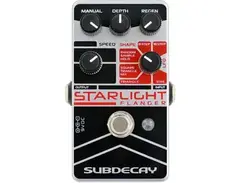
Excellent flanger.
As a user of Subdecay Quasar phaser I had high hopes from this flanger pedal too. I have to admit this pedal completely meets my expectations. It's hands down the best flanger pedal in its price range.
1268
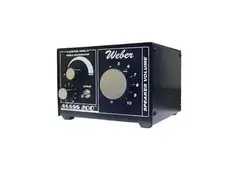
Works best for my amp
Since my BV150H is a 150 watt tube amp it's absolutely unusable in my home and small venues. For such locations this attenuator is indeed a life saver. Due to the ridiculously high wattage of my amp I use two such attenuators with two parallel outputs of my amp. Then I set my cab to operate in stereo mode and then I connect the outputs from the two attenuators into the stereo inputs of my cab.
It adds minimal coloration to my amps tone. Compared to many other reactive attenuators it costs pretty low too. Of course it doesn't have stuffs like IR loader and other bells and whistles but then again I never felt the need of such stuffs. I prefer to record my amps in the old fashioned way, with microphones.