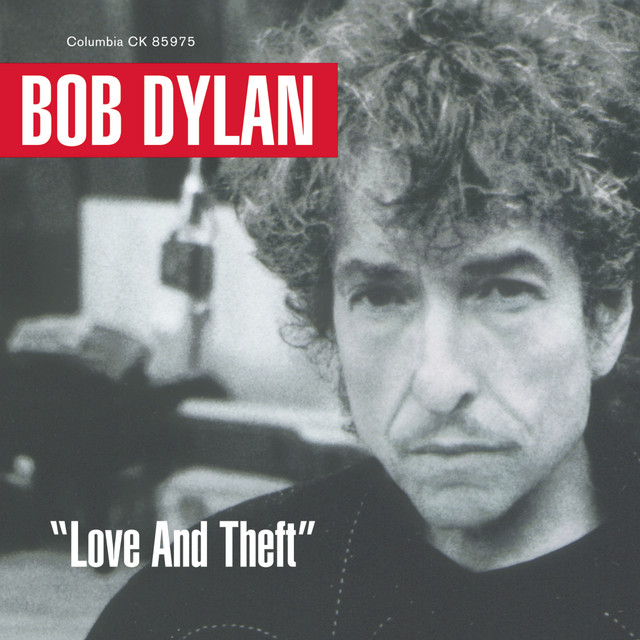
Bob Dylan & Robert Zimmerman – Love And Theft
The music gear and equipment used by the artists, producers, engineers, and more involved in the making of the 2001 album Love And Theft.
Music from Love And Theft
Artists on Love And Theft


Gear Used On Love And Theft
Explore the instruments, equipment, software, and production tools used in the making of Bob Dylan & Robert Zimmerman – Love And Theft (2001). Click more on each item to see exactly how it was used.
.jpeg?v=1785144727)
Studio Equipment used by Bob Dylan on Love And Theft

Bob Dylan's 1999 album, Love and Theft, was recorded on a Neve 8068 Mixing Console, according to this article.


Avg price: $10,449.86
A Studer A827 was used to record Bob Dylan's 1999 album, Love and Theft, according to this article by E-Musician.
Studio Gear used by Bob Dylan on Love And Theft

Millenia HV-3D-8 Eight Channel Microphone Preamplifier
Avg price: $4,380.00
Used for Dylan's vocals on Love and Theft, as mentioned by sound engineer Chris Shaw in this December 31, 2008 Electronic Musician article. The article erroneously mentiones the preamp as an "HD3D".
One collateral issue is what happens on the relatively rare occasions where Dylan needs to punch in a line on a vocal—not only is there a lot of band leakage on the vocal track, but Dylan dislikes headphones and won’t use a floor monitor. With neither, how could he be cued in to sing at the right moment and on pitch? Shaw’s solution, which he devised during Love and Theft, is quintessentially Dylanesque.
“I have the band play along with the track at a lower volume while wearing headphones, and I have Charlie Sexton sing the lead vocal he’s hearing in the headphone and Bob follows along in the room,” he explains. “Then I punch in for the line. It gets the same spillover from the band on the punched part of the vocal track.” As a back up for the ambience, Shaw also sets up a second SM7 about two feet in front of Dylan’s vocal microphone and pointed in the same direction. “Just in case he has to do a punch without the band in the room, because when the ambient sound disappears, you really notice that it’s gone.”
Shaw further tempers Dylan’s vocal sound by running the SM7 through a Millennium HD3D mic pre. Dylan asks Shaw to crank the midrange on his voice, which he does by adding a couple of dB between 2kHz and 3kHz on a Neve 1073 module. Shaw then compensates by adding some additional low end and a little airy EQ around 12kHz, then heavily compressing the signal through an Empirical Labs EL8 Distressor. “I drive it untill the red lights don’t blink anymore,” he says. “You can hear all the bleed from the band into the vocal microphone pumping under the compression and it adds a cool thickness to the sound.”
