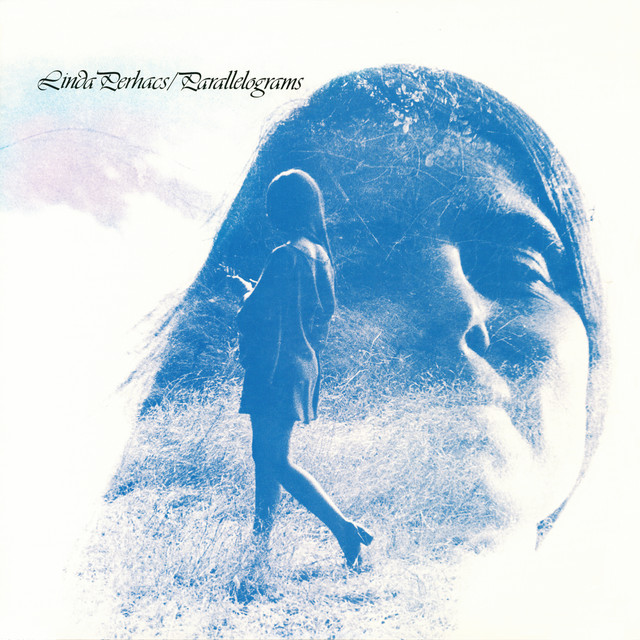
Linda Perhacs – Parallelograms
The music gear and equipment used by the artists, producers, engineers, and more involved in the making of the 1970 album Parallelograms.
Music from Parallelograms
Artists on Parallelograms

Gear Used On Parallelograms
Explore the instruments, equipment, software, and production tools used in the making of Linda Perhacs – Parallelograms (1970). Click more on each item to see exactly how it was used.
Studio Equipment used by Linda Perhacs on Parallelograms

Used for "Parallelograms", as stated in multiple interviews.
2003, Eight Miles High: Folk-Rock's Flight from Haight-Ashbury to Woodstock by Richie Unterberger
In those days, we did not have the massive computers to help us create music. But that is what I was reaching for when I wrote Parallelograms. I wanted it to be like a Japanese air painting in motion, with the sounds moving through space creating the shapes of the words being spoken or sung, and for the shapes caused by the throwing of sounds and tones from speaker to speaker to do what we now can do with 'surround sound.' Or, if performed live, to throw the sounds as shapes of moving music around the room with the words and shapes visible via lighting in motion. We only had one piece of equipment to help us do this then. I believe it was called a voice modulator; all else was live musicians," including noted jazzman Shelly Manne on drums.
Kim: So the only one with an actual scroll was “Parallelograms.”
Linda: Because the music had to become pictures, and move. That song hasn’t been done right to this day. It still needs some of the equipment we have now. When I think computer graphics…I’ve even asked about pricing…I’ve been told that animation would be too expensive. I know Leonard would love to see this realized, too, because we only had one piece of equipment in the studio to do that song, and it was called a voice modulator. He was using it in his classical music.
Kim: Is that the same as a ring modulator?
Linda: Yeah. It modulates the voice. That’s the only thing we had in those days, but now you can do it with anything. It’s an idea before its time which hasn’t been done fully yet.
June 15, 2012, It's Psychedlic Baby
Leonard and I were both experimenting with multi dimensional sounds long before the equipment was created to make that type of music easily. All that we had at the time was a voice modulator. Recently, to my great joy, other young musicians and composers have helped me to use today’s musical techniques to sculpt and compose music even more three-dimensionally, and to multi- layer harmonies and unusual sounds. The song, “Parallelograms” was a very early attempt to sculpt with sound and to paint three dimensional shapes and to move the sound- shapes around in a predetermined way.
October 23, 2014, Fractured Air
Leonard was working in electronic sounds in his day at the time he is talking to me about this piece. He was using the only thing available to modulate the human voice and it was called a ring modulator. He was already attaching that to the sounds from a contralto; a beautiful woman contralto named Sally Cherry and he was using it in very avant garde classical pieces that were not meant for film or TV – it was his great passion to do these pieces of music – so he let me hear those sounds that day I saw this phenomenon in the sky. And I had already said to him “Leonard, we’ve got to use these sounds; I love it, what are you doing to that lady’s voice? It’s wild!” So Leonard was already using these sounds and then he would play some of the unusual tones and things in space movies when they assigned him to do a space movie.
Then it took Leonard and I three weeks to put the song "Parallelograms" together. It's all my vocals, there's about twenty-four layers, which was the biggest equipment we had at that time. The center section has some modulated, ring modulated sounds, the Celtic melody is all natural voice.
The model is not specified, but research uncovers that Tom Oberheim sold an early prototype to Rosenman.
In 1969, Leonard Rosenman, a film composer, heard about it and decided to use one in the score of Beneath the Planet of the Apes. He called me and I traipsed over to 20th Century-Fox for the recording. The funny thing was that some of the guys in that big orchestra listened to what was happening and said, 'Hey, I want a ring modulator, too.'


