This page about Oberheim Music Modulator is a stub. You can help improve it:


Pricing and availability




* Product prices and availability are updated by Equipboard every 24hrs and are subject to change. Equipboard may receive compensation for purchases made at participating retailers linked on this site. This compensation does not affect what products or prices are displayed, or the order of prices listed. For more information, please refer to our affiliate disclosure.


Reviews
Based on 0 Reviews and 0 Ratings
Artist usage
Add artist

According to the research of Catalinbread's Nicholas Kula, Hammer used a unit with the Mahavishnu Orchestra.

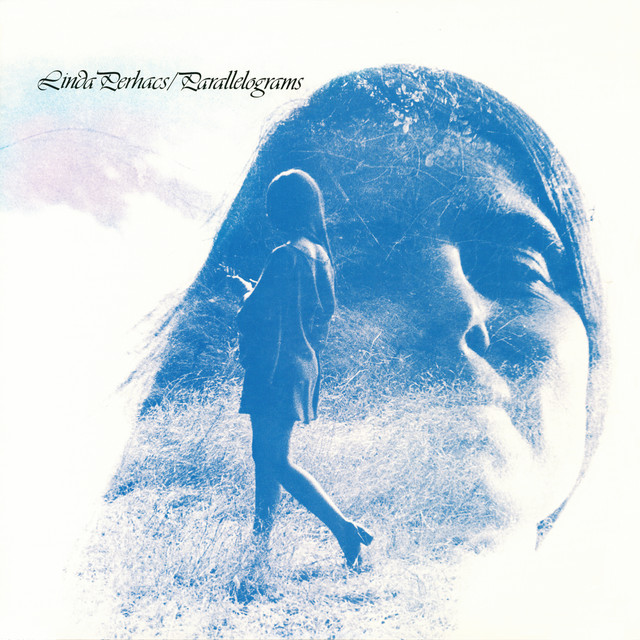
Used for "Parallelograms", as stated in multiple interviews.
2003, Eight Miles High: Folk-Rock's Flight from Haight-Ashbury to Woodstock by Richie Unterberger
In those days, we did not have the massive computers to help us create music. But that is what I was reaching for when I wrote Parallelograms. I wanted it to be like a Japanese air painting in motion, with the sounds moving through space creating the shapes of the words being spoken or sung, and for the shapes caused by the throwing of sounds and tones from speaker to speaker to do what we now can do with 'surround sound.' Or, if performed live, to throw the sounds as shapes of moving music around the room with the words and shapes visible via lighting in motion. We only had one piece of equipment to help us do this then. I believe it was called a voice modulator; all else was live musicians," including noted jazzman Shelly Manne on drums.
Kim: So the only one with an actual scroll was “Parallelograms.”
Linda: Because the music had to become pictures, and move. That song hasn’t been done right to this day. It still needs some of the equipment we have now. When I think computer graphics…I’ve even asked about pricing…I’ve been told that animation would be too expensive. I know Leonard would love to see this realized, too, because we only had one piece of equipment in the studio to do that song, and it was called a voice modulator. He was using it in his classical music.
Kim: Is that the same as a ring modulator?
Linda: Yeah. It modulates the voice. That’s the only thing we had in those days, but now you can do it with anything. It’s an idea before its time which hasn’t been done fully yet.
June 15, 2012, It's Psychedlic Baby
Leonard and I were both experimenting with multi dimensional sounds long before the equipment was created to make that type of music easily. All that we had at the time was a voice modulator. Recently, to my great joy, other young musicians and composers have helped me to use today’s musical techniques to sculpt and compose music even more three-dimensionally, and to multi- layer harmonies and unusual sounds. The song, “Parallelograms” was a very early attempt to sculpt with sound and to paint three dimensional shapes and to move the sound- shapes around in a predetermined way.
October 23, 2014, Fractured Air
Leonard was working in electronic sounds in his day at the time he is talking to me about this piece. He was using the only thing available to modulate the human voice and it was called a ring modulator. He was already attaching that to the sounds from a contralto; a beautiful woman contralto named Sally Cherry and he was using it in very avant garde classical pieces that were not meant for film or TV – it was his great passion to do these pieces of music – so he let me hear those sounds that day I saw this phenomenon in the sky. And I had already said to him “Leonard, we’ve got to use these sounds; I love it, what are you doing to that lady’s voice? It’s wild!” So Leonard was already using these sounds and then he would play some of the unusual tones and things in space movies when they assigned him to do a space movie.
Then it took Leonard and I three weeks to put the song "Parallelograms" together. It's all my vocals, there's about twenty-four layers, which was the biggest equipment we had at that time. The center section has some modulated, ring modulated sounds, the Celtic melody is all natural voice.
The model is not specified, but research uncovers that Tom Oberheim sold an early prototype to Rosenman.
In 1969, Leonard Rosenman, a film composer, heard about it and decided to use one in the score of Beneath the Planet of the Apes. He called me and I traipsed over to 20th Century-Fox for the recording. The funny thing was that some of the guys in that big orchestra listened to what was happening and said, 'Hey, I want a ring modulator, too.'


Tom Oberheim made Ellis an early prototype in the late 1960s, as recalled in this excerpt from a 1977 High Fidelity interview.
"So I built one, and this friend hooked it up to a piano and made some weird sounds with it; he thought it was terrific. Around the same time, I was building amplifiers and other little things for Don Ellis, the jazz musician, and he decided he wanted a ring modulator, too. Well, the word got around fast. In 1969, Leonard Rosenman, a film composer, heard about it and decided to use one in the score of Beneath the Planet of the Apes. He called me and I traipsed over to 20th Century-Fox for the recording. The funny thing was that some of the guys in that big orchestra listened to what was happening and said, 'Hey, I want a ring modulator, too.' So because of all these little unrelated incidents, I decided that maybe there was a market for these units.

Mentioned on the "Products" page of Tom Oberheim's official website. It was used for Rain, as specified on Grayson's curriculum vitae and as described in Synapse, Vol. 1, No. 3 (September-October 1976).
Synapse, Vol. 1, No. 3, "An Interview With Tom Oberheim founder of Oberheim Electronics with Cynthia Brett Webster"
Synapse: "What was your instrument?"
Oberheim: "I was a choir singer. I didn't play an instrument at that time. I did do some performances for a while though. When I built the first ring modulator, I showed it to a very close friend of mine, Richard Grayson. He's a composer, performer, and in incredible keyboard improvisationalist. He came over to my house one afternoon, I hooked the ring modulator up to the piano and he played a couple notes and a couple chords and then he just started playing this new instrument immediately. I had a pedal hooked up to the carrier frequency so that the ring modulator could be varied. On preceding evenings, I hooked up my Revox tape recorder to get some tape delay and tape echo effects. That added to the whole thing and Richard was composing on the spot while I'd fiddle with the echo and other stuff."
"At that time, Richard was starting to put on these noon concerts. Finally on one of these concerts, we did a little electronic piece together. We had a couple speakers, I hooked the ring modulator up to the piano, had a little tape delay and people loved it. We actually had pieces where there was a lot going on by the both of us, I wasn’t just bringing up the gain. Richard would play a chord and I'd add echo or some kind of reverb. He would react to that and then I'd react back; we really had fun. That went on for three years. Richard continued with them, and he has just given his seventh annual concert, so we started this seven years ago. I considered myself a performer because of what Richard and I did. I’m certainly not a composer, and I’m not actively a performer anymore, I just build equipment now.”
"Richard Grayson's Curriculum Vitae, January, 2004"
Rain (piano, ring modulator, tape delay)
Tom Oberheim website
The first commercial product that Tom produced was the Music Modulator which was the result of combining Tom's experiments with ring modulators with other circuitry to create a device that could be used in live performance. This product was used by a number of contemporary musicians including innovative trumpeter Don Ellis, and experimental composer Richard Grayson, who played the units with Tom in improvised live performance concerts.


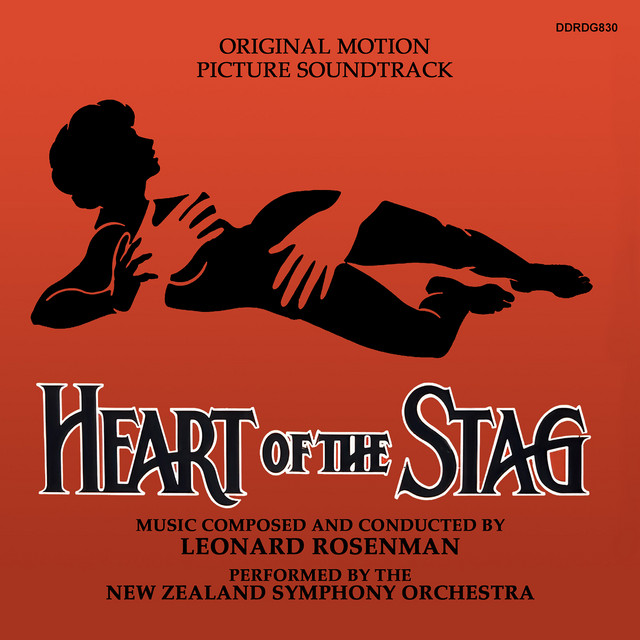
According to the following sources, Tom Oberheim made Rosenman an early prototype in 1969, which went on to be used for the Beneath the Planet of the Apes soundtrack and Linda Perhacs' "Parallelograms".
High Fidelity, April 1977
"So I built one, and this friend hooked it up to a piano and made some weird sounds with it; he thought it was terrific. Around the same time, I was building amplifiers and other little things for Don Ellis, the jazz musician, and he decided he wanted a ring modulator, too. Well, the word got around fast. In 1969, Leonard Rosenman, a film composer, heard about it and decided to use one in the score of Beneath the Planet of the Apes. He called me and I traipsed over to 20th Century-Fox for the recording. The funny thing was that some of the guys in that big orchestra listened to what was happening and said, 'Hey, I want a ring modulator, too.' So because of all these little unrelated incidents, I decided that maybe there was a market for these units.
Kim: So the only one with an actual scroll was “Parallelograms.”
Linda: Because the music had to become pictures, and move. That song hasn’t been done right to this day. It still needs some of the equipment we have now. When I think computer graphics…I’ve even asked about pricing…I’ve been told that animation would be too expensive. I know Leonard would love to see this realized, too, because we only had one piece of equipment in the studio to do that song, and it was called a voice modulator. He was using it in his classical music.
Kim: Is that the same as a ring modulator?
Linda: Yeah. It modulates the voice. That’s the only thing we had in those days, but now you can do it with anything. It’s an idea before its time which hasn’t been done fully yet.
Fractured Air, October 23, 2014
Leonard was working in electronic sounds in his day at the time he is talking to me about this piece. He was using the only thing available to modulate the human voice and it was called a ring modulator. He was already attaching that to the sounds from a contralto; a beautiful woman contralto named Sally Cherry and he was using it in very avant garde classical pieces that were not meant for film or TV – it was his great passion to do these pieces of music – so he let me hear those sounds that day I saw this phenomenon in the sky. And I had already said to him “Leonard, we’ve got to use these sounds; I love it, what are you doing to that lady’s voice? It’s wild!” So Leonard was already using these sounds and then he would play some of the unusual tones and things in space movies when they assigned him to do a space movie.
Album Usage
The Oberheim Music Modulator has been featured on the following albums:

Genre Usage
Based on how artists on Equipboard use this gear, it is most commonly found in the following genres.
Similar
Add recommendation1 alternative for Oberheim Music Modulator, curated by the Equipboard community.

$1,070.89
More Oberheim Effects Processors


$1,500.00
in Effects Processors Rank


-m.webp?v=1784559394)
$640.00
in Effects Processors Rank


$189.00
in Effects Processors Rank


$1,799.00
in Effects Processors Rank


$1,549.00
in Effects Processors Rank


$1,999.00
in Effects Processors Rank


$749.99 - $833.00
in Effects Processors Rank


$136.00
in Effects Processors Rank


$1,450.00
in Effects Processors Rank


$3,799.00 - $4,985.00
in Effects Processors Rank


-m.webp?v=1784871685)
$40.00 - $2,999.00
in Effects Processors Rank

$5,777.00 - $6,999.00
in Effects Processors Rank
.jpg?v=1784733415)


$1,153.00 - $2,635.00
in Effects Processors Rank


.jpg?v=1784637724)

$3,568.46 - $4,750.00
in Effects Processors Rank


$892.41 - $1,799.95
in Effects Processors Rank


$220.00
in Effects Processors Rank


$850.00
in Effects Processors Rank


$69.95
in Effects Processors Rank


$199.99 - $300.00
in Effects Processors Rank


-m.webp?v=1784818739)
$320.00
in Effects Processors Rank


$419.99 - $1,179.99
in Effects Processors Rank


$749.99 - $4,999.00
in Effects Processors Rank


$1,650.00
in Effects Processors Rank


$2,999.00 - $3,250.00
in Effects Processors Rank


$629.99 - $849.00
in Effects Processors Rank


$35.70 - $199.00
in Effects Processors Rank


-m.webp?v=1784818824)
$309.37 - $936.00
in Effects Processors Rank

$2,555.00 - $3,225.00
in Effects Processors Rank

-m.webp?v=1784818777)
$450.00 - $699.00
in Effects Processors Rank


$4,999.00 - $8,037.96
in Effects Processors Rank


$999.00
in Effects Processors Rank

.jpg?v=1784792382)


$138.00
in Effects Processors Rank


$1,338.62
in Effects Processors Rank


$202.50 - $599.99
in Effects Processors Rank


$361.46
in Effects Processors Rank


$66.00
in Effects Processors Rank


$175.00
in Effects Processors Rank


$475.00
in Effects Processors Rank


$1,135.25 - $1,199.00
in Effects Processors Rank
Community setups


Gear Guides








Most Popular Effects Processors
Most Popular Brands
-
Added to Equipboard on by
 eyeseeofficial
GearIQ 161592
-


