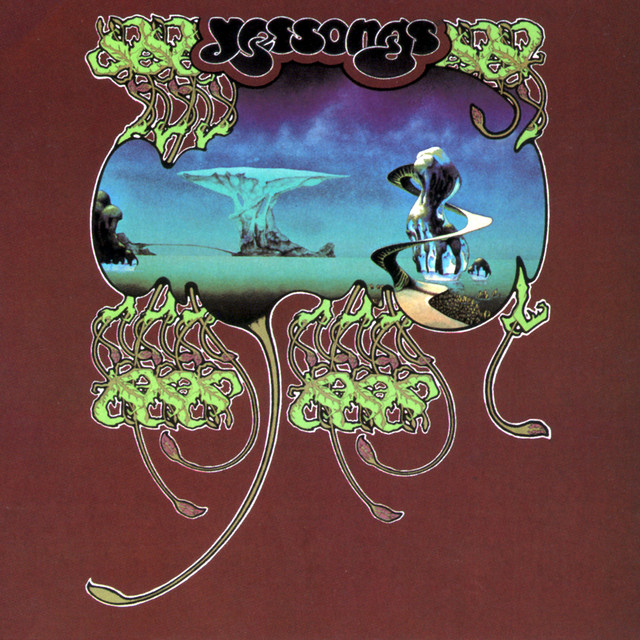
Yes – Yessongs
The music gear and equipment used by the artists, producers, engineers, and more involved in the making of the 1973 album Yessongs.
Music from Yessongs
Artists on Yessongs


Gear Used On Yessongs
Explore the instruments, equipment, software, and production tools used in the making of Yes – Yessongs (1973). Click more on each item to see exactly how it was used.

Rick Wakeman
Roles:
Keyboards and Synthesizers used by Rick Wakeman on Yessongs

Avg price: $4,729.63
Mentioned in this July 1999 Sound on Sound interview, this November 1, 2013 interview with Astronauta Pinguim and this July 14, 2020 Music Radar interview. One from 1970 was listed on Reverb.com in June 2020.
Sound on Sound, July 1999,
"For touch‑sensitivity, I used the brand new Fatar keyboard. Close your eyes and it really is like playing a piano. All of the piano on the album is real piano [a Steinway 9‑foot]. For soloing, my favourite keyboard is the Minimoog. After the Minimoog, my second favourite is the Roland JD800, which I MIDI up with other instruments. It's interactive — I love being able to fiddle with the knobs as I play. (...)
I remarked that it was good to hear that Rick is still teamed up with his Minimoog, being that they go together like bangers and mash — but then their association goes back a long way. "I bought my first Minimoog from a guy who said it was broken", confides Rick. "He wanted 35 quid for it — and they were £1000 new. I got it back home, plugged it in and found it in perfect working order. I felt honour‑bound to call the guy and let him know I couldn't find anything wrong. He told me that it only played one note at a time! I explained that it was a monophonic synth and was only meant to play one note at a time. He said that that was no good to him, and told me to keep it! Even that amount of money was a lot to me at the time — I was on 20 quid a week with Yes".
Rick's trademark Minimoog sound obviously relies on some subtle use of effects — so what is the secret? "I have my own way of recording the Minimoog. It's all to do with delay. I'm not giving too much away here, but something I always encourage other people to do is to try bringing other effects in on delay repeats. I also use a lot of pre‑delay."
(...) And Rick's famous Minimoog has an amazing sound. It doesn't matter how much is going on in the mix, the Minimoog will cut through!
Astronauta Pinguim, November 1, 2013, "Seven questions to Rick Wakeman"
Rick got his first Minimoog in 1971 from actor Jack Wild (Oliver!), who, not knowing it was monophonic, though it was broken and sold it to Wakeman for half the price it originally costed. (...) I don't know the exact answer, but I think I have probably owned about 20 Minimoogs in my lifetime. I currently have 9. Finding good ones is extremely difficult. I have a very good man who repairs them for me and keeps them in good order. I cannot even imagine not having one."
Music Radar, July 14, 2020, "Rick Wakeman on his top 5 synths: 'I suddenly had an instrument that could give the guitar a run for its money'"
“When you’re making music, you are automatically limited by what you’re able to create. But also limited by what your imagination can conjure up. Does that make sense? It’s a bit like an artist saying, ‘I’m going to paint a picture with a colour blue that hasn’t been invented yet’. If you don’t know what that blue is and there’s no way of getting hold of it, you can’t really paint with it. Getting hold of the Minimoog in 1971 was like finding that colour blue. As well as reds, purples and millions of other colours you’d never thought possible. (...)
“It is and always will be number one for me. The first synth I owned and the one I’ve used most.
“They’re all over the Yes albums. The main theme on And You and I is a good example. Also, that shortish solo on the live version of Starship Trooper.
“The great thing about the Moog - this applied to a lot of those early synths - was that I suddenly had an instrument that could give the guitar a run for its money. I could do crazy solos and turn it up loud. VERY loud! Frequencies that you could never get from a guitar. There’s a specific setting I discovered that would literally rattle your teeth!
“I actually got my first Minimoog off Jack Wild - the former child star who played the Artful Dodger the 1968 film, Oliver! He bought it and thought something was wrong with it because it only played one note at a time. I explained that it was monophonic, but he said, ‘Ah, keep it’. I think I gave him 30 quid. Even if it hadn’t worked, I’d have bought it and had it on stage with me. Just because it looked so fantastic.
“I became good friends with Bob Moog and he invited me over to the offices in the early 70s. ‘There were huge No Smoking signs all over the place. Not very rock ‘n’ roll, I thought. I asked Bob about it and he explained that their place in Buffalo was an old munitions factory. He lit a match and threw it on the floor.
“Crackle-crackle-fizzle, all around our feet. All those lovely Moogs were surrounded by explosive dust!”
Reverb.com, June 2020, "Moog MiniMoog Model D owned & used by Rick Wakeman of YES 1970 Natural"
Used on Various Tours by Rick with Yes as well as on solo projects
Note - Rick is on of the worlds most prolific of all Mini Moog Users


