
deadringer's Reviews
4 reviews Back to deadringer's Equipboard

91
UHe Ace VST
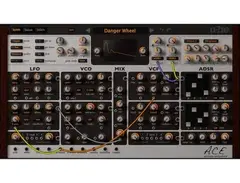
The plugin design and production company known as U-He presents users with a unique piece of software in the form of ACE. The concept behind ACE is to take advantage of modular synthesis in order to fully use the processing power of newer computers and increase overall creative output. ACE is classified as a semi-modular synthesizer with a huge selling point compared to its hardware counterparts: you can patch any input to any output and are not limited to any number of connections. In a very clever and groundbreaking fashion, u-he has put together one of the most refreshing pieces of software for producers; best of all, it comes with a very artist friendly price tag ($79 at the time of writing).
Understanding the ACE user interface may seem a little daunting at first, but after some experimentation it becomes much easier to get a hang of. In terms of most modular synthesis devices, ACE is fairly straightforward: you are given several inputs and one or two outputs, and you can run as many cables as you like from each output to any input. Inputs and outputs are denoted as they would on a hardware synthesizer by what look like small outlets in the software itself. According to u-he, they classify ACE is a tool that is very favorable to beginning users. With the hopes of giving people a more affordable outlet into experimentation with modular synthesis, ACE easily provides an infinite selection of choices for beginners and experts alike.
After test driving the product myself, I have to say that I’m very pleased with the results it gave me. U-he does an incredible job of designing ACE to be free of any eyesores, while still keeping the interface free of clutter. While most low to mid level synthesizers attempt to cut costs in the visual department, ACE does not take part in this stereotype and actually has a better visual design than some synthesizers that cost hundreds of dollars. My favorite part is that each of the sections of the interface, everything single knob, and all drop down menus are well labeled and don’t leave anything up to guessing. The only potential downside that ACE comes with is the high CPU requirement. U-he has worked wonders in being able to attain the sonic charm of vintage hardware, but causes users with slow computers or too many open instances of ACE to suffer. Regardless of this fact, ACE delivers a complete package that most synthesizers just don’t come close to, and for the low price it’s offered for, it’s a no-brainer addition to any software synthesizer arsenal.
91
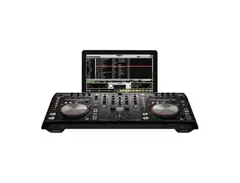
A cost-effective and portable DJ solution with CDJ features
Didn't make sense for me to spend a ton on two CDJ-2000s and a DJM-900, so after a lot of research I went with the DDJ-S1. This thing looks very sexy (gets ooohs and ahhs from my buddies), and is nice and portable.
Honestly this is like having two CDJs and a good quality 2 channel mixer. The CDJ features are all there (for example love that when you exit a loop you can resume the track at the previous point as if no loop had been made).
91
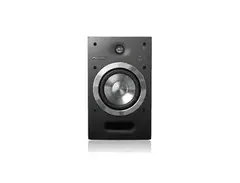
Stylish sound that complements a DJ setup perfectly
Love the way these look & sound, complement my Pioneer DJ setup perfectly
91
Durable, high quality headphones for DJs
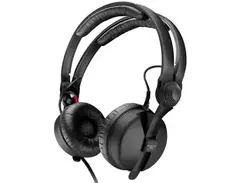
The HD25-1 comes from a huge audio equipment manufacturing company known as Sennheiser. These on-ear DJ headphones are fairly standard in both price range and quality. However, Sennheiser is known for bringing customers very high quality products compared to their competitors, so it’s always worth checking out their stuff. These headphones are clearly designed for DJs in dance clubs, but do not perform as well in a more casual environment.
Like many headphones being released these days, the structure of the HD25 is very simple and straightforward. Unfortunately, they are neither flat-folding nor collapsible, but instead have very simple rotating joints and removable metal hardware. The rough black plastic is resistant to cracks and scratches and the headphones are also very light and not likely to get damaged from falls. One of the best features of the HD25s is that every single part of the headphones is user-replaceable. Sennheiser prides itself on producing quality gear and allowing users to replace literally every single piece of the headphones insures better longevity and overall user satisfaction.
For the most part, the HD25s have fairly good comfort. Since they are meant to be DJ headphones, it seems like they were designed with the notion that the user wouldn’t need to be keeping them in one place for a long period of time. However, if you try to use them outside of a live environment, the clamping strength of the top section ends up being pretty strong and causes some discomfort. The ear cups do have good motion, as they should, and make listening to cued tracks a breeze.
As is typical of on-ear headphones, the HD25s have a bit of trouble when it comes to isolation of sound. However, I think this is a trade-off for the fact that they are meant to be mobile, in a sense, so that you can quickly transition between a cued track and the currently playing live track. Sennheiser, as always, delivers a high sound quality in each HD25. Although sound quality may not be as important in a live setting, the HD25s do a great job in the mid and low spectrums. The high end, unfortunately, seems to have been boosted a little bit too much and cause sounds to seem brighter than they normally would.
Personally, I prefer over-ear headphones, so the HD25s aren’t so much my cup of tea. I’ve been a big fan of Sennheiser over the years, but for a pair of $250 headphones I think they could’ve done a little bit better. Granted, these aren’t made for the studio so I think they decided to skimp in some areas of the product that would take them to the next level overall.