
dylan's Reviews
9 reviews Back to dylan's Equipboard
-s.webp?v=1784335436)

1734
Clean and crunch channels are meh, but the high gain...
The high gain is where this preamp shines. This preamp is tonally based on the Mesa Rectifier, and it really shows. It's thick, chewy, and crunchy just like a Rev-G Dual Rectifier, and you SERIOUSLY cannot beat the tone for the price, considering you can find these things for under $400. The EQ section doesn't work exactly like a Recto's EQ section (mesa is known for their crazy EQ sections), but the core tone IS there, and the EQ still gives you plenty of tonal tweaking, ESPECIALLY with the parametric midrange. Scoop your mids wherever you want, crank your mids wherever you want. The range is quite wide as well. 250hz - 7khz. On top of that, the EQ section is digitally programmable. You can dial in a tone, save it, and scroll through them as if you were using a modeler. It's also MIDI-capable, so you can recall your presets via MIDI.
I really debated on making this a 5-star review, but this preamp isn't THE most versatile. The clean and crunch tones are lacking, and I'm not too fond of the built-in Hush. The Hush is in the loop, so it isn't the best if you want to quiet down a noisy pedalboard. You'd still need a noise gate in front of your board.
With that said, the tone of this amp is 10/10, the programmable EQ helps if you want various high-gain sounds, and the parametric midrange is a godsend.
Seriously, if you want GREAT metal tones on the cheap, GET THIS PREAMP!

41037
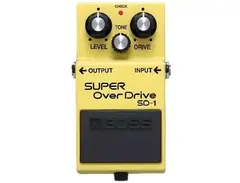
It is in fact the same circuit as a TS9 more or less, the difference as you have guessed is in the centering of the mid emphasis, the input cap shaping the bass response and in the clipping diodes in the feedback loop. The SD1 retains the asymetrical clipping (2 silicon diodes and a germanium) of the 2 knob OD1. The tubescreamers use just 2 silicon diodes because at the time that Maxon set about copying and evolving the OD1 circuit Boss held an international patent on assymetrical clipping circuits for guitar pedals. A more versatile version of this circuit can be found for relatively cheap in the MXR 'custom badass OD'. Really great tweaks on this classic.
1734
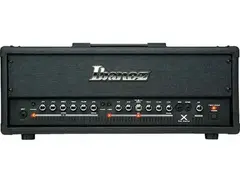
Probably the best high-gain head for the price
This amp is unbashfully solid state. It's not warm in any way. Just very, very tight, brutal, extreme high gain crunch and thump. Considering you can find these heads for $100 - $150 these days, if you're looking for a beginner's high-gain amp for a metal situation, it's seriously hard to beat this amp.
-s.webp?v=1785170298)
1734
Pristine cleans, some drawbacks
My favorite clean tone. Nothing else to say.
Drawbacks are is that ANY kind of breakup sounds like dog doo doo. This amp doesn't sound pretty with a slightly broken-up clean tone like a Fender would. On top of that, the older models have a fixed chorus setting with no control over the depth or speed.The only Jazz Choruses that have this option are the JC77, JC55, JC40, and the JC120H.
41037
at least the similar chorus builtninto the juno synths has 2 preset buttons for different depth/rate.... still, the jazz chorus is a class act
1734
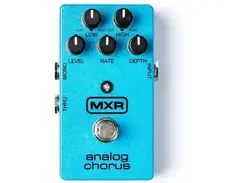
My favorite chorus
Not as well-known as the Stereo Chorus or the classic Boss offerings, but I feel this pedal does the job better than most. It's not as deep as most, but if you want to add some depth and shimmer to your tone, this pedal is extremely hard to beat for the price. If you like to shape your tone, the low and high offer some EQ cutting if you want to tame some frequencies. I prefer to keep everything at 10 and have a slow, deep chorus.
-s.webp?v=1785150301)
1734
Best whammy for the bypass alone, but is super versatile
A lot of the previous whammys were notorious for their bad bypassing. This one has true bypassing to fix that problem. Not only that, but the classic/chords setting makes this a crazy versatile pedal. Can get that classic glitchy Whammy sound with one setting, and a polyphonic octaver with the other.
-s.webp?v=1785130695)