Join music gear discussions on Equipboard. Talk about guitar gear, electronic music production, get help identifying gear, ask for feedback on your music, suggest ideas to improve Equipboard and more.

What's the easiest to use hardware synth (that sounds awesome)?

alas the behringer is not springed :-(

GEAR:
  • Roland Juno-6
  • Gibson SG Standard
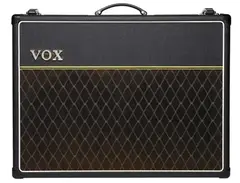
  • Vox AC30 Guitar Combo Amp

alas the behringer is not springed :-(

uhg... well there's one reason to go with the Korg 2600M.

GEAR:
  • Roland TR-808 Rhythm Composer
  • Roland SH-101
  • Roland TR-909 Rhythm Composer

uhg... well there's one reason to go with the Korg 2600M.

Is the korg mini even available?

GEAR:
  • Roland Juno-6
  • Gibson SG Standard
  • Vox AC30 Guitar Combo Amp

uhg... well there's one reason to go with the Korg 2600M.

Is the korg mini even available?

not yet

GEAR:
  • Roland TR-808 Rhythm Composer
  • Roland SH-101
  • Roland TR-909 Rhythm Composer

Giullio's really thinking this one over.

GEAR:
  • Roland Juno-6
  • Gibson SG Standard
  • Vox AC30 Guitar Combo Amp

Giullio's really thinking this one over.

We even stayed on-topic for once.

GEAR:
  • Roland TR-808 Rhythm Composer
  • Roland SH-101
  • Roland TR-909 Rhythm Composer

We even stayed on-topic for once.

Lol sorry dudes, been slammed working on the site, a mix of infrastructure stuff, new features, rethinking old ones...

Anyhow back to synths. You have given me so much to think about. I'll tell you what my two strongest contenders are at the moment:

Korg Minilogue XD: I think this little guy might have everything I want/need. It sounds good, looks good, is very tweakable/accessible, 4 note polyphony is nice, the sequencer is nice... it can even get kinda percussive which would be cool to sequence some drum loops and jam along on guitar. It just has that immediacy & fun factor that I think I would love, and the price is so good for what you get.

This one's a bit out of left field, but Elektron Digitone Keys. The synth engine is awesome, and the sequencing capability is amazing. Can see myself sitting down on the floor, guitar setup on my right, Digitone to my left, sipping on an Old Fashioned, throwing together loops and arpeggios and getting lost in some soundscapes. What gives me pause is it might not check the "ease of use" box... not sure I wanna get out of my flow and bury my head in the manual anytime I wanna figure out how to do something...

GEAR:
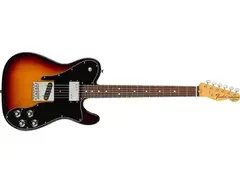
  • Fender Telecaster Custom Electric Guitar
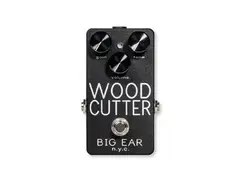
  • Big Ear Pedals Woodcutter
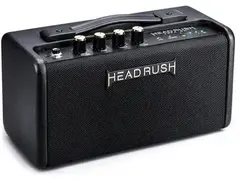
  • HeadRush FRFR Go Portable Desktop Amplifier

We even stayed on-topic for once.

Lol sorry dudes, been slammed working on the site, a mix of infrastructure stuff, new features, rethinking old ones...

Anyhow back to synths. You have given me so much to think about. I'll tell you what my two strongest contenders are at the moment:

Korg Minilogue XD...

This one's a bit out of left field, but Elektron Digitone Keys...

I'm a big Minilogue fan, though having played both versions side-by-side at the last in-person NAMM, the XD isn't just the original plus more stuff, it's got it's own sound... which is (I think) one of the reasons they're still selling/making the original (silver) one. So just keep that in mind. if you don't need the more intense oscillator/DSP stuff of the XD, save the cash and get the silver one... but both are great.

Re: Digitone keys... I didn't realize that they key'd version was just under $1000, that's great! I LOVE the sound engine in that thing. If you think you can hang with the (greatly improved) Yamaha DX-style FM programming, I say go for it... it's multitimbral and everything. I've been very tempted by the non-keyed version.

GEAR:
  • Roland TR-808 Rhythm Composer
  • Roland SH-101
  • Roland TR-909 Rhythm Composer

the digitone is really cool sounding but as Kenneth pointed out its not an easy sound engine apart rom the added filters. I was tepted to get one at one point then the opsix came out and also I have all these FM synths already.... inf act, the argon 8 also can do a form of FM that's really interesting but that's a whome ther thing

my other problem with the digikeys is that its got the interface all on one side, and on the bass hand no less....

GEAR:
  • Roland Juno-6
  • Gibson SG Standard
  • Vox AC30 Guitar Combo Amp

Elektron is not a company that comes to mind when the topic is "easiest to use hardware"... but the Digitone does sound awesome. I'm sure it's easier to navigate an Elektron product that it is to fix some of the bugs on this site, it's all relative ;).

EDIT: what?! Elektron put individual outs on the keyboard version? That was the one thing really missing from the desktop module... want.

GEAR:
  • Roland TR-808 Rhythm Composer
  • Roland SH-101
  • Roland TR-909 Rhythm Composer

If you're OK going used, there are a lot of VAs out there that sound great and are available within a $1000 budget. I have owned an Access Virus and Nord Lead since the early 2000s and they're both fantastic and easy to learn. The Nord is deceptive - it looks pretty simple as everything is laid out on the panel, no menus, 2 oscillators, no effects - but after 20 years I'm still finding I drag unexpected things out of it pretty regularly. The Virus gets some flak for menu diving, and there's a little of that, but only because it's a deeper synth than say the Nord. You'll find either in module form for around $800, leaves you plenty of room for a keyboard controller! A key differentiator here as well is both these synths are multitimbral, and I don't believe any of the other suggestions are (or even any of my other recommendations). For the Nord - if you decide to go that way, make sure you either get a fully-upgraded Nord Lead 1 or better yet hold out for a Lead 2X. The OG Nord only shipped with four voices, and fully expanded you get 12. The 2x I believe is a 20-voice synth. Given that you can use four parts simultaneously, you'll obviously run out of voices fast on the 4-voice units and I doubt the 12 voice expansions are available 20 years on from when it was new! Similar with the Virus - the A is 12 voice, B I believe 16 voice, and C 20-voice. B and C also have built-in effects so those are the ones to have of the "classic" Virii. You probably know a lot of that already since you owned a Nord and Virus in the past, but good info for others asking the same question.

For brand-new synths under $1k, I think you're hard pressed to do better than the Deepmind-12. Real analog poly at a price point that's about half or less of a "name" analog polysynth. If you can stretch your budget a little, the Roland System 8 is incredible. It might seem a little overwhelming at first given that it can run multiple models (including the Junos and Jupiters), but if you stick to the System-8 native sound engine and start with just the basic oscillator controls and envelopes it's pretty easy to get to grips with. Maybe not as easy as the Nord, but close.

Once you get over $2k, every choice is good sonically so it will come down to ease of use. I haven't used any of the Dave Smith polys in person (I do own a Pro-3 monosynth) but I'd bank on the Prophet 5 , Prophet 6, and OB-6 being pretty good in that respect. I wouldn't count out the Virus TI2 either - like the System 8 if you start with just what's on the panel it'll be pretty straightforward to figure out the basics.

Good luck!

PS - Hate to rain on the parades of people suggesting ARP/ARP clones - I would NOT consider those synths easy to learn!

PS - Hate to rain on the parades of people suggesting ARP/ARP clones - I would NOT consider those synths easy to learn!

Thank you for complimenting my cleverness!

GEAR:
  • Roland Juno-6
  • Gibson SG Standard
  • Vox AC30 Guitar Combo Amp

Hey man, there are things you can't get out of most other synths in those boxes! But easy, they are not lol.

Hey man, there are things you can't get out of most other synths in those boxes! But easy, they are not lol.

A 2600-style semi-modular requires some knowhow, but what is complicated about an Arp Odyssey?

GEAR:
  • Roland TR-808 Rhythm Composer
  • Roland SH-101
  • Roland TR-909 Rhythm Composer

Oh jeez, I was reading fast and my brain only grok'ed "2600"! Yeah an Odyssey isn't that complicated.

Oh jeez, I was reading fast and my brain only grok'ed "2600"! Yeah an Odyssey isn't that complicated.

The thing about the 2600 is its normalled in a minimoogish configuration so it's no harder to use than an odyssey on a basic level... just an extra oscillator to consider and the envelope followerwhich is a really specific thing for external sources. It only gets complicated when you want to use the patch cables. And even then... the 2600 was actually designed with colleges in mind.

But yeah I was talking odyssey. Killer learning synth. Everything spelled out clearly and the decision to use sliders makes the whole panel very visual and as a result educational. Simplicity itself.

GEAR:
  • Roland Juno-6
  • Gibson SG Standard
  • Vox AC30 Guitar Combo Amp

Roland Juno 106 or the boutique model.

Juno 6. No MIDI errors or patch memory chaos, just sweetspots.

Juno 6. No MIDI errors or patch memory chaos, just sweetspots.

Exactly: that's the magic of those first 3 Junos: they're one big sweet spot.

The patch memory on the 60, 106, Alpha Junos and the rack equivalents is simple as can be... it's hilarious to hear that described as "chaos", lol... but I know @jimmarchi1 agrees with you, on the grounds that patch memory added a lot of complication to synth, and therefore makes the Juno 60 more of repairs liability than the 6.

Case-in-point: my 60 has had some dead memory locations since I got it back in the '00s. I've had the parts to fix that standing by for nearly as long, but I just never seem to get to it.

All that said, I think the OP decided on an Elektron Digitone after all was said and done. One person's weekend of manual-diving and YT tutorials is another person's "easiest". :)

GEAR:
  • Roland TR-808 Rhythm Composer
  • Roland SH-101
  • Roland TR-909 Rhythm Composer

Juno 6. No MIDI errors or patch memory chaos, just sweetspots.

Exactly: that's the magic of those first 3 Junos: they're one big sweet spot.

The patch memory on the 60, 106, Alpha Junos and the rack equivalents is simple as can be... it's hilarious to hear that described as "chaos", lol... but I know @jimmarchi1 agrees with you, on the grounds that patch memory added a lot of complication to synth, and therefore makes the Juno 60 more of repairs liability than the 6.

Yes... and you get the continuously variable hpf slider.

Case-in-point: my 60 has had some dead memory locations since I got it back in the '00s. I've had the parts to fix that standing by for nearly as long, but I just never seem to get to it.

I'm the second owner of my 6. It's never been serviced. It's due for preventative maintenance but it doesn't give me grief so I kept putting it off... knock on fake wood.

Interestingly, I've looked at the schematics for the 6 and the 60 and apart from the hpf slider they're not actually identical everywhere, particularly the gain staging around the vcf and vca. How much you hear it, I don't know, but the signal path is slightly different.

GEAR:
  • Roland Juno-6
  • Gibson SG Standard
  • Vox AC30 Guitar Combo Amp