Join music gear discussions on Equipboard. Talk about guitar gear, electronic music production, get help identifying gear, ask for feedback on your music, suggest ideas to improve Equipboard and more.

EQ Pedal for a Mid-Boost for stand out guitar solos?

I've been looking for a guitar pedals that will boost specific mid EQs for soloing. A boost with a parametric EQ to boost specific frequencies.

Then it hit me... should I just use my old DOD FX40B Equalizer pedal to boost my mids?

Has anyone tried this for solos? Have you had any luck? What pedals have you used and what settings worked to put your guitar in the front of the mix?

GEAR:
  • Gibson Les Paul Studio Vintage Mahogany
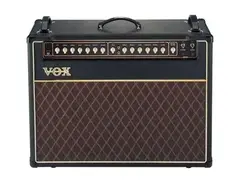
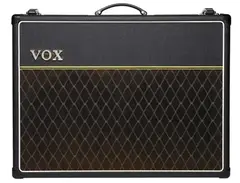
  • Vox AC50 CP2
  • Blank slot

I think a boost pedal is traditionally made for what you want. You're definitely not wrong though; while I think an EQ pedal is conceptually made to sculpt your sound to sit better in a mix, you absolutely could use it to boost frequencies and stand out for a solo.

If your DOD is reliable and quiet, then I don't see why not. I love a good boost pedal myself, we reviewed several and it would be hard to go wrong with something like the MXR M-133 Micro Amp.

GEAR:
  • Fender Telecaster Custom Electric Guitar
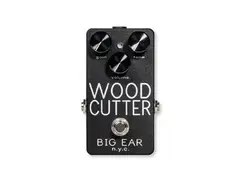
  • Big Ear Pedals Woodcutter
  • HeadRush FRFR Go Portable Desktop Amplifier

TC Electronic Spark Booster

oy, ehre we go

what type of amp are you driving, how much noise cna you tolerate? what sort of music do you even like? define mdirange... midrange is the frequency spectrum that encompasses MOST of human eharing. basically for guitar purposes think of maybe 200hz to 3000hz.... here's some 2 cents

The absolutely classic is a tuebscreamer with the gain all the way down. The boss SD1 does this trick as well being basically the same but with assymetrically clipping and different mid frequency emphasis. Both cut your bass as part of the mid hump effect. Ibanez hinks, boss barks. All TS/SD variants do this for the most part. Though in different ways and to different extents for sure... If you want a lot of headroom, pretty much no clipping get one with a diode lift switch or get the xotic RC booster which is absically a TS9 with no diodes and a bass control added LOL. if you crank that the opamp wills tart to growl, but at anything elss than full gain its fairly clean. Mid Boost available in spades tweakable via tone cotnrols.

A rangemaster type treble booster creates a midboost as long as its the first thing your guitar sees. Apart from cutting abss and thus boosting treble it has a low input impedance that laods the down the high of your pickup creating mid-boost. If tis not the first thing your pickup sees it wll just treble boost because your pickup won't receive the laod from the transisotr. Think Iommi, Brian May etc

there is the full tone fat boost. Guess what that one does,

there are EQ pedals aplenty, these are gyrator circuits simualting inductor absed EQ... these graphics tend to be noisy and many of them don't have enough bands and the nes that do usually are the wrog frequencies for guitar. Boss' 10 bands ten to eb the best if you cna locate one... MXRs 10 sucks... anyway

Ibanez parametric EQ pedal from the 8 and 9 series.... I've ahd both. Very good stuff. Not to noisy, great sweepable mid with cut or boost and fixed frequency shelves for treble and bass... goofy, but excellent.... getting collectible... similar is the JHS hanting mids pedal, check it out

elearn to sue your guitar controls more effectively. If you play a gibson style guitar there's wealth of shades and textures available from those 4 knobs straight into a quality tube amp set to peel the paint off the walls with your bridge pickup at 10

GEAR:
  • Roland Juno-6
  • Gibson SG Standard
  • Vox AC30 Guitar Combo Amp

Thats really great info, thanks man!

Music style: Blues-Hard Rock... some "prog"

I usually play my Les Paul Studio through a Vox AC50CP2. I get the amp really clean with gain to taste to get that Vox "Chime". I use a xotic SP compressor and the SL Drive to drive my amp, then I usually use my Empress Boost/Buffer+ when I want to solo.

I usually use my DOD Eq Fx40b to scoop mids for a crunchier tone, but lately I have been experimenting with it to boost my tone. It's relatively quiet and has a +18 boost on each frequency. I have been boosting anywhere from 800hz-2k and as long as im not pushing the main gain over +5db im not getting additional noise, but some pretty intresting boosted tones.

I appreciate all the info though. I'm definetily going to look up some of those pedals. The JHS Haunting Mids sounds very interesting.

THANKS!

oy, ehre we go

what type of amp are you driving, how much noise cna you tolerate? what sort of music do you even like? define mdirange... midrange is the frequency spectrum that encompasses MOST of human eharing. basically for guitar purposes think of maybe 200hz to 3000hz.... here's some 2 cents

The absolutely classic is a tuebscreamer with the gain all the way down. The boss SD1 does this trick as well being basically the same but with assymetrically clipping and different mid frequency emphasis. Both cut your bass as part of the mid hump effect. Ibanez hinks, boss barks. All TS/SD variants do this for the most part. Though in different ways and to different extents for sure... If you want a lot of headroom, pretty much no clipping get one with a diode lift switch or get the xotic RC booster which is absically a TS9 with no diodes and a bass control added LOL. if you crank that the opamp wills tart to growl, but at anything elss than full gain its fairly clean. Mid Boost available in spades tweakable via tone cotnrols.

A rangemaster type treble booster creates a midboost as long as its the first thing your guitar sees. Apart from cutting abss and thus boosting treble it has a low input impedance that laods the down the high of your pickup creating mid-boost. If tis not the first thing your pickup sees it wll just treble boost because your pickup won't receive the laod from the transisotr. Think Iommi, Brian May etc

there is the full tone fat boost. Guess what that one does,

there are EQ pedals aplenty, these are gyrator circuits simualting inductor absed EQ... these graphics tend to be noisy and many of them don't have enough bands and the nes that do usually are the wrog frequencies for guitar. Boss' 10 bands ten to eb the best if you cna locate one... MXRs 10 sucks... anyway

Ibanez parametric EQ pedal from the 8 and 9 series.... I've ahd both. Very good stuff. Not to noisy, great sweepable mid with cut or boost and fixed frequency shelves for treble and bass... goofy, but excellent.... getting collectible... similar is the JHS hanting mids pedal, check it out

elearn to sue your guitar controls more effectively. If you play a gibson style guitar there's wealth of shades and textures available from those 4 knobs straight into a quality tube amp set to peel the paint off the walls with your bridge pickup at 10

GEAR:
  • Gibson Les Paul Studio Vintage Mahogany
  • Vox AC50 CP2
  • Blank slot

the ac50 channel switching amps are their own discussion... I'm not getting into that here

you should try doing a 3k centric boost next

the basic region you're bosting might be acheived well with a rangemaster, aprticularly a modernized one... try the catalinbread naga viper. this will deliver a really retro british blues mid-boost and also do 70s rock like sabbath and queen. Everyone needs a rangemaster type pedal. It'll also do cool things if you turn down your guitar volume rather than disengaging it to lwoer your gain into the amp's input. Downside is that it won't be a significant noise reduction from the DOD EQ... but it'll be a more classic take on the mid boost you're shooting for.

A boss SD1 will grab thsoe frequencies and just boost them with the gain down and volume up. A tubescreamer gives a lower range of mids that will eb mushy though your amp.

So stick with what you have or get a anga viper. Or a haunting mids for a bit more control and a more modern tone

GEAR:
  • Roland Juno-6
  • Gibson SG Standard
  • Vox AC30 Guitar Combo Amp

Yeah I don't want to get into a Vox AC50 discussion... I just keep mine on the first channel and try get the cleanest sound I can sans pedals. Then I let my pedals do their job.

I'm definetily going to try out a JHS Haunting Mid from my local store and see if they can get their hands on Naga Viper. Until then I'll just keep tweaking with my DOD FX40B. It does have a 3200K slider that I'll experiment with.

GEAR:
  • Gibson Les Paul Studio Vintage Mahogany
  • Vox AC50 CP2
  • Blank slot

there's a zillion rangemaster based treble boosters besides the naga viper, that one is just very consistent unit to unti and has a selector switch for the voicing so it cna get really midrange focused. It seeme dlike your thing. Personally I just have ones I built. Its simple to make a rangemaster if you cna wield a sodlering iron. Simplest circuit, you just need a suitable transistor. You can find them pre-tested at small ebar electronics. So there's another option f you want to join the old schoolt eam and use a devie that was invented in the eearly 60s.

3khz is a pwoerful freq range for electric guitar. Its the 'edge'....of distorted sounds. It custs a mix like a hot knife through butter. Remove it from cleans and get more parkle and a relaxed palce in tehe band.... turn it up when distorted and you're cutting through and getting agressive. Turn it up too much and you're going to be overbearing and give everyone ear fatigue. Turn it way down and lose all your muscle. You'll see. err ehar

try boosting both 1k and 3k2 and cutting around 300hz

GEAR:
  • Roland Juno-6
  • Gibson SG Standard
  • Vox AC30 Guitar Combo Amp

This may be off topic but for young players reading this I'd like to clarify the difference between playing with dynamics and "cutting through the mix."

Playing with dynamic contrast is extremely beneficial to your music. This may include picking or strumming softly, palm muting, and attacking or accenting certain notes differently. It doesn't matter what genre you play, it makes a huge difference to your audience.

Above this, on a higher level of audio volume, is how your guitar "sits" in the mix when you play with others (whether live or on a recording). Good "placement" means adjusting your EQ, tone knobs, etc. to blend tastefully. Unless you play instrumentals, your guitar probably doesn't belong front and center - but your wicked guitar solo!? Enter: boost pedals. Boost pedals effectively raise your volume (or the volume of certain frequencies) of your signal creating a "lead track" in the mix. The reason they tend to boost "mids" is because that's where the meat of guitar tone lives.

Other ways of doing this: (1) use a volume pedal; (2) use a 2-channel [overdrive] pedal or more than one drive pedal.

I prefer the second option as I usually want my "lead" tone to have more drive than my "rhythm" tone. In a way, this is no different than using your clean amp tone for "rhythm" and your overdrive pedal for "lead" (which is what many Blues players do).

OP, how about a Dunlop Q-Zone or Stone Deaf PDF-2? Both are parametric, while the first is a cocked wah and the latter more of a notch filter. Similar enough to recommend them both.

But it'd need to be near the end of your chain, at least AFTER most other drive/fuzz pedals, else your tone will be masked. "Blanket effect" galore.

a ccocked wah is a bandpass, it actually eliminates frequencies at the outer edges of the filter and reduces everything that passes but the center frequency...

a notch or bad stop filter is the opposite, it removes the center frequency and reduces the frequency around it. However, if you reverse a notch with active circuitry you get a peaking filter which is exactly what you would think; the center freuency is boosted a lot and all teh surrounding frequencies come up a bit, everything else is uanffected, ie has the same gain as before.

Bandpass and band stop fitlers can eb passive, a peaking fitler cannot sicne you have to reverse and boost up a band stop to make it... at the same time you might as well keep the ability to band stop and thats what midrange EQ is. Its an active fitler that does band stop or peaking, that's it. That's what the mid bands on a graphic are, they ahve fixed width (Q) so they overlap in an intelligent and useful way... anyway

I suspect the PDF-2 is pretty similar to teh ld ibanez 'parametric ' pedals and is also probably related to the Ibanez circuit (which is pretty simialr to msot 'sweepable' midrange EQs on little mixers), they just added a width control, soemthing that you really want in this type of fitler. I coudl go into which analog fitlers 'self adjust' their width in a msuical way and why and also why you won't see that in a pedal versus an expensive studio EQ... but that's way beyond the scope of this question...

I think the cocked wah thing may be cool, it worked for Mick Ronson but I don't think its what the OP is askign about... the sotne deaf seems like an old ibanez EQ with dirt built in and that may be just the ticket, although if he's letting the amplifier produce a lot of the distortion he might be setting the gain really low to maintain some clarity

GEAR:
  • Roland Juno-6
  • Gibson SG Standard
  • Vox AC30 Guitar Combo Amp

Wah affects tone and falls under the same bracket as "dynamic contrast" playing IMO.

I believe a "good" boost pedal is transparent (does not affect tone).

That being said, many wah pedals have a volume boost - some are even adjustable - and can act as a "boost pedal" even though they aren't quite the same.