Join music gear discussions on Equipboard. Talk about guitar gear, electronic music production, get help identifying gear, ask for feedback on your music, suggest ideas to improve Equipboard and more.

In your opinion, what makes real vintage guitars sound better than nowadays guitar?

Hey guys.

Folks, generally, is inclined to spend thousand of bucks in vintage guitars, because they seems sound better. Why, for example, an original '54 strat sounds better than a reissue of 54, in your opinion? Material construction? Pheraps the effect of the years in the alnico pickups?

And, why in your opinion an 80s japanese fender, which they are quoted more or less as same quality as american, costs less than an American of the same dacade? For example, an elite stratocaster costs 2000 bucks nowadays, a contemporary strat 500 bucks more or less. In the 80s american fender prices were of 700/800 bucks, i haven't lived in 80s but i think that a Elite strat in 83 cost 700 bucks, and a contemporary made in 85/87 in fujigen gakki too, and i think that either have something of "rare". Why american seems to increase their value in time and japanese don't? We only pay the provenience of American only because we are 100% sure of their quality?

P.s I do not want to put in discussion the quality of vintage instruments, they are great instruments indeed. Just want to undestand the value of the instruments

its hard to work with this question because the title and 1st paragraph contains a tacit assumption that old guitars are universally better than new ones which is simply not true... it also assumes that collectible markets like comic books, baseball cards, toys, records, vintage guitars and amps are driven soley by the quality of the old items in question when its driven by demand versus supply and the disirability versus the scarcity of each specific item. That's driven by reputation and scarcity of remaining examples. Reputation is driven by so many factors. For isntance why are ES335s worth mroe than 345s and 355s? The higher numbered guitars were more expensive new, but they have additional features thata re not always desireable to players while the 335 was also played by a lot more guitar heroes than the two upgrade odels... so there's reputation at play too. During the pre-65, so-called golden age of 335s the specs are pretty similar, there's a stock color options change from antural to heritage cherry and switch to block inals from dots an. The necks on later ones tend to be slimmer, but its no rule, but certain years are msot desireable. Why? Guys like Clapton used a very specific year on iconic records and collectors know it. Therefore that year is mroe ind emand. Is that ebcause its ebtter? No, clapton bought the one that he found at a good price near his house and took it out with Cream. That's it, but that year now has the reputation of ebing 'the one Eric played' so it comands a premium as a collectible not as an isntrument.

making sense yet? I'm getting tired of typing.... the vintage instrument market has been driven by market forces that have little to do with the superior utility of these peices as instruments for some time. This market was born during a dark period in american guitar making from the late 60s until the 90s. The reputation fo the japanese amrket is fueled by the brief superiority of high end japanese models to their maerican coutnerparts of teh same period. I cna really explain the Japanese guitar market in the USA to you if you want, but it'll take a while and I have stuff to do in 15 minutes. Why don't you read a book on economics if you're that itnerested. And if you want to know more about the real differences between modern and older factory guitars (for better or for worse) then maybe do some reading on that topics too. Tooling and electronic parts tolerances are tighter now, materials engineering ahs made huge strides in metalurgy, plastics etc, CNC routers make extreme consistency possible now, old growth wood is in short supply, some wood species are gone from the market forever, environmental regulations restrict the use of acetone based aerosoles, modern environmentally friendlyfinishes are designed to be mroe durable, self-levelling and quick drying by the furniture industry and theya ren't worried about how wood breathese on a guitar to enhance resonance... there's a lot to all of the topics youraise that is far beyond the scope of a forum post, man.

https://youtu.be/B1uc7ohS7cU

GEAR:
  • Roland Juno-6
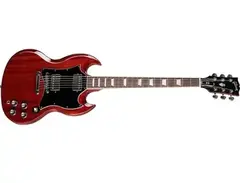
  • Gibson SG Standard
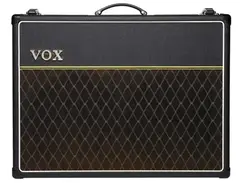
  • Vox AC30 Guitar Combo Amp

Yeah, I realize that in questions like this there's a lot of talking about. I've already read about pre and post cbs periods, and that in the 80s fender opened a branch in japane, in the same period manufacturing Corona plant closed, and they were forced to import guitars from japan. Anyway thanks for your helpful answer. At last, what book would you advise me?

jesus you're needy... a lot of my guitar books are ins torage (have thousands of books including my late wife's huge library, won't all fit in the house unless I get rid of amps and guitar and synths and that's not hapening). I'll try to job my memory. Economics is well covered by great writers like Adam Smith, Karl Marx, Maynard Keynes, Friedrich Hayek.... lsots of differeing views but filled with consistent observations on the abstract socio-political forces driving our economic system.

GEAR:
  • Roland Juno-6
  • Gibson SG Standard
  • Vox AC30 Guitar Combo Amp

Yeah, I need it to improve my english too, ahah. Thanks for advices, man!

I wasn't going to trash your english, my second language is a dead language and I'm rusty. 2 languages is a lot to hold down conversationally.

GEAR:
  • Roland Juno-6
  • Gibson SG Standard
  • Vox AC30 Guitar Combo Amp

TBH, those good vintage guitars were good because they always have been a good guitar. Ditto anything new. I've mostly ever played newer guitars, and started playing when the "vintage market" was already alive and kicking.

My #1 go to is a Fender Jag-Stang - she's not vintage, she has EMG's from the late 1990's, but that guitar has a special magic to it - and it's only 22 years old, I've had that guitar since it was six years old, and she's always been that good a guitar. Granted though there are some things where the wood parts tend to wear into a certain "settlement" where they are "broken in" and that can determine things like tuning stability and how strongly it will retain it's setup under certain conditions. That guitar is always strong, even played a gig in the rain, my friend's Jackson started to drift and parts started to rust, Jag-Stang just shrugged it off like it was nothing. That's why that one is my main.

I had a 66' Fender Mustang, that guitar was a nice sounding guitar and pretty good playing, but there was just something "missing" about it that I could not place - and the 15 layers of paint, and slightly deader nature of that Mustang is what showed me Vintage guitars are not all that. By contrast, I'd played a 63' Fender Jaguar that pretty much set the bar for what I prefer in a Jaguar, that guitar was beat to shit, and it was because it's last owner LOVED it, it sounded great, played great.

I don't think age has anything to do with what makes a guitar sound better. I think it's the guitar itself, and one musician's potion is another's poison. Some people hate EMG's, I love them. Some people could not stand the 1" Nut width on a Hondo Paul Dean II - I LOVE that neck for that reason. Somepeople like more bass, some like more treble, and some more midrange. Exceptional instruments just sort of are regardless of how old they are.

Actually, that Hondo Paul Dean II is another one. That was a 28 year old guitar I bought that had the original strings on it, some crazy Loverboy fan probably bought it in the early 80's as a memoribilia piece and kept it in the closet, then I got ahold of it and started to show that hiding behind that piece of wooden wall art was an exceptional instrument. The action is low (lower than the last Tom Anderson I played after I Leveled and recrowned the frets), the neck is fast, the original pickups were great, but the vintage DiMarzio Super II humbuckers I put in it that it would have shipped with with the $60 upgrade package at the time really showed that even Hondo could put out a pro-grade guitar. The reason I sourced "Vintage" pickups was because those Super II's from the late 70's/80's had a different construction (plastic epoxy covers) from the metal covers or open coils they do now and I wanted to keep period correct and some more "Grind" to it. It's goodness is not because it's a 35 year old guitar, it's because it was a good guitar to start with.

GEAR:
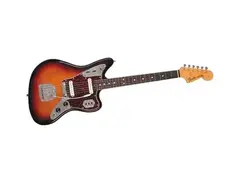
  • Fender '62 Jaguar Reissue Electric Guitar
  • Hondo Paul Dean II
  • Fender Jaguar

From these answers i understand that vintage instruments are so expensive only for "collectable" reason, not for much quality compared to modern instruments. You can find good and bad vintage guitars, as you can fing good or bad modern guitars. By the way, what makes vintage guitars more expensive is only for a collectable year construction. Thanks

The only objective reason for an old guitar to sound better than identical new one is that the wood dries and gets better with years.

The only objective reason for an old guitar to sound better than identical new one is that the wood dries and gets better with years.

Nothing can be identical. Specs can be duplicated, even mass produced, but two instuments from the same production day will sound different to a discerning ear.

If I were to try and explain why old guitars sound better than new ones... the answer is humans.

Back then people made guitars... now machines have automated most of the processes. While this standardises and speeds up the manufacture, machines can not monitor quality control.... this takes people. And while people examine along the way, they are not hands on for the entire process anymore and things get overlooked.

This is not to detract from the Luthiers like Fano still out there handshaping their craft. There is a reason why these pieces command their prices and hold their reputation.

In short.. hand made sounds better than machine made.

GEAR:
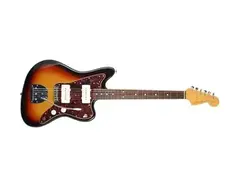
  • Fender MIJ Jazzmaster JM62
  • Epiphone Dot
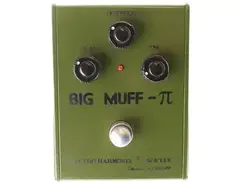
  • Electro-Harmonix Sovtek "Green Russian" Big Muff Pi V7C

maybe vintage guitars sound good because they are generally wielded by good payers!

GEAR:
  • Roland Juno-6
  • Gibson SG Standard
  • Vox AC30 Guitar Combo Amp

maybe vintage guitars sound good because they are generally wielded by good payers!

God I hope you meant good players...

So basically, in answer to the OP... you are locking in FINGERS as your final answer?

GEAR:
  • Fender MIJ Jazzmaster JM62
  • Epiphone Dot
  • Electro-Harmonix Sovtek "Green Russian" Big Muff Pi V7C

well you need to be a good payer too

GEAR:
  • Roland Juno-6
  • Gibson SG Standard
  • Vox AC30 Guitar Combo Amp