
engels
no clue what I'm doing here...
Every rig tells a story. Start yours.
Catalog your gear, wishlist what's next, and share the setups behind your sound — free.
Create your EquipboardGuitars 6

While one pickup is a serious limitation, it is the most comfortable, enjoyable and beautiful guitar I have. The beefy "rounded" neck profile is my favourite, the action and the resonance are superior and it cuts through any mix with its focused midrange.

Challengers were made in the early 80's by the time Norlin Gibson period was close to its ending. These were the worst Gibson years and being a student-grade low end model Challenger may not win any prizes. Bolt on maple neck, slab mahogany body carved for two pickups both on Challenger II (2 -pickups) and Challenger I (one-pickup). I've got Challenger I with one pickup, and it's funny the body is carved underneath the pickguard - like, we know you will try to upgrade it.
Bought mine (1983) as a husk - no hardware, just the body and the neck. I don't like the neck profile, I couldn't set it to the low action I'm used to on my other Gibsons. But in the end it sounds very good - the old woods dried properly and ring better than my younger guitars.
Recommended for punk, stoner and sludge - generally, music where you don't need a super tight axe to play ultra techincal stuff. This guitar can take lots of abuse, sound good and look decent.


This thing is made to be the bestseller. Costs next to nothing, looks cool and plays great. If you compare it to a Taylor (that's my main acoustic) it's nowhere near that lush ring, but it's got own identity. The sound is balanced, surely lacks some lows but is nicely focused, has a clear midrange and cuts in a mix. Reminded me of Kurt' Stella on "Polly". I recorded some picking parts with it and it has subtle banjo vibe. Blues, folk, it will cover that. But the most important - it begs to be played, it's very comfortable and light.

I've bought it for my 9 y.o. daughter. Now me, she and her elder sister fight who plays it. It's just too much fun. Small, but sounds very nice. No, it's not a sound of a full sized classic guitar, but it's a great sound anyway. It's a bit close to ukulele in terms of character, but don't get me wrong. I already used it is sessions and recorded it professionally, it makes a great rhythm track or solo.
A bit on construction - no flaws, all great. Looks tiny, but the neck is almost full size, wide and comfortable. It has a truss rod, the woods look spectacular (all mahogany). I've had a trouble finding a bag for it, the shop didn't have anything this small, so at the end I ordered the smallest guitar bag from AliExpress and it fitted. It weighs next to nothing, might be a good travel guitar as well.
Bass Guitars 3


People need to pay more attention to the Revelation brand, they put out absolutely awesome instruments for unbelievably low prices. This particular instrument is Revelation's take on Fender Bass VI. This is not a copy, it has different everything, still keeping the vintage F-vibe. Revelation beats Squier Bass VI (which is more expensive) in every aspect. It sounds better, the low E string is not flabby, it intonates like it's supposed to and doesn't need any upgrades.

ARIA Cardinal Series Bass series from the early 80's includes CSB-300, CSB-380, CSB-450 and Deluxe models with 300 model featuring the most simple matte finish, 380 having transparent gloss color finishes showing wood grain and 450's being the fanciest with some sort of carved top. Deluxe model had two pickups and all the rest one. The CSB series bodies were made from scrap ash wood blocks glued together which didn't look really nice but allowed the price to be low and surprisingly the sound of the basses was still pretty decent. All CSB basses featured medium 32" scale, master volume and tone knobs. The neck joined the small body around 18th fret so it appears pretty long. It was relatively wide at the nut but was not getting as wide as most other basses remaining almost straight all the way. The high mass cast bridges had narrow string spacing and were Aria's own designs that I admit are quite good.
Deluxe basses had a different sound from the rest of the series due to different pickup configuration, but all the rest sound more or less the same, only the finishes were different and 450 having a different (but similar looking) pickup model. That pickup is a large unit that's a rather distant relative of Precision split humbucker. It has a very high output and located somewhere between the P and Stingray's positions, which results in a sound that indeed resembles both. It's sharper and more burpy than P but more mellow than Stingray. Tone knob works wonders and you can have many shades of that sound - from cutting funky tone to dark Motown.
My 1982 380 is a very nice bass and it is highly playable. For the price it's a steal. I admit it's not as universal as my Fender Jazz and will not sound good on any amp and with any preamp. However its direct signal is good enough without any EQ applied. You have basses like Thunderbird that you really need a premp to shape the signal into something, but this little bass is more in the Fender camp - you can use the direct signal and get away with it. The body is smaller and lighter than P or J but it's ash which is one of the best options for bass so it sounds good.
The two problems of these basses are ergonomics and the neck. The body has short upper horn so it's not balancing good on a strap and not comfortable to play compared to Fenders. Of course compared to Steinbergers or Some BC Riches it's very comfy. The neck problem is based on the fact that the neck is not supported up to the very last frets. This puts a lot of tension on the truss rod and I've heard of CSB basses that are not possible to set up because the neck is curved. Mine is okay and truss rod functions but I still cannot get the action as low as I would like to.
One noteable user of CSB-380 was Kim Deal during the early Pixies' years. The other one is myself. I may recommend it to players with smaller hands as it's a bit smaller overall, girls may enjoy it. Also Les Claypool fans should take notice of this bass. His main basses today feature 32" scale and P pickup around the same position as CSB's, so they sound relatively similar. You can have your Claypool on budget with bonus Pixies with CSB and that's pretty good for the price.
Amplifiers 4

-m.webp?v=1784473083)


Effects Pedals 28


-m.webp?v=1784473161)
I've got this pedal on my board since the late 90's. It does many interesting things, combining delay and pitch shift. When I go on tour and arrange a minimal pedalboard to saveweight and space it is the only modulation pedal I take. It has a straight ahead digital delay, a digital chorus (detune) and with an expression pedal it can do Whammy too. The most unique mode is # 7 and it combines reverse delay with pitch shift. The resulting shimmering voice is pretty unique and it's the more I use the most.
Very versatile and sturdy box, if you like strange noises and weird things - go get it.


I've bought this pedal since I needed a tremolo for one of my bands but my board space was limited. The pedal is nice, it does what it's supposed to do. It features a level knob which is sort of unusual since tremolo pedals always set to unity gain. So with this one you can have a little tremolo-boost.
Being very cheap, around $25, it was a no-brainer. However, it is not your unbreakable BOSS - the power supply jack is not tight which results in a lack of power sometimes which I could not tolerate at gigs. So now it is retired, not because I don't need it or it sounds bad but because the hardware is not 100% working.

-m.webp?v=1784459364)
-m.webp?v=1784473065)


Not the best sounding box. Pretty thin, and of course it's digital. All emulations are far from the real Univibes, Choruses and such, but if space on your board is an issue you may give it a shot. The most useful are tremolos and the vibe (pitch modulated vibrato). Phaser, Chorus, Flanger and univibe remotely resemble the real analog effects, so if you want it for that - pass.


You've heard MXP phase many times on the radio, on TV and so on. Most guitar players had this little orange box since mid 70's, it's one of the classic pedals. It's not doing many things like most other phasers but it sounds great and it works in music context. Now they've squeezed it into smaller format and added switching to cover all the possible versions of the classic Phase 90 and 45. It sounds just as great as the originals, it's smaller and it's a winner, it will probably stay on my board forever, no need to look for other versions as it features all of them in one package. The knobs affect the sound subtly, I don't even know which setting is my fav - thy're all good.

This pedal already won several prizes for a reason. It is a brand new effect, a breakthrough, and no chineze maker still haven't copied it yet. Apart from creating feedback without amplifier (useful when recording direct) you can cook many different strange sounds that you cannot make in any other way. Durable and relatively easy to use, but it takes a whole lot of learning how to play with this pedal as it's not a straightforward effect. In short - go and get it, it worth the money.


Not too many cab simulations on this one and honestly I haven't found the one I like. 4X12 setting works for bass, all others are good for guitar only. It does the job though, and if you have a stereo output on your board yo can send a line to the house through this pedal. I guess this must be useful for silent recording but most software cab simulators sound better and have more options.
+1 for working with bass
+1 for the size

Studio Equipment 3
-m.webp?v=1784473084)
Purchased for $100 about 8 years ago and it's a very useful piece of equipment. The built in mics and battery function allow for good quality field recording and having 4 channels makes it an awesome demo-making tool. It is not sufficient to record music on professional level, today's standards require more editing power. Also, there are no XLR inputs for external mics and no built in FXs for guitars and such.
The best feature of DP004 are the built in mics. They sound very natural and if your band sounds good in a room you can just press record and have it. also, TASCAM makes quality products and it's very durable.
The worst feature is how it functions and communicates with a computer. You cannot just connect it via USB and get the files it recorded. First, you need to set ending point on a song, then you need to create a master, which works just like 30 years ago - you press record and play the whole tune again while the thing records the master track. Then you need to export the master track to WAV format which also takes several minutes for an average 4 min song. Only then you can connect it to your comp and see the files. This drives me mad and I cannot stand all the time wasted just to drop the already recorded materials on a computer.

I've had this thing for more than five years. It's awesome and I've recorded tons of stuff with it, recently a LP for my band, SHOOM, was all recorded on that white marvel. Check it at www.shoom.band
R16 is very useful, full of features and well designed. However, the thing that you should know is that ZOOM is a cheap brand and R16 is a fragile plastic box with low quality parts. Mine already has most of its input jacks not working with XLR cables, the gain knobs inject crackle noises etc.
The other major design limitations are
1. it records in 16bit format, no way to get 24 or higher. Some sound engineers cringe over that.
2. phantom power on two channels only
3. effects available only on channel 1
Still there's no other product on the market that does what R16 does for $300, so I do recommend it.

Other Gear 4


RODE NT1A won numerous prizes and #1's for its low noise floor, good sound and availability. I've got a pair of these I use for ambience and all the rest - vocals, woodwinds, acoustic guitar etc. It's a very good sounding condenser microphone, really warm and musical. The designers aimed for the cheapest design so it has only a cardioid pattern and no pads, but I don't miss that since it just delivers with what it's got. I've seen NT1A's in many studios I've been to and sometimes sound engineers preferred them to 414's, TLM's and other expensive and vintage mics for certain applications. A well-respected general purpose professional condenser microphone that costs way less than it should have been.

This is one of the most respected and used dynamic microphones, and the most important - it's cheap! SM57 is the standard for recording electric guitars, snare drums and US presidents.

If you ever been to a professional recording studio you probably noticed several pairs of these headphones around. AKG K240 are praised for their natural flat sound and used for mixing and monitoring. Like NM10 monitors, they are the reference standard. These headphones do not boost any particular frequency but give a true sonic picture. They're also user very friendly allowing for hours of work without headache. There are more expensive headphones out there, but these are pro's choice for a good reason.
Wishlist 0
Nothing here yet.
Gear Photos 3

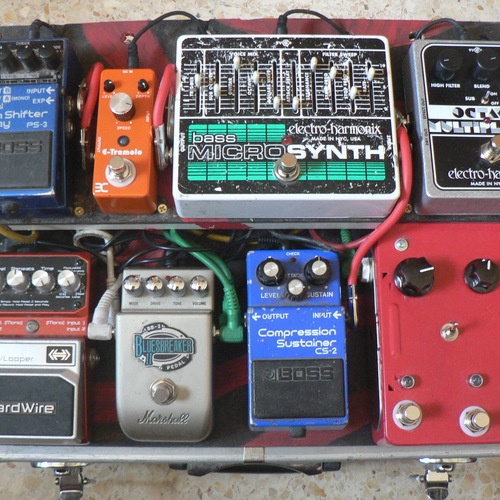
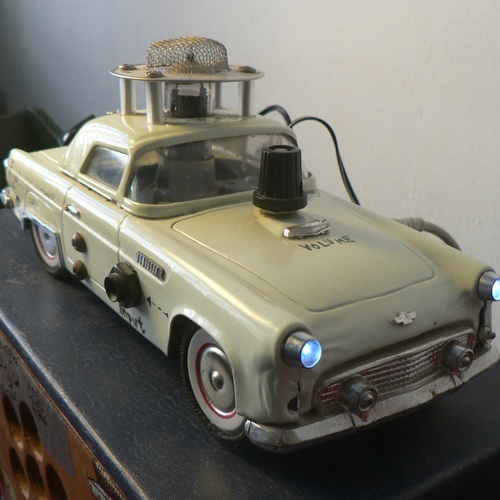
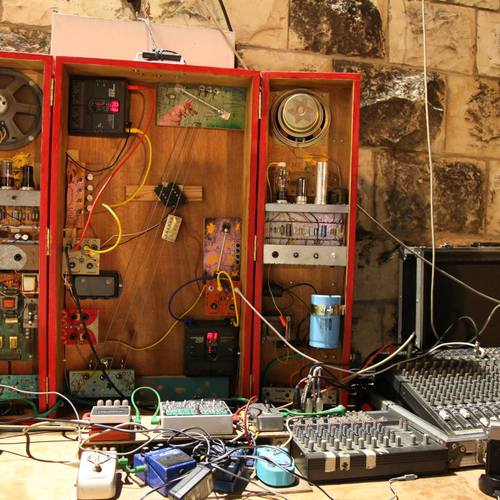
Top artists 2
The artists engels has added the most gear to.

