
kugupu's Reviews
10 reviews Back to kugupu's Equipboard

1294
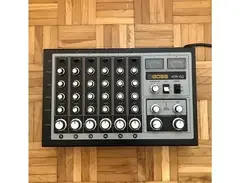
Love this Roland/Boss vintage mixer
This is a very rare and cool looking 6-channel vintage mixer (build in the late 70’s in Japan) with level, treble, bass, effect level, pan and 3-stage input attenuator per channel. In the master section you will find the master and the effect return controls for the left and right channels. Also the monitor output control, the switch for low cut filter on/off and power on/off and, not to forget, these two coll looking backlid VU-meters are there. It is build like a tank as many gear off these old times. The size is 19" x 3,7" x 10,8" and has a weight of aprox. 4,7kg. I used it a lot for summing drum machines, samplers and synths with the benefit to overdrive it, to get the warm characteristics and distortion out of this wonderful piece of gear..."
1294
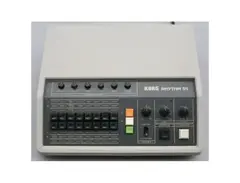
Exploring the vintage charm and unique features of a classic analog rhythm box
The Korg Rhythm 55 (KR-55) is a non programmable analog rhythm box from 1979. The KR-55 and its little brother KR-33 were the successors of the Korg Minipops series. Same knobs as on the MS/PS-series. The sound of the hi hats is more complex - similar to those on the Roland TR-808/606.
The KR-55 has some special features: a TRIG OUT jack including several triggering modes, SHUFFLE function and volume faders for the most drum sounds.
The rhythms are not mixable like on earlier Korg rhythm boxes (Minipops series). TEMPO and VOLUME controls. It was used by Jean-Michel Jarre (Magnetic Fields) and Depeche Mode (Speak and Spell) among others. It has a very characteristic sound - it sounds fantastic!
1294
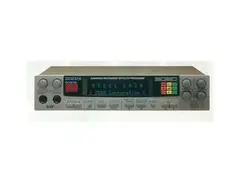
Zoom 9030
What seems to set the 9030 apart from the many other DSPs in this class that is the friendly user interface. Granted, if you don't intend to do much editing of effects programs, most DSPs are pretty simple to use; but you won't find a DSP that's any easier to play with than the 9030. Most of this ease is the result of bringing a visual version of the effects chain to the front panel (with the nine module LEDs) and adding the four "editing" knobs to the panel. Our hats are off to Zoom for bringing clarity and directness to an area of audio technology that too often assumes the user has all day to read a manual and all night to push buttons.
-s.webp?v=1784333654)
1294
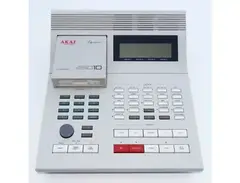
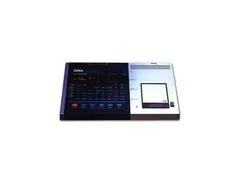
Akai ASQ10
Akai's first desktop sequencer was the ASQ10 and it was amazing. Up to 99 sequences, 99 tracks, 60,000-note capacity, 3.5" built-in disk drive and sophisticated real-time or step recording and programming. Overdubbing, punch in/out, track soloing and a big LCD data screen. Extensive edit-ability, recording features and MIDI implementation make the ASQ10 one of the best stand-alone MIDI sequencers around. (1986/7)
1294
Korg SQD-1
The SQD-1 is a classic and easy to use stand-alone sequencer. It has 15,000-note capacity and 2 tracks. Your song is created by bouncing down between these two tracks as you go. Real-time and step recording is available as well as pretty in-depth and precise editing of events. It has a built-in 2.8" disk drive that can store up to 30,000 notes of data. (1986)
1294
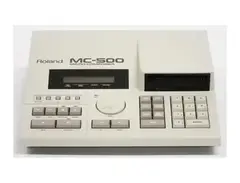
Roland MC-500 stand-alone sequencer and midi recorder from the 80s
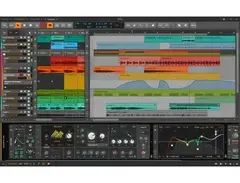
MC-500 (MicroComposer) was released by Roland in 1986 and it was one of the first affordable hardware sequencers at that time. It has been used by many 80s artists and most notable by Detroit Techno pioneer Juan Atkins who even named his famous Model-500 project on his Technoplex label inspired by this machine. It was one of the best and reigning stand-alone sequencer and midi recorders around. There's 4-track recording in real or step time and 16 midi channel multitimbrality, a dedicated rhythm track, a built-in 3.5" disk drive (that you can now replace with HxC SD/USD floppy emulator) with 100,000 note capacity and a large LCD screen. Final operating systems including the newer mkII version can be loaded via the disk drive. Editing is intense and precise. The sequencer has 30,000 note capacity, track merging, microscopic editing, quantization and it's relatively simple to use. In 1988 Roland released MC-500mkII that was equipped with Turbo software. Now there are 8 tracks of recording, 100,000 note capacity, real-time track muting and more. Like "in box" DAW it may not have pretty hi-res screen displays and graphical editing, but sophisticated hardware sequencers, such as Roland MC series, are capable of just about anything you could possibly want to do in the context of music. They also have the advantage that they become extremely fast to use; indeed, many MC500 users can program at amazing speeds, because performing any particular operation always comes down to a sequence of key-strokes which the user unconsciously gets to know after a while (inevitably somewhat faster then aiming a mouse).