You need to sign in or sign up before continuing.

nickgrooves's Reviews
67 reviews Back to nickgrooves's Equipboard

2154
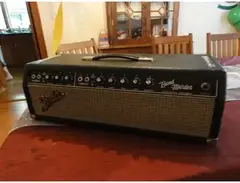
Pure clean blackface tone
Incredibly rich, pure blackface tone. I didn't fully appreciate it when I was younger. Now that I've grown as a player - both in amp knowledge and guitar skill - it really shines.
2154
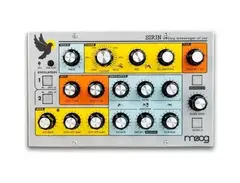
Lots of enhancements over MiniTaur
I've heard some folks saying the Sirin is basically an overpriced Minitaur. This is not true. It's fundamentally different with enhanced filters (six steps instead of four) and expanded range. For those thinking it doesn't go "as low" as the Minitaur, technically this is true however the Sirin starts at 20 Hz (the beginning of audible sound). In other words, you aren't missing anything ;)
2154
Great hammer weight but not good for Classical
Let's be clear. Keyboards are two things: a keybed and a computer. "Controllers" are mostly keybed, while "workstations" are both and tend to be computer-centric. This board has a bit of both though it seems to function primarily as a controller. It's no surprise therefore that everyone keeps talking about the keybed action. In fact, it's why I bought mine. I've always wanted a true, weighted keyboard and have played many which let me down - and always because they weren't quite heavy enough. This one is a little too heavy. Try playing anything Classical such as a Bach invention or a fast repetition of the same note and you'll see what I mean. The response time (think "bounce back") is very slow. That having been said, it does feel great and I presume I'll get used to it over time. If you're thinking it's too heavy because I'm not used to acoustic pianos, let me set the record straight. I'm classically trained and have been playing on acoustic pianos since age 4 (over 30 years ... I won't say how much over LOL!). Not all acoustic pianos feel the same. The upright in my studio has a different keybed weight than my Steinway. This one is simply "heavy" and has a slower response than your average Steinway or Yamaha grand. It's not ideal for all players, but it makes a great studio controller.
2154
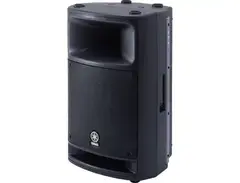
Sound great, road tested.
Not really meant to be studio monitors, but they deliver powerful bass and clear midrange. I have used two as PA mains for gigs, but most of the time I use one as my keyboard monitor. I run the Hammond drawbar organ (which has INSANE bass, for those who don't know) and my synths all through my little mixer into this powered monitor and it handles everything just fine! Never any crackle or distortion of any kind. Pretty amazing since I've had monitors crackle under my organ at some of the "finest" music venues in the country. Not when I'm using the MSR-400. Crystal clear tone. The only drawback: they are kinda heavy!
2154
Great Little Console with USB
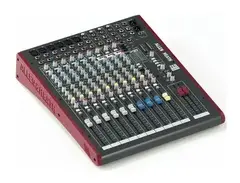
Used on many a live gig, never fails. Great job passing audio without coloring. If you want FX, it has great quality 'verbs and such. USB out makes live recording extremely easy. No interface required. More and more common today, but when it was released ... not so much. Great workhorse and not too heavy.
-s.webp?v=1783781955)
2154
Best. Synth. Ever.
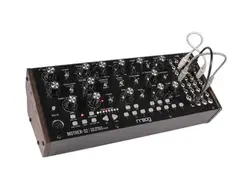
If you're reading this, you probably already know what it is and what it can do. So rather than review the features, I'll explain why I love it. I was classically trained on piano, and play mostly Jazz / Rock keys and electric guitar. I play with my hands. I step on stompboxes, work the wah, tweak knobs. I'm a knob tweaker. Scrolling through endless presets is not my style. With my Voyager, and all its glorious knobs, I feel like I am really connecting with the instrument not only on a tactile sense but a deeper, creative sense. I can physically adjust every setting by turning and flipping instead of scrolling or swiping, etc. The only thing that could possibly make this any better is if it were a polyphonic. But there are three oscillators, so creating intervals is easily done! And if you like presets, there are some great ones.
2154
Awesome sauce
Single oscillator, LFO, ladder filter, and much more. Well built, too. Great tone.
2154
Closest You Can Get
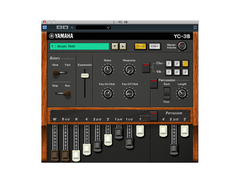
I have a Hammond drawbar organ, and play it live exclusively. In the studio, still prefer the real deal but many artist-producer-engineers insist on MIDI keys. Why? Well, unlike a live WAV performance, they can edit everything including changing the tone (drawbar settings) as they change their minds. So, I have used this quite a few times in various studios over the years. It always sounds great. Honestly, once the record is mixed and mastered, I sometimes forget which tracks were Hammond (WAV) and which were YC-3B. It can be hard to tell them apart. Definitely the best organ emulator plugin that I've seen.
2154
Gig Tested, Audience Approved.
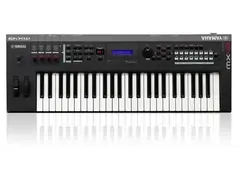
Grabbed a blue one, love it. Used on a gig where we did a Pink Floyd tune, and I had zero issues replicating the white noise generator complete with filter sweeps. I have a Minimøog Voyager and a Møog Mother 32 euro rack, and I approve the synth modeling sounds on this board. Of course they'll never hold a candle to the Minimoog, but they do a heck of a great job! And have many sounds the Møog boards don't. Folks, this is 1,000 MOTIF sounds with tweak knobs right on the face. What's not to love? It feels like the typical Fatar key bed, which is fine, but most importantly it IS touch sensitive. I was able to play very expressive piano passages easily. I saw one review online where a guy complained the keys are not the same width as acoustic piano keys. He said he had difficulty playing classical passages. Well, I am a classically trained pianist and I have had zero issues. Octaves, sixths, whatever ... easy to play. My hands are large (can reach an 11th on acoustic keys) and I have no issues fitting my fat fingers between the black keys on this board. Best part? If you prefer a different key bed? Hook this up as a slave soundbank via MIDI and you're golden. It's not a toy. It might feel like one, because it's so ridiculously lightweight, but it's definitely a pro board. And the price ... geez. 5 Stars.

2154
Um, it's ProTools
Yes, it's true that most studios keep older versions of PT on backup systems, and for whatever reason certain engineers will prefer certain vintages. I suspect this is because the layout and overall user experience changes slightly from version to version. This is my first version, so I'm using this latest incarnation and loving it. After being in so many studios over the decades and watching engineers work their magic, it's great to finally have my own system. Running on Windows 10 without issues knock on wood
2154
Version 8 lives up to claims
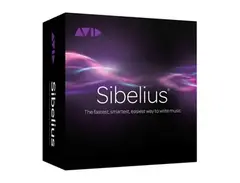
I've been using Sibelius since version 1.0, when it was lightyears ahead of the competition. Now, everyone else has caught up quite a bit to the point where Finale is arguably equal. But in my opinion, the basic underlying difference is what makes Sibelius the best notation software of all time. Finale and other programs are (or at least, were) graphics programs. Drag-and-drop type stuff. Sibelius was built with the mentality of a word processor. A lot of my peers like to "play" their notation with MIDI controllers, but I just type mine in with the keyboard. Super fast, super easy and logical. Over the years, I upgraded very few times: v1 > v3 > v7 > v8. The reason I jumped up to level 8 was because it's the last upgrade before the "subscription" changeover (of which I'm not a fan). I have to say, huge step up from v7. I still have v7 on my home desktop, but the UI / look and feel is so different, I find myself going out of my way to drive back to the studio in the evenings just to use v8 on my studio desktop because I prefer it more and more to the v7 layout.
2154
21st Century Fuzz
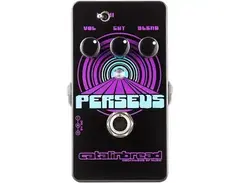
Solid 8-bit Nintendo NES setting. Decent "Money For Nothing" setting. But with your knobs in the right place, a truly bad-@ss modern fuzz that leaves no prisoners. Sounds best (in my experience) with clean tone, single-coil pup. This pedal adds an octave (or two) below the note you're playing, but it's very sensitive so if an overtone or subtle harmonic comes out from your pickup this effect will jump your "note" up an octave. Hard to describe but think of it as a slightly uncontrolled pitch-shifter / octave pedal / fuzz all in one. At first I thought it was sensitive to pick attack, but after really messing with it I discovered it's sensitive to overtones not dynamics. However, it does not sustain much. Slight signal volume drop causes the effect to drop out to super low octave "noise" (that fuzz "noise" you're hearing is actually really low octave downshifting). When your incoming tone is overdriven or distorted you get more sustain from Perseus. However, the outgoing tone sounds pretty much the same. Hard for me to discern the difference between "clean" or "distorted" tone going into the pedal. Hope this helps!
2154
Not worth it ... so many better options
Yamaha makes some amazing instruments, particularly pianos. But when it comes to their student-line acoustic guitars, you can get SO much more bang for your buck with Canadian brands like Seagull, and Alvarez guitars. I've never owned a Yamaha acoustic guitar but I have taught MANY students over the last 12 years who had these as starters, and they always disappoint. Trust me ... shop around.

41013
I love seagulls, great bang for buck... never played an alvarez I liked... the 70s Yamaha acoustics are nice though, really nice
2154
Oh man, there are definitely some horrible super low end Alvarez but their middle line is so cheap. I got an excellent acoustic-electric Alvarez, brand new, for under $200 at a local shop that was trying to move product so, maybe elsewhere it might run as high as $300? but it sounds like a $600-700 guitar. I've played some (not many, but some) Larivee and Taylor acoustics that didn't hold a candle. Great tones, perfect for stage gigs.
2154
Perfect for the beach, students, kids... takes a beating and stays in tune.
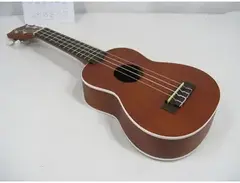
This thing has bounced around the trunk of my car, back seat, all sorts of weather, and my 2-year old toddler has been abusing it for about two years ... still works like brand new AND the finish has held up. Not a single scratch. I don't know how it's possible because it does NOT seem to have any lacquer coating or if it does, very thin ... maybe the wood is some kind of weird composite wood I don't know. All I know is that it LOOKS GREAT and SOUNDS GREAT and wasn't crazy expensive ($60?)
41013
good to know... I was thinking of getting one of these for my boy when he turn 2 this winter!
2154
Excellent! He will love it. Probably more durable than the plastic kind sold at Wal-Mart(?).
2154
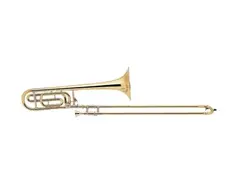
Excellent tone and playability.
I have no issues with this horn. It is one of the finest trombones I've ever played, and in the right hands, sounds equally as good alongside Shires and other more expensive brands.
2154
High quality rosin, great for cello.
Purchased when I was playing cello for a brief stint. Worked very well. Recommended by a local [orchestral strings] luthier, FWIW.
2154
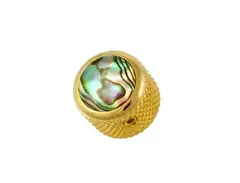
Fancy knobs for fancy guitars.
Q-Parts makes excellent knobs. They have a lot of variety, and they are easy to install on any volume or tone potentiometer with the Allen wrench (included). If you wanna trick out your guitar, check out Q-Parts.
2154
Haha! Thanks :)
2154
A lot of young players are surprised to learn that you can customize your guitar, and that it's OK to swap out factory parts like knobs and bridges ... and pickups and even the neck if you want.
2154
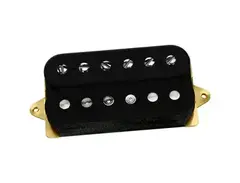
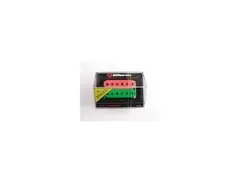
Great for that Eric Johnson blues rock tone. Helps make your overtones shine.
Regarding the F-spacing, from DiMarzio's website: "All of our full-size humbuckers except the X2N® and D Activator-X™ are available in two polepiece spacings. F-spacing refers to the wider of the two spacings. For proper string alignment and balanced output, F-spaced humbuckers should be used in the bridge position on all guitars with string spacing at the bridge of 2.1" (53 mm) or greater. On these guitars, if the nut width is 1-11/16” (43 mm) or greater, F-spaced pickups can be used in the neck position as well."
2154
Love the tone, one of my favorite pickups. Excellent for rock!
From DiMarzio's website: "All of our full-size humbuckers except the X2N® and D Activator-X™ are available in two polepiece spacings. F-spacing refers to the wider of the two spacings. For proper string alignment and balanced output, F-spaced humbuckers should be used in the bridge position on all guitars with string spacing at the bridge of 2.1" (53 mm) or greater. On these guitars, if the nut width is 1-11/16” (43 mm) or greater, F-spaced pickups can be used in the neck position as well."
2154
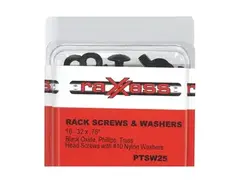
Hard to mess up screws and washers. What can I say, these work as expected.
I've had them in my rack gear for a few years now, and none have broken. Five stars! haha
2154
No idea. Never looked for another brand. My rack came with a box of these, and I've been satisfied using them.