.jpg?v=1781625107)
Source Direct
UK drum n bass
Source Direct's Gear


At the 8:26 mark in this 1996 documentary for Dutch TV, you can see an S3000 sitting in the rack behind 'em.
Further details re: how they used the S3000 available courtesy of Youtuber Groovin in G
Find it on:


At 8:26 in this 1996 documentary for Dutch TV, you can see an Emu Orbit sitting in the rack of the home studio these two used. You can make out the word "Orbit" in large print on the left hand side of the unit, and the knobs and switches also line up with the layout of the original (first run) Orbit 9090 units.
It might seem shocking that these experts of sampled sounds would own an item that is so tacky by today's standards, but sampler ROM space was really limited back then, and the Orbit contained a ton of the type of pad sounds popular in jungle/drum'n'bass production at the time. Emu was also a very respected brand at the time (still is, RIP).
Find it on:

Here at the 8:40 mark we see Steinberg Cubase, the original MIDI-only version, running on an Atari ST in Source Direct's home studio.
Find it on:


In this July, 2014 interview for The Quietus, Source Direct confirm the Atari 1040 ST was their sequencing computer of choice in the early days.
Q: In terms of the early production process, what were you using back then?
JB: I was on an Atari 1040ST originally. Which to this day is the only computer that came out of production with a MIDI port – MIDI in, MIDI out. After all this time, you still have to get an external MIDI port. [laughs]
You can also see their ST perched just above their midi controller, running Cubase, at the 8:50 mark here.
The 1040 ST was very popular in 90s electronic music production due to its relative affordability (especially second-hand after Atari stopped making home computers) and for its rock-solid MIDI timing. The Atari ST line even shipped with MIDI ports built directly into the computer itself (as mentioned in the quote above), and (crucially) the Atari ST operating system executed one task at a time, rather than rapidly switching between many tasks to give the illusion they were running simultaneously… which meant that when you asked for a MIDI event in an exact sequence at an exact time, there was a very good chance you got exactly that, since there weren’t other system tasks introducing tiny, unpredictable delays. Modern operating systems (Windows, macOS, Linux) and DAWs have finally caught up to -- and surpassed -- the Atari ST in terms of rock-solid MIDI timing, but (to the best of my knowledge) the Atari ST running Cubase or similar sequencing software remained the gold standard for ultra-tight, reliable MIDI timing well into the 2000s.
Find it on:

In this 2024 video by Youtuber Groovin in G, he outlines the samplers favored by Source Direct in the 1990s (@1:40 mark). Among those named is the Emulator IV rack sampler, which (according to the evidence in the video) the duo used more for sampling from vinyl and sound quality than for its timing (the duo would apparently transfer the EMU-created samples to their Akai for sequencing, once they had them sounding right). The Emulator rack samplers of the time were percieved as a bit lax in their timing feel compared to the surgical precision of the Akai S series... but they had more synth-like tone shaping capabilities and great overall sound quality. Even much later rack samplers like the first of the Yamaha A3000 series were seen as "loose" in their timing compared to the much older Akai S series.
Goovin in G cites quotes from a 1990s Future Music interview (he holds up the issue and shows a screenshot of the quote re: their 3 main samplers), so his research checks out.
Also, you can briefly see the EIV occupying the top rack in the closing seconds of this 1996 documentary for Dutch TV (@8:55).
Note: the improved/expanded Emu E4XT model didn't ship until years after this documentary was shot, so it must be an original EIV model.
Find it on:

In a YouTube comment from 8 years ago (currently the top comment in the linked video), the members of Source Direct detailed their sub-bass creation process. Responding from their official YouTube account, they state:
I have just read all you folks arguing about where and how the SNAKE STYLE bassline was created… I’m gonna tell y’all direct from the source to educate and inform. I sampled a TR808 Kick Drum with its parameters set to give me the longest sustain possible… sound sent through my desk and EQ... sampled on a ROLAND S-750 then sculptured into a decent chest “thudding” attack and slow decay with longer sustain option using the 750’s “forward & reverse” looping function. Then with a little sprinkle of Jimmy’s SOURCE DIRECT magic, layering, EQ and compression you create this warm buzzin sub bass line. Similar was used in THE CRANE & BLACK ROSE for anyone who hasn't heard those tracks yet. Give it a listen guys. Hope this clears things up for anyone still questioning… Thanks for all your support and positive feedback people, it means a great deal and energises me to get into the studio as much as possible and finish the many new tracks in the creation process at “TOP STATION”. Respect! SD
Source Direct also mentioned the Roland S-750 as one of their 3 main samplers in a 1990s Future Music Magazine interview detailed by Youtube Groovin' in G.
Find it on:

In this 1996 documentary for Dutch TV, Source Direct's Alesis M-EQ 230 rack unit can be seen in their studio at exactly 6:48 (link is queued to exact spot).
This was the only 1-unit rack EQ Alesis made prior to the date of this production (1996). Furthermore, you can make out the distinctive "ALESIS" lettering on the entire left-face of the unit at multiple points throughout the video.
Find it on:

In this 1996 documentary for Dutch TV, you can see Source Direct's cream-colored Oberheim Matrix 1000 rack synth @8:31. The first run of the Matrix 1000 was black, but the later units were a distinctive cream color like you see here. Back when these guys were producing, you could pick up a matrix 1000 for $100-$300 on eBay or you local classifieds all day... and many of us (like me) still waffled because of the lack of hands-on control. The Matrix 1000 was easily one of your most affordable options for getting a MIDI-capable analog (DCO) polysynth into your studio, in the days before software-based virtual analog synth emulations were really a thing... heck, even hardware VA was pretty new and exotic in 1996.
Find it on:
This is a community-built gear list for Source Direct.
- Find relevant music gear like Studio Equipment, Software Plugins and VSTs, Headphones, and other instruments and add it to Source Direct.
- The best places to look for gear usage are typically on the artist's social media, YouTube, live performance images, and interviews.
- To receive email updates when Source Direct is seen with new gear, follow the artist.
-
Added to Equipboard on by
 michael
GearIQ 43227
-
Updated
Discography
Album Credits
-
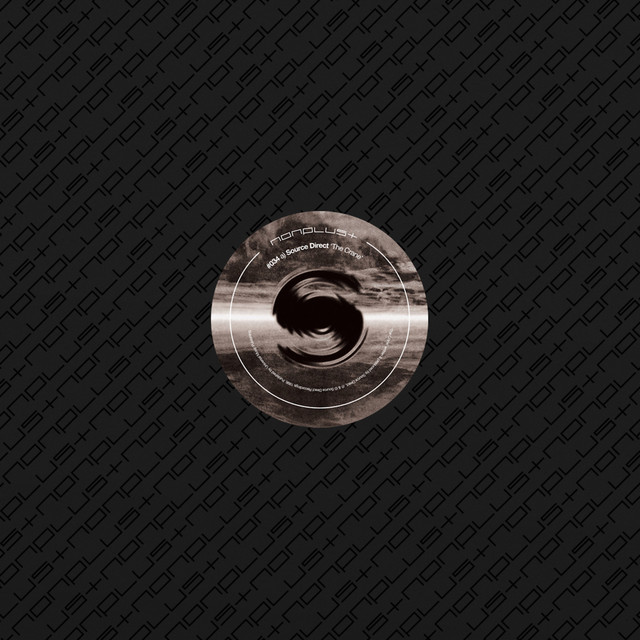
Source Direct · 2016
Producer -
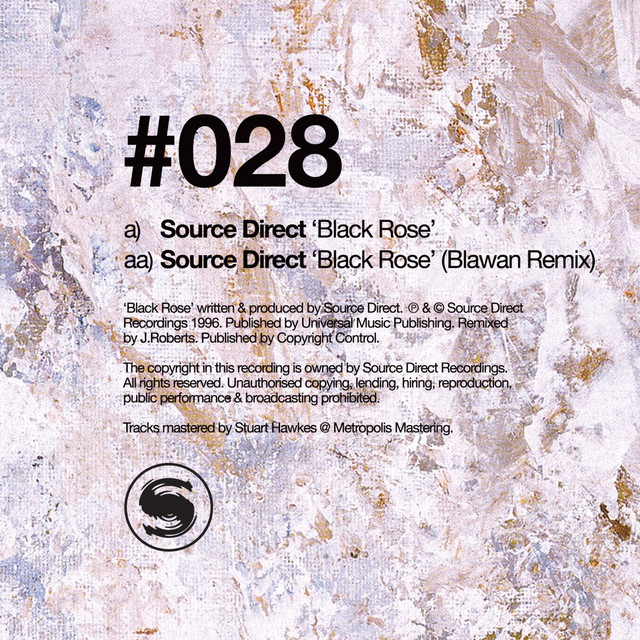
Source Direct · 2015
Producer -
Source Direct · 2015
Producer -

Source Direct · 2008
Producer -
Source Direct · 1999
Producer