
spaker's Reviews
43 reviews Back to spaker's Equipboard

462
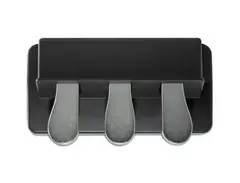
Three Pedals. Three 1/4 Outputs- Made for DIY MIDI
The SP-Triple pedal from M-Audio performs all the standard soft, sostenuto, and damping functions that your performance demands. Additionally, they add the versatility of 2 and 3 independent ¼” output cables. This means you can use the SP-Triple with any keyboard that has sustain and/or foot controller ¼” input jacks. The pedal is assignable to keyboard functions such as patch advance, sequencer stop/start and modulation effects—exactly as you require from a momentary foot controller.
462
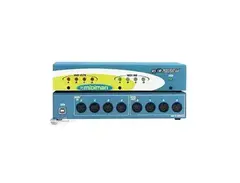
I believed tech support had halted, but was mistaken. Found updated S/W
Will report on functionality and use once I bring it back into the fold, now that I have found and installed the drivers I previously believed was non-existent. They can be located here: https://goo.gl/7CYMFH Drivers can be used for a host of Legacy M-Audio MIDI I/O devices.
The MIDISPORT USB MIDI Interface has the following features: • MIDISPORT 1x1: 1-In, 1-Out MIDI Interface (16x16 MIDI channels) • MIDISPORT 2x2: 2-In, 2-Out MIDI Interface (32x32 MIDI channels) • MIDISPORT 2x4: 2-In, 4-Out MIDI Interface (32x64 MIDI channels) • MIDISPORT 4x4: 4-In, 4-Out MIDI Interface (64x64 MIDI channels) • High-speed connection to USB-equipped PC or Apple computers • Windows XP, 2000, Me, and 98 —true Plug and Play compatible installation requires no IRQ, I/O Address or DMA channel setup • Macintosh installation requires OS 9.2.2 or higher, OMS required for 9.2.2 only • "MIDI Thru" push-button allows you to play your gear even when your computer is turned off, without having to disconnect cables (MIDISPORT 2x2 and 2x4 only) • MIDI-In and MIDI-Out activity indicators for each port • Self-powered—requires no external power supply
-s.webp?v=1785250704)
462
Works as it should. Sturdy A+ Gear Perfect 48 point Patchbay
Fully balanced and extremely durable, Samson's 48-point patch bay makes all your connections easy. Gone are the days of changing a patch bay's mode by taking it out of the rack, dismantling it and putting it back together in the desired mode! With the S-Patch Plus, all of this can be accomplished from the front panel with a flip of a switch! Simple, affordable and time-saving!
Samson S-Patch Plus 48-point patch bay Features: Fully balanced, extremely durable 48-Point patch bay Normal, Half-normal and Through Mode operation 3-way Front Panel Mode Switches 1/4" TRS Connectors 19" Rack Mount Chassis Tech Specs Analog/Digital Analog Number of Points 48 Format Rack Connector Types - Front 1/4" TRS Connector Types - Back 1/4" TRS Function Mode Normal, Half Normal, Pass through Height 1.73" Depth 2.62" Width 19" Weight 3.8 lbs Manufacturer Part Number SA-SPATCHPLUS
462
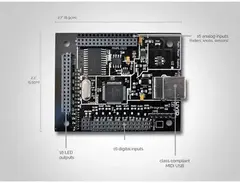
DIY Livid Brain Jr. MIDI Controller
Brain Jr. is a compact and affordable micro controller platform for connecting sensors, switches, LEDs, and more. A single USB connection powers Brain Jr. and provides MIDI communication to a PC / DAW. I have several of thee units, along with several "capes," that provide easy connection for knobs, buttons, encoders and faders to design and fabricate my own custom MIDI controllers, catered to my performance style. One of my creations is a simple box with six 1/4" input jacks- all for plugging in different pedals. Momentary pedals are used just like a momentary button. Expressive pedals are used just like a knob or fader. I have four momentary and two expression pedal jacks for use in live play. I can use them for loop control, Ableton device control or any function I may need to map a pedal for use when I need a "third hand!" Another Brain Jr. I used for control of a very specific device chain in Ableton. It has four endless encoders in a row. Under each encoder are two arcade style buttons: one-over-the-other. Two faders I set up horizontally and use as crossfaders within the device chain, and a set of six knobs and four shorter, 30mm faders are set up on the right side of the controller. A Third Brain Jr. controller I made uses touch fader strips I bought from an electronics online outlet. They work exactly like traditional faders except touching any point on the touch surface allows the parameter assigned to that touch strip to "jump" to the value closest to the point touched. In other words, a volume control could be at zero and if I touch the strip around the halfway point between the top and bottom of the strip, the volume level will "jump" to around 50% without visiting volumes 1-49% to arrive at the halfway point. Anything you can ting of involving faders, knobs, encoders, buttons, and even sensors can be wired to the Brain units to make your own MIDI controllers. Visit the website for a host more info than I could possibly provide with my limited scope of uses for my individual units.
462
I have THREE Livid Brain Jr. units. I have used one to make a simple looking, very powerful MIDI controller that hosts five 1/4" inputs, used for both momentary (like an on/off switch,) and expression (like a knob) pedals. These pedals are crucial for me using Ableton utilities like the Looper, running standard and VST sourced per channel and universal effects, and in certain instances, emulating a kick drum pedal like a drummer would use on his kick drum. The expression pedals are great for adjusting the wet/dry of powerful effects. And it goes without saying that using pedals frees up my hands to work the many other pieces of gear in the arsenal. THAT IS JUST ONE OF THE BRAIN JR. UNITS!!! The second Brain Jr. I made a MIDI controller out of controls a box with 8 push encoder knobs, 8 arcade style buttons, three push button switches, four toggle switches, and 8 regular knobs. I use custom MIDI maps for this controller based on what I am using within Ableton. Most of the time, they handle specific VSTs and effect chains.
462
Workhorse
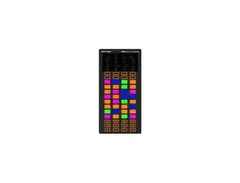
Say what you will about the brand. They never break. They are built like trucks and never fail. In conjunction with one or two of the other CMDs, using the plates to join the bottoms together and you have a piece of machinery that is built like a tank and performs like it was built for WAR.
462
Can't get enough of Michael Rucci Hand Made Gear
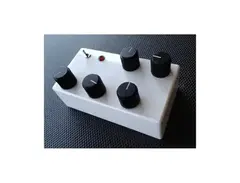
Perfect for the unique additions in my Ableton compositions in the studio. Playing Live, I never know what I am going to break out. The Rucci gear always has the ability to run through another piece of gear as a pseudo FX module, or to add another layer of mysterious noise in a complex tapestry of Electronic music. Hat's off to Michael! If there were only more like him.... or maybe not! If only Michael made ten new units a month, perhaps!
462
Endless uses in FX, EDM production, Filters and original Lo-Fi sound additives
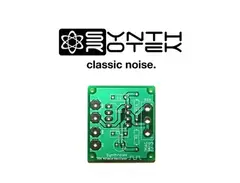
Synthrotek's 555 Timer Kit has endless usage! Use it as an LFO to modify existing noise making machines or use it as a stand alone tone generator or a clock. Adding this PCB to our PT2399 delay on pin 6 has been super awesome. (A MUST FOR CIRCUIT BENDERS) Many other ideas... Kit includes everything you need to make a variable pulse generator. Comes with 9V battery clip; use it stand alone or wire it up to your existing circuit.
462
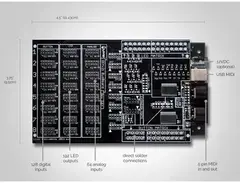
Most Advanced DIY MIDI Conroller Board there is.... by Livid Instruments
The Brain V2 is a USB-powered class-compliant MIDI device that converts digital and analog signals into MIDI output. With user-programmable MIDI output, this board can control up to 64 analog inputs, 128 Buttons, and 192 LEDs. Components are easily connected with ribbons cables and we’ve created the Omni board to allow dozens of layouts with a single circuit board. It can also be operated without a USB host, using an optional 5V power supply.
I have made several MIDI Controllers with the Brainv2, to include a 6 pedal (4 momentary, 2 expression) with crazy LED feedback, Arcade buttons, toggle switches, touch sensitive faders, traditional pots and faders.... you name it, the Brainv2 can hook in any type of input and with minimal programming- just GO.
I use Ableton. Sometimes, I like to use a momentary pedal as my kick for a more organic sound... you know, like an actual human using a kick drum. The expression pedals are insane for FX wet/ dry or volume controls on specific clips & tracks. The limit to the Brainv2 is your wiring skills, a little programming and creativity with making your own hardware.
462
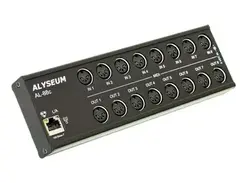
USB MIDI patch-bay with 8X8 MIDI ports
AL-88c offer the same performances and main functionalities as our flagship product : the AL-88. Far more powerful compared to the classical USB MIDI patch-bay with 8X8 MIDI ports.
Expandable by multiples of 2 and 8 MIDI I/O ports to create a unique patch-bay which also encompasses up to 32 virtual MIDI ports in every computer (WIN & MAC).
AL-88c allows you to connect 8 MIDI In and 8 MIDI Out ports, simply and in a flexible way to patch, remap, filter and merge MIDI flows on a fine channel basis.
The AL-88c was tested against numerous MAC & PC programs - including MIDIQUEST - for a perfect handling of the touchy SYS EX exchanges of past synthesizers.
The AL-88c offer the Top performances in terms of MIDI throughput and latency/jitter far below 1 mS. Full compatibility with real-time applications.
462
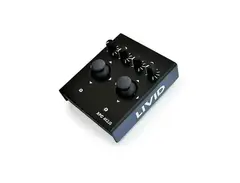
Additional control for CNTRL:R, Block, and OhmRGB with 4 knobs and 2 XY joysticks.
Livid Instruments CNTRL:R / OHM:RGB Add on Module for additional controls with your Livid Conroller. Useful for all sorts of Navigation / FX - XY variable controls, with 4 mappable o board knobs. Good addition to Livid Controllers for controlling specific FX / or to navigate and select in Ableton Clip Launch mode.
XPC Expansion Controllers are a perfect addition to your CNTRL:R, Block, or OhmRGB. These hand-held controllers plug right into your expansion jack and extend your realm of control. The XPC controllers are plug and play and don't require any special setup. Housed in a sleek black aluminum case, these handy modules come in a variety of configurations that adds more continuous control to your rig.
The XPC Controllers effortlessly connect to your CNTRL:R, Block, or OhmRGB through their 10 pin expansion ports with a single ribbon cable. The XPC series controllers allow you to add additional controls to your setup without having to add a bunch of extra gear and doesn’t take up additional USB ports. You can easily swap modules for different needs, too. Their compact size packs in a lot of control without taking up too much space in your studio or your bag. These controllers can also be used with our Builder series and can connect directly to the Brain.

462
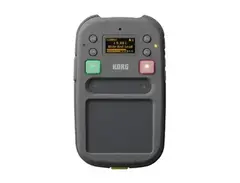
You can also use the unit as a conventional audio player; save your favorite songs on a card and use the mini kaoss pad 2S to apply effects for fun. No other equipment is required.
powered-up mini kaoss pad 2, the mini kaoss pad 2S ("S" for sampler) is a powerful DJ effect unit that fits in the palm of your hand. It includes the familiar KORG touchpad, which allows you to intuitively control 100 different effects, and a sampler function that makes it easy to load and trigger a variety of sounds. Whether you are playing or performing, you'll have more fun than ever with the powerful mini kaoss pad 2S.
462
Useful FX Tool with Live PA Electronic Music Setusps
The Korg kaossilator 2S synthesizer offers you a simple way to create cool and original electronic music in the palm of your hand. Loaded with 150 excellent synth and instrument sounds, plus powerful looping and arpeggiation options, the kaossilator 2S covers a broad range of musical styles. It's configurable X-Y pad lets you quickly tap out melodies, and thanks to sound-on-sound recording, you can build up complete songs wherever you go. Sweetwater electronic music artists are even more stoked about the kaossilator S2's export options, which let you save each recorded layer as a separate layer as its own WAV file or as a complete Ableton Live set.
462
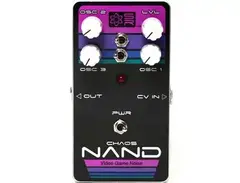
The 4093 Chaos NAND is a wicked cool noise generator with a wide range of sonic potential! Low pulsing drones, robotic chaos, high-pitched laser sounds - it's all here in this small ballistic package ready for your gig!
Features:
4 Knobs and 2 Switches for ultimate control! The Chaos Nand has 3 square wave oscillators: 1 main oscillator (OSC 3) and 2 sub-oscillators that can be turned on/off via the switch next their respective knob. The power switched can be engaged for hands-on knob tweaking or can be turned off allowing you to input control voltage via the 1/4î CV input.
CV Input allows for you to power your circuit off an external voltage source for tons of tones you never thought possible! Feed it ~+4V and let it starve or crank up the voltage to 12V for some serious output power! Use a step sequencer to vary the insanity!
CV Switch lets you toggle between CV and Power Supply voltage. On/Off Switch kills the power to the circuit allows for a sick dive bomb / laser sound as the circuit discharges its stored voltage.
1/4" Jacks
Requires a 2.1-2.5mm 9V center negative power supply of at least 50mA (not included). A Boss-style or one-spot adapter will work fine. Or use a 9V battery instead, just remove the back of the case and install like a standard guitar pedal.
462
Atari Punk is 8bit Fun from yesteryear that is a perfect jump off point to run through or as filter and beat FX to create even crazier sounds
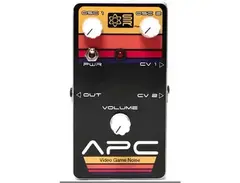
The APC is the ultimate video game noise unit. Originally designed by DIY electronics guru Forrest Mims III as the "Stepped Tone Generator", the Atari Punk Console is one of the most famous and recognizable Lo-Fi synth circuits ever. Using a single 556 dual timer IC with minimal part count, the Atari Punk Console circuit is a solid, time-tested noise generator capable of outrageous square wave madness!
462
Brilliant concept.... public not accepting
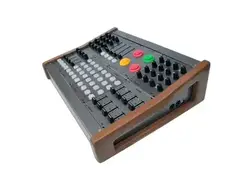
Livid Instruments is one of those companies everyone wishes they could work for. They area small operation in a hip town, are on the edge of the entertainment business- yet make quality products on the cutting edge of technology making MIDI controllers in a way that caters directly to their customers as much as possible. Sometimes, to a fault. Take the Livid Elements MIDI controller. Made with the same idea as Eurorack Modular Synths, in which users begin with an empty rack and fill it with universally fitting modules to suit their every musical whim in synthesis. Livid tried to recreate this idea with the modern MID controller, selling one or two tiered "blank" racks and a host of modules that would fit in, connect to power and a data line that fed MIDI and USB out of the case to act as one unified MIDI controller for programs like Ableton or Traktor. The modules had mixtures of different size faders, joysticks, many types and sizes of buttons, rotary and push encoders, external jacks for pedal input, LED feedback on most controls- and most modules were available with any combination of the options within a single section. A single tier case allowed for four different modules, while a dual tier case could have up to eight. The results were whatever the end user wished to have in a controller- and often the finished, custom "Elements" rack MIDI controllers looked chaotic at best, and messy at worst. Livid probably realized that even if a user wanted four huge arcade buttons, eight tiny faders and sixteen knobs- he didn't account for workflow use and mundane functions in every MIDI controller, like navigation and repetitive, boring tasks. The units were also sold, like Euroracks, a-la-carte, and were very expensive in the end, compared to the MIDI controller counterparts with similar function. Like all Livid products, the controllers were made by hand, in Texas, and extremely durable. Livid has a reputation of catering to each customer personally, and this time "Elements" went to far. The customer may think he knows what is best - but not everyone can design MIDI gear that looks good, makes sense and has intuitive play. The project flopped, and morphed into Livid selling the microcontroller that made all of the individual parts work together and export MIDI via USB- the "Brain" of Livid Elements, if you will. They names it "Brain" and continue to sell it as of Summer 2016. You can now buy "Brain" and make your own MIDI controller, but it is up to the user to supply (fabricate himself) the enclosure and all of the inputs like the faders, knobs, lights and buttons. There are still a lot of Elements units floating around that were designed and played by people and pros who really knew what they wanted out of a MIDI controller and designed themselves a useful auxiliary, if not primary controller. Personally, I use mine in conjunction with another Livid Controller designed by Richie Hawtin, the CNTRLR. My own Elements by livid offers me a dozen extra faders, six knobs, six push encoders, several large arcade buttons I use to control Ableton Looper (in the dark) and a 4x4 bank of LED back-lit rubber type buttons to manipulate Ableton drum racks within a Max for Live sequencer, in conjunction with my CNTRLR. My Livid Elements is an extremely useful auxiliary tool, as are all of my Livid products.
462
Most Powerful Ableton Drum Rack Tool EVER
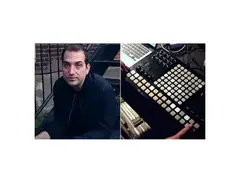
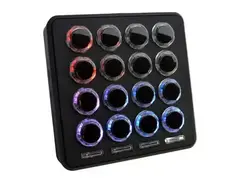
MIDIFIGHTER got me into Ableton, Finger drumming, and helped shape my style. The inventors, DJTECHTOOLS, are a class act company. I wish they would invent more tools for me to covet and perfect my skills with, because- to date, everything they release has made me better at what I do.
462
I need serious study with this one. Only have scratched the surface.
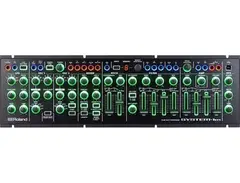
I don't even have a toe in the Eurorack Ocean, and I figured this System-1m and the Moog Mother 32 I got would give me a nice baptism. I know that I still need major help with it, but I've seen System-1m operated by a real pro and had to reattach my jaw from falling on the floor.