
sprucebringsteen's Reviews
15 reviews Back to sprucebringsteen's Equipboard

28717
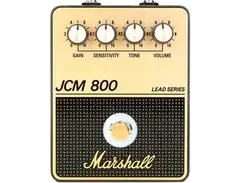
Don't believe the demos, try one and believe your ears
Years before this pedal, Marshall made The Guv'nor, arguably the first 'Marshall in a box' style distortion pedal, styled after the JCM800 amplifier of the time and its legendary crunch tones. The new JCM800 pedal is essentially their second go around at the same concept, using newer design philosophy and sharing very little with their vintage pedals. The misnomer that I've seen in multiple major reviews has been using this pedal as a standalone amp sim, when it's really optimized to run into the clean channel of a good tube amp and give it that JCM800 flavor, which I'd argue it does beautifully. The construction seems solid, the current $150 price is fair, and the sound they have into a Fender style amp makes it stand with any 'Marshall in a box' by a different name.
28717
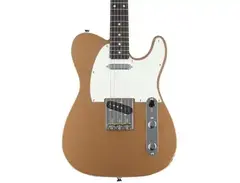
Maybe the best current Tele that says Fender on it.
This guitar blew me away with the usability of the 4 way switch, incredible finish that was always shifting in the sunlight, comfortable neck, and outstanding fretwork. Compared to USA and higher end MIM Teles, this guitar is the clear winner in terms of build quality.
28717
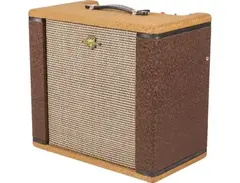
Unacceptable lack of design, care, or thought put behind any aspect of it.
Every single one of these amps I have crossed paths with has sounded incredibly brittle, and had some sort of ground hum from a design error with the PCB, which depending on the guitar, wall voltage of the room, and even the type of lights can get worse. For a cool looking tube amp these seem might be a great value, but the sound is nothing inspiring compared to other offerings.
28717
Curiously Strong Minty Freshness.
WIntergreen are the best flavor, but the peppermint ones sound better.
28717
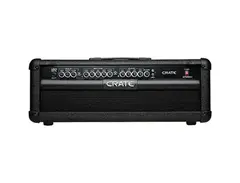
Terrible first amp, but nostalgic
I still have this amp. I'm not entirely sure why, but I've never brought myself to let it go. The cleans are surprisingly good, distortion is pure ice pick, but for the $30 I paid and the 4x12 and all, it's worth having the effects loop to put a preamp into. Sometimes if I need a crazy noise I'll plug it in and jounce it around just for the spring reverb, and amazingly it's always survived. This amp will be too loud for most of the people that end up with it, who are players that are just starting out, because it will likely be too loud and WILL sound too harsh, especially with 120 watts and lots of controls.
But for a beater amp with a real spring reverb tank, it's not bad at all.
Preferred Settings + Usage:
Grab a Metal-zone and recreate the greatest tones 13 year old you ever created.
28717
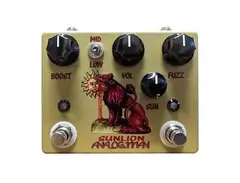
Two classic circuits, bundled perfectly
The Sun Lion was truly my bucket list pedal. I saved for years to get one, and it became a routine to check Reverb for them at under market prices. Eventually when I had the funds, I lowballed a guy with a nice high gain RCA, not expecting him to accept, but was terrified to see the pedal in my cart. It soon arrived on my porch at sat there for an hour at 95 degrees, before I got home. I then brought it in, plugged straight in, and was reminded it didn't like the heat. The Beano Boost side was familiar, as I had one before that I considered integral to my sound, especially with a Vox, but the Sun Face still surprises me to this day. The Fuzz side doesn't sound incredibly different from the red Dunlop Fuzz Face when the gain is maxed, but at lower settings with the bias knob, I discovered a new world of low gain fuzz, and great old school 'overdrive' sounds out of a fuzz pedal, and still think I've barely scratched the surface with the volume knob. Eric Johnson 'Violin' tones and early Black Sabbath riffage are all here in spades.
Preferred Settings + Usage:
Boost at 10 o'clock, Fuzz about the same with the bias set to taste depending on the pickups.
28717
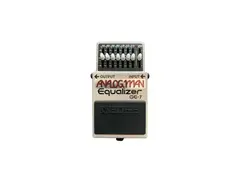
The ultimate solo boost.
If you have one of these pedals lying around or find an old one for a fair price, just get this mod done and you'll have a wonderful pedal you might not be able to live without. For the speed of the service and quality of work, I figured it was a fair value, but from what I know it's an easy mod to perform at home with the right parts. If anyone is struggling to be heard in a mix, any old EQ post drive can get the job done, but this one might just sound a little sweeter.
28717
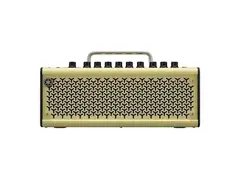
The practice amp solution
I like tubes. I have a box full of them. I flip tubes around looking for different sounds for fun. I know, it's scary. I also like the THR, and when I just need to sit down and play at a decent bedroom level it's exactly what I need and maybe more. The amount of volume it can produce for its size is staggering, high gain models are surprisingly good, and the reverbs sound awesome. One of my favorite things about the THR series is they always run in stereo, kinda like the Roland Jazz Chorus. It doesn't need pedals, but I have found it to be a more pleasant sounding amp with at least an EQ of some sort, especially if you want to use it as an acoustic amp. Some of the clean amp models can be surprisingly noisy if you A/B it with something like an Iridium, but the built in noise gate is one of the better ones, even if I'd rather not use it. Occasionally the phone connection can be inconsistent, and I've found it nearly impossible to connect it to my Mac, but other than that, the sheer portability, and endless tweakability of this amp seem to make it worth it. And if you for some reason don't like the way it sounds (skill issue), you can use it as a FRFR speaker or have the world's most expensive bluetooth speaker to play backing tracks. The THR10II is more than a glorified bluetooth speaker or a cheesy little amp, it's the just right for when you want to simplify your life knowing you can still endlessly tweak your sound.
Preferred Settings + Usage:
Note - run the bass almost all the way down, and make sure you're on the latest update, as the current version seems to have smoothed out the crackle the speakers have at high volume.

28717
My Favorite take on the Nashville drive... for now
The Nobels ODR-1 was the first pedal I really loved. I have found myself NEEDING one for the longest time, and I don't mean liking it more than other drives, but needing that sound to even play a gig comfortably or at least have it be an enjoyable experience for me. The Nobels had no single setting that was the best, it's a simple enough layout you can tweak the knobs and find a sound you like. I retired my first Nobels, and tried the mini, liked it, but found myself questioning the quality just as much as an old Nobels, and that's saying something. The weirdest thing about the mini, was that when I tapped on the knobs of the pedal it was microphonic, and it just felt generally cheap even though I had no problems with the sound. I tried the Wampler at a Guitar Center (ick), realized it did the thing, and ordered one by the time I got home. At 18V, it's not indistinguishable from the old Nobels, but Brian Wampler's subtle tweaks all seem to be careful and intentional, and make it just a fantastic take on the ODR-1 formula. I do find myself using more gain on the Belle, because it's quiet, smooth, and doesn't get boomy since you can roll back the bass. Into a tweed amp it just feels like a "more" button, into a black panel Fender it feels like a bit of the Tweed flavor. I even bought a second one, and my ODR-1 lives at home safe.
Preferred Settings + Usage:
I am always finding different settings on the Belle and tweaking it to the room, but it always sounds good.
28717
Oddly enough, my always on with digital rigs.
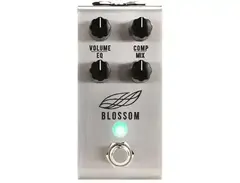
My first impression of the Blossom was it being the very first compressor I owned, as I got one in a multi pedal trade. I first used it as a boost into all my overdrives, replacing my TC Spark, but realized with my higher output guitars it would breakup very easily, in a satisfying way. One trick I learned was putting an EP Booster in front of the Blossom, for a long sustain dual compression approximation, that holds out notes in a very pleasant and natural sounding way. Where the Blossom does have a major shortcoming is the power jack, which will not stay plugged in if there is the slightest bit of pressure on the cable. In fact, when the board I have it on has gone down, it has been the Blossom losing power every single time, without fail. But it does a thing no other compressor I have tried does, so much I'd almost place it in the compander or colored boost camp on some settings. It brings a smoothness to digital rigs, and feels like a quality product, besides that darn power jack.
Preferred Settings + Usage:
Compression at 80%, clean blend at 40%. Tilt EQ and volume to taste. Try it after your overdrives and you might be surprised.
28717
If you play a Vox, it's a must try. Truly unique in a world of pedal clones.
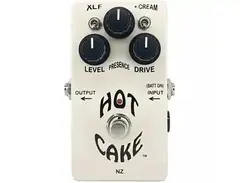
The Paul Crowther Hot Cake might not be a cheap pedal, but compared to pedals like the Klon Centaur, King of Tone, and others, you can always say it was built by the man himself, Paul Crowther who designed the circuit in the early 70's, and has built every Crowther pedal out of his home since. The Hot Cake has no Mojo components, no magic diodes, and no waiting list. Instead you get what feels like a New Zealand original, that copying would just feel wrong. The Hot Cake is a simple circuit, you could probably build your own. There are a few clones or tributes out there, that I would like to try myself, but the sound of the Hot Cake into a Vox leaves pretty much nothing to be desired, and just feels right to play. If you have the funds and are looking for that just right drive into your AC4, AC10, AC15, AC30, Matchless, Morgan, Victory, or Trainwreck you won't regret it.
Preferred Settings + Usage:
Level at 1 o'clock, Drive at 10 o'clock. Bypass design is weird, but doesn't have any phase issues or tone suck. Presence knob is just a mid lift that sounds at both extremes. Presence at 10 o'clock or lower depending on the amp.
28717
The overdrive that makes your other overdrives sound even better.
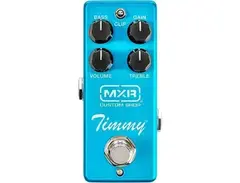
The MXR Timmy might not be a Paul Cochrane original, or even viewed as a serious contender by some for its size. The CSP027 is not only approved by the man who built the original Timmy, the pedal on which so many boutique designs are borrowed, but he argues it's indistinguishable from the V2. The clipping switch is hard to perceive making any difference, which is nothing new for a Timmy pedal. The MXR might also vary from the full size version in the value of the mini volume pot, which was noticeable enough Paul Cochrane offered a mod for them I can't seem to find much about. This pedal is still an excellent addition to any rig, even if you already have a few overdrive pedals, it might just stack well enough to justify a place on your board, or just stick around as a clean boost, a job it might even do better that a gasp Klon.
Preferred Settings + Usage:
Boosting my MXR Duke of Tone, or doing a surprisingly good impression of a Blues Driver at low gain.
28717
Punches above its weight and holds its own against larger boxes
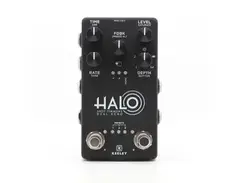
I picked up the Halo a couple months ago, after most of the hype had died down, to see if it was a suitable upgrade from my TC Electronic Flashback 2 I regretteed selling, with less bugs. For playing everything from church services to Floyd covers, I found the Flashback to sound just right, but found myself alternating between settings and needing to switch on the fly, something the TC was physically incapable of without a loud pop, which seems to be an inherent issue with its design. The Halo's preset banks and on the fly switching intrigued me, so I eventually found one for a good price used, and immediately integrated it into my rig. The stock Andy 1A preset is fun, but I found some of the stock dotted delays to be a little samey sounding and not what I was looking for. My favorite part of having presets is the little pitch warble when you switch delay times, which almost feels like an effect on its own, as it is both seamless and musical sounding. Where this pedal will really shine is customizing your own presets to have in addition to the 'Halo' mode, and in stereo, with a clean and slightly dirty amp. Where I will dock the Halo is the price point in a market saturated with great sounding multi mode delays, but it is a quality piece of kit by a company with top tier service. It can also be noisy on occasion, but that has proven to be user error or lack of isolated power at certain venues, so I can believe the noise floor is lower with the Halo Core.
Preferred Settings + Usage:
The way I settled on using it is a clean dotted eighth, which is a modified version of 2A, and my own Tape style slapback on 2B. The bucket brigade mode is also awesome, as I'm a big fan of the old Ibanez and Maxon boxes it can imitate well.
28717
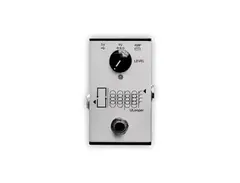
A fantastic product, burdened by a lack of tech support and uncertain updates
Pros:
180 minute looping time
Infinite layers
Adds a line out function to older desktop amps, without muting the onboard speaker
Small footprint
Low current draw, easy to power with a daisy chain
Adds no noticeable noise to your existing desktop setup
Cons:
Can't be used with a traditional amp, meaning this is a second looper at best.
Input jack is reserved for a long promised update, currently has no function
Only ships with a USB to lightning cable, leaving you on your own to find a USB-A to USB-B cable if your amp didn't include one.
Footswitch feels like it might not last, even compared to less expensive traditional loopers.
No way to delete layers, even with current updates
28717
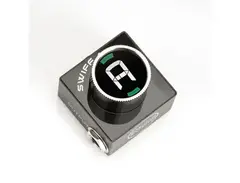
Solid for the price, but branding/design may be questionable.
Appears to be identical to the Rockstock Mini tuner I have been seeing on a lot more boards lately, and judging from the fact even the pictures are the same besides the branding, I would assume they are made in the same factory but exported under different names. The Rockstock tuner is (currently) listed for $49.95 on Amazon, but the Swiff seems to cost half as much or even less. I have not had any problems with the Swiff, but I would not be surprised if the manufacturing had been outsourced, and then this contractor decided to start selling them as their own product.
Update - the screen is falling apart after being carried in a padded pedalboard case.