
tel_nobody's Reviews
51 reviews Back to tel_nobody's Equipboard

3007
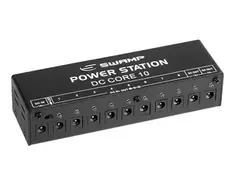
Swamp DC Core 1 power brick
The SWAMP DC Core 10 provides 10 individual points from which to power your entire guitar effects pedals board using a single 240V power source. With eight 9V, a single 12V and single 18V outlets, the DC Core 10 will cater for most types of pedals,giving the user enough options for most pedal board set ups. As each individual power outlet is filter isolated, risk of hum, or buzz is minimised, allowing clean power to flow to your pedals, and clean signal to reach your amp.
3007
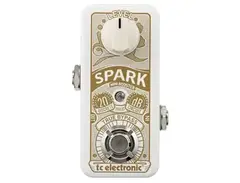
Spark Mini Booster. Mini is size... NOT in boosting.
This little pedal ROCKS! I have used EQ pedals, light and transparent overdrives and volume pedals in the past to give me that lift when I am soloing or emphasizing a phrase. Always struggling to get that lift. Rotated off this pedal meets guitar volume.. that is parity... (EQ pedal is half way, with opportunity to decrease volume). This is a boost. At 9 o'clock it is a completely suitable soloing and phrasing volume. At 12 0'clock I was clambering to turn it back down a touch... and it still winds around to 5 o'clock. Don't let size fool you... 20db. No false claims. The best feature is the unlatched footswitch. Stomp it on for the spotlight moments, press and hold to grab a moment then as your foot leaves, so does the boost.
3007
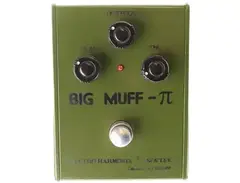
Green Russian Big Muff
Series 7c Big Muff made in Russia. Thicker tone than US muffs with plenty of sustain.
3007
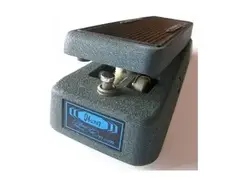
Phase Tone PT-1000
First series treadle controlled phaser from 1977 - 1978. Switch on the side to choose fast or slow, with the rocker treadle used to dial in how much speed is being applied to the setting. Effect is smooth and subtle.
3007
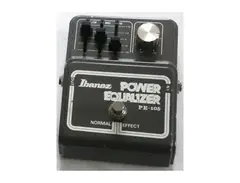
Ibanez Power EQ
Ibanez First Series EQ pedal from 1977 - 1978. Powered by 2 x 9v batteries. pedal is loud and makes a great boost pedal.

3007
Forgot I had it.
3007
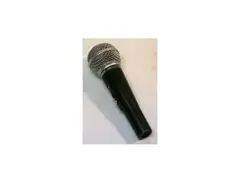
Shure Prologue 14L Microphone
Prologue 14L mics are low impedance dynamics. The wiring can accommodate either balanced or unbalanced use. The 14L is appreciably better than the rest of the range in subjective terms. Its frequency response reaches up to 13kHz, only 2kHz lower than the SM58, (which costs roughly four times as much) though it has a high frequency dip just above the presence peak that characterises all the dynamic mics in the Prologue range. This microphone is better suited to more serious vocal use and can be used to achieve results of a very high standard in the small studio. It also has a lockable on/off switch.
In conclusion, these mics offer good value for money. Retailing for only a fraction of the price of original Shure microphones, the only indication of reduction in quality is slight tonal loss at the top end, slight handling noise and a slightly coloured tonality due to the less than flat response curves. They seem very rugged and are easy to service. Definitely a range not to be overlooked if finances are tight. Useful for work with vocals, electric guitars and some mid-range percussion, but unsuitable for use with bass instruments where punch is required.
41031
do they still make these? I remember buying a couple of these as a teenager along with some radioshak branded Omni shures for 4 track recording and sampling purposes.... I just found 1 of these and 2 shack shures in a vox a week or two ago and am all excited just knowing I still own them!
3007
Manufacture stopped in 1997
3007
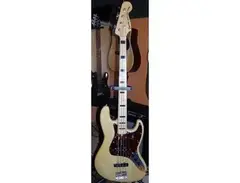
Emperador Electric Bass
A copy of a Fender Jazz Bass, the Emperador Electric range were made in Japan in the Kasuga and Kawai/ Teisco factories (the Emperador Acoustic range were made in the Hayashi/ Zenon plants) and were reported to be constructed between 1960 to 1980. Later models were made by Cort up to 1992. The pickups are rich and punchy and the machine heads are stable.
3007
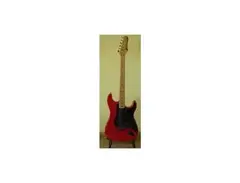
Cimar Strat Hardtail
Cimar was an Australian rebranding of guitars made in the Ibanez Hoshino Corp. Factories. They enabled retailers to buy "Ibanez" product without becoming full-fledged Ibanez dealers. They were sold through wholesalers with no franchise requirements.
3007
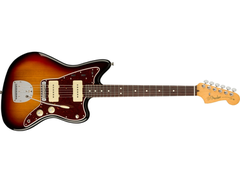
The guitar that found it's way.
Since first identifying Robert Smith of The Cure playing an Olympic White Jazzmaster in their earliest albums, I was fascinated by this instrument. To later see them wielded by Sonic Youth, Dinosaur Jr, My Bloody Valentine and Swervedriver, it seems that Leo Fender's ill fated jazz intentions had found their true home in the Alternative and Indie music scenes. Tonally quite thin, the Jazzmaster handles effects brilliantly, chiming with chorus or letting a fuzz clear its throat. The floating tremolo allows for ample movement up and down; from a few tones up, to slack on the fretboard slams, the guitar handles it all and bounces back in tune for the next round. The trem can even be locked into position if you want to disengage it for more tuning stability The most definable feature is the rhythm circuit. Running independently to the 3 way selector switch, it comes with it's own dedicated volume and tone sliders. This circuit can be used to simply toggle two settings in instrument tone, provide a rhythm at an attenuated volume or can serve as a killswitch when the volume is disengaged, bypassing even the noisiest of pedal combinations. Lightweight and comfortable to play sitting or standing, the Jazzmaster is a guitar to fall in love with.
3007
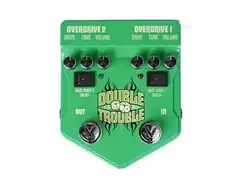
Great Pedal
The Double Trouble is two Tube Screamers in one casing. Plenty of gain (I have one side set to treble boosting lead channel) and sidles up to a big muff nicely. Modelled after the TS-9, it was good enough to retire my TS-10 from the board.
3007
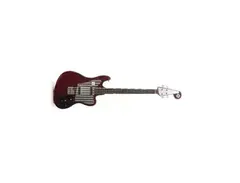
Well Possibly....
This lacks any markings identifying it as a Tiesco, but therefore lacks any markings proving it is NOT a Tiesco. Rebranding was popular at the height of this company's popularity.