
aceflibble's Reviews
6 reviews Back to aceflibble's Equipboard

271
Solid all-rounder
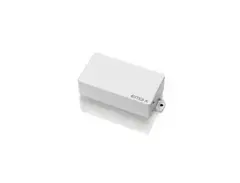
Not to be confused with the more common 60, the 60A uses an AlNiCo magnet (EMG do not actually specify what type of AlNiCo is in the 60A, but they mostly use AlNiCo 5 in their other pickups) instead of the ceramic magnet in the regular 60, to produce a slightly softer tone with a little less output and compression. The 'X' model uses a more modern preamp which is more power-efficient and can run with full headroom on 9v, similar to the older EMG models running on 18v.
The 60 and 60A are essentially 'minibuckers' in a full-size humbucker casing. The 60 is commonly found as the neck position counterpart to the popular EMG 81 and has a very bright and compressed tone, similar to a Firebird pickup. The 60A's softer attack and overall warmer tone make it sound more like a standard minibucker, similar to those found in a classic Les Paul Deluxe or the neck position of some Telecasters. Another way to think of it is as a halfway point between a humbucker and a P90 tone.
I use these in both the neck and bridge position of an ESP LTD EC-401 guitar, a Telecaster Deluxe, and a hybrid Tele-LP 'parts build'. The 60AX doesn't mask the individual tone of the guitars (contrary to the reputation active pickups have) and in each case simply sounds like a really good, versatile, jack-of-all-trades light humbucker. The output is almost the same as a Seymour Duncan Jazz/Custom 5 set I have in another guitar; higher output than a vintage PAF-style humbucker but lower than typical 'hot rod' pickups like a JB or Super Distortion. The tone balance is extremely even, with just the very slightest V-shape or 'scooped' feeling as the treble and bass come through just a tiny bit stronger than the mids. These pickups retain their slightly open and airy quality from clean through to mid gain, though of course once you start using very high gain then everything becomes more compressed; that's just the nature of high gain, with any pickup.
Tuning down to Drop C on a 24.75" scale guitar comes through sounding completely clear (even though I like very light strings, too), though I've not tested tuning lower than that. E Standard of course sounds faultless.
I've put these in guitars where I wanted a versatile sound but wanted the tone to be just a hint more modern than the Gibson BurstBucker #3 I favour in other guitars, but also not as high-output as really 'modern' humbuckers. If you want a specific tone such as mids-heavy, bass-heavy, very high output or very vintage, or any other specific tone, then the 60AX (or plain 60A) likely won't impress you very much. If you want a pickup you can depend on to do a standard rock gig one night, a goth metal gig the next night, and then maybe even do a little bit of clean jazz afterward, this is the pickup you want.

271
Best semi-custom necks around
I've tried these kinds of 'custom' parts from all the major brands: Warmoth, USACG, Guitarbuild, SimS Custom Shop, etc. Of them all, Musikraft's necks have been by far the best. Best-constructed, best-finished, best set up right out of the box, etc. They've also been the nicest company to deal with, by far the quickest to respond to questions. They're also by far the most reasonable when it comes to accommodating slight variations, such as different fretboard radius or neck profile sizes, which other companies charge extra for. My only complaint with Musikraft is that they have, over the last couple of years, started to remove some options they used to offer, and their guitar bodies never had that many options available to begin with. For this reason I buy my bodies elsewhere. When it comes to necks however, I now only go straight to Musikraft.
271
Top all-rounder
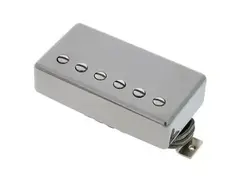
The Gibson Burstbucker PAF-style humbucker with asymmetrical coils and an AlNiCo II magnet. The #3 variation is the 'overwound' model. When installed as the 'stock' pickup in a guitar it comes wax potted; when sold separately it is not wax potted. Gibson mostly use these in a few Artist signature models as well as some Custom Shop models, though they have been used in a couple of production guitars and even two Epiphones.
I've had them in four guitars now—two Les Pauls, one Telecaster Delxue and one Telecaster Thinline—and they have become my 'default' pickup. If I either need a versatile tone or I simply don't know what tone I want, I reach for one of the guitars with a BurstBucker #3 in. Three of these guitars have the BurstBucker #3 at the bridge, where it is mostly intended for, and one uses it at the neck. In the bridge it is simply an extremely flexible humbucker. It produces more output than its specification suggests, especially clearer bass and more treble (due to the coils being mismatched). Side-by-side it roughly matches a Seymour Duncan JB in terms of plain volume, though of course the EQ balance is very different. Because it has more treble and bass than most PAF-style humbuckers, but less than very modern pickups, it can do high-gain and low tunings better than vintage-style pickups while also doing blues and country better than modern humbuckers.
Though a totally clean amp with the EQ set completely flat, the BurstBucker #3 has the tonal balance of a warm and thick P90, with slightly softer attack and less compression. With low gain it sounds similar to a minibucker as found in some Les Paul Deluxe guitars. Under medium gain you can't tell the difference between it and a standard rock humbucker like a SD Custom or DM PAF Pro. With high gain the EQ balance sounds like a halfway point between a DiMarzio Super Distortion and Tone Zone, but still with more restrained output. In the neck position with a fairly cranked mid-gain amp it does a fantastic Carlos Santana impression.
If you want the most bass, this is not the pickup for you. If you want the most treble, it's not for you. If you want the most mids or the least mids, it's not for you. If you want the highest or lowest output, it's not for you. If you want an all-rounder which sounds at home in any guitar and can be used for blues one night and heavy metal the next, get a BurstBucker #3.
-s.webp?v=1784646126)
271
Reliable backup
No matter what other amp I use, this HD147 is always behind it. When I inevitably get bored of an amp, or an amp breaks, this HD147 fills the gap until the next amp comes along. This is the one amp I keep coming back to, year after year. It's not very good at sounding like the amps it claims to model, but if you ignore the model names and simply go by what your ears hear, there is a large range of good tones in here. The JCM 2000 model, for example, sounds nothing like my actual Marshall JCM 2000, but it's still a nice rhythm tone in its own right. The more blues and country-style tones aren't very good and expose the dated processing in this amp, but all the fully clean tones and everything from standard rock gain upwards sound at least decent. Special mention has to go to Line 6's original tones which are not based on any specific amp, but were made simply by Line 6 trying to make a nice sound; in most cases, they succeeded. Their 'Insane' distortion tone is legendarily bad, but all their other 'originals' sound extremely good and cover a wide range of tones. Their original clean tones are especially good, mostly sounding like a hybrid of a Fender blackface/silverface and a Roland JC.
Most importantly, the HD147 is the single toughest and most practical amp I've owned or used. You have to really go out of your way to try to break it, and it has every kind of connection and function you could need in a general-purpose amplifier. In addition it has been well designed for live use. When using it with the FBV Shortboard floor controller, for example, activating the wah pedal automatically adds in a small volume boost, so it can be used for solos without needing to also adjust the volume separately. The whole front panel is also free to be adjusted on the fly, like any analogue amp's controls are, so if you decide you need a little more bass for one particular room or a little more treble or anything like that, you can dial in that adjustment exactly the same as you would with a regular amp.
The Vetta and Vetta II amps do offer more advanced processing but they also aren't as practical live; other modelling (or "profiling", as some brands market themselves) amps offer more accurate reproductions of popular valve amps, but those also typically are not as practical in terms of live use. And, other than rack-mounted units, most of them are not as tough, either. My personal HD147 has been subjected to rapid and extreme temperature changes, liquid spills, and being dropped on concrete, and other than a few scratches to the outer plastic is otherwise unharmed. The fact it is 15 years old, has never required a service and not a single pot crackles is quite outstanding.
These amps have been discontinued for a long time and never built up enough of a reputation (in fact, had their reputation dragged down by the similarly-named Spider 150HD) for them to retain much value, so you can buy these in good condition at a fairly low cost. My advice to anybody other than blues and country players is if you see one of these advertised at a price you can afford, check that it still works of course but buy it right away. This is one of those amps you likely won't record your #1 album with but it'll always be there either in your studio or as your backup head, always ready to go and able to fill in nearly any task you ask of it. It's not the very best tone you can get but it's so tough and so practical that it is an absolute must-have.
271
Good for low-gain tones at home
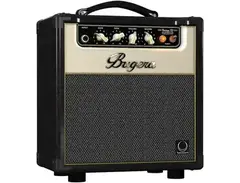
I bought this to have something quieter and simple to use at home, for when my larger amps were inappropriately loud but I didn't want to use headphones and modelling software. It fits that purpose. The tone is the most middle-of-the-road balance possible; neither 'American' nor 'British', or German, or anything else. It's totally in the middle of everything. The small speaker is extremely 'directional' and you need to be perfectly in line with it, ideally with it pointed straight at your head, or it sounds very muffled; do not expect this amp to fill the room with sound evenly because all of the treble is only projected directly forwards and nowhere else. The reverb also has limitations, as it distorts when pushed much beyond '4'. The power switching does work but as the speaker is so small and limited to begin with, and since the amp doesn't really get that crunchy when pushed, cutting the power mostly just results in a muddier volume drop; you may as well just set the master volume lower.
All that said, for low-gain basic clean(ish) tones at home with a hint of reverb at volumes that others in your house or building won't complain about, this works. It's functional, it's cheap, and the valve monitoring does seem to work correctly, easing maintenance. The tone is generic but that does mean it's flexible; the reverb sounds pretty good as long as you keep it below '4'. It's not a good amp per se, but it useful for quiet playing.
271
Shockingly good for the price.
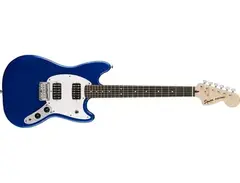
This guitar should not be as good as it is. It is mass produced using the cheapest hardware, electronics, and wood, yet it is acceptably well-crafted and doesn't really feel any worse in the hand than the more expensive Squier Mustangs and Jaguars. The large 'swimming pool' routing makes it versatile for modifying. You're not going to tour the world with these guitars, but for a beginner, someone who wants to give 24" short scale a try without investing a lot of money, or anyone who wants a cheap 'base' guitar to try out modifications on, this is a really good option.