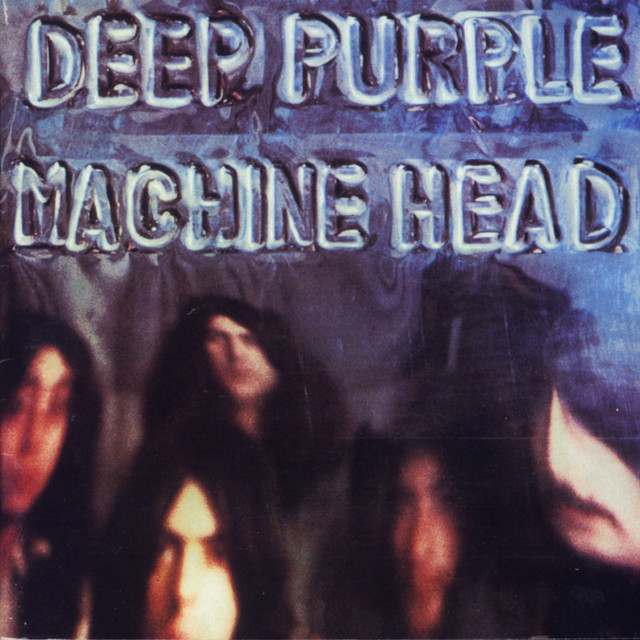
Deep Purple – Machine Head
The music gear and equipment used by the artists, producers, engineers, and more involved in the making of the 1972 album Machine Head.
Music from Machine Head
Artists on Machine Head

Gear Used On Machine Head
Explore the instruments, equipment, software, and production tools used in the making of Deep Purple – Machine Head (1972). Click more on each item to see exactly how it was used.

Ritchie Blackmore
Roles:
Effects Pedals used by Ritchie Blackmore on Machine Head

Sola Sound Tone Bender Professional MKII
''Blackmore used the Sola Sound Tone Bender pedal for recording and touring during his first couple of years in Deep Purple. You can hear this pedal throughout the first three Deep Purple albums. Sola Sound Professional MK II Tone Bender was first designed in 1964 and it was based on the Gibson Maestro Fuzz-Tone.''


Guitars used by Ritchie Blackmore on Machine Head

Fender Stratocaster (1971-1977)
Avg price: $505.70
Ritchie used this "Machine Head" Strat as his main guitar between early 1971 and early 1973. This axe was used at the Beatclub show (Sept 71) and the Machine Head recording session (Dec 71) until summer or autumn 1972. Then during a heavy showcase, this fine guitar was rather damaged by Ritchie at the headstock. Nevertheless, Ritchie played this guitar until early 1973. Than the axe was finally destroyed by Ritchie and was replaced by a newer 1972s sunburst Strat with a scalloped, lacquered fretboard. This guitar carries all specs of a standard 72s Fender Strat like a bullet truss-rod at the nut and 3-bold tilt-neck.


Jon Lord
Roles:
Amplifiers used by Jon Lord on Machine Head

Marshall Major Model 1967 200-watt head
Avg price: $4,600.00
In 1971 Deep Purple recorded his album "Machine Head" (edited in 1972). At some point, guitarist Ritchie Blackmore said he was to tired to record rhythm guitars, so Jon Lord decided to emulate it himself. For doing that, he conected Hammond organ to distorted Ritchie's amplifiers (Marshall Major at this time), and developed what he called "The Beast", one of his caracteristic sounds.