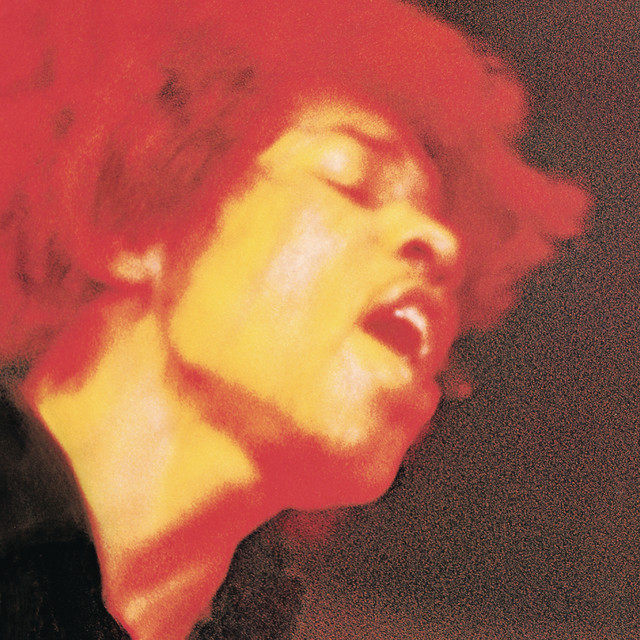
Jimi Hendrix – Electric Ladyland
The music gear and equipment used by the artists, producers, engineers, and more involved in the making of the 1968 album Electric Ladyland.
Music from Electric Ladyland
Artists on Electric Ladyland
Gear Used On Electric Ladyland
Explore the instruments, equipment, software, and production tools used in the making of Jimi Hendrix – Electric Ladyland (1968). Click more on each item to see exactly how it was used.

Jimi Hendrix
Roles:
Guitars used by Jimi Hendrix on Electric Ladyland

Gibson Custom Shop Jimi Hendrix "Love Drops" Flying V
Avg price: $9,103.86
According to the Metropolitan Museum of Art where the original was exposed:
*Though known for playing Fender Stratocasters, Jimi Hendrix played this Gibson Flying V extensively from 1967 to 1969. He probably used it on his 1967 BBC Radio 1 sessions and 1968’s Electric Ladyland, notably for his solo on “All Along the Watchtower.” Hendrix modified the nut and strap button and painted the instrument himself using nail polish. When Hendrix gave the guitar to Mick Cox of the Irish band Eire Apparent in 1969, Cox refinished it in black and removed the original design. In the 1990s, session musician Dave Brewis acquired the instrument and restored Hendrix’s original paint job.
Technical Description: Mahogany body and neck, rosewood fingerboard; 24¾ in. scale; black finish painted with psychedelic design, set neck with pearloid dot inlays; rounded arrow-shaped headstock with gold Gibson logo stamped on truss rod cover; two humbucking pickups, three-way selector switch, two volume controls and one tone control; nickel tune-o-matic bridge, Vibrola vibrato tailpiece, pickup covers, and Kluson tuners, black plastic knobs, large three-ply white & black plastic pickguard; original sunburst refinished in black, restored psychedelic paint job, nut and strap button modified for left-handed playing*
https://www.metmuseum.org/art/collection/search/754368
This guitar is also reffered to as the "Love Drops" Flying V because of the writing on the bottom right of the guitar.


-m.webp?v=1784991505)
Fender Mustang Electric Guitar
Avg price: $1,155.99
Used for the Olympic Studios sessions of Axis: Bold as Love and Electric Lady Land. It was auctioned via Bonhams on November 21, 2004, only to be reauctioned via Julien's on April 27, 2007
Bonhams
A Jimi Hendrix Daytona red Fender Mustang guitar,
1966, serial number 126288, with guitar case, with an affidavit from John Mitch Mitchell, who was formerly the drummer with Jimi Hendrix Experience that states the guitar was used by Jimi Hendrix at the Olympic Studio, London for the recording of "Alxis Bold as Love" and "Electric Lady Land" and was used by him on these two album.
The guitar is part of the L series, which were among the last Fenders made before the company was taken over by CBS and these style of guitars are regarded as some of the best guitars made by the company.
Julien's
1966 Red Fender Mustang, serial number 126288, solid maple neck and body, 22 fret rosewood fret board, double cutaway body, the nut has been flipped to accommodate the fact that the guitar has been
Pictures of the guitar can be found here, here, here and here.

Microphones used by Jimi Hendrix on Electric Ladyland

Avg price: $7,560.29
Used to mic Hendrix's guitar amp, as stated by recording engineer Eddie Kramer in this November 2005 Sound on Sound interview. Note that the first sentence of the following excerpt pertains to Electric Ladyland.
While Hendrix's amp was screened off in the studio and miked with Neumann U67s, Mitch Mitchell's kit was positioned on a riser within a roofed, open-sided booth to give it depth and miked with a combination of U67s and AKG C12s. (...) When asked about the techniques used to record Hendrix's guitar, Eddie Kramer's response is concise and to the point. "I'd stick a bloody mic in front of it and hope for the best," he jokes. "Nah, generally speaking it was either a 67 or [a Beyer] M160 or a combination of both, which I still use today. It might be slightly different, of course, but the basic principle's the same — a ribbon and a condenser, along with compression and EQ and reverb. All that stuff was always added during recording."


Avg price: $899.76
Used to mic Hendrix's guitar amp and for the vocals on Electric Ladyland, as stated by recording engineer Eddie Kramer in this November 2005 Sound on Sound interview.
When asked about the techniques used to record Hendrix's guitar, Eddie Kramer's response is concise and to the point. "I'd stick a bloody mic in front of it and hope for the best," he jokes. "Nah, generally speaking it was either a 67 or [a Beyer] M160 or a combination of both, which I still use today. It might be slightly different, of course, but the basic principle's the same — a ribbon and a condenser, along with compression and EQ and reverb. All that stuff was always added during recording." (...) Hendrix recorded all of his vocals for the album at the Record Plant, and as usual a Beyer M160 was the mic of choice while a three-sided screen provided him with the desired privacy. "He'd always face the other way," says Kramer. "He hated to be looked at. He was very shy about his vocals. The truth was, he had a great style and I loved his vocals, but he hated them. He was so embarrassed by them. 'Oh man, was that OK?' 'Yeah man, it's cool.' 'No, I've got to do another one.' 'OK.' Jimi was not a great vocalist in the classic sense, but his vocal style suited what he did to the nth degree. I mean, it was very emotional and very personal, and I can't think of anybody else doing what he did. He was eminently capable, and the singing was an integral part of what he was doing, because he would often take a guitar solo and sing the melody line in unison with that solo — which is an old jazz trick — and it was wonderful."


Effects Pedals used by Jimi Hendrix on Electric Ladyland

Avg price: $870.50
This detailed gear diagram of Jimi Hendrix 1969 "Woodstock" stage setup includes a Dallas Arbiter Fuzz Face.
Univibe & Rotary Effects Pedals

Avg price: $4,000.00
Vintage Guitar magazine created a "25 Most Valuable Effects" list and coming in at number 3 is the Univox Uni-Vibe pedal. "Vintage" writes in this article "If Hendrix touched it, you can bet it’s enshrined as effects legend. Created to replicate the sound of japanese radios picking up radio Moscow, the ’Vibe – manufactured for Univox by the Shin-Ei corporation of Japan – was really a four-stage phaser with four pairs of light bulbs and cells for a liquid, juicy tone that hooks plenty of players from the first moment they hear it, and which caught fire big-time in the late ’60s. To hear the original, check out Hendrix’s “Voodoo Chile,” “The Wind Cries Mary,” or his performance of the “Star Spangled Banner” at Woodstock.."