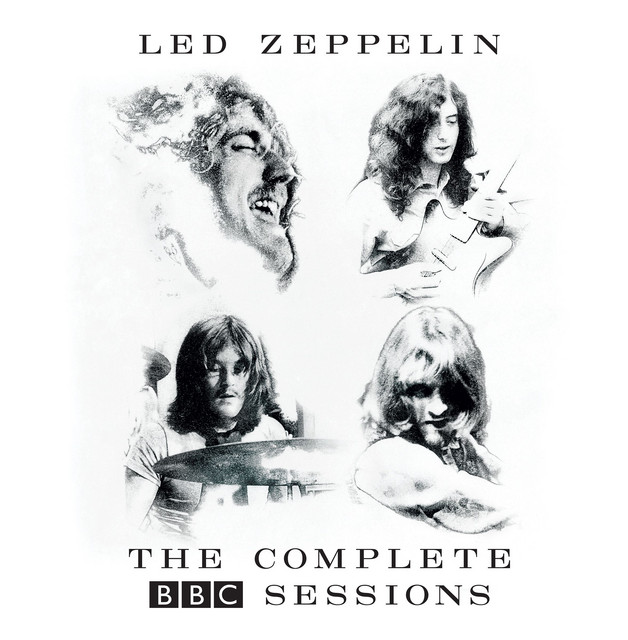
Led Zeppelin – The Complete BBC Sessions (Remastered)
The music gear and equipment used by the artists, producers, engineers, and more involved in the making of the 2016 album The Complete BBC Sessions (Remastered).
Music from The Complete BBC Sessions (Remastered)
Gear Used On The Complete BBC Sessions (Remastered)
Explore the instruments, equipment, software, and production tools used in the making of Led Zeppelin – The Complete BBC Sessions (Remastered) (2016). Click more on each item to see exactly how it was used.

Jimmy Page
Roles:
Guitars used by Jimmy Page on The Complete BBC Sessions (Remastered)

Avg price: $216.26
Jimmy Page can be see in this image with a Eko Ranger VI. According to Pro Guitar Shop, "This acoustic was used to record the rhythm track for Thank You at Morgan Sound Studios in 1969."


John Paul Jones
Roles:
Keyboards and Synthesizers used by John Paul Jones on The Complete BBC Sessions (Remastered)

Avg price: $3,100.00
In this photo, Jones's Hammond C-3 organ can be seen on stage during a Led Zeppelin concert. The Keyboards of Led Zeppelin & John Paul Jones website covers Jones's use of the Hammond C-3:
John Paul Jones often recorded with a Hammond C3, and it was a common instrument on many of their early tours. Led Zeppelin's most memorable organ track, "Thank You," was recorded in 1969 at Morgan Studios in London. On this song, Jones's beautiful organ parts are the main support during the verses. His style here reflects his many years playing organ in church as a boy. The organ is restrained, with no vibrato or distortion, and avoids sounding like a blues or jazz instrument. A tape delay, which echoes the organ track in the opposing speaker, creates an echo effect that enhances the "church" mood. At the same studio sessions, "Since I've Been Loving You" was recorded, but it was not released until Led Zeppelin III a year later.
The Hammond was a very common sight on Jones' right side of the stage from 1970 until 1975. The Hammond was always run through a Leslie speaker, which has become the traditional way to amplify a Hammond. The Leslie speaker contains an amplifier and "spinning speaker" system that gives the sound animation and energy. Unfortunately, the Leslie amp was only 45 watts -- certainly not enough to be heard clearly on the loud stages of Led Zeppelin. So, the band would put the Leslie offstage in the dressing room and place microphones near it to send sound to the mixer. This clever arrangement created problems on a few occasions! Jones recalls: "People used to go in to the dressing room and shout things over the microphones. It would come over the PA... (laughs)." By the 1977 tour though, Jones was regretting not taking the Hammond with him, but admitted that there were already too many keyboard instruments covering the stage. There just was not enough room for it.


