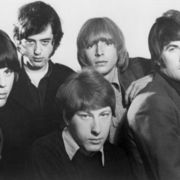
Jimmy Page
Role
Genre
Group
Credits
Role
Genre
Group
Credits
Jimmy Page's Gear


Jimmy Page talks about the guitar he used for "Whole Lotta Love" in this interview with the Wall Street Journal, saying, "To get my guitar to sound surreal, I detuned it and pulled on the strings for a far-out effect. I was playing a Sunburst 1958 Les Paul Standard guitar I had bought from [James Gang guitarist] Joe Walsh in San Francisco when we were out there on tour. The Standard had this tonal versatility, allowing me to get a blistering high pitch."
Find it on:


Jimmy Page famously used this guitar with Led Zeppelin throughout and classics such as Kashmir, Page bought this guitar while he was a studio musician and still uses it now, it can be seen in the documentary 'It Might Get Loud' with Jack White and U2's the edge.
The guitar was used on songs such as "In My Time of Dying", "Kashmir". According to The Met, Page bought this guitar in 1963 at London's Selmer Shop, and was firstly used in 1967, during his tenure with The Yardbirds.
Find it on:


The book "Whole Lotta Led Zeppelin," by Jon Bream, Robert Alford, and Charles Auringer, states on page 164, "He [Page] preferred heavy-duty Herco 75 picks."
Find it on:


-m.webp?v=1784785343)
According to WholeLottaLed, "It was used to create the annoying octave down fuzz for the Fool In The Rain solo." Jimmy Page's use of the MXR Blue Box backed up by http://www.jimmypage.co.uk/equipment.htm and http://www.jimdunlop.com/product/m103-blue-box-octave-fuzz (Dunlop is the current owner of MXR, the creators of the Blue Box).
Find it on:

"Marshall SLP-1959 100-watt amp which was modded with KT-88 valves, which boosted its output to 200 watts."
Find it on:

Jimmy Page acquired his 1964 Fender Lake Placid Blue Stratocaster in April 1975 from Sam Ash in New York City and used it at the 1975 Earls Court shows for "No Quarter" and "Over The Hills And Far Away". It was also used in 1979 and 1980 for "In The Evening". You can see it around the 1:50 mark.
In the studio, Page used the Fender Stratocaster in the Presence sessions, on "For Your Life" and "Hots On For Nowhere".
Page continued to use the Stratocaster into the 1980's with The Firm.
jimmypage.co.uk/equipment.htm https://www.groundguitar.com/jimmy-page-gear/
Find it on:


Jimmy Page worked with Gibson to create his "Number Two" signature guitar based on his own 1959 Les Paul Standard.
Find it on:

Jimmy Page used two Vox AC30s in his system designed by Pete Cornish during the 90s. In the photo you can see one to the left.
https://guitarplayer.wordpress.com/category/pete-cornish-pedalboard/
Find it on:

Used during Page's time with The Firm and his first solo tour, as is visible in this photo of Page's 80s pedalboard from this My Les Paul Forum thread.
Before the big Cornish pedalboard Jimmy commissioned from Pete Cornish in the early 90s, there was this much smaller pedalboard, in the Cornish style, but not from Cornish.
I know because I asked Pete Cornish by email and here's his reply:
Not guilty - it's not one of mine.
Best Wishes, Pete Cornish.
Find it on:

This custom made Fender Telecaster is known as Dragon Telecaster and was played by Jimmy Page.
This YouTube video showcases Jimmy Page at a live concert in London 1969 playing the Fender Dragon Telecaster for the Led Zeppelin song, "Dazed and Confused".
"I still have it,” he told Guitar World in 1998. “But it’s a tragic story. I went on tour with [a] ’59 Les Paul that I bought from Joe Walsh, and when I got back, a friend of mine had kindly painted over my paint job. He said, ‘I’ve got a present for you.’ He thought he had done me a real favor. As you can guess, I wasn't real happy about that. His paint job totally screwed up the sound and the wiring, so only the neck pickup worked. I salvaged the neck and put it on my brown Tele string bender that I used in the Firm [in 1985 and 1986]. As for the body, it will never be seen again!"
Find it on:


-m.webp?v=1784732327)
As noted by this Rolling Stone article, Jimmy Page used the Gibson EDS-1275 to play "Stairway to Heaven" Gibson created a EDS-1275 Signature Model for Jimmy Page in 2007.
Find it on:
-m.webp?v=1784785189)
In this photo, an M-101 can be seen on the right, on Jimmy's pedalboard. This pedal is discussed further on this website. It was used for part of 'Immigrant Song' as well as 'Dazed and Confused', and for "Rock and Roll' at Live Aid 1985.
Find it on:

Page (pictured with the Firm 1984) initially toured and recorded with Led Zeppelin using a Fender Telecaster as his primary electric guitar, but then switched to the Les Paul; but Page never stopped using Telecasters, he used them whenever he wanted the infamous "b-bender" effect pioneered by Clarence White and Gene Parsons. Page used on the guitar on the Led Zep 1977 US Tour for Ten Years Gone, 1983 Arms Concert, The Firm 84-86 and in 1984 with Roy Harper at English festival.
Guitar Show with Jimmy Page onhis b bender https://www.youtube.com/watch?v=InIYpuovgLo&feature=youtu.be
check out the article on this guitar https://spinditty.com/artists-bands/Jimmy-Page-And-The-Fender-Telecaster
More Pictures: Click the images for articles on Jimmy's BBender https://www.pinterest.com/pin/265501340517462386/
Find it on:

Jimmy can be seen in this picture playing a Fender Electric XII 12-String.
Jimmy used this 1965 Fender Electric XII 12 string guitar in the studio to record “Living Loving Maid”, “Stairway to Heaven”, and later on “The Song Remains The Same” from Houses Of The Holy released in 1973. This Fender Electric XII model was introduced in late 1965, and it was a purpose-built 12-string guitar with individual saddles for each string. The guitar had a Jazzmaster-shaped alder body, rosewood neck with “hockey-stick” headstock, and two split single coil pickups.
Find it on:

In the March 13, 1971 issue of Melody Maker, Jimmy Page is shown using the Univox UD-50 Uni-Drive to achieve an electronic cello effect.
Find it on:

According to this list, Jimmy Page used the Roger Mayer Fuzz Box. Roger Mayer was an electrical engineer, and built a fuzz box and several other guitar effects for Page.
Find it on:

Jimmy Page started using the 1969 Gibson Les Paul Deluxe 'No. 3' ca. August 1970, presumably as a replacement for the 1960 Gibson Les Paul Custom 'Black Beauty' according to this article.
Having purchased it from Mike Rudd in Memphis, Tennessee after his "Black Beauty" Gibson Les Paul was stolen, the guitar, which had started its life as a Goldtop Les Paul Deluxe, had been fitted with double humbuckers that had replaced its original minihumbuckers, was painted red and was later fitted with a B-bender mechanism.
The present of this guitar is viewed in the Led Zeppelin's reunion Celebration Day Live at 02 Arena in 2007, it's seen with the full-size humbuckers with black rings and the B-bender system, here's a clip from this exact reunion where the system, paintjob, humbuckers and tuner can be seen as described before: https://youtu.be/rCBXd1uXPVA?t=6022
Find it on:

In the film "It Might Get Loud," Jimmy Page can be seen playing a Fender Stratocaster Electric Guitar, as shown in the photo from Feelnumb.
Find it on:

Jimmy Page is shown using Ernie Ball Super Slinky Guitar Strings in a user-uploaded photo on Ernie Ball’s website.
Find it on:

Jimmy can be seen here with an Ovation CSE225-RRB. His appears to be fully black instead of having a red sunburst, but appears to be otherwise stock.
Find it on:

Used for the recording of “You Shook Me”, as stated in this June 11, 2014 Guitar World interview.
A debate has raged for many years on what electric guitars were used on the first album.
It’s hard for people to believe, but I just used my Fender Telecaster for the entire album, except for one track. Somebody was trying to sell me a Gibson Flying V at the time. I don’t what made them think I could afford it, because I clearly couldn’t, but I asked them if I could just try it out. I brought it into Olympic and used it on “You Shook Me.” With those big humbuckers, it was so powerful you can hear it breaking up the amp in the middle of the song. I could’ve tidied it up, but I really liked hearing the amp really struggle to get the sound out. It’s really fighting through the electronics to get out of that speaker. I’m not sure what happened to the guitar. It might’ve found its way to Keith Richards or something, but I really don’t know.
Find it on:

Jimmy Page can be see in this image with a Eko Ranger VI. According to Pro Guitar Shop, "This acoustic was used to record the rhythm track for Thank You at Morgan Sound Studios in 1969."
Find it on:



In the Guitar World interview of Jimmy Page he confirms the Supra Coronado 1690T is the amp he used on LZ1.
Find it on:

Page is shown here playing a traditional Les Paul Goldtop.
According to Jeff Strawman's preview of his book, which offers 600 pages of Led Zeppelin gear examination, he clearly describes this guitar and her use in 90's mainly.
"Jimmy Page has always looked to explore new frontiers, and he found a worthy partner in that journey with the TransPerformance automatic tuning system, which he noted "allows you to store over a hundred different tunings. That opens all kinds of possibilities." Page took possession of his first TransPerformance-equipped guitar, a goldtop Gibson Les Paul Standard, in late 1991 during the Coverdale-Page sessions. He memorably used it in the "Pride and Joy" video with David Coverdale, in the 1994 Unledded show with Robert Plant and then the accompanying 1995-96 world tour, and as recently as 2007 at the Led Zeppelin reunion concert. He used a second TransPerformance-equipped wine red Gibson Les Paul Standard Premium on the 1998-99 Walking Into Everywhere tour with Plant. He personally nicknamed a third TransPerformance-equipped guitar “Pepto Bismol,” because of its pinkish finish. Page then traded this guitar back to Transperformance for a fourth guitar, which he dubbed “Eerie Dess,” due to its maroon red crackled finish. This is the guitar that was seen on Saturday Night Live in 1998, when Page appeared with Sean “Puff Daddy” Combs for a performance of "Come With Me."
Find it on:

Jimmy Page used the "Theremin" in Led Zeppelin's concert film "The Song Remains the Same" at Madison Square Garden, New York City in 1976 . He used it in the song "Whole Lotta Love" . The item appears in 1:48-3:40 . Additional quote : The concert was filming in 1973 (3 nights) but the concert film was made in 1976 .
Find it on:

Used during 1998 on the Walking Into Clarksdale tour
Find it on:

Page used a 1960s MSA 10 string pedal steel guitar on the songs "Tangerine" & "That's The Way" from the Led Zep III album. The exact year of the PSG is unknown.
Here's a little bit of an interview with Jimmy page from '77.
On "Tangerine" [Led Zeppelin III] it sounds as if you're playing a pedal steel.
I am. And on the first LP there's a pedal steel. I had never played steel before, but I just picked it up. There's a lot of things I do first time around that I haven't done before. In fact, I hadn't touched a pedal steel from the first album to the third. It's a bit of a pinch really from the things that Chuck Berry did. Nevertheless, it fits. I use pedal steel in "Your Time is Gonna Come" [Led Zeppelin]. It sounds like a slide or something. It's more out of tune on the first album because I hadn't got a kit to put it together.
You've also played other stringed instruments on records?
"Gallows Pole" [Led Zeppelin III] was the first time for banjo, and on "The Battle of Evermore," [Led Zeppelin IV] a mandolin was lying around. It wasn't mine, it was Jonesey's. I just picked it up, got the chords, and it sort of started happening. I did it more or less straight off. But, you see, that's fingerpicking again, going back to the studio days and developing a certain amount of technique -- at least enough to be adapted and used. My fingerpicking is a sort of cross between Pete Seeger, Earl Scruggs, and total incompetence.
Full Interview: http://web.archive.org/web/20030210174225/archive.guitarplayer.com/archive/artists/jimmypage77.shtml
Find it on:

Jimmy Page uses the Fender Dual Showman amplifier, as detailed on his official equipment page.
Find it on:

Jimmy Page is seen here on the [Orange website]
(https://www.orangeamps.com/products/guitar-amp-heads/ad-series/ad30htc-head/) as a user.
Find it on:

Jimmy is seen playing this Yamaha FG-403MS in a video for a charity auction for the guitar. He mentions the model just after 0:45.
Find it on:
This is a community-built gear list for Jimmy Page.
- Find relevant music gear like Guitars, Amplifiers, Effects Pedals, and other instruments and add it to Jimmy Page.
- The best places to look for gear usage are typically on the artist's social media, YouTube, live performance images, and interviews.
- To receive email updates when Jimmy Page is seen with new gear, follow the artist.
Discography
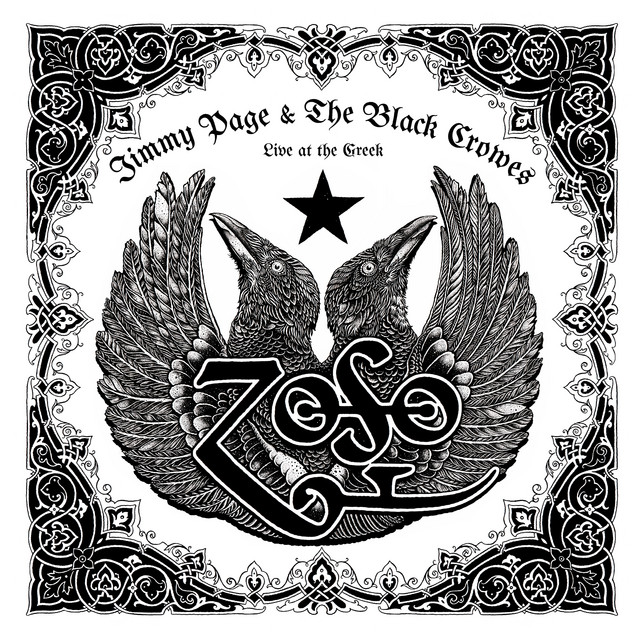
Album Credits
-
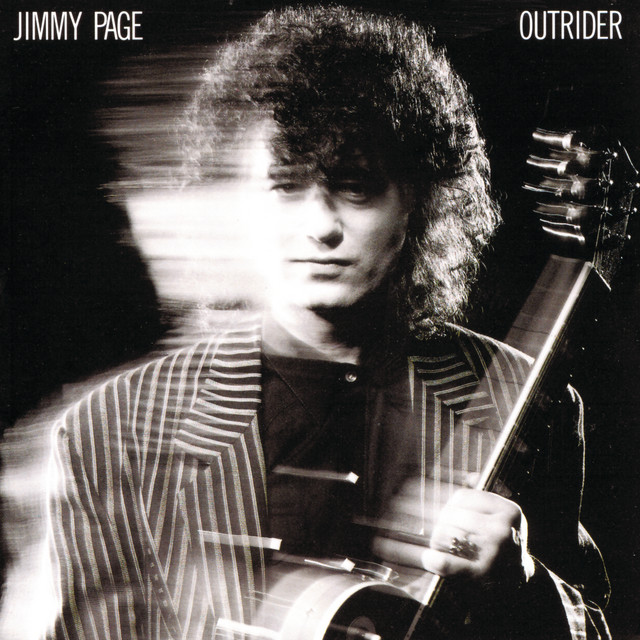
Jimmy Page · 1988
Producer -
The Kinks · 1964
Session Musician

.jpg?v=1784640200)